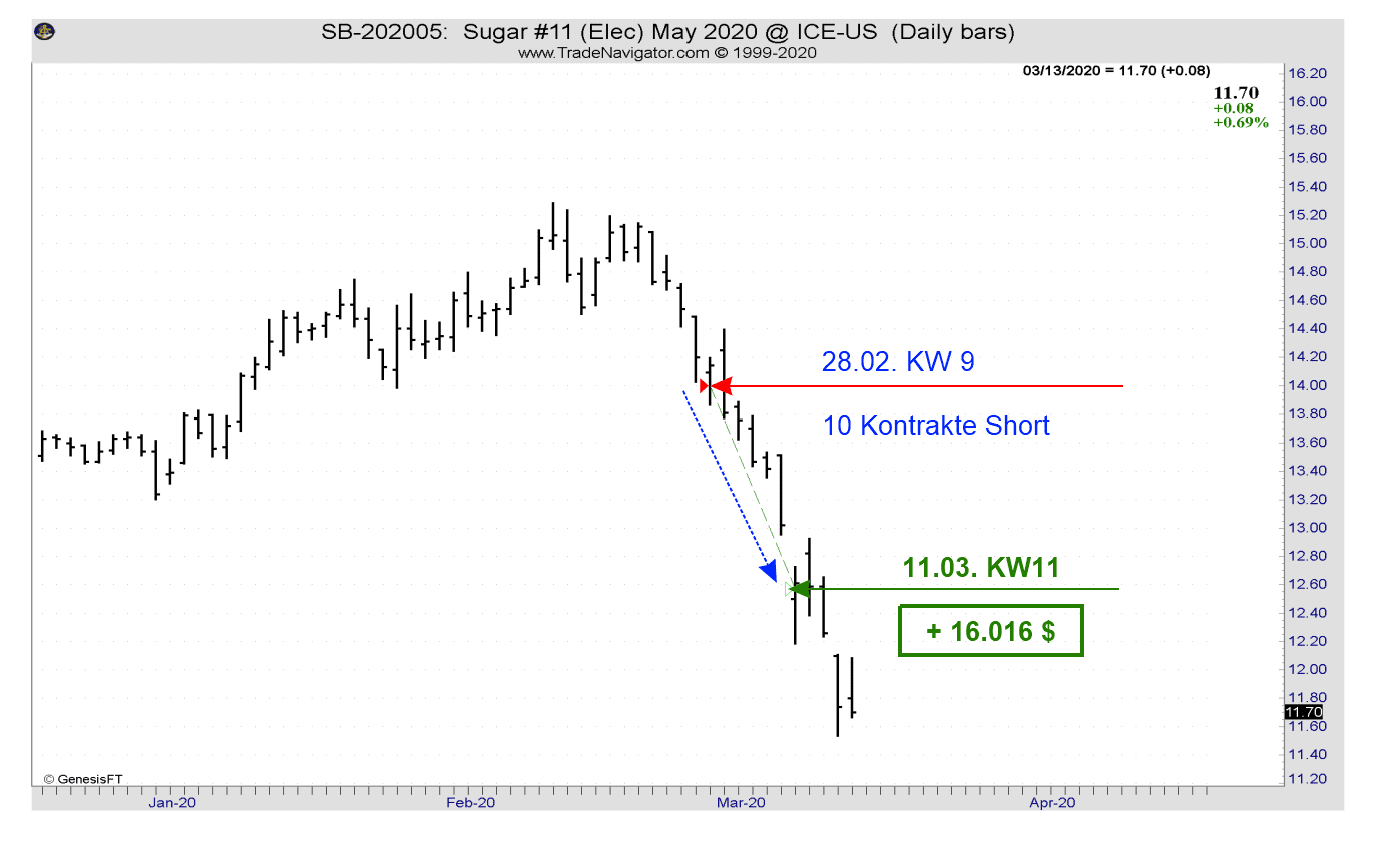
Sugar Futures Price Market Definition and Trading Dynamics
Sugar futures are standardized exchange-traded contracts that obligate a buyer to purchase, and a seller to sell, a specific quantity of sugar at a predetermined price on a future date. As of 2026, the market is primarily defined by th...
Sugar futures are standardized exchange-traded contracts that obligate a buyer to purchase, and a seller to sell, a specific quantity of sugar at a predetermined price on a future date. As of 2026, the market is primarily defined by the benchmark Sugar No. 11 contract, which tracks world raw sugar prices and serves as the global price discovery mechanism for producers, industrial consumers, and speculators.
Contents
Understanding the Sugar Futures Market Definition
The sugar futures market is a subset of the soft commodities sector, focusing on the trade of raw and white (refined) sugar. Unlike metals or energy, sugar is highly sensitive to seasonal agricultural cycles and tropical weather patterns. In financial terms, a sugar futures contract is a legal agreement to trade a specific amount of sugar—typically 112,000 pounds (50 long tons) for raw sugar—at a set price for delivery in a future month.
There are two primary benchmarks in the global market:
- Sugar No. 11 (World): This is the global benchmark for raw sugar. It represents sugar from any of 28 countries of origin, delivered "Free on Board" (FOB) to the receiver's vessel at a specified port within the country of origin.
- Sugar No. 16 (U.S. Domestic): This contract is used for the physical delivery of raw cane sugar within the United States. It is influenced heavily by U.S. Department of Agriculture (USDA) quotas and domestic farm bills, often trading at a premium to the world price due to protectionist trade policies.
For traders and hedgers in 2026, understanding these definitions is critical because they dictate the liquidity and the regulatory environment of the trade. The Intercontinental Exchange (ICE) remains the primary venue for these transactions, providing a transparent platform for price discovery that reflects global supply and demand imbalances.
Key Contract Specifications and Mechanics
To participate in the sugar futures market, one must understand the technical specifications that govern these contracts. In 2026, the standardized nature of these contracts ensures that a buyer in London and a seller in Brazil are trading the exact same asset quality.
Contract Size and Quotation
A single Sugar No. 11 contract represents 112,000 pounds. Prices are quoted in cents per pound. Therefore, a price movement of one cent (e.g., from 20.00 cents to 21.00 cents) represents a value change of $1,120 per contract. The minimum price fluctuation, known as a "tick," is 1/100th of a cent, which equals $11.20 per contract.
Delivery Months
Sugar is not traded for every month of the year. Instead, it follows the harvest cycles of major producers. The standard delivery months are:
- March (H)
- May (K)
- July (N)
- October (V)
Traders must be aware of "first notice day" and "last trading day" to avoid unintended physical delivery. Most speculative traders exit or "roll" their positions into the next contract month well before the expiration date.
Fundamental Drivers of Sugar Price Dynamics
The trading dynamics of sugar are influenced by a complex interplay of agricultural, energy, and macroeconomic factors. In the 2025/2026 marketing year, these factors have remained the primary catalysts for volatility.
The Brazil-Ethanol Linkage
Brazil is the world's largest producer and exporter of sugar. A unique dynamic in the Brazilian market is the "flex-fuel" capability of its mills. Brazilian mills can choose to process sugarcane into either sugar for export or anhydrous ethanol for domestic fuel consumption.
If global crude oil prices are high, Brazilian mills shift production toward ethanol, reducing the global supply of sugar and driving sugar prices higher. Conversely, if oil prices drop, mills maximize sugar production, leading to a surplus and downward price pressure. This makes sugar futures highly correlated with the energy complex.
Weather and Climate Patterns
Sugar is a "weather-sensitive" crop. The El Niño and La Niña southern oscillations significantly impact the "Sugar Belt" in Brazil, India, and Thailand.
- Drought in Brazil: Reduces cane yields and sucrose content.
- Monsoon Variability in India: India is the second-largest producer. A weak monsoon can lead to export bans, as the Indian government prioritizes domestic food security. In 2026, monitoring rainfall patterns in Maharashtra and Uttar Pradesh remains a daily requirement for commodity analysts.
Currency Fluctuations (The Brazilian Real)
Because sugar is priced in U.S. Dollars (USD) but produced in Brazilian Reals (BRL), the exchange rate is a major trading dynamic. If the BRL weakens against the USD, Brazilian producers receive more local currency for every pound of sugar sold. This often encourages aggressive selling and hedging from Brazil, which can cap price rallies in the futures market.
Market Participants and Trading Profiles
The sugar market is composed of various actors, each with different objectives. Analyzing the Commitment of Traders (COT) report is a standard practice for understanding which group is currently driving the price action.
Commercial Hedgers
These are the "physicals"—producers like sugar mills and industrial consumers like global beverage and confectionery companies. Producers use futures to lock in a selling price for their future harvest to protect against price drops. Industrial consumers buy futures to cap their raw material costs against potential price spikes. Their activity is generally considered "smart money" because it is based on physical supply needs.
Non-Commercial Speculators
This group includes hedge funds, Commodity Trading Advisors (CTAs), and retail traders. They do not intend to take delivery of the sugar but seek to profit from price movements. In 2026, algorithmic and high-frequency trading (HFT) represent a significant portion of speculative volume, often leading to sharp, momentum-driven swings that can overshoot fundamental valuations.
Index Funds
Passive investors often hold sugar as part of a broader commodity index (like the Bloomberg Commodity Index). They typically maintain long positions and "roll" them forward, providing a consistent source of liquidity but also occasionally creating "roll congestion" near contract expiry.
Comparative Dynamics: Sugar No. 11 vs. Sugar No. 16
| Feature | Sugar No. 11 (World) | Sugar No. 16 (U.S. Domestic) |
|---|---|---|
| Contract Size | 112,000 lbs (50 long tons) | 112,000 lbs (50 long tons) |
| Primary Exchange | ICE Futures U.S. | ICE Futures U.S. |
| Pricing Basis | FOB (Free on Board) at origin port | CIF (Cost, Insurance, Freight) U.S. Port |
| Deliverable Grade | Raw centrifugal cane sugar | Raw centrifugal cane sugar |
| Market Driver | Global supply/demand (Brazil, India) | U.S. Farm Bill, USDA quotas |
| Liquidity | Very High | Moderate to Low |
| Price Volatility | High (Energy & Weather linked) | Lower (Regulated by import quotas) |
Technical Trading Dynamics in 2026
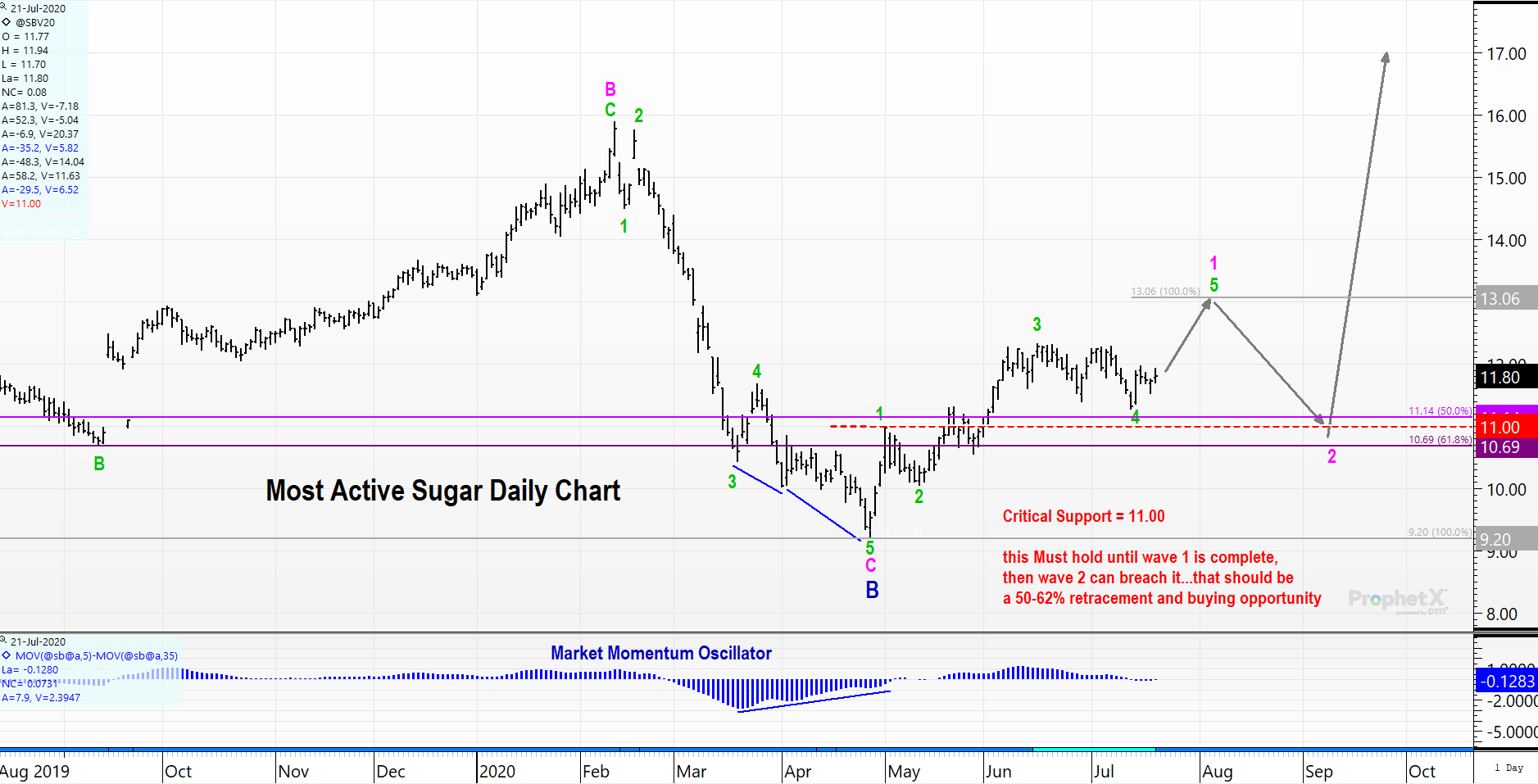
Modern sugar trading relies heavily on technical analysis to complement fundamental research. Because sugar is a trending commodity, traders often look for specific patterns:
- The White Sugar Premium: This is the price difference between Sugar No. 5 (London Refined White Sugar) and Sugar No. 11 (Raw Sugar). A widening premium suggests strong demand for refined sugar or a shortage of refining capacity, which eventually pulls raw sugar prices higher.
- Seasonality: Historically, sugar prices often bottom out during the peak of the Brazilian harvest (May-July) and tend to strengthen toward the end of the year as global stocks are drawn down.
- Mean Reversion and Moving Averages: Given the high volatility, sugar prices frequently deviate from their 200-day moving averages. Traders use these deviations to identify overbought or oversold conditions, especially when fundamental news (like a crop report) is absent.
Risk Management for Sugar Traders
Trading sugar futures involves substantial risk due to leverage and volatility. In 2026, brokerage firms require "initial margin" to open a position and "maintenance margin" to keep it open. If the market moves against a trader, they may face a margin call, requiring them to deposit more funds immediately or have their position liquidated.
Key risks include:
- Gap Risk: Sugar markets can "gap" up or down overnight following major weather events or government policy shifts in India or Brazil.
- Policy Risk: Subsidies and export quotas are political tools. A sudden change in Indian export policy can move the market 5-10% in a single session.
- Liquidity Risk: While Sugar No. 11 is highly liquid, further-out contract months (deferred months) may have wider bid-ask spreads, making entry and exit more expensive.
FAQs About Sugar Futures
What is the difference between raw sugar and white sugar futures?
Raw sugar futures (Sugar No. 11) represent unrefined sugar that must still be processed. White sugar futures (Sugar No. 5 on the ICE Europe exchange) represent sugar that has been refined and is ready for consumption. The "arbitrage" or spread between these two is a key indicator of refining margins.
How does the U.S. Dollar affect sugar prices?
Since sugar is traded globally in U.S. Dollars, a stronger USD generally makes sugar more expensive for buyers using other currencies (like the Euro or Yen), which can dampen demand. Conversely, a weak USD often supports higher sugar prices.
Can I trade sugar without a futures account?
Yes, investors can gain exposure through Exchange Traded Funds (ETFs) like the Teucrium Sugar Fund (CANE) or through contracts for difference (CFDs) and options. However, these instruments may have different fee structures and may not perfectly track the spot price due to contango or backwardation in the futures curve.
What are "Limit Up" and "Limit Down" moves?
Exchanges impose price limits to prevent extreme volatility from crashing the system. If the price of sugar moves by a certain amount (e.g., 2 cents) in one day, the exchange may halt trading or prevent the price from moving further for a period. This is a critical consideration for managing "stop-loss" orders.
Why is Brazil so important to the sugar price?
Brazil accounts for approximately 40% of global sugar exports. Any disruption to Brazilian logistics (port strikes) or production (frost or drought) has an immediate and outsized impact on the global availability of sugar, making it the "anchor" of the market definition.
Practical Recommendation for Market Participants
For those entering the sugar futures market in 2026, the first step is to establish a robust monitoring system for the Brazilian Real (BRL/USD) and Crude Oil prices. Because sugar acts as a bridge between the food and energy sectors, you cannot trade it in a vacuum.
Begin by paper trading the Sugar No. 11 contract to understand how the 112,000-pound leverage affects your account equity. Additionally, always consult the weekly Commodity Futures Trading Commission (CFTC) reports to see if large speculators are "stretched" in their positions, which often signals a potential trend reversal. Professional guidance from a commodity trading advisor is recommended for managing the specific margin risks associated with soft commodities.
Image Gallery