Comprehensive Guide to Dentists Who Do Payment Plans Explained
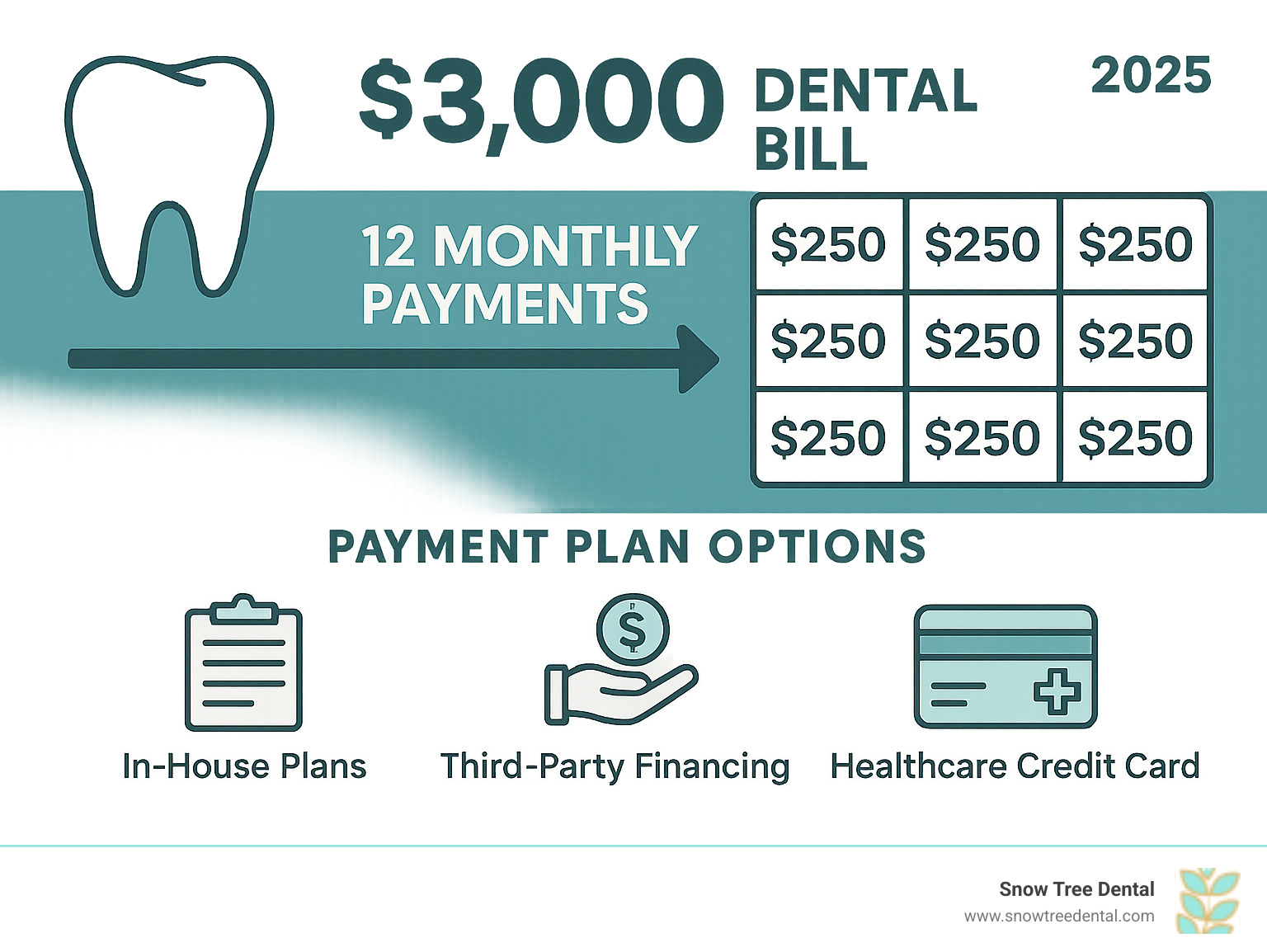
Dentists who offer payment plans provide a financial arrangement where patients can distribute the total cost of dental treatments over a series of monthly installments instead of paying the entire balance upfront. These plans are cate...
Dentists who offer payment plans provide a financial arrangement where patients can distribute the total cost of dental treatments over a series of monthly installments instead of paying the entire balance upfront. These plans are categorized into in-house arrangements managed by the clinic or third-party financing through specialized healthcare lenders. By 2026, these options have become a standard necessity for making high-cost restorative and cosmetic procedures accessible to a broader range of patients.
Contents
Why Dental Payment Plans Are Essential in 2026
As we move through 2026, the landscape of dental care continues to evolve with advanced technologies such as AI-assisted diagnostics and 3D-printed restorations. While these innovations improve clinical outcomes, they often come with higher initial price tags. Traditional dental insurance frequently imposes annual maximums—often ranging between $1,500 and $2,500—which have not kept pace with the inflation of medical costs. Consequently, a single dental implant or a full-arch reconstruction can easily exceed a patient’s yearly coverage in one visit.
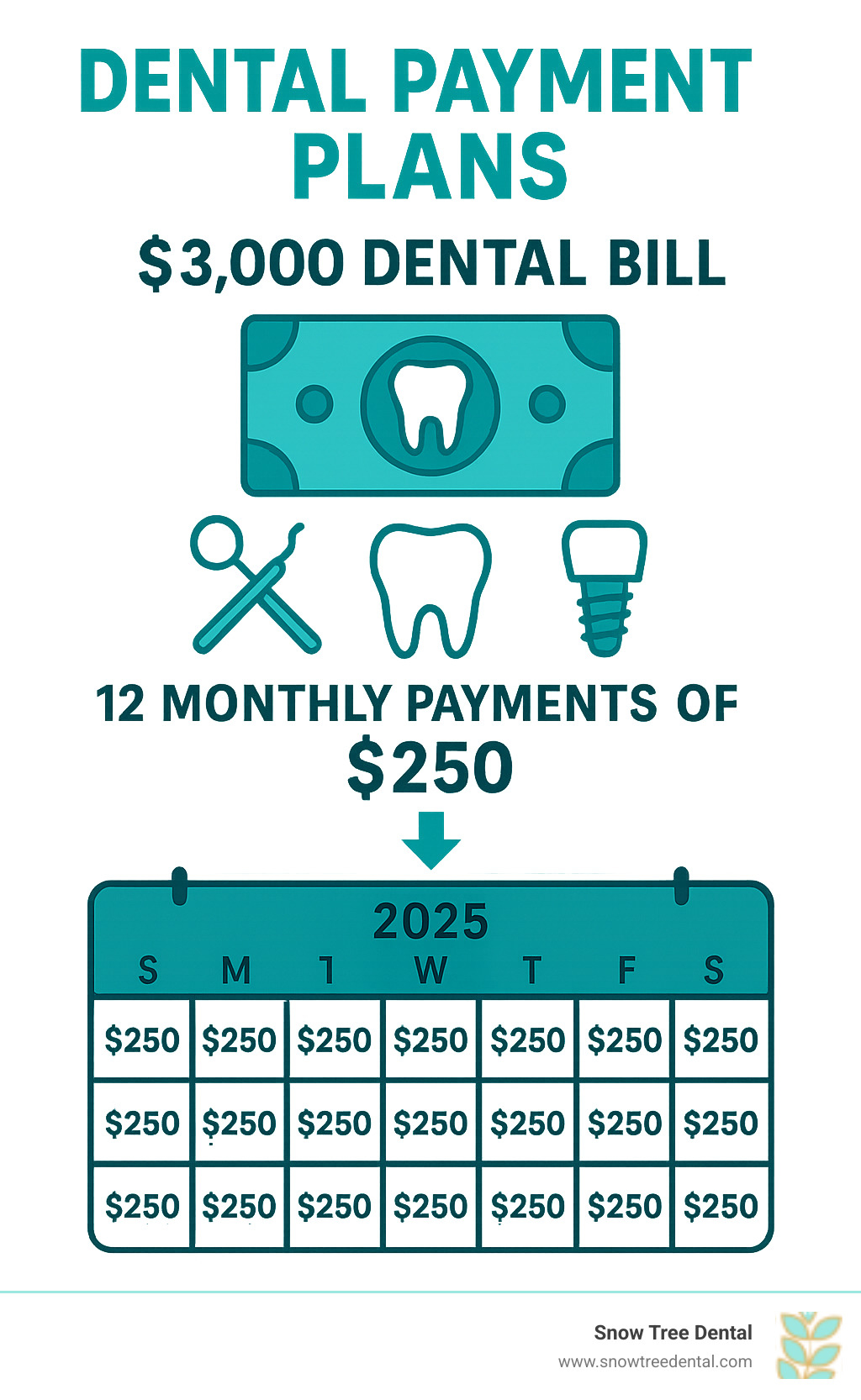
Payment plans bridge the gap between the clinical necessity of a procedure and the patient's immediate liquidity. Without these financial tools, many patients are forced to delay treatment, leading to more complex and expensive emergencies later. For many, "dentists who do payment plans" is the primary search criteria when selecting a new provider, as the ability to budget $150 a month is far more manageable than a one-time $5,000 expense.
Types of Dental Payment Plans Explained
Understanding the distinction between how these plans are structured is vital for choosing the right dentist and the right financial commitment. Generally, there are two primary models: in-house financing and third-party lending.
In-House Payment Plans
In-house plans are contracts established directly between the patient and the dental practice. The dentist acts as the lender, often requiring a down payment followed by a set number of monthly payments.
- Structure: Usually reserved for long-term treatments like orthodontics (braces or clear aligners) or multi-phase restorative work.
- Benefits: These often come with 0% interest because the dentist is more interested in securing the patient for a long-term treatment plan than in earning interest income.
- Drawbacks: They are often shorter in duration (6 to 12 months) and may require a higher credit standing if the office performs its own credit checks, though many small practices rely on a "trust-based" model for established patients.
Third-Party Financing
The most common form of "dentists who do payment plans" involves third-party companies. In this scenario, the dentist receives the full payment from the lender upfront (minus a processing fee), and the patient owes the lender.
- CareCredit: One of the oldest and most recognized names in healthcare lending. They offer "No Interest if Paid in Full" promotions for terms of 6, 12, or 18 months.
- Sunbit: Increasingly popular in 2026 due to its high approval rates. It uses a "soft" credit pull, making it accessible to patients with a wider range of credit scores.
- Cherry and Proceed Finance: These companies often focus on larger, more complex procedures like "All-on-4" dental implants, offering longer terms of up to 96 months.
Eligibility and the Application Process
Securing a payment plan at a dental office is typically a streamlined process designed to happen during the consultation phase. In 2026, most applications are handled digitally via the patient’s smartphone or an office tablet.
Credit Requirements
The level of credit required depends heavily on the lender and the amount being borrowed.
- Prime Lenders: For 0% interest plans, lenders typically look for a FICO score of 640 or higher.
- Subprime/Fair Credit Lenders: Some modern fintech companies specialized for dental offices allow for scores as low as 500, though these will almost certainly carry high interest rates (APR) ranging from 15% to 35%.
The Application Steps
When you visit a dentist who does payment plans, the workflow usually follows this sequence:
- The Treatment Plan: The dentist provides a detailed cost breakdown of the necessary procedures.
- The Financial Consultation: A treatment coordinator presents the available payment plan options.
- Immediate Application: You provide basic information (SSN, income, address). Most providers give an approval decision within 60 seconds.
- Verification: Once approved, you sign the digital loan agreement, and the dental office schedules your treatment immediately.
Comparing Popular Dental Financing Providers in 2026
The following table compares the typical terms offered by the dominant third-party providers found in dental offices today.
| Provider | Typical Term Lengths | APR Range | Credit Impact | Best For |
|---|---|---|---|---|
| CareCredit | 6 - 60 months | 0% (if promo met) to 29.99% | Hard Inquiry | General dentistry & emergencies |
| Sunbit | 3 - 72 months | 0% to 35.99% | Soft Inquiry (to check) | High approval rates/Fair credit |
| Proceed Finance | 24 - 96 months | 3.99% to 24.99% | Hard Inquiry | Major surgery (Implants) |
| In-House Plan | 3 - 12 months | Usually 0% | Varies by office | Orthodontics & established patients |
Critical Consideration: The "Deferred Interest" Trap
A significant number of dentists who do payment plans offer "Interest-Free" options. It is imperative to understand how deferred interest works. In many CareCredit or store-branded dental cards, the 0% interest is a promotional period.
If the balance is not paid in full by the end of the 6, 12, or 18-month term, the lender may apply interest retroactively to the original purchase amount from the start date of the loan. In 2026, the Consumer Financial Protection Bureau (CFPB) continues to monitor these practices, but they remain a standard part of medical lending contracts. Always ensure your monthly payment is calculated to clear the balance at least one month before the promotion expires to avoid a massive sudden interest charge.
Specialized Plans for Major Procedures
Not all payment plans are created equal. The financing you use for a filling might not be the same one you use for a full mouth of veneers.
Orthodontic Financing
Because orthodontic treatment naturally takes 12 to 24 months, many dentists and orthodontists are more flexible with in-house billing. They may collect an initial "banding fee" or down payment and then set up an automated monthly draft. Since the treatment is ongoing, the dentist has the leverage to pause treatment if payments cease, which reduces their financial risk.
Cosmetic and Implant Financing
Procedures like dental implants or porcelain veneers are often considered "elective" by insurance companies. Because the lab costs for these procedures are high, dentists rarely offer in-house financing for them. Instead, they refer patients to companies like Proceed Finance or SoFi, which offer "extended-term" loans. These function more like personal loans with fixed monthly payments and terms that can stretch over several years.
How to Find a Dentist Who Offers Payment Plans
Finding the right provider involves more than just a search for "dentists who do payment plans explained." You must verify the quality of care alongside the financial options.
- Check the Website's "Financials" Page: Most modern dental practices in 2026 have a dedicated section on their website listing the specific third-party lenders they partner with.
- Inquire About Dental Membership Plans: Some dentists offer their own "membership" for a monthly fee (e.g., $30/month) that covers cleanings and provides a 15-20% discount on all other work. This is not a payment plan for a specific bill, but it makes the final bill smaller.
- Read Reviews Regarding Billing: Look for mentions of the "Treatment Coordinator" or "Financial Manager" in reviews. A helpful and transparent financial team is often as important as the dentist's clinical skill.
- Confirm Insurance Coordination: If you have insurance, ensure the dentist will "assign benefits," meaning they bill the insurance first and only put the remaining balance on a payment plan.
Frequently Asked Questions
Can I get a dental payment plan with bad credit?
Yes, it is possible. Companies like Sunbit specialize in high approval rates for patients with subprime credit. Additionally, some dentists may offer in-house plans if you can provide a significant down payment (usually 30-50% of the total cost). However, expect higher interest rates for third-party loans if your credit score is below 600.
Are there 0% interest dental payment plans?
Many dentists offer 0% interest plans through providers like CareCredit or Cherry for terms of 6 to 24 months. These are almost always "deferred interest" plans, meaning you must pay the balance in full within the timeframe to avoid being charged back-interest at a high rate (often 26.99% or higher).
What happens if I miss a payment on my dental plan?
Missing a payment on a third-party plan will result in late fees and a negative report to credit bureaus, similar to a missed credit card payment. If it is an in-house plan, the dentist may suspend your treatment or refuse to see you for future appointments until the balance is settled.
Do I need a down payment for dental financing?
For third-party financing, a down payment is rarely required; the lender covers 100% of the cost. For in-house financing, most dentists require between 20% and 50% upfront to cover their "hard costs," such as laboratory fees for crowns or bridges.
Can I use a payment plan for emergency dental work?
Absolutely. This is one of the most common uses for dental payment plans. Because the approval process is nearly instantaneous, many patients apply for and receive financing while sitting in the dental chair during an emergency visit for a root canal or extraction.
Final Recommendation for Patients
Before committing to a dental payment plan in 2026, always request a written "Truth in Lending" statement from the office. This document must clearly outline the total amount financed, the APR, the monthly payment, and the total cost of the loan over its lifetime. Compare the total cost of the "interest-free" plan (if you were to miss a deadline) against a fixed-rate personal loan. Often, for very large procedures like implants, a fixed-rate loan from a credit union or an online lender may offer more protection and a lower total cost than a deferred-interest dental card.
Image Gallery