Why the Insurance Salvage Value for Auto Matters to You
Insurance salvage value is the estimated resale price of a damaged vehicle in its current "as-is" state, typically after an insurance provider declares it a total loss. This figure matters to you because it directly impacts your final...
Insurance salvage value is the estimated resale price of a damaged vehicle in its current "as-is" state, typically after an insurance provider declares it a total loss. This figure matters to you because it directly impacts your final settlement check, determines whether you can afford to keep your car after an accident, and influences your long-term financial recovery.
Contents
When a vehicle is involved in an accident, the financial implications extend far beyond the immediate repair costs. For most policyholders, the term "total loss" sounds like a final verdict, but the math behind that verdict—specifically the salvage value—is a critical variable that dictates your options. As we navigate the automotive landscape in 2026, where vehicle technology is more complex and repair costs are higher than ever, understanding the mechanics of salvage value is essential for every driver.
The Relationship Between Actual Cash Value and Salvage Value
To understand why salvage value matters, you must first understand the "Total Loss" equation. Insurance companies do not merely look at the cost of repairs; they look at the economic viability of those repairs compared to the vehicle's worth.
- Actual Cash Value (ACV): This is the market value of your car immediately before the accident.
- Salvage Value: This is the amount the insurance company expects to recoup by selling your wrecked car to a scrap yard or a specialized auction house (like Copart or IAAI).
- The Threshold: Most states and insurance policies use a "Total Loss Threshold" (often between 70% and 80%). If the cost of repairs plus the salvage value exceeds the ACV, the car is totaled.
For example, if your car has an ACV of $20,000 and the salvage value is $5,000, and the repairs are estimated at $16,000, the insurance company sees a $21,000 liability ($16k repairs + potential unknown supplements). It is cheaper for them to pay you the $20,000 ACV and sell the car for $5,000, resulting in a net loss of only $15,000.
Why Salvage Value Dictates Your Payout
The salvage value is the "pivot point" of your insurance settlement. If you decide to let the insurance company keep the car, you generally receive the full ACV (minus your deductible). However, if you have an emotional attachment to the vehicle or believe it can be repaired safely for less than the official estimate, you may choose owner-retained salvage.
In an owner-retained scenario, the insurance company deducts the salvage value from your settlement check. If your car is worth $10,000 and the salvage value is $2,000, you only receive $8,000. You keep the damaged car, but you must now use that $8,000 to cover all repairs, inspections, and the administrative costs of "rebuilding" the title. If you underestimate the salvage value or the insurance company overestimates it, you could find yourself with a check that is insufficient to restore the vehicle to a drivable condition.
How Salvage Value Is Calculated in 2026
By 2026, the methodology for determining salvage value has shifted significantly toward high-frequency data and AI-driven predictive modeling. Insurance companies no longer rely on broad estimates; they use real-time data from global salvage auctions to determine exactly what a specific make and model is worth in parts or scrap.
- Parts Demand: If you drive a popular model with a high demand for used parts (like a Ford F-150 or a Toyota Camry), your salvage value will be higher because the components—engines, transmissions, and body panels—are in high demand.
- Material Value: The price of aluminum, steel, and precious metals (found in catalytic converters) fluctuates. In periods of high commodity prices, even a completely crushed vehicle has a baseline salvage value.
- EV Battery Health: For electric vehicles, the salvage value is heavily weighted toward the battery pack. In 2026, specialized diagnostic tools allow insurers to value the "Second Life" potential of a battery for stationary energy storage, which can keep EV salvage values surprisingly high compared to internal combustion engines.
The Financial Impact of the "Salvage Title"
The moment a car is settled based on its salvage value, the legal status of the vehicle's title changes. This is perhaps the most significant reason salvage value matters to you in the long term. Once an insurer pays out a total loss claim, they notify the Department of Motor Vehicles (DMV), and a permanent brand is placed on the title.
Resale Value Depreciation
A vehicle with a "Salvage" or "Rebuilt" title typically loses 20% to 40% of its market value compared to an identical vehicle with a clean title. Even if you repair the car to factory standards, the salvage brand acts as a permanent red flag for future buyers and dealerships. If you plan to sell the vehicle in a year or two, the "savings" you gained by keeping the salvage car may be wiped out by the diminished resale value.
Insurance Challenges
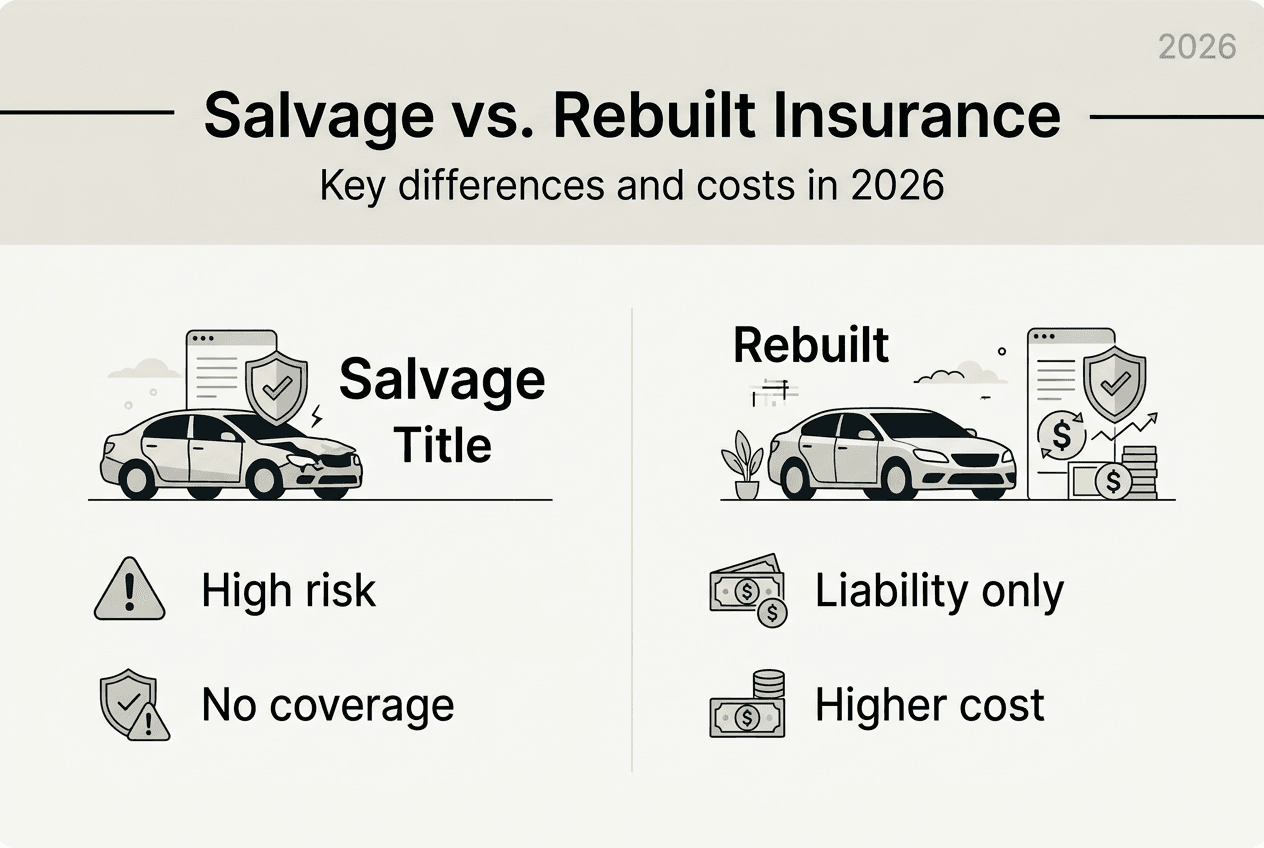
Securing insurance for a car that has been "totaled" and then rebuilt can be difficult. Many national carriers will offer liability coverage but may refuse to provide comprehensive or collision coverage. Because the car has already been "paid for" once by an insurance company, determining a secondary ACV for a future accident is a logistical nightmare for underwriters.
Comparing Settlement Options: A Practical Guide
When faced with a total loss, you usually have two paths. The salvage value is the primary differentiator between these two financial outcomes.
| Feature | Option A: Surrender Vehicle | Option B: Retain Vehicle |
|---|---|---|
| Primary Payout | Full Actual Cash Value (ACV) | ACV minus Salvage Value |
| Deductible | Subtracted from payout | Subtracted from payout |
| Vehicle Possession | Insurance company takes the car | You keep the damaged car |
| Title Status | N/A (You no longer own it) | Becomes a Branded/Salvage Title |
| Future Insurance | Standard rates on a new car | Difficult to get full coverage |
| Repair Responsibility | None | Full personal and financial liability |
The "Hidden" Risks of High Salvage Values
In some cases, a high salvage value can actually work against you. If the insurance company determines that your car is worth a significant amount even when wrecked, they are more likely to "total" the car rather than repair it.
This frequently happens with high-end luxury vehicles or newer EVs. If the salvage auction value is high, the "net cost" to the insurer to total the car is lower. You might want the car repaired because the damage seems minor (e.g., a cracked bumper and a deployed sensor), but if the salvage value is high enough, the insurer will force a total loss settlement. This can be frustrating if you are in a "gap" situation where you owe more on your loan than the ACV of the car.
Negotiating the Salvage Value
Many policyholders do not realize that the salvage value—and the ACV—can be negotiated. If you believe the insurance company has assigned an unfairly high salvage value to your vehicle (which reduces your check in an owner-retained scenario), you can provide evidence to the contrary.
- Local Market Research: Look for "junk" or "as-is" listings of similar damaged models in your specific geographic area.
- Condition Reports: If your car had specific mechanical issues before the accident that would lower its scrap value, ensure the adjuster is aware of them.
- The Appraisal Clause: Most policies contain an appraisal clause that allows you to hire an independent appraiser to dispute the insurance company's valuation if you cannot reach an agreement.
Professional Advice and Jurisdictional Limits
It is important to note that salvage laws vary significantly by state and country. For instance, in some jurisdictions, if a vehicle is over a certain age (e.g., 10 years old), the state may not require a "Salvage" brand on the title, even if it was totaled. Conversely, some states have strict "75% rules" where the insurance company is legally mandated to total the vehicle if repairs hit that mark, regardless of owner preference. Always check with your state's Department of Insurance or DMV for the specific statutes governing your location. For complex total loss claims involving significant sums of money, consulting a specialized automotive attorney or a public adjuster can be beneficial.
Frequently Asked Questions
Can I negotiate the salvage value if I want to keep my car?
Yes. While the ACV is the most common point of negotiation, the salvage value is also an estimate. If you can show that the insurance company's salvage quote is higher than what local salvage yards are actually paying, you may be able to lower that deduction and keep more of your settlement check.
Why is the salvage value of my EV higher than a gas car?
In 2026, the demand for lithium-ion battery components is a major driver of salvage prices. Even if an EV is structurally totaled, the battery cells often remain functional and are highly valuable for the secondary energy storage market, leading to a higher salvage value and a higher "total loss" probability.
Does salvage value affect my insurance premiums?
Not directly. Salvage value is a calculation used during the claims process. However, if you choose to drive a car with a "rebuilt" title (after it was declared a salvage total loss), your premiums may be affected because the risk profile of a previously totaled vehicle is higher.
What happens to the salvage value if I have a "Gap Insurance" policy?
Gap insurance is designed to cover the difference between your loan balance and the ACV. If your car is totaled, the salvage value remains a factor for the primary insurer, but the gap provider typically ensures your loan is paid off regardless of what the salvage value is. However, if you choose to keep the salvage vehicle, gap insurance usually will not cover the "deduction" of that salvage value from your check.
Is a "Rebuilt" title the same as a "Salvage" title?
No. A "Salvage" title generally means the vehicle is not legal to drive on public roads. A "Rebuilt" title is what you receive after a salvage vehicle has been repaired and passes a rigorous state safety inspection. The salvage value is what the car is worth before it reaches the "Rebuilt" stage.
Practical Recommendations
If you are currently facing a total loss claim, your first step should be to request a detailed Valuation Report from your adjuster. Do not just look at the final number; look at the salvage value deduction. If you intend to keep the car, call three local salvage yards and ask what they would pay for your vehicle in its current condition. If their quotes are significantly lower than the insurance company's deduction, you have a basis for negotiation.
Finally, before deciding to retain a salvage vehicle, contact your insurance agent to confirm they will actually provide coverage once the repairs are complete. There is no point in keeping a car that you cannot legally or affordably insure.
Image Gallery