Why Jonathan and Nancy Went to Murray in Stranger Things
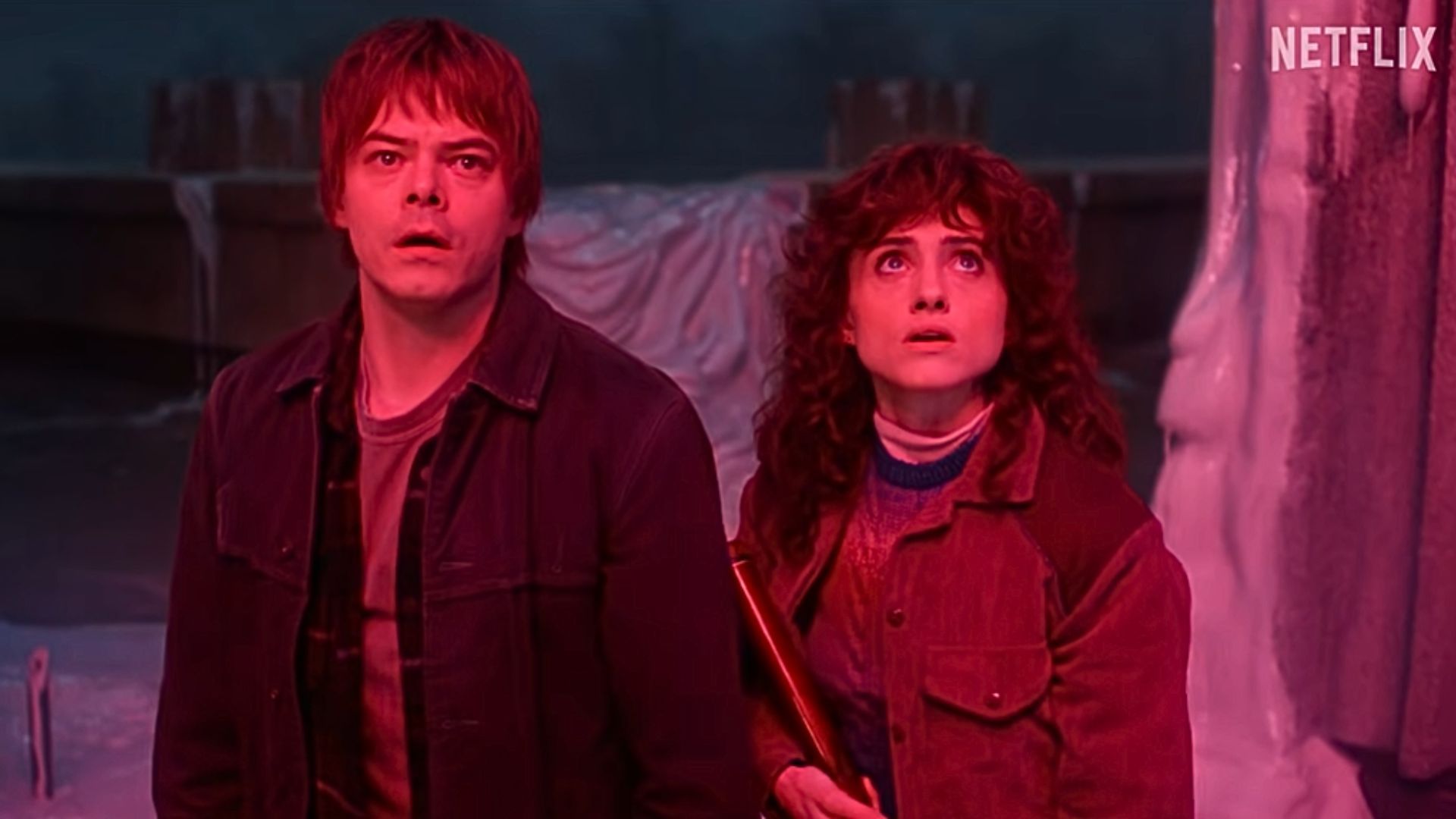
In the second season of Stranger Things, Jonathan Byers and Nancy Wheeler travel to see Murray Bauman to help them expose Hawkins National Laboratory. Because the literal truth involved interdimensional monsters, they needed Murray’s i...
In the second season of Stranger Things, Jonathan Byers and Nancy Wheeler travel to see Murray Bauman to help them expose Hawkins National Laboratory. Because the literal truth involved interdimensional monsters, they needed Murray’s investigative expertise to "water down" the story into a believable narrative—specifically a chemical leak—that would ensure justice for Barbara Holland.
Contents
The Catalyst: The "Justice for Barb" Mission
To understand why Jonathan and Nancy sought out Murray Bauman, one must first understand the immense guilt weighing on Nancy Wheeler. Throughout the latter half of the first season and the beginning of the second, the disappearance and subsequent death of Barbara Holland remained an unresolved trauma for Nancy. While the town of Hawkins moved on, and the official story remained vague, Barb’s parents were spending their life savings on a private investigator to find their daughter.
Nancy felt personally responsible for Barb’s death at the hands of the Demogorgon, as she had encouraged Barb to attend Steve Harrington’s party and then left her alone. By 1984 (the setting of Season 2), Nancy could no longer tolerate the silence imposed by the government. Her primary motivation for seeking out Murray was not just to tell the truth, but to provide Barb’s parents with closure and to hold Hawkins National Laboratory accountable for the negligence that led to the tragedy.
Jonathan Byers joined Nancy in this mission partly out of his own sense of justice and partly due to his growing feelings for her. Together, they realized that the local police, including Chief Jim Hopper, were limited by the massive cover-up orchestrated by the Department of Energy. They needed an outsider—someone who wasn't afraid of the government and who already had a foot in the door of the investigation.
The Infiltration and the Recording of Dr. Owens
Before heading to Murray’s residence, Nancy and Jonathan staged a tactical "trap" for the scientists at Hawkins Lab. Knowing they were being watched, they arranged a meeting in a public park, which prompted lab security to apprehend them. They were taken inside the facility, where they met Dr. Sam Owens, the successor to the villainous Dr. Brenner.
During this encounter, Dr. Owens took them on a tour of the lower levels, showing them the massive "Gate" to the Upside Down that was being kept at bay with flamethrowers. Owens, attempting to be more humane than his predecessor, explained that the truth was too dangerous for the public to know. However, he also inadvertently confessed that the lab was responsible for Barb's death.
Unbeknownst to Owens, Nancy had hidden a micro-cassette recorder in her purse. This recording was the "smoking gun" they needed. However, as teenagers with no media connections, they lacked the resources to distribute this information effectively. They also faced a significant logical hurdle: no one would believe a story about monsters and an alternate dimension.
Why Murray Bauman was the Only Choice
Murray Bauman was introduced as a "conspiracy theorist" and a disgraced journalist who had been hired by the Hollands. While the town saw him as a nuisance or a "crackpot," Nancy recognized that he was actually a highly skilled investigative reporter who simply lacked the right evidence.
The Investigative Background
Murray possessed the professional contacts that Jonathan and Nancy lacked. As a former journalist, he knew the standards of evidence required to get a story published in major outlets like the Chicago Tribune. He understood the mechanics of the press and the legal protections (and risks) involved in whistleblowing against a government entity.
The Shared Goal
Murray was already obsessed with the "Russian spy" theory in Hawkins, which he believed was linked to Barb’s disappearance. While he was wrong about the specifics (the supernatural element), he was right about the existence of a massive cover-up. By going to him, Jonathan and Nancy were able to pivot his existing investigation toward the actual culprits at the lab.
Intellectual Capability
The duo needed someone who could process the high-stakes information they were providing without being overwhelmed. Murray’s cynical worldview made him uniquely prepared to accept that the government was conducting unethical experiments, even if the nature of those experiments was more bizarre than he had originally imagined.
The Strategy: "Watering Down" the Truth
One of the most critical scenes in Season 2 occurs in Murray’s warehouse-style home, where the three characters analyze the tape of Dr. Owens. Murray realizes immediately that the tape, while incriminating, is unbelievable. He explains that the public has a "limit" to the amount of truth they can accept.
Murray’s strategy, which he describes as "watering down" the truth, involves removing the supernatural elements to make the story palatable. This is a common tactic in investigative journalism when the reality is too complex or "fringe" for the mainstream audience.
| Element of the Truth | The "Watered Down" Version for the Press |
|---|---|
| The Upside Down / Gate | A restricted area for hazardous chemical storage |
| The Demogorgon | A lethal, airborne toxin or chemical leak |
| Barb’s Death | Accidental exposure to an experimental nerve agent |
| Hawkins Lab | A facility guilty of gross negligence and illegal dumping |
By reframing the supernatural horror as a domestic environmental disaster, Murray ensured that the story would be taken seriously by federal regulators and the media. This shift in narrative was the primary reason Jonathan and Nancy stayed with Murray for several days: they had to meticulously craft the "leak" to match the physical evidence available in Hawkins.
The Personal Dynamics and "Shared Trauma"
While the primary reason for visiting Murray was the mission to close the lab, the trip served a secondary, narrative-heavy purpose regarding the relationship between Jonathan and Nancy. Murray, acting as a surrogate for the audience’s observations, pointed out the obvious romantic tension between the two.
He famously analyzed their "shared trauma," suggesting that they were staying in separate rooms because they were afraid of their feelings for one another. This intervention by Murray acted as the catalyst for Jonathan and Nancy finally acknowledging their attraction, leading to their first night together. This development was crucial for the series, as it moved the plot away from the Nancy/Steve/Jonathan love triangle and established a long-term partnership that would last through the subsequent seasons.
The Outcome of the Murray Visit
The plan hatched at Murray’s residence was remarkably successful. After mailing out numerous packages containing the "watered down" evidence to various news outlets, the fallout was swift. By the end of Season 2, the following events occurred:
- The Closure of Hawkins Lab: The Department of Energy was forced to shut down the facility due to the public outcry and the legal scrutiny following the reports of "toxic leaks."
- Justice for Barb: A formal funeral was finally held for Barbara Holland. While the public still didn't know about the Demogorgon, her parents were given a body (symbolically) and the knowledge that the lab was responsible for her death.
- Murray’s Vindication: Murray Bauman regained a sense of professional purpose, though he remained an eccentric outsider.
- The Rise of a New Threat: While the lab was closed, the "watering down" of the truth meant that the town remained unaware of the Mind Flayer and the ongoing danger from the Upside Down, which set the stage for the events of Season 3 at Starcourt Mall.
Frequently Asked Questions
What exactly was on the tape Nancy and Jonathan recorded?
The tape contained a recording of Dr. Sam Owens admitting that Barbara Holland had died as a result of "an accident" at the lab and that the lab had covered it up to prevent "the Russians" or the public from finding out. While he didn't explicitly describe the Demogorgon on the tape in a way that was clear to a listener, his admission of the cover-up was legally damning.
Why couldn't they just go to Chief Hopper with the tape?
While Hopper was an ally, he was also "in on it" to an extent. He had made a deal with the lab at the end of Season 1 to protect Will and the other kids. Furthermore, Hopper was a local law enforcement officer with limited reach. To shut down a federally funded laboratory, Jonathan and Nancy needed the national press, which Murray Bauman could help them access.
Did Murray Bauman actually believe the story about the monsters?
Initially, Murray was skeptical, but after hearing the tape and seeing the conviction of Jonathan and Nancy, he accepted that something far more sinister than a simple spy ring was occurring. He chose to ignore the specifics of the monsters not because he didn't believe them, but because he knew the public wouldn't.
How did the "toxic leak" story affect the Hollands?
The story provided them with the closure they desperately sought. It allowed them to stop their expensive and futile search for a "missing" daughter and accept that she was gone. It also gave them a target for their grief—the negligent government scientists—rather than a vague mystery.
Does Murray appear again after this storyline?
Yes, Murray becomes a central character in Seasons 3 and 4. His role evolves from a cynical investigator to a key member of the "adult" group (alongside Joyce and Hopper), eventually traveling to Russia to help rescue Hopper from a Gulag. His bond with Nancy and Jonathan in Season 2 was the foundation for his continued involvement with the Hawkins group.
Final Practical Takeaway
The decision to visit Murray Bauman was the most strategic move Nancy and Jonathan made in the series. It highlighted the difference between knowing the truth and being able to prove a version of the truth that society can handle. For viewers and writers alike, this subplot serves as a masterclass in how to use a "truth-seeker" character to bridge the gap between a high-concept sci-fi premise and a grounded, political resolution. If you are re-watching the series in 2026, pay close attention to Murray’s "watering down" speech—it remains one of the most intellectually honest moments in the show's history.
Image Gallery