Low Cost Whole Life Insurance No Medical Exam: A Comprehensive Guide for 2026
Low cost whole life insurance with no medical exam provides permanent coverage and cash value accumulation without requiring a physical checkup or blood work. By utilizing simplified underwriting, carriers offer accessible rates for th...
Low cost whole life insurance with no medical exam provides permanent coverage and cash value accumulation without requiring a physical checkup or blood work. By utilizing simplified underwriting, carriers offer accessible rates for those seeking final expense protection or modest estate planning, with approvals often granted within minutes based on digital health records.
Contents
Navigating the life insurance market in 2026 requires an understanding of how technology has transformed the traditional underwriting process. For decades, "no medical exam" was synonymous with "high cost" or "limited benefit." However, the integration of real-time data analytics and automated health screening has made low-cost whole life insurance more accessible than ever. Whether you are looking to cover funeral costs, leave a small legacy, or build a modest cash-value asset, understanding the nuances of these policies is essential for securing the best possible rate.
Understanding the Landscape of No-Exam Whole Life Insurance
Whole life insurance is a form of permanent coverage that remains in effect for the insured’s entire lifetime, provided premiums are paid. Unlike term insurance, which expires after a set period, whole life offers a guaranteed death benefit and a savings component known as cash value. When you remove the medical exam requirement, the insurer relies on alternative methods to assess risk.
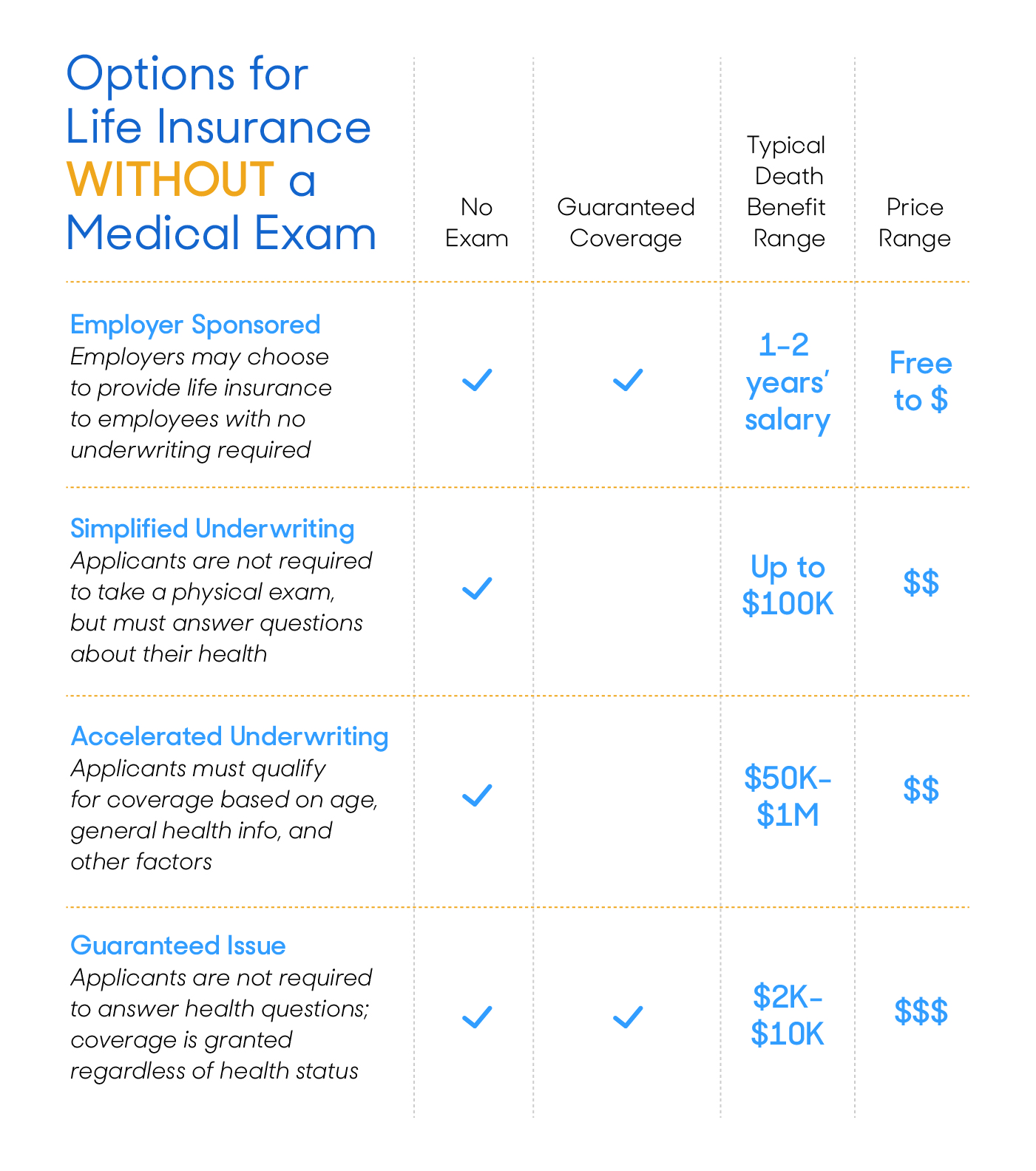
In 2026, the term "no medical exam" typically refers to two distinct types of underwriting: Simplified Issue and Guaranteed Issue.
Simplified Issue Whole Life
Simplified issue is the primary path to "low cost" no-exam coverage. Instead of a physical exam, you answer a series of health questions on the application. The insurance company then cross-references your answers with third-party databases, such as the Medical Information Bureau (MIB) and prescription drug registries. Because there is still some level of health screening, insurance companies can offer lower premiums than they would for a policy that accepts everyone regardless of health.
Guaranteed Issue Whole Life
Guaranteed issue policies require no medical exam and ask zero health questions. Because the insurer takes on the highest level of risk—knowing nothing about the applicant's health—these policies are the most expensive per thousand dollars of coverage. They also typically include a "graded death benefit," meaning the full face amount is not paid out if the insured dies from natural causes within the first two or three years of the policy.
Why "No Exam" Doesn't Always Mean High Cost in 2026
Historically, skipping the doctor meant paying a massive premium. In 2026, the gap between fully underwritten (exam-required) and no-exam policies has narrowed significantly for smaller face amounts. This shift is driven by Accelerated Underwriting (AU).
Insurance carriers now use sophisticated AI algorithms to analyze your risk profile using:
- Electronic Health Records (EHR): Instant access to clinical data provided with your consent.
- Prescription History: Data from services like Milliman IntelliScript or LexisNexis.
- Motor Vehicle Records: Analyzing driving history as a proxy for risk-taking behavior.
- Credit-Based Insurance Scores: Assessing financial stability as a predictor of policy longevity.
By utilizing these data points, insurers can offer competitive, low-cost rates to healthy individuals who simply prefer the convenience of skipping a medical exam. For those seeking coverage amounts between $5,000 and $50,000, the cost difference is often negligible.
Factors Influencing Your Premium Costs
While the absence of an exam simplifies the process, your premium is still calculated based on several core factors. Understanding these helps you identify where you can save money.
Age and Gender
Whole life insurance rates are locked in at the age you apply. In 2026, the "cost of insurance" component remains heavily tied to life expectancy tables. Applying at age 50 will always be significantly cheaper than applying at age 70. Additionally, because women statistically live longer than men, they generally qualify for lower premiums.
Tobacco and Nicotine Usage
Tobacco use remains the single largest controllable factor in life insurance pricing. Even "no exam" policies will ask about smoking, vaping, or chewing tobacco. Smokers can expect to pay two to three times more than non-smokers for the same amount of whole life coverage.
The Face Amount (Death Benefit)
"Low cost" is a relative term. For whole life insurance without an exam, most carriers cap coverage at $50,000 or $100,000. Choosing a death benefit that precisely matches your needs—such as $15,000 for funeral expenses rather than an arbitrary $25,000—is the most effective way to keep your monthly premium low.
Policy Riders
Adding features like an Accelerated Death Benefit (which allows you to access funds if diagnosed with a terminal illness) or a Waiver of Premium (which pays your premiums if you become disabled) can add to the cost. To keep the policy at the lowest cost, stick to the base coverage unless a specific rider is essential for your situation.
Comparing No-Exam Whole Life Options
When searching for the best value, it is important to compare how different policy structures impact your long-term costs and benefits.
| Feature | Simplified Issue | Guaranteed Issue |
|---|---|---|
| Medical Exam | No | No |
| Health Questions | Yes (Detailed) | No |
| Approval Time | Minutes to Days | Instant |
| Cost | Moderate (Lower) | High |
| Death Benefit | Immediate (Day 1) | Graded (2-3 year wait) |
| Typical Max Coverage | Up to $100,000 | Up to $25,000 |
| Best For | Average Health / Convenience | Serious Health Issues |
How to Secure the Lowest Rates in 2026
Finding a low-cost policy requires a strategic approach to the application process.
1. Opt for Simplified Issue First
Unless you have a terminal illness or are currently in a nursing home, always attempt to qualify for a simplified issue policy first. Many people assume their health history (such as well-managed Type 2 diabetes or high blood pressure) automatically disqualifies them from "standard" rates. In 2026, many carriers are much more lenient with managed chronic conditions, allowing you to avoid the high costs of guaranteed issue.
2. Verify the "Mutual" Advantage
Consider purchasing from a mutual insurance company. Mutual companies are owned by policyholders rather than shareholders. Many of their whole life policies are "participating," meaning they may pay out dividends. While dividends are not guaranteed, they can be used to reduce your premium payments over time, effectively lowering the cost of the insurance.
3. Review the Graded Benefit Period
If you must use a guaranteed issue policy, compare the length of the graded benefit period. Some carriers in 2026 offer a 24-month wait, while others require 36 months. Since you are paying a higher premium for this "no questions asked" access, ensure you are getting the shortest waiting period possible for your budget.
4. Use Independent Agencies
Captive agents (those who work for only one company) can only offer you one set of rates. Independent agents work with dozens of carriers and can "shop" your profile. Since different companies have different appetites for specific health risks—for example, one might be more lenient with heart stents than another—an independent agent is vital for finding the "low cost" leader for your specific profile.
Common Pitfalls and Limitations
While no-medical-exam whole life insurance is a valuable tool, it is not without drawbacks.
- Premium Ceilings: If you need $500,000 or more in coverage, "no exam" whole life will likely be prohibitively expensive or unavailable. At those levels, a medical exam is usually required to secure a competitive rate.
- The "Cost of Convenience": You are essentially paying the insurance company to take a blind or semi-blind risk. If you are in excellent health and don't mind a nurse visit, a fully underwritten policy will almost always be cheaper.
- Cash Value Growth: Because no-exam policies often have higher internal fees to cover the increased risk, the cash value may accumulate more slowly than in a traditional whole life policy.
Legal and Regulatory Considerations
In the United States, life insurance is regulated at the state level. The National Association of Insurance Commissioners (NAIC) provides resources to help consumers understand their rights. In 2026, most states have strict "Free Look" periods, typically 10 to 30 days, during which you can cancel your policy for a full refund if you find the terms or costs are not what you expected.
Furthermore, it is crucial to be honest on simplified issue applications. While there is no exam, the "Contestability Period" (usually the first two years) allows the insurer to investigate the medical records if a claim is filed. If they find you misrepresented your health on the questionnaire, they can deny the death benefit.
Frequently Asked Questions
Can I get low-cost whole life insurance if I am over 80?
While coverage is available, "low cost" is relative at this age. Most carriers cap no-exam whole life at age 80 or 85. Premiums will be high because the insurer's timeframe to collect premiums is short. For seniors in this bracket, guaranteed issue final expense insurance is often the most viable, albeit expensive, option.
What happens if I miss a premium payment?
Whole life insurance includes a "grace period," typically 31 days. In 2026, many policies also feature an "Automatic Premium Loan" (APL) provision. If you have built up enough cash value, the insurance company will automatically take a loan against that value to pay the premium, preventing the policy from lapsing.
Is the cash value in a no-exam policy taxable?
Generally, the cash value grows on a tax-deferred basis. Under Internal Revenue Code Section 7702, death benefits are usually paid out income-tax-free to beneficiaries. However, if you withdraw more than the "basis" (the total premiums you've paid), the excess could be taxable.
How quickly does the death benefit become active?
For simplified issue policies, the full death benefit is typically active from day one. For guaranteed issue policies, there is usually a graded period of two to three years. If death occurs during this window from natural causes, the beneficiary may only receive a refund of premiums plus interest (often 10%).
Do I need to be a U.S. citizen to apply?
Most top-tier carriers providing low-cost no-exam policies require the applicant to be a U.S. citizen or a permanent resident (Green Card holder) with a valid Social Security number.
Practical Recommendation for 2026
If you are seeking low-cost whole life insurance without a medical exam, your first step should be to determine your exact "need" amount. For most, this is a final expense need between $10,000 and $25,000. Once you have a number, apply for a Simplified Issue policy through an independent broker.
This approach allows you to leverage 2026’s digital underwriting to get "Standard" or even "Preferred" rates without the needle, provided your digital health footprint is relatively clean. Avoid Guaranteed Issue unless you have been declined elsewhere, as the cost-to-benefit ratio is significantly less favorable. Always verify the carrier’s financial strength rating through agencies like A.M. Best to ensure they will be there to pay the claim decades into the future.
Image Gallery