What Kind of Life Insurance Policy Should I Have?
Choosing the right life insurance policy depends on your financial goals, age, number of dependents, and budget. For most people, term life insurance offers the most affordable way to replace income during peak earning years. However,...
Choosing the right life insurance policy depends on your financial goals, age, number of dependents, and budget. For most people, term life insurance offers the most affordable way to replace income during peak earning years. However, permanent policies like whole or universal life are better suited for lifelong protection, wealth transfer, and estate planning.
Contents
Deciding on a life insurance policy is one of the most significant components of a long-term financial plan. In 2026, the insurance market has become more streamlined through advanced digital underwriting, but the fundamental choice remains between temporary protection and permanent coverage. To determine which policy fits your specific needs, you must evaluate why you are seeking coverage: Is it to replace your salary for your children, pay off a mortgage, or provide a tax-advantaged inheritance?
Understanding Term Life Insurance
Term life insurance is often described as the simplest and most cost-effective form of coverage. It is designed to provide a death benefit for a specific period, typically ranging from 10 to 30 years. If the policyholder passes away during this "term," the beneficiaries receive the face value of the policy tax-free. If the policyholder outlives the term, the coverage simply ends unless it is renewed or converted.
The primary advantage of term life insurance is its affordability. Because it does not include a savings component or "cash value," the premiums are significantly lower than permanent alternatives. This allows young families or individuals with high debt loads to secure a large amount of coverage—often $500,000 to $1 million or more—for a relatively small monthly payment. In 2026, many providers offer "accelerated underwriting," where healthy applicants can secure term coverage in minutes without a medical exam by utilizing historical health data and AI-driven risk assessment.
Term insurance is ideal for "lapsed" risks—financial obligations that have an expiration date. For example, if you have a 25-year mortgage and children who will be independent in 20 years, a 25-year term policy ensures that your family can stay in their home and fund education if you are no longer there to provide. It acts as a safety net during your most vulnerable financial years.
Exploring Permanent Life Insurance Options
Permanent life insurance is intended to last for the policyholder's entire life, provided premiums are paid. Unlike term insurance, these policies include a cash value component that grows over time on a tax-deferred basis. This cash value can often be borrowed against or withdrawn, though doing so may reduce the final death benefit.
Whole Life Insurance
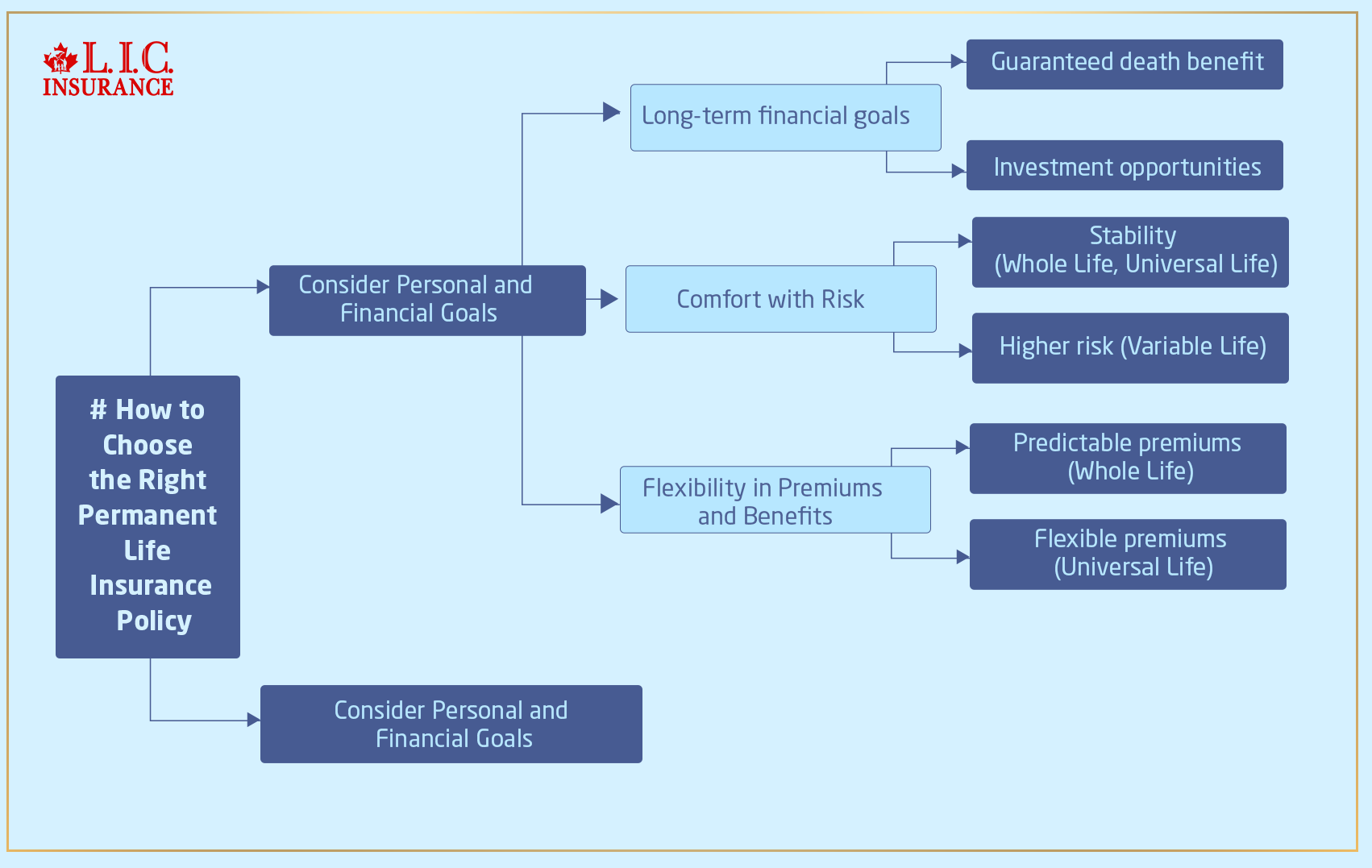
Whole life is the most traditional form of permanent coverage. It features fixed premiums that never increase, a guaranteed minimum rate of return on the cash value, and a guaranteed death benefit. Because of these guarantees, whole life is the most expensive type of insurance. It is frequently used by high-net-worth individuals as a tool for estate planning or as a way to provide a guaranteed legacy. According to the National Association of Insurance Commissioners (NAIC), whole life provides a level of certainty that other policies do not, making it a "forced savings" vehicle for those who want lifelong peace of mind.
Universal Life Insurance
Universal life (UL) offers more flexibility than whole life. Policyholders can often adjust their premium payments and death benefits as their financial circumstances change. The cash value in a universal life policy earns interest based on current market rates or a specific financial index. In 2026, Indexed Universal Life (IUL) remains popular because it allows for potential gains based on market performance while usually offering a "floor" to protect against market losses. However, these policies require active management; if the interest rates underperform and the policyholder pays the minimum premium, the cash value may not be sufficient to keep the policy in force in later years.
Specialized Policies for Specific Life Stages
Beyond the standard term and permanent categories, several specialized policies address niche requirements. Understanding these can help you avoid overpaying for features you do not need.
- Final Expense Insurance: Also known as "burial insurance," these are small permanent policies (usually $5,000 to $25,000) designed solely to cover funeral costs and end-of-life medical bills. They are typically marketed to seniors and feature simplified underwriting.
- Variable Life Insurance: This is a permanent policy where the cash value is invested in sub-accounts similar to mutual funds. While it offers the highest potential for growth, it also carries the highest risk, as the cash value and death benefit can fluctuate based on market performance.
- Group Life Insurance: Many employers offer this as a benefit. It is usually term insurance and is often free or very cheap for a base amount (like one year's salary). While convenient, it is rarely enough coverage on its own, and you typically lose it if you leave the job.
Comparison of Major Life Insurance Types
The following table summarizes the key differences between the most common policy types available in 2026.
| Feature | Term Life | Whole Life | Universal Life |
|---|---|---|---|
| Duration | 10–30 years (Fixed) | Lifelong | Lifelong |
| Premium Cost | Lowest | Highest | Flexible/Moderate |
| Cash Value | None | Guaranteed growth | Market-linked growth |
| Death Benefit | Fixed | Guaranteed | Adjustable |
| Best For | Income replacement, debt | Estate planning, legacy | Flexibility, cash growth |
| Complexity | Simple | Moderate | High |
Determining Your Coverage Amount: The DIME Method
Once you identify the type of policy, you must calculate the amount. A common mistake is choosing a round number like $250,000 without calculating actual needs. The "DIME" formula is a standard industry tool used to ensure comprehensive protection:
- Debt: Total all your outstanding debts, excluding your mortgage. This includes car loans, credit cards, and student loans.
- Income: Multiply your annual salary by the number of years your family would need support (often 10 to 20 years).
- Mortgage: Include the total payoff amount for your home.
- Education: Estimate the cost of sending your children to college.
By adding these four categories together, you arrive at a much more accurate coverage target. For instance, a parent earning $75,000 with two young children and a $300,000 mortgage might find they actually need $1.5 million in coverage, which is often surprisingly affordable via a 20-year term policy.
Key Riders to Consider
Riders are optional add-ons that customize your policy. In 2026, certain riders have become standard in many competitive packages:
- Accelerated Death Benefit: This allows you to access a portion of the death benefit while you are still alive if you are diagnosed with a terminal illness. This money can be used for medical treatments or hospice care.
- Waiver of Premium: If you become totally disabled and cannot work, this rider pays your premiums for you, ensuring the policy does not lapse.
- Child Term Rider: This provides a small amount of life insurance for your children, which can usually be converted to a permanent policy when they reach adulthood regardless of their health status.
Common Pitfalls in Selecting a Policy
One of the most frequent errors is waiting too long to purchase coverage. Life insurance premiums are based largely on age and health. In 2026, with the integration of predictive health analytics, even minor changes in your medical profile can lead to higher "ratings" (higher costs). Buying a policy while young and healthy locks in lower rates for decades.
Another mistake is relying solely on employer-provided group life insurance. According to the U.S. Bureau of Labor Statistics, the average worker changes jobs multiple times in their career. Because group policies are usually not portable, you could find yourself uninsured at age 50 after a job change, at which point a private policy would be significantly more expensive.
Frequently Asked Questions
Can I convert a term policy to a permanent one later?
Yes, many term policies include a "conversion rider." This allows you to switch to a permanent policy without undergoing a new medical exam, which is invaluable if your health declines during the term. However, there is usually a deadline for this conversion, such as before age 65 or within the first 10 years of the policy.
Is the death benefit from life insurance taxable?
In almost all cases, the proceeds of a life insurance policy paid to a beneficiary are not subject to federal income tax. However, if the death benefit is paid to your estate rather than a named individual, it may be subject to federal estate taxes if the total estate value exceeds certain thresholds defined by the IRS.
Should I buy life insurance for my children?
Generally, no. Life insurance is intended to replace income or cover debts. Since children do not have incomes or dependents, the money spent on premiums is usually better invested in a 529 college savings plan or a custodial brokerage account. The exception is if you want to "insure their insurability" against future chronic illnesses.
How does my health affect my premium in 2026?
In 2026, insurers use a mix of traditional blood tests and "digital footprints," including prescription history and motor vehicle records. Factors like smoking, high blood pressure, and a high BMI (Body Mass Index) still significantly increase costs. Conversely, demonstrating a healthy lifestyle can often lead to "Preferred Plus" rates, the lowest available tier.
What happens if I stop paying my premiums?
For a term policy, the coverage will simply lapse after a grace period (usually 30 days). For permanent policies with cash value, the insurer may use the existing cash value to pay the premiums until the fund is exhausted, or the policy may transition to a "reduced paid-up" status with a smaller death benefit.
Practical Recommendation
To find the right policy, start by calculating your DIME score to determine your total need. If you have a young family and a mortgage, your first action should be to secure a term life insurance policy for at least 10 to 15 times your annual income. This provides the highest level of protection for the lowest cost. If you have already maxed out your retirement accounts and are looking for a tax-advantaged way to transfer wealth or require lifelong coverage for a dependent with special needs, consult with a financial advisor about a whole or universal life policy to supplement your term coverage.
Image Gallery