How to Choose GCP ETL Tools for Modern Data Pipelines
Choosing the right Extract, Transform, Load (ETL) or Extract, Load, Transform (ELT) tool on Google Cloud Platform (GCP) requires evaluating data volumes, processing latency, engineering capabilities, cost structures, and integration ec...
Choosing the right Extract, Transform, Load (ETL) or Extract, Load, Transform (ELT) tool on Google Cloud Platform (GCP) requires evaluating data volumes, processing latency, engineering capabilities, cost structures, and integration ecosystems. Because GCP provides a rich suite of native serverless data services alongside robust third-party ecosystem integrations, architects must align tool capabilities with specific enterprise data orchestration patterns.
Contents
Understanding the GCP Data Ecosystem
Before evaluating individual tools, data engineers must understand how GCP categorizes its data processing and storage solutions. Google Cloud provides infrastructure and managed services across the entire data lifecycle. Storage layers like Cloud Storage and BigQuery serve as foundational data repositories, while compute and orchestration layers handle the movement and transformation logic.
The architectural paradigm on GCP has largely shifted from traditional ETL—where data is transformed before entering the data warehouse—to modern ELT patterns. In an ELT framework, raw data is loaded directly into a centralized data warehouse or data lake (such as BigQuery or Cloud Storage) using high-throughput ingestion tools. Transformations are subsequently executed inside the destination using SQL-based workflows or managed processing engines. This approach leverages the massive parallel processing capabilities of Google's cloud infrastructure, reducing pipeline bottlenecks and preserving raw data lineage for auditing and machine learning applications.
Core Stages of GCP Data Pipelines
- Ingestion (Extract): Pulling data from SaaS applications, databases, operational logs, and streaming sources into GCP.
- Storage (Load): Staging raw data in Cloud Storage buckets or loading structured records directly into BigQuery tables.
- Transformation (Transform): Cleaning, deduplicating, enriching, and modeling data into analytics-ready schemas.
- Orchestration: Scheduling, monitoring, and managing dependencies across multi-step data workflows.
Key Factors When Evaluating GCP ETL Tools
Selecting a tool without a rigorous framework often leads to ballooning cloud bills, maintenance bottlenecks, and rigid pipelines that break when source schemas change. Evaluating GCP data integration options requires balancing operational complexity against business requirements.
1. Data Latency and Processing Paradigm
Determine whether your use case demands real-time streaming ingestion or scheduled batch processing. Streaming architectures require tools capable of handling unbounded data streams with low latency, whereas batch pipelines operate efficiently on scheduled intervals (hourly, daily) processing bounded datasets.
2. Engineering Resource and Skill Sets
Match the tool's interface to your team's core competencies. Low-code and no-code graphical user interfaces empower analysts and data stewards to build pipelines quickly, but they may lack the granular control required for complex data manipulations. Conversely, code-first frameworks written in Python, SQL, or Java offer maximum flexibility for software engineers and analytics engineers, but demand higher maintenance overhead.
3. Total Cost of Ownership (TCO)
GCP pricing models vary significantly across services. Managed serverless tools typically bill based on data volume processed or resource consumption time (e.g., vCPU and memory hours), whereas open-source frameworks running on Google Kubernetes Engine (GKE) or Compute Engine incur fixed infrastructure costs alongside engineering labor costs for cluster management.
Core GCP Native ETL and ELT Services
Google Cloud provides several fully managed native services designed specifically to integrate with its storage and analytics ecosystem.
Cloud Dataflow
Cloud Dataflow is GCP's fully managed service for stream and batch data processing, built on the Apache Beam SDK. Dataflow abstracts away cluster provisioning and management, automatically scaling worker nodes up and down based on workload demands.
Dataflow excels in complex transformation scenarios where data must be processed with exact-once semantics, windowing functions, and complex joins across disparate streams. Because it uses Apache Beam, pipelines can be written in Java, Python, or Go, making it ideal for software engineering teams building custom, high-throughput processing pipelines that feed BigQuery or Cloud Bigtable.
Dataproc
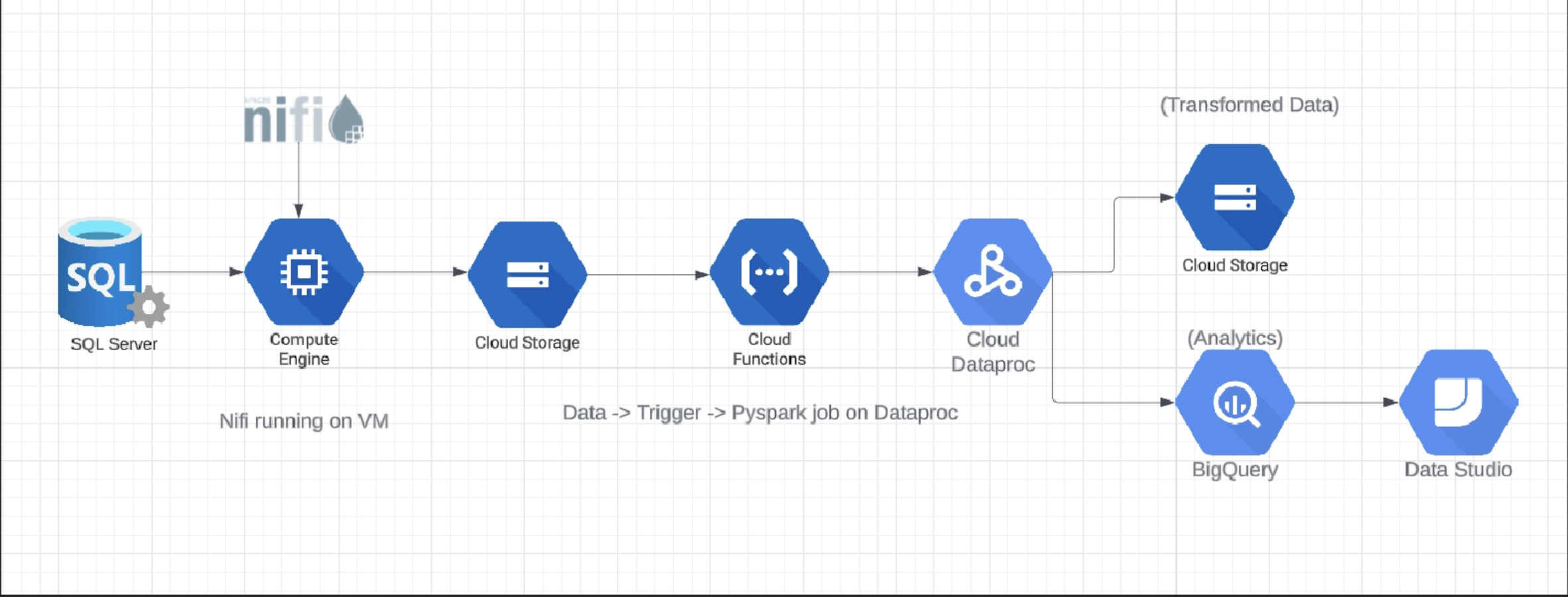
Dataproc is a fast, easy-to-use, fully managed cloud service for running Apache Spark, Apache Hive, and Presto clusters on GCP. Organizations migrating legacy Hadoop or Spark workloads to the cloud often rely on Dataproc to run existing ETL jobs with minimal code refactoring.
Dataproc allows teams to spin up clusters in seconds and scale them down when jobs complete, optimizing cloud spend. It integrates deeply with Cloud Storage and BigQuery, enabling efficient querying of data lake files using Spark SQL or native connectors.
BigQuery Data Transfer Service and Native ELT
For standard data warehousing workloads, BigQuery functions as both storage and transformation engine. The BigQuery Data Transfer Service automates data ingestion from SaaS applications (such as Google Ads, Salesforce, and YouTube) and external cloud storage providers directly into BigQuery tables on a scheduled basis.
Once raw data resides in BigQuery, teams utilize SQL-based transformation tools like dbt (data build tool)—frequently deployed alongside GCP infrastructure—to execute modular, version-controlled transformations. This combination represents the modern standard for cloud ELT architectures.
Comparison of Major GCP Data Integration Options
| Tool/Framework | Primary Paradigm | Best Suited For | Engineering Skill Required | Scaling Model |
|---|---|---|---|---|
| Cloud Dataflow | Streaming & Batch | Complex transformations, real-time event processing | High (Python, Java, Go) | Fully Managed / Auto-scaling |
| Dataproc | Batch (Spark/Hadoop) | Migrating legacy Hadoop/Spark jobs, large-scale data processing | High (Spark, SQL, Scala) | Cluster-based / Manual or Autoscaled |
| BigQuery + dbt | ELT / SQL Transformations | Analytics engineering, structured data warehousing, data modeling | Medium (Advanced SQL) | Serverless / BigQuery slots |
| Cloud Composer | Workflow Orchestration | Complex multi-system dependencies, scheduling DAGs | Medium to High (Python/Airflow) | Managed Environment sizing |
Orchestrating Pipelines with Cloud Composer
Building individual ETL jobs is only part of the data engineering lifecycle. Enterprise architectures require reliable workflow orchestration to manage dependencies, retry failed tasks, and alert engineers when anomalies occur.
Cloud Composer is GCP’s fully managed workflow orchestration service built on Apache Airflow. Composer allows data teams to author, schedule, and monitor pipelines as Directed Acyclic Graphs (DAGs) using Python. It integrates natively with every major GCP service—triggering Dataflow jobs, launching Dataproc clusters, running BigQuery SQL queries, and moving files across Cloud Storage buckets.
When choosing an orchestration layer, evaluate whether your workflows require complex conditional branching, cross-platform triggers, and extensive audit logging, all of which Cloud Composer handles natively within a managed Python ecosystem.
Third-Party SaaS and Open-Source Alternatives
While native GCP tools offer tight cloud integration, many organizations choose third-party data integration platforms to simplify pipeline maintenance.
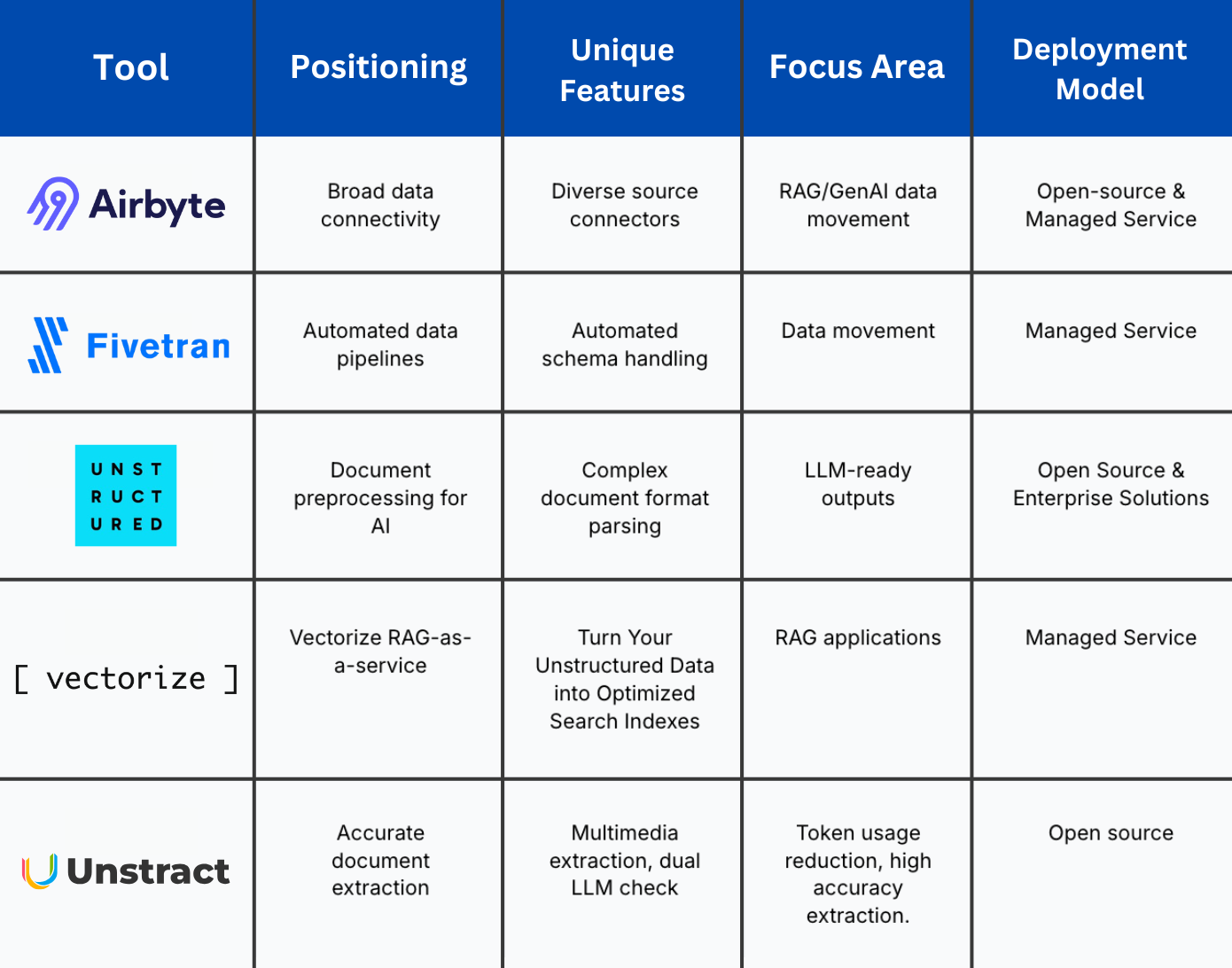
- SaaS ELT Platforms (e.g., Fivetran, Airbyte Cloud): These platforms provide hundreds of pre-built connectors for operational databases, CRMs, and marketing tools. They handle schema drift, API rate limits, and incremental syncs automatically, loading clean data directly into BigQuery. While they incur SaaS licensing fees, they drastically reduce the engineering hours required to build and maintain custom API connectors.
- Open-Source Orchestration and Ingestion: Frameworks like Mage, Airbyte Open Source, and Prefect offer alternative development paradigms that can be deployed on Google Compute Engine or GKE, giving teams complete data governance and ownership over their infrastructure.
Common Mistakes to Avoid
- Ignoring Data Governance and Schema Drift: Failing to anticipate changes in source API schemas will cause ingestion pipelines to fail silently or corrupt downstream analytics tables. Implement schema evolution policies and monitoring alerts early.
- Over-Engineering with Streaming Too Early: Building complex real-time streaming pipelines via Dataflow when business stakeholders only require daily or hourly batch reports introduces unnecessary operational complexity and cost.
- Neglecting BigQuery Partitioning and Clustering: In a modern ELT architecture, poorly optimized BigQuery tables lead to massive query scans and runaway cloud costs. Always partition large event tables by ingestion date and cluster by frequently filtered columns.
Frequently Asked Questions
What is the difference between ETL and ELT on GCP?
ETL (Extract, Transform, Load) transforms data on a separate processing server before loading it into the destination warehouse. ELT (Extract, Load, Transform) loads raw data directly into Google Cloud storage or BigQuery first, then uses native compute power to transform the data inside the warehouse. ELT is generally preferred on GCP due to BigQuery's massive parallel processing capabilities.
When should I choose Cloud Dataflow over Dataproc?
Choose Cloud Dataflow if you need serverless stream processing, exact-once event processing guarantees, or dynamic auto-scaling without managing cluster infrastructure. Choose Dataproc if you are migrating existing Apache Spark or Hadoop workloads that rely on cluster-based ecosystems and custom cluster configurations.
How does dbt fit into a GCP data architecture?
dbt (data build tool) acts as the transformation layer in a modern BigQuery ELT stack. While tools like Fivetran or Dataflow handle ingestion and loading, dbt allows analytics engineers to write modular SQL queries that transform raw tables into clean, tested, and documented data models directly inside BigQuery.
How can I control and optimize my GCP ETL costs?
Control costs by implementing BigQuery query limits, partitioning large staging tables, right-sizing Cloud Composer environments, and utilizing Dataflow Flex Templates with autoscaling limits. Regularly audit Cloud Storage lifecycle policies to archive stale raw data into Nearline or Coldline storage tiers.
Are third-party tools better than native GCP tools?
Third-party SaaS ingestion tools excel at maintaining hundreds of standard SaaS connectors without custom code maintenance. Native GCP tools excel at high-throughput custom data processing, real-time streaming, and deep integration with Google's machine learning and analytics ecosystem. Many enterprises successfully combine both approaches.
Next Actions for Data Teams
To operationalize your tool selection process, begin by auditing your data sources, expected ingestion frequencies, and team skill sets. Run a proof-of-concept (PoC) comparing a native ingestion approach against a managed SaaS connector for your most complex data source. Measure engineering setup time, ongoing maintenance overhead, and total cloud resource consumption to determine the optimal configuration for your enterprise data stack.
Image Gallery