Where to Get an Operating Agreement for an LLC: Top Options and Providers
You can obtain a Limited Liability Company (LLC) operating agreement from online legal document services, business formation platforms, free downloadable legal templates, or a licensed business attorney. For straightforward, single-mem...
You can obtain a Limited Liability Company (LLC) operating agreement from online legal document services, business formation platforms, free downloadable legal templates, or a licensed business attorney. For straightforward, single-member LLCs, customizable online templates or formation service add-ons are usually sufficient. Complex multi-member businesses, investor-backed ventures, or companies with non-standard profit splits should hire a qualified lawyer to draft a custom agreement.
Contents
Disclaimer: This guide is provided for educational and informational purposes only and does not constitute formal legal or financial advice. Consult a licensed attorney in your jurisdiction for guidance on specific business contracts.
What Is an LLC Operating Agreement and Why Do You Need One?
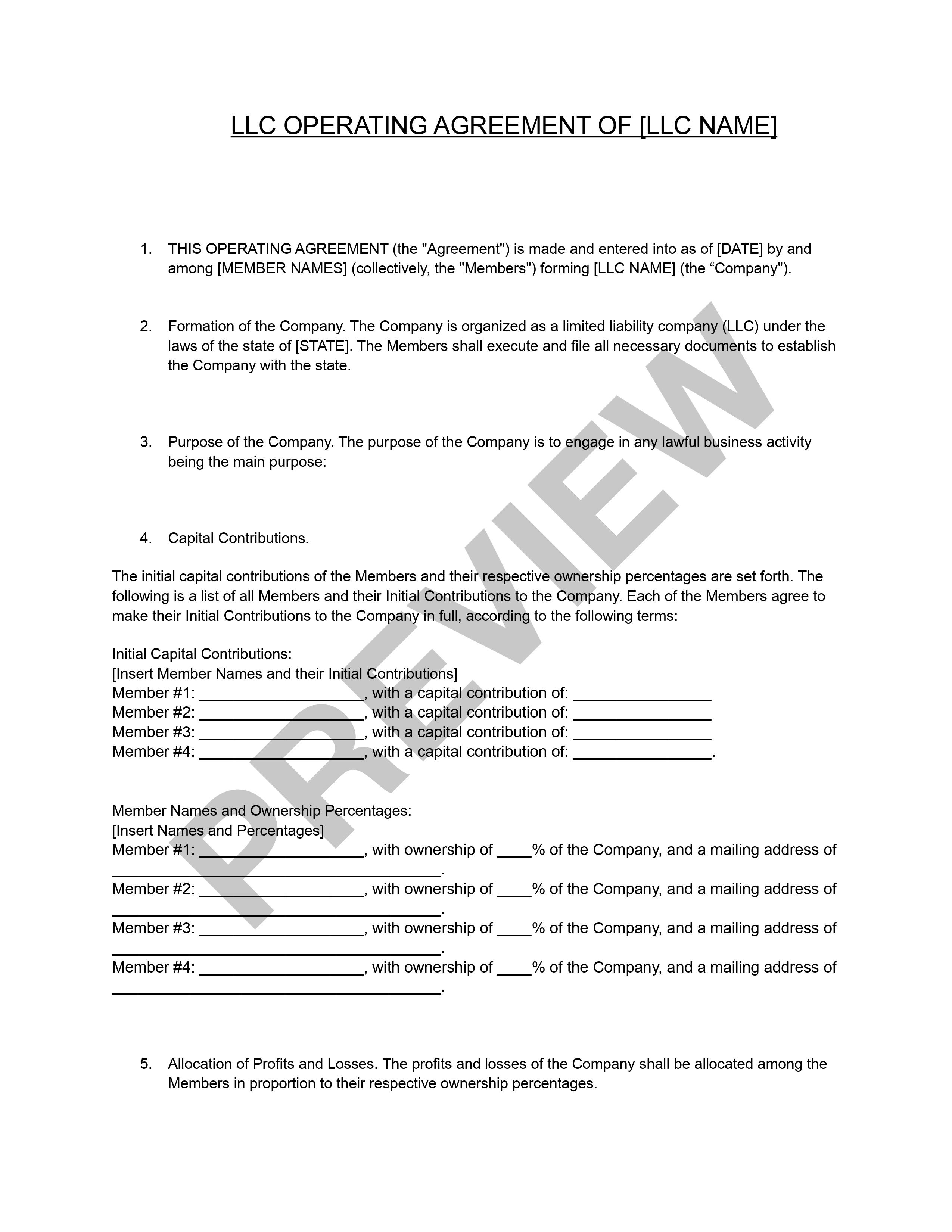
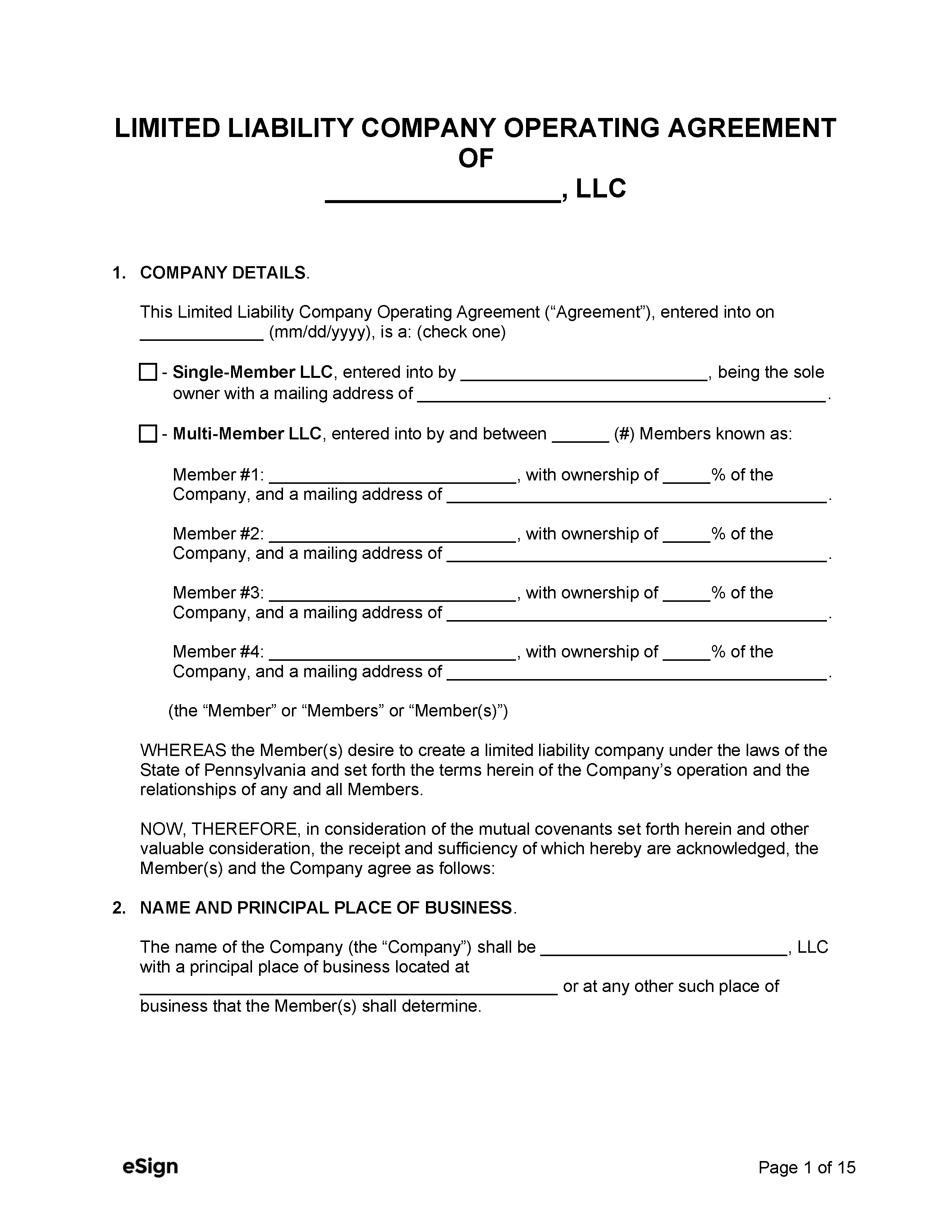
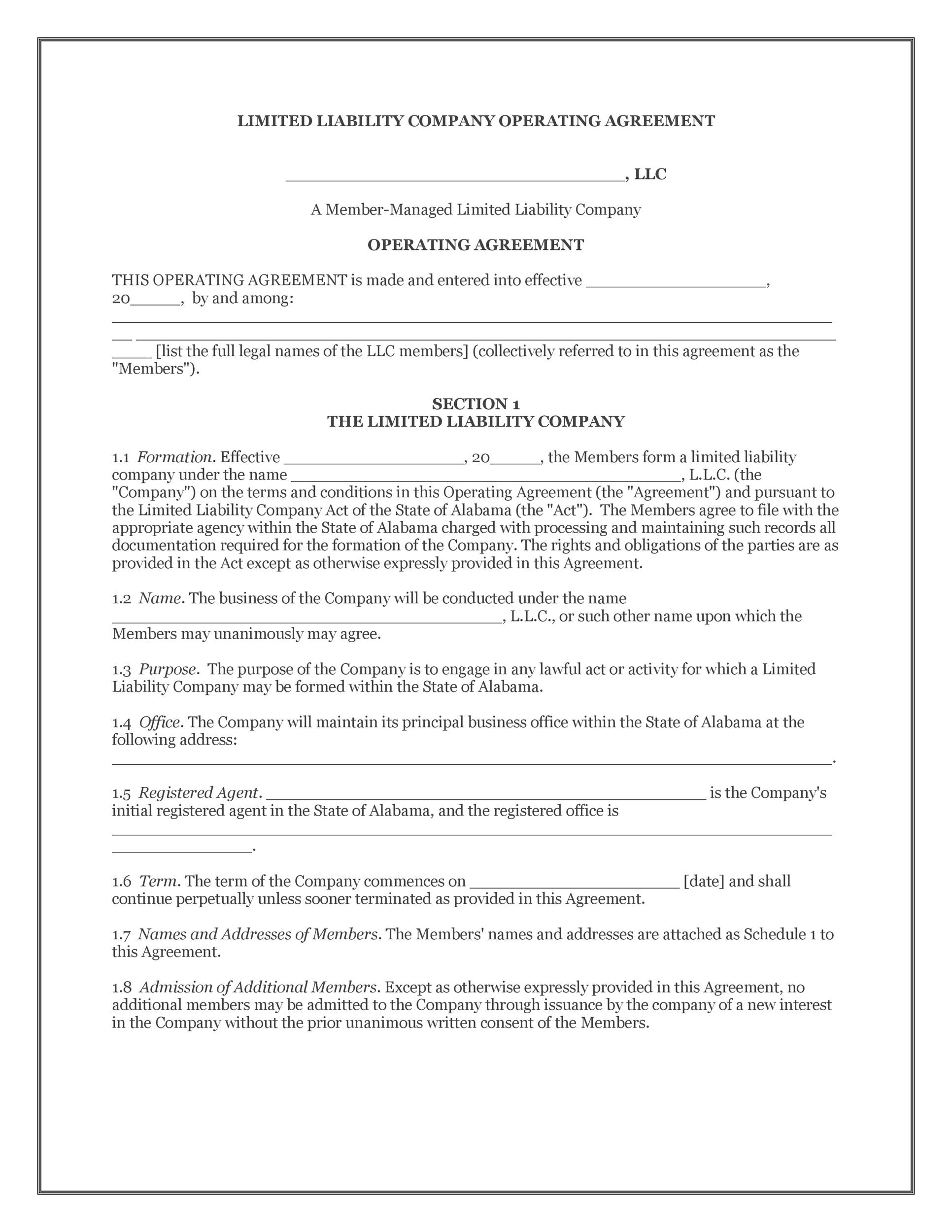
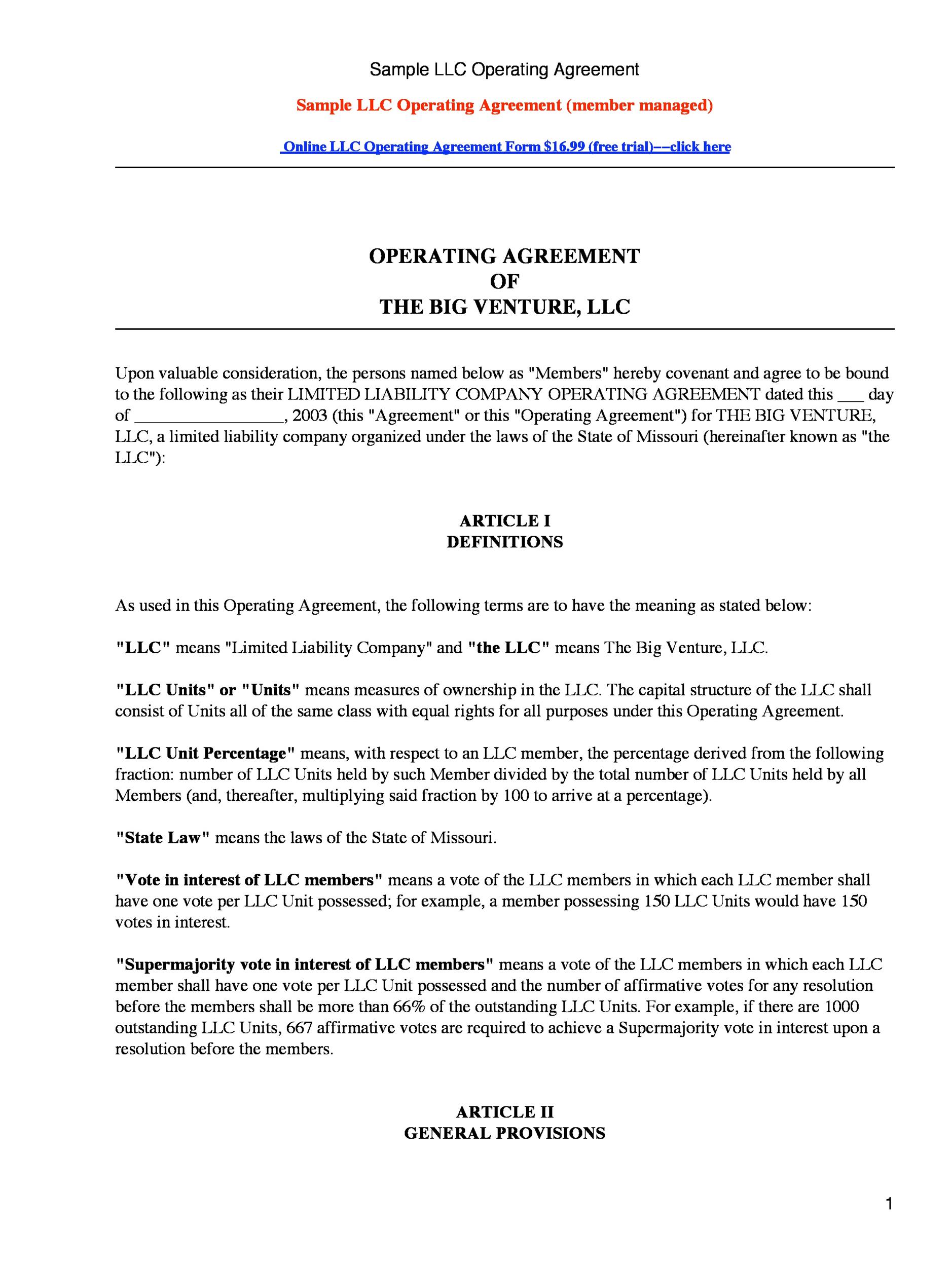
An LLC operating agreement is an internal governing document that outlines the ownership structure, financial framework, operational guidelines, and decision-making rules of a limited liability company. Unlike Articles of Organization (sometimes called the Certificate of Formation), which are filed directly with a state’s Secretary of State or equivalent business filing office to officially establish the legal entity, an operating agreement is rarely filed with state agencies. Instead, it serves as a binding contract among the members (owners) of the business.
Even in jurisdictions where state law does not strictly require businesses to maintain a written contract, holding a formal operating agreement is essential for several reasons:
- Preserving Limited Liability Protection: A formal operating agreement reinforces the legal separation between the individual owners and the corporate entity. This separation is vital if a creditor attempts to "pierce the corporate veil" by arguing that the business is merely an alter ego of its owners.
- Overriding State Default Rules: In the absence of a written agreement, your LLC is governed entirely by the default LLC statutes of the state where it was formed. State statutory defaults may dictate equal profit sharing or voting rights regardless of actual capital contributions, which may not align with your business arrangements.
- Establishing Clear Governance: The agreement clarifies member voting thresholds, manager responsibilities, profit distribution schedules, capital call expectations, and protocols for adding new members.
- Satisfying Institutional Requirements: Banks, commercial lenders, title companies, real estate landlords, and prospective investors routinely request a signed operating agreement before opening commercial accounts, approving loans, executing leases, or transferring assets.
Where to Get an LLC Operating Agreement
Choosing where to source your operating agreement depends on the complexity of your company’s ownership structure, your risk tolerance, and your overall budget.
- LLC Structure & Complexity Level
- Single-Member / Standard
- Online Legal Tools
- Business Formation Packages
- Multi-Member / Custom
- Legal Aid / SBDC
- Business Attorney Draft
- Single-Member / Standard
1. Business Attorneys and Corporate Legal Counsel
Hiring an experienced corporate or small-business attorney is the safest method for securing a tailored operating agreement. A specialized lawyer drafts custom provisions that accurately mirror your operational expectations and safeguard your rights.
- Best Suited For: Multi-member LLCs, businesses raising external capital, entities with sweat-equity contributions, companies holding real estate or intellectual property, and businesses with custom profit-sharing structures.
- Estimated Cost: $500 to $3,000+ depending on local market rates, attorney expertise, and structural complexity.
- Advantages: Offers tailored risk management, customized buyout mechanisms, compliance with state-specific business statutes, and fiduciary advice.
- Disadvantages: Higher upfront expense and longer turnaround time compared to self-service digital platforms.
2. Online Legal Services and Document Platforms
Online legal platforms offer guided questionnaires that generate customized legal agreements based on your answers. These platforms bridge the gap between basic blank templates and full attorney representation.
- Popular Providers:
- Rocket Lawyer: Offers customized document generation with optional attorney review services under a monthly subscription model.
- LegalZoom: Provides self-service document creation alongside options for attorney consultations and legal review.
- LawDepot: Features automated, step-by-step document builders for single-member and multi-member LLC structures.
- Best Suited For: Single-member LLCs or standard multi-member companies with simple ownership structures and straightforward management preferences.
- Estimated Cost: $0 to $150 for individual document generation, or $20 to $40 per month via continuous legal service subscriptions.
- Advantages: Accessible online access, user-friendly forms, fast delivery, and lower costs than traditional legal retainers.
- Disadvantages: Generic questions may miss unique business nuances, and non-attorney platforms cannot give tailored legal advice.
3. Business Formation Providers and Registered Agents
If you are currently forming your business entity, most commercial incorporation services offer operating agreement templates as part of their initial filing packages.
- Popular Providers:
- Northwest Registered Agent: Includes customizable, state-specific operating agreement templates with their filing and registered agent services.
- ZenBusiness: Supplies customizable governing document templates as an add-on or standard feature in their higher-tier entity formation bundles.
- Bizee (formerly Incfile): Generates pre-populated operating agreements aligned with the information submitted during your state business registration.
- Best Suited For: Entrepreneurs establishing a new LLC who want streamlined, all-in-one state incorporation and basic compliance documents.
- Estimated Cost: Often bundled into formation packages ranging from $0 plus state fees up to $300+.
- Advantages: Convenient integration with state entity filings; eliminates redundant data entry.
- Disadvantages: Bundled documents are typically standardized forms that require manual customization for unique ownership agreements.
4. Free Legal Document Repositories and Government Portals
For business owners operating on a tight budget, free legal templates are widely available online through public resources, non-profit business organizations, and open-access legal libraries.
- Reliable Sources:
- Small Business Development Centers (SBDCs) & SCORE: Local SBDC offices and SCORE mentor networks funded by the U.S. Small Business Administration (SBA) often supply free, state-compliant business templates.
- State Bar Associations: Certain state bar programs or legal aid networks publish free standard business forms for public use.
- eForms and LawDistrict: Digital libraries that host free downloadable PDF and Microsoft Word templates for single-member, multi-member, and manager-managed LLCs.
- Best Suited For: Single-member LLCs seeking a foundational document without immediate financial outlay.
- Estimated Cost: Free.
- Advantages: No cost, instant access, and simple modification in word processing software.
- Disadvantages: High risk of using outdated state provisions, missing tax language, or boilerplate terms that fail to resolve co-owner conflicts.
Comparing LLC Operating Agreement Sources
| Source Type | Typical Cost | Customization Level | Risk Mitigation | Recommended Use Case |
|---|---|---|---|---|
| Business Attorney | $500 – $3,000+ | Fully Custom | Highest | Multi-member LLCs, complex equity structures, passive investors |
| Online Legal Services | $20 – $150 | Moderate | Moderate | Standard multi-member or single-member LLCs needing legal software assistance |
| Formation Providers | Included or $50 – $100 | Basic | Moderate-Low | New LLC setups seeking convenience alongside state filing services |
| Free Online Templates | $0 | Low / Self-Edited | Low | Budget single-member LLCs with straightforward, low-risk operations |
Essential Clauses Every Operating Agreement Must Contain
Regardless of where you source your document, a solid operating agreement should address several core business functions to prevent management disputes and operational confusion.
| Core Operating Agreement Clauses | Description |
|---|---|
| 1. Ownership & Capital | Members' equity % & capital contributions |
| 2. Distributions & Taxes | Profit allocations & tax classifications |
| 3. Governance & Voting | Member-managed vs. Manager-managed |
| 4. Buy-Sell & Transfers | Valuation terms, transfer restrictions |
| 5. Dissolution & Winding Up | Order of asset distribution upon closure |
1. Equity Allocation and Capital Contributions
The document must explicitly record initial capital contributions (cash, real estate, services, or equipment) made by each member, alongside their assigned ownership percentages. It should also state requirements for future capital calls if the business needs additional funding.
2. Profit, Loss, and Distribution Structure
The contract must detail how net profits and losses are allocated to members. While distributions often follow ownership percentages, members can agree to alternative economic arrangements (special allocations) provided they comply with internal tax guidelines under Treasury Regulation 26 CFR § 1.704-1.
3. Management Structure and Voting Rights
Specify whether the entity will be Member-Managed (where owners handle day-to-day operations) or Manager-Managed (where designated members or non-member executives manage business operations). Define voting mechanics, including:
- Voting weight per member (pro-rata by ownership vs. per-capita).
- Voting thresholds required to pass routine operating decisions (e.g., simple majority).
- Supermajority or unanimous consent requirements for major corporate events (e.g., incurring significant debt, selling core business assets, or amending the operating agreement).
4. Ownership Transfers and Buy-Sell Provisions
Buy-sell provisions control how ownership units can be transferred, sold, or inherited. Key mechanisms include:
- Right of First Refusal (ROFR): Requires departing members to offer their shares to existing members before selling to an outside third party.
- Triggering Events: Establishes procedures for mandatory buyouts or asset reallocations upon member bankruptcy, divorce, disability, retirement, or death.
- Valuation Methodology: Defines how the business will be valued (e.g., fixed multiple of earnings, independent appraisal, or annual member agreement) during a buyout.
5. Tax Classification and Accounting Preferences
State the accounting method (cash vs. accrual) and fiscal calendar year chosen by the company. If the LLC plans to alter its default pass-through tax status—such as electing corporate taxation under Treasury Regulation 26 CFR § 301.7701-3 (S-Corporation or C-Corporation status)—the operating agreement should reflect these tax election rules.
State-Specific Operating Agreement Requirements
While operating agreements are primarily internal corporate records, statutory rules vary across states:
- Mandatory Written Agreement States: In states like California, New York, Missouri, Maine, and Delaware, state laws explicitly require LLCs to adopt an operating agreement. For instance, New York LLC Law § 417 requires members to adopt a written operating agreement within 90 days after filing their original Articles of Organization.
- Financial Institution Verifications: Regardless of individual state laws, most commercial banking institutions nationwide mandate a signed operating agreement before issuing a commercial bank account or business loan under federal Customer Due Diligence rules managed by the Financial Crimes Enforcement Network (FinCEN).
- Internal Recordkeeping: Unless specifically requested by state regulatory agencies, your executed agreement should be stored securely alongside corporate minutes, capital account registers, and ownership certificates at your principal place of business.
Frequently Asked Questions
Do I need to file my LLC operating agreement with the state government?
No. In almost all states, operating agreements are internal governing documents that are not filed with the Secretary of State or state business registries. You file the Articles of Organization publicly, while the signed operating agreement stays in your secure company records.
Can I write my own LLC operating agreement from scratch?
Yes, you can legally draft your own operating agreement. However, writing a complex contract from scratch without legal background increases the risk of leaving out essential dispute-resolution clauses, using language that conflicts with state business codes, or inadvertently triggering unintended tax obligations.
What is the difference between single-member and multi-member operating agreements?
A single-member operating agreement is tailored for a business owned by one individual or corporate entity. It emphasizes maintaining your limited liability protection, satisfying bank underwriting requirements, and designating successor managers. A multi-member operating agreement manages relationships among multiple owners, detailing voting rights, profit sharing, dispute resolution, and ownership transfer limits.
How much does it cost to get an LLC operating agreement?
Costs range from $0 (using free online templates or public business assistance resources) to $2,000+ (hiring a corporate law firm for custom multi-member agreements). Online legal software services typically offer automated document generation for $20 to $150.
Does a single-member LLC really need an operating agreement?
Yes. Courts often inspect single-member LLCs closely to confirm they operate as distinct entities from their owners. A formal, signed operating agreement demonstrates corporate separation, protects personal assets from business liabilities, and is usually required to open business bank accounts or apply for commercial loans.
Recommended Next Steps
- Evaluate Business Complexity: If you are the sole owner of a simple service business, an online legal service platform or vetted statutory template is usually sufficient. If you have co-owners, external investors, or complex capital arrangements, retain an experienced attorney.
- Select and Customize Your Source: Choose a reliable provider, enter accurate business details, and verify that the document aligns with your target state's statutory guidelines.
- Review Essential Terms: Confirm that capital contributions, management roles, voting thresholds, and buy-sell terms are clearly stated.
- Execute and Safely Store: Have all founding members sign and date the agreement. Maintain the signed original with your permanent corporate records, provide copies to all members, and present a copy to your bank when setting up corporate financial accounts.
Image Gallery