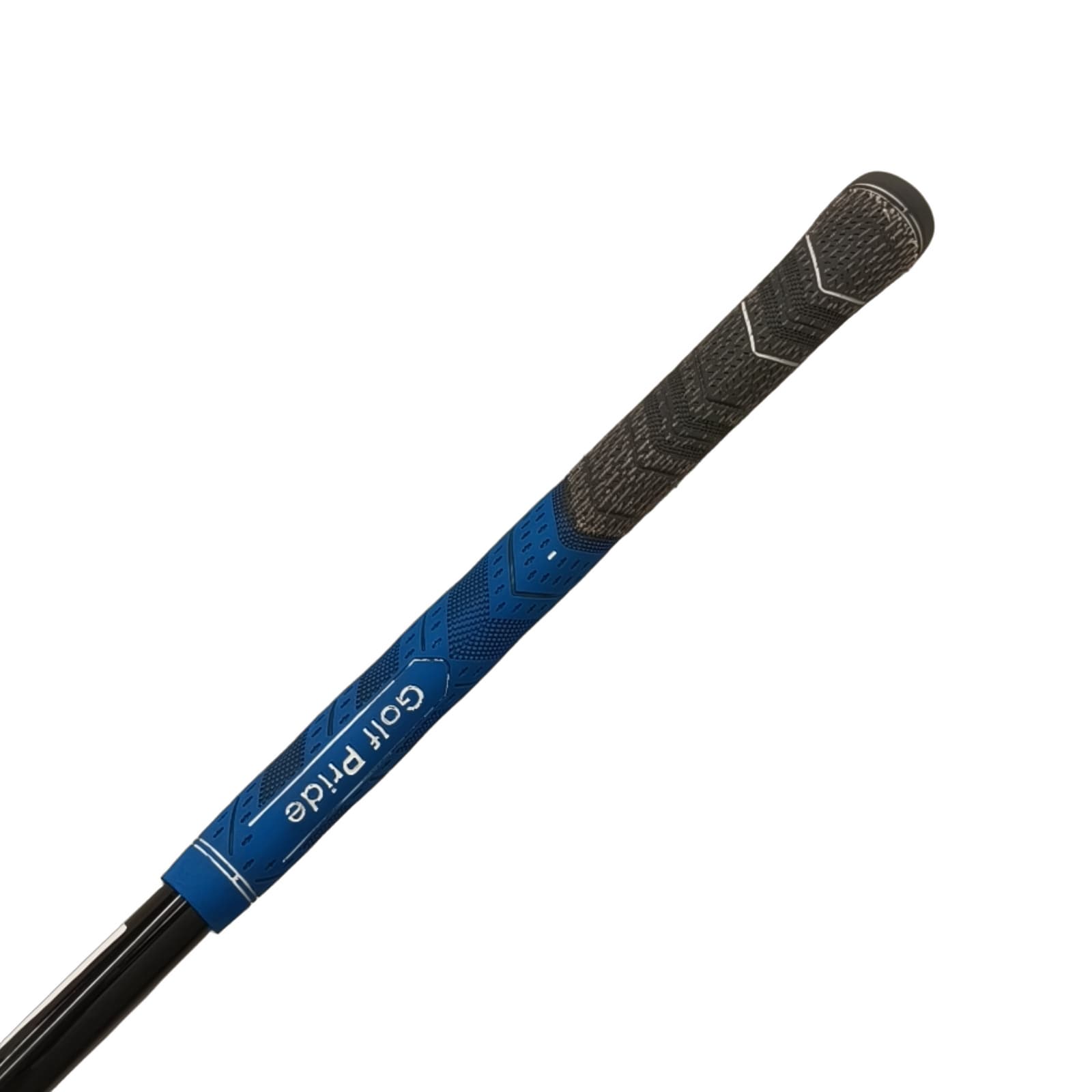
Rory McIlroy’s Shaft Choice: Technical Breakdown of the Fujikura Ventus Black X-Stiff
Rory McIlroy plays the Fujikura Ventus Black Extra Stiff (X-Stiff) shaft in his driver setup to stabilize his 120+ mph swing speed, control spin rates, and tighten shot dispersion. Engineered with Fujikura’s proprietary VeloCore Techno...
Rory McIlroy plays the Fujikura Ventus Black Extra Stiff (X-Stiff) shaft in his driver setup to stabilize his 120+ mph swing speed, control spin rates, and tighten shot dispersion. Engineered with Fujikura’s proprietary VeloCore Technology, the Ventus Black features an ultra-stiff tip and butt section designed specifically for high-speed players seeking low launch and low spin without losing energy transfer at impact.
Contents
Why Rory McIlroy Opted for the Fujikura Ventus Black X-Stiff
Rory McIlroy is widely regarded as one of the most mechanically efficient dynamic drivers in modern golf history. Averaging driver clubhead speeds between 120 mph and 124 mph on the PGA Tour—yielding ball speeds frequently exceeding 180 mph—McIlroy generates immense rotational torque and load during his transition from backswing to downswing.
For a golfer with this mechanical profile, standard shaft profiles present distinct physics challenges:
- Excessive Dynamic Loft: A shaft that sags or droops excessively during downswing acceleration increases dynamic loft at impact, sending ball flight higher than desired and ballooning spin rates above optimal ranges (typically 2,000 to 2,400 RPM for Rory).
- Face Angle Volatility: Shafts with flexible tip sections twist upon impact, particularly on off-center strikes. At 180+ mph ball speeds, even a 1-degree face open or closed deviation translates to significant offline yards.
- Transition Energy Loss: An aggressive, sudden transition requires a rigid butt and mid-section to give the golfer consistent spatial feel of the clubhead without feeling "mushy" or unresponsive.
To solve these issues, McIlroy moved to the Fujikura Ventus Black 6X (and at times 7X in specific fairway wood or driver configurations). The Ventus Black profile delivers an aggressive stiffness profile throughout the entire length of the shaft, particularly in the tip section, ensuring the clubface returns square to the ball with minimal deflection.
Technical Engineering of the Fujikura Ventus Black
The Fujikura Ventus series transformed tour shaft fitting upon its release, primarily due to its internal construction architecture. While classic graphite shafts rely on standard modulus carbon fiber plies wrapped around a mandrel, the Ventus line introduces specialized multi-material structural enhancements.
- FUJIKURA VENTUS BLACK BEND PROFILE
- BUTT SECTION: Ultra-Stiff: Controls feel and transition leverage
- MID SECTION: Stiff: Maintains energy transfer through arc
- TIP SECTION: Ultra-Stiff: Eliminates twisting & lowers launch/spin
VeloCore Technology
The engine behind the Ventus Black's performance is Fujikura's VeloCore Technology. VeloCore utilizes a full-length, pitch 70-ton carbon fiber core material.
- Pitch 70-Ton Carbon Fiber: Standard graphite shafts typically use 24-ton to 40-ton carbon fiber materials. Pitch 70-ton fiber is significantly stronger and stiffer per unit weight, yielding maximum structural memory.
- Full-Length Bias Layer: Rather than placing high-modulus material only in localized sections (like just the tip or butt), VeloCore runs the full length of the shaft inside the bias plies.
- Torsional Resistance: This full-length construction dramatically reduces off-axis twisting (torque) during downswing acceleration and impact, stabilizing the Energy Transfer Efficiency (Smash Factor).
Bend Profile and Torque Profile
The Ventus lineup is color-coded by launch and spin characteristics:
- Ventus Red: High launch, mid-low spin (softer tip).
- Ventus Blue: Mid launch, low spin (firm tip, mid-soft mid-section).
- Ventus Black: Low launch, ultra-low spin (ultra-stiff tip, stiff mid, ultra-stiff butt).
In the X-Stiff (6X and 7X) spec, the Ventus Black features low torque ratings (around 3.1° for 6X and 2.8° for 7X). This extreme resistance to twisting ensures that when McIlroy impacts the ball slightly off-center (such as high-toe or heel strikes), the clubhead resists gear-effect spin spikes, maintaining linear trajectory and predictable carry distances.
Specifications: Fujikura Ventus Black Matrix
The following table highlights the exact technical specifications for the Fujikura Ventus Black profile across standard Tour-level X-Stiff configurations:
| Shaft Model | Flex | Weight (g) | Torque (Deg) | Butt Diameter (in) | Launch Characteristic | Spin Characteristic | Typical Application |
|---|---|---|---|---|---|---|---|
| Ventus Black 6X | Extra Stiff | 65.0g | 3.1° | 0.605 | Low | Low | Tour Drivers (McIlroy primary) |
| Ventus Black 7X | Extra Stiff | 77.0g | 2.8° | 0.605 | Low | Low | Heavy Driver / 3-Wood Setup |
| Ventus Black 8X | Extra Stiff | 86.0g | 2.6° | 0.605 | Ultra-Low | Ultra-Low | Tour 3-Wood / 5-Wood |
| Ventus TR Black 6X | Extra Stiff | 65.5g | 2.9° | 0.605 | Low | Low | Reinforced Spread Tow (Driver) |
| Ventus TR Black 7X | Extra Stiff | 77.5g | 2.6° | 0.605 | Low | Low | Reinforced Spread Tow (Fairway) |
Note: Rory McIlroy has frequently optimized between 6X and 7X variants depending on tour conditions, head weight adjustments, and seasonal swing adjustments.
Impact on Rory McIlroy's Swing Dynamics and Ball Flight
A driver shaft does not create swing speed; rather, it manages the energy generated by the golfer and delivers the clubhead to the ball cleanly. For McIlroy, using a Ventus Black X-Stiff delivers clear mechanical advantages on launch monitor metrics:
Rory McIlroy Swing Profile vs. Ventus Black Match
| Swing Metric | Ventus Black Shaft Response |
|---|---|
| Clubhead Speed: 120-124mph | Low Torque (3.1°/2.8°) keeps face square under maximum loading |
| Aggressive Transition | Stiff Butt/Mid prevents shaft lag/droop misalignment |
| Attack Angle: +3° to +5° (Upward hit) | Ultra-Stiff Tip keeps dynamic loft optimized (spin < 2,400 RPM) |
1. Spin Rate Control
With a positive angle of attack (+3° to +5° upward strike), high-speed players risk launching the ball with excess spin if the shaft tip sags upward at impact. The ultra-stiff tip of the Ventus Black keeps dynamic loft low, holding McIlroy's driver spin within the ideal 2,000 to 2,300 RPM window for optimal carry and rollout.
2. Shot Dispersion and Tight Left-to-Right Windows
McIlroy plays a soft high draw or a controlled power fade when under pressure. Because high-torque shafts twist at impact, miss-hits can result in high-right pushes or snap hooks. The 70-ton pitch fiber in VeloCore keeps face angle rotation linear, allowing McIlroy to trust his swing commitment on tight fairways.
3. Kinetic Energy Transfer (Smash Factor)
When a shaft twists off-axis during impact, energy is lost in structural deformation. The stiff tip section of the Ventus Black maintains structural integrity across the strike, helping McIlroy consistently achieve smash factors near the theoretical maximum of 1.50 to 1.52.
Fitting Guide: Should You Play the Fujikura Ventus Black X-Stiff?
While amateurs frequently want to play the exact equipment used by tour players, playing a shaft optimized for Rory McIlroy can negatively impact performance if your swing speed and release mechanics do not match.
Minimum Swing Metrics Required for Ventus Black X-Stiff
- Driver Clubhead Speed: 108+ mph for Ventus Black 6X; 115+ mph for Ventus Black 7X.
- Ball Speed: Minimum 160+ mph.
- Transition Tempo: Moderate-to-aggressive. Smooth, low-speed transitions will find the shaft rigid and difficult to load.
- Launch Needs: Players struggling with excessively high launch angles or high spin rates (>3,000 RPM on driver strikes).
Risks of Playing an Over-Stiff Shaft Profile
If your swing speed is below 105 mph and you install a Ventus Black 6X or 7X:
- Loss of Distance: You will be unable to flex the shaft sufficiently to kick at impact, leading to flat, low-launching drives that drop out of the air prematurely.
- Push/Slice Tendency: Because the tip section is ultra-stiff, slower swing speeds will struggle to square the face in time, leading to weak block-pushes or open-face slices.
- Harsh Impact Feel: Without adequate flex to load the shaft, impact will feel boardy, harsh, and unresponsive through the hands.
Recommended Alternatives for Other Swing Profiles
If you like the structural stability of Fujikura VeloCore technology but require different launch or flex characteristics, consider these alternatives:
- Fujikura Ventus Blue (Stiff/X-Stiff): Ideal for players with swing speeds of 95–108 mph needing mid-launch with low spin control.
- Fujikura Ventus TR Blue: Features spread-tow carbon fabric in the butt section for added stability with mid-launch playability.
- Fujikura Ventus Red: Designed for golfers who struggle to elevate the ball and require high launch assistance with low-to-mid spin stability.
Frequently Asked Questions
What exact shaft spec does Rory McIlroy use in his driver?
Rory McIlroy primarily plays a Fujikura Ventus Black 6X (Extra Stiff) trimmed to tour length specs in his driver, though he has periodically tested and played the Ventus Black 7X or Ventus TR Black 6X/7X depending on head weight setup, swing changes, and course conditions.
What is the main difference between Ventus Black and Ventus Blue?
The Ventus Black features an ultra-stiff butt, stiff mid-section, and ultra-stiff tip section, offering low launch and low spin. The Ventus Blue features a firm tip and butt section with a slightly softer mid-section, resulting in a mid-launch trajectory with low-to-mid spin characteristics.
What does "VeloCore" mean on Fujikura Ventus shafts?
VeloCore is Fujikura’s multi-material core construction technology that incorporates full-length, pitch 70-ton carbon fiber. It increases torsional stiffness, reduces off-center shaft twisting at impact, optimizes smash factor, and tightens overall shot dispersion.
What swing speed is needed to play an Extra Stiff (X-Stiff) shaft like the Ventus Black 6X?
To effectively load and profile a Ventus Black 6X, a golfer generally needs a driver clubhead speed of at least 108 to 112+ mph, with a relatively aggressive transition from backswing to downswing.
Does the Ventus Black lower driver spin rates?
Yes. The ultra-stiff tip profile prevents the clubhead from sagging or adding dynamic loft through the strike zone, making it one of the most effective driver shafts on the market for lowering spin rates by several hundred RPM compared to standard stock shafts.
Next Actions and Fitting Recommendations
If you are evaluating whether to transition to the Fujikura Ventus Black or a similar tour-grade low-spin shaft, follow these practical steps:
- Schedule a TrackMan or GCQuad Fitting Session: Establish baseline numbers for your current clubhead speed, attack angle, dynamic loft, and total spin rates.
- Verify Swing Speed Thresholds: Ensure your driver clubhead speed consistently clears 108+ mph before investing in Ventus Black 6X, or 115+ mph for 7X.
- Compare Profiles on Dual Launch Monitors: Test the Ventus Black directly against the Ventus TR Black and Ventus Blue to see which shaft yield optimal peak height (typically 30–35 yards) and landing angle for maximum total distance.
Editorial Category Metadata:
Image Gallery