What Are Team Building Skills? A Comprehensive Guide to Fostering High-Performing Teams
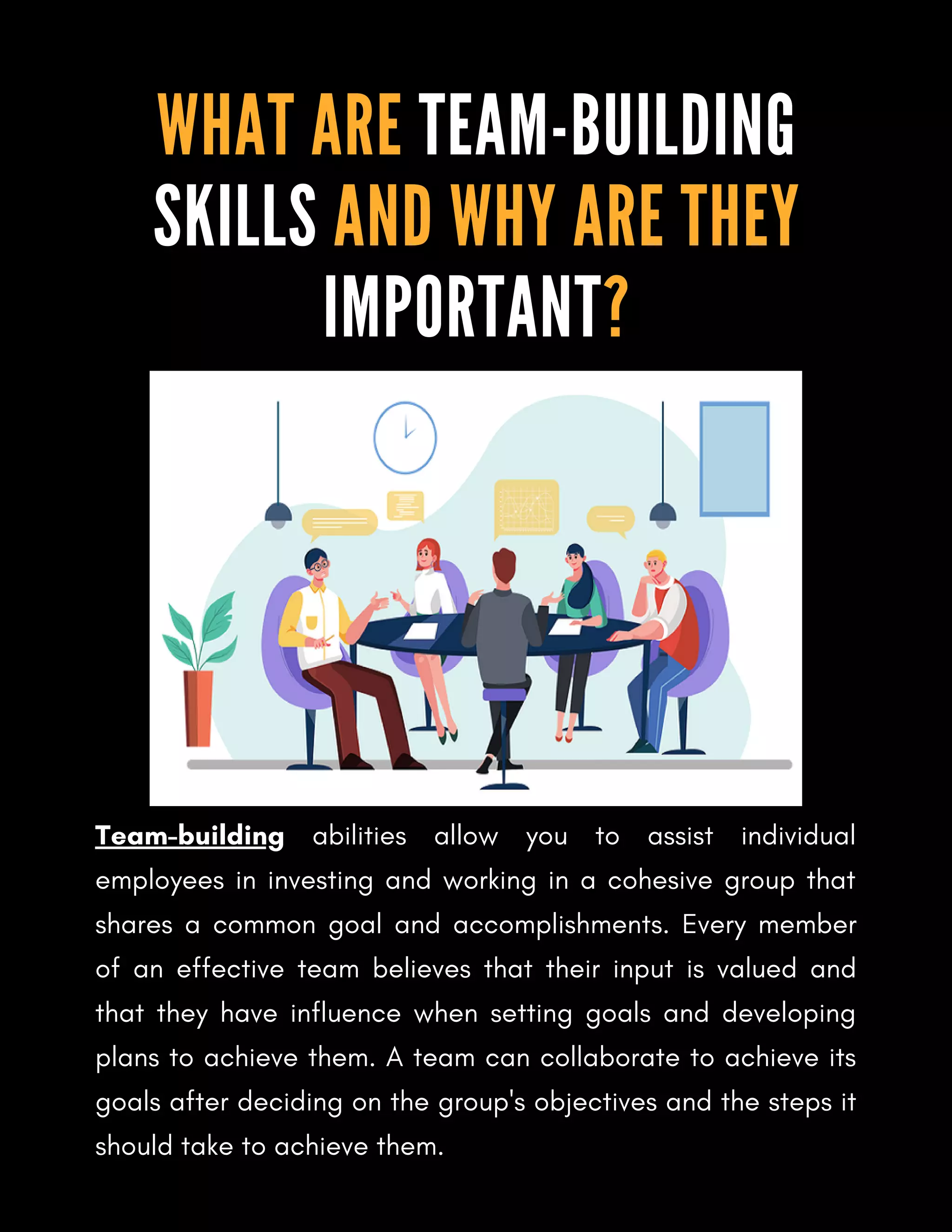
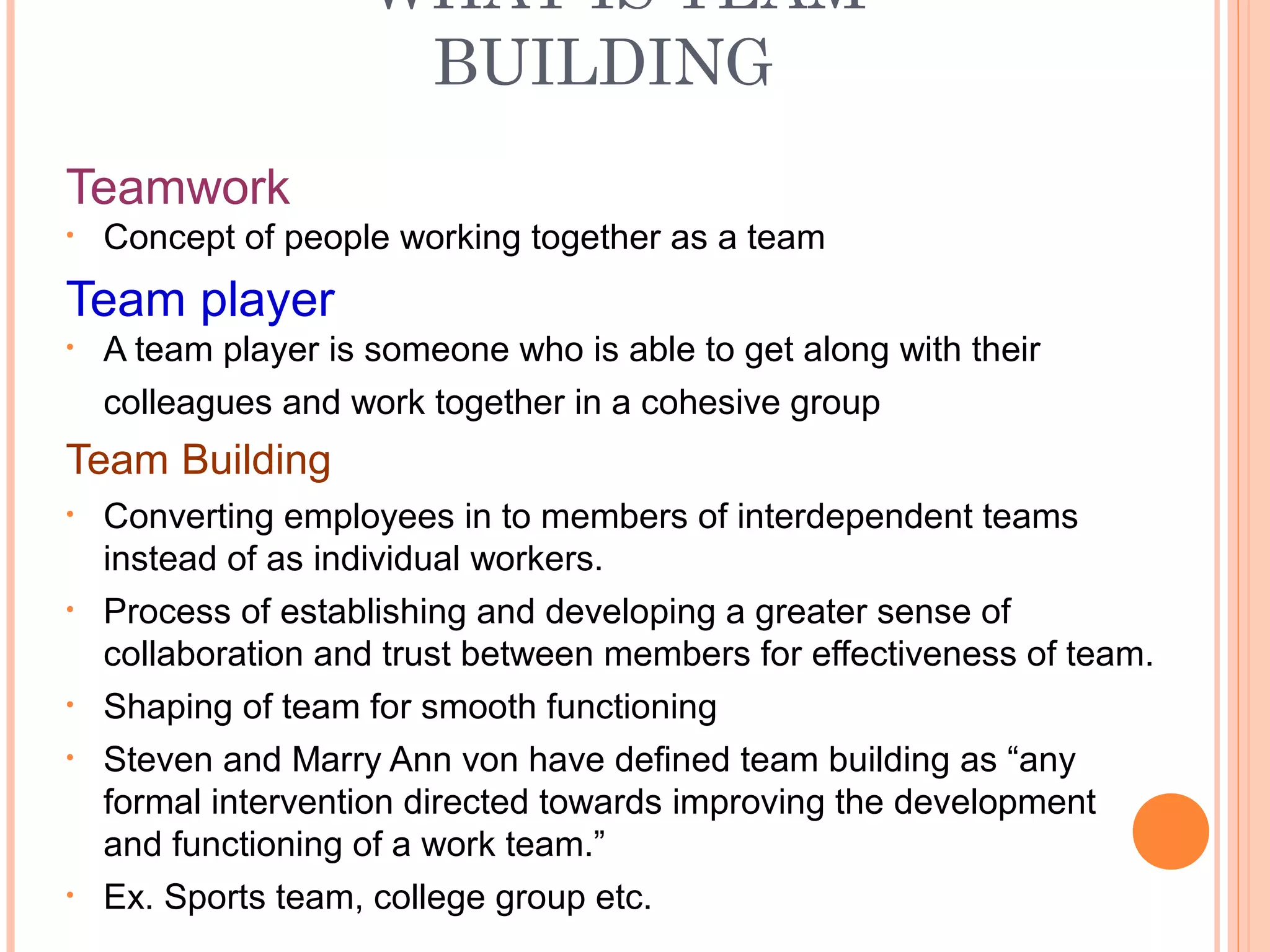
Team building skills are the strategic, interpersonal, and managerial competencies that enable individuals to assemble, align, and support a cohesive group working toward shared organizational objectives. These capabilities include act...
Team building skills are the strategic, interpersonal, and managerial competencies that enable individuals to assemble, align, and support a cohesive group working toward shared organizational objectives. These capabilities include active listening, psychological safety creation, conflict resolution, emotional intelligence, and effective delegation, which transform individual talents into a unified, high-performing unit.
Contents
Understanding Team Building Skills
At their core, team building skills represent an individual's ability to create an environment where diverse talent collaborates efficiently. While basic interpersonal capabilities allow people to get along, true team building skills involve purposeful tactics to optimize how a group functions, solves problems, and achieves measurable outcomes.
Managers, project leads, and executive leaders rely on these competencies to construct organizational structures, establish cultural norms, and navigate team dynamics through structural shifts. However, team building skills are not exclusive to leadership roles. Individual contributors who understand how to facilitate peer-to-peer alignment, welcome new members, and mediate minor friction actively contribute to the overall strength of their teams.
Investing in these capabilities yields structural advantages for organizations:
- Increased Productivity: Aligned teams experience less operational friction and fewer redundant efforts.
- Higher Employee Retention: Workplaces grounded in psychological safety and mutual respect experience lower turnover rates.
- Enhanced Innovation: Teams with strong communication habits share ideas more freely, encouraging creative problem-solving.
- Clearer Accountability: Structured team-building processes establish explicit roles, preventing project bottlenecks.
Teamwork Skills vs. Team Building Skills: Key Differences
Though frequently used interchangeably, teamwork skills and team building skills address distinct aspects of group performance. Confusing the two can lead to gaps in leadership training and employee performance evaluations.
Teamwork skills are operational and execution-focused; they refer to how effectively an individual works as part of a collective unit. In contrast, team building skills are structural and strategic; they involve designing systems, establishing norms, and guiding group dynamics so that others can collaborate successfully.
| Dimension | Teamwork Skills | Team Building Skills |
|---|---|---|
| Primary Focus | Individual contribution and cooperation | Group design, alignment, and optimization |
| Target Role | All team members (peer level) | Leaders, facilitators, and managers |
| Core Capabilities | Task execution, punctuality, active listening, reliability | Role assignment, trust building, conflict resolution, vision setting |
| Primary Goal | Executing assigned deliverables within a group | Building an environment where the group thrives long-term |
| Key Example | Completing a designated section of a shared presentation | Defining the presentation's scope, assigning sections based on talent, and mediating disagreements |
Understanding this distinction allows organizations to train employees accurately: individual contributors need strong teamwork skills to function well, while rising supervisors need team building skills to organize and motivate their departments.
Core Components of Effective Team Building
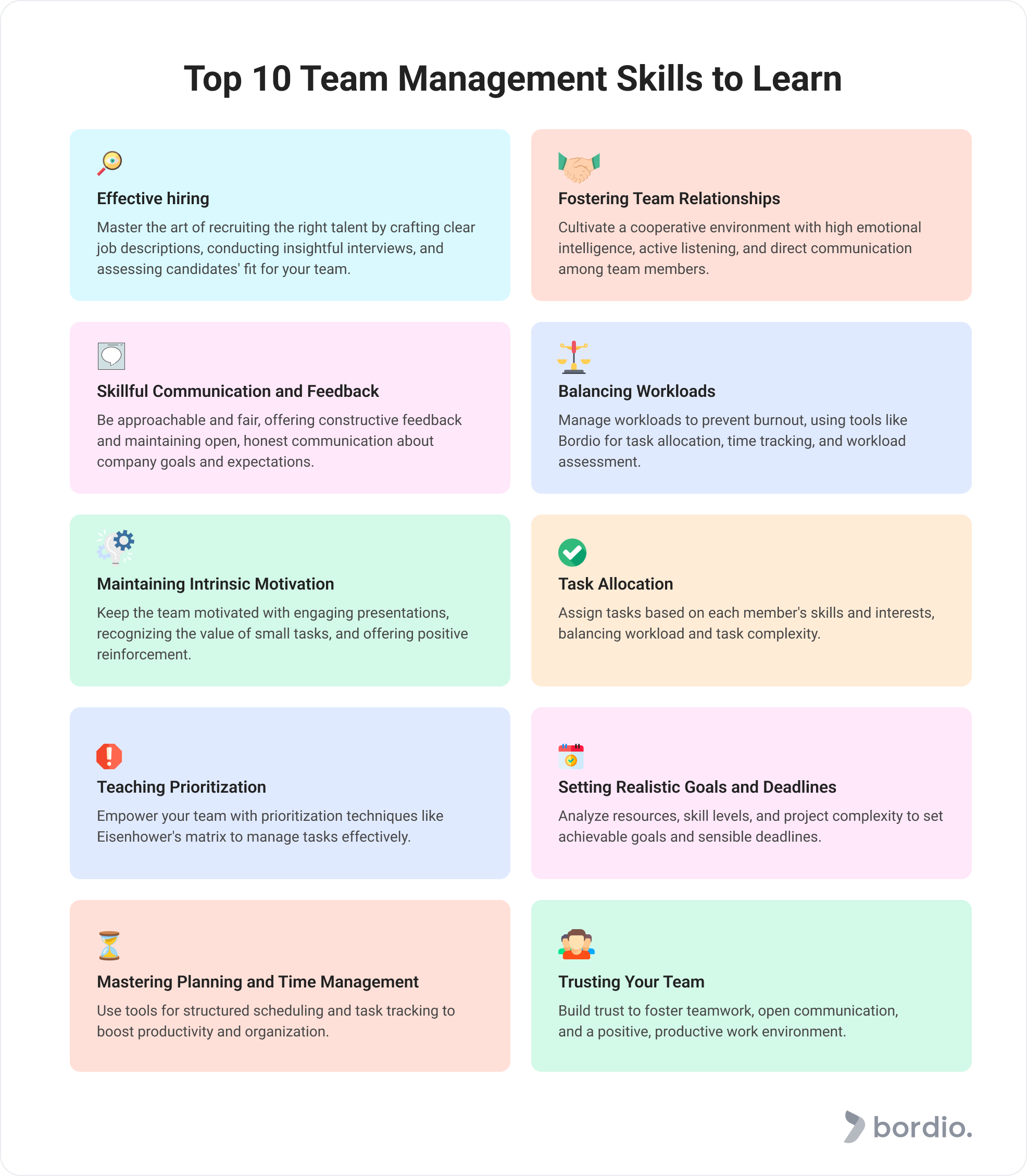
Developing robust team building skills requires mastering several interconnected disciplines. When combined, these competencies help leaders establish stable, high-output environments.
- Team Building Competencies
- Trust & Safety
- Active Listening
- Strategic Conflict Resolution
- Emotional Intelligence
1. Building Psychological Safety and Trust
Psychological safety—a concept extensively researched by Harvard Business School professor Amy Edmondson—is the foundation of any resilient team. It describes a workplace climate where individuals feel secure taking interpersonal risks, asking questions, acknowledging mistakes, and proposing unconventional ideas without fear of embarrassment or retribution.
Leaders with strong team building skills create psychological safety by:
- Admitting their own oversights publicly to normalize learning from failure.
- Responding constructively to mistakes rather than assigning personal blame.
- Encouraging candid input during meetings and project retrospectives.
Without psychological safety, team members withhold critical feedback, downplay project risks, and avoid creative experimentation.
2. Active Listening and Clear Communication
Effective communication in team building extends beyond delivering top-down directions. It requires active listening—the practice of fully concentrating, understanding, responding to, and remembering what team members express.
Clear team communication relies on setting precise expectations regarding timelines, deliverables, and communication channels. Leaders with strong communication skills adapt their messaging format based on the situation, using asynchronous written updates for project tracking and real-time verbal discussion for nuanced feedback.
3. Strategic Conflict Resolution
Conflict is inevitable when individuals with different backgrounds, perspectives, and working styles collaborate. Rather than suppressing disagreements, effective team builders use strategic conflict resolution to transform friction into productive discourse.
Key tactics include:
- Separating People from the Problem: Focus on objective operational issues rather than personal attributes.
- Identifying Underlying Interests: Look beyond immediate demands to understand what each party genuinely needs to succeed.
- Establishing Shared Goals: Re-center discussions around mutual objectives to realign competing priorities.
When managed correctly, task-based conflict uncovers hidden operational vulnerabilities and drives better decision-making.
4. Intentional Delegation and Talent Alignment
Team building requires recognizing each member's unique strengths, development goals, and working preferences, then assigning tasks accordingly. Ineffective leaders assign work based solely on immediate availability, whereas skilled team builders delegate work to stretch capabilities while maintaining output quality.
Proper alignment requires matching high-stakes tasks with proven skills while pairing growth opportunities with appropriate coaching. This approach keeps senior talent engaged and accelerates the professional development of junior personnel.
5. Emotional Intelligence (EQ)
Emotional intelligence involves recognizing, understanding, and managing one's own emotions while navigating the emotions of others. High-EQ leaders accurately read team dynamics, sense unstated tension, and recognize early signs of burnout.
By demonstrating empathy and emotional regulation, managers preserve stability during high-pressure cycles, organizational restructurings, or tight project deadlines.
Applying Team Building Skills Across Stages of Team Development
To build effective teams, leaders must adjust their approach as the group evolves. Psychological researcher Bruce Tuckman introduced the Tuckman Model in 1965 (later expanding it in 1977), outlining five essential stages of group development: Forming, Storming, Norming, Performing, and Adjourning. Applying team building skills successfully requires adapting managerial behavior to fit the group's current stage.
- Forming (Directing)
- Storming (Coaching)
- Norming (Facilitating)
- Performing (Delegating)
- Adjourning (Transitioning)
Stage 1: Forming (Orientation)
In the forming stage, team members join the group, learn about project scopes, and gauge peer expectations. Anxiety is often elevated, and individuals rely heavily on formal leadership for direction.
- Applied Team Building Skill: Structured Direction and Role Clarity.
- Action: Define clear goals, establish team charters, outline responsibilities, and schedule structured orientation sessions.
Stage 2: Storming (Friction)
As tasks get underway, personal working styles conflict, boundary issues arise, and disagreements over decisions emerge. The storming phase can cause friction if left unmanaged.
- Applied Team Building Skill: Conflict Resolution and Active Mediation.
- Action: Mediate interpersonal disputes, re-evaluate working processes, reiterate common goals, and reinforce psychological safety norms.
Stage 3: Norming (Integration)
During norming, team members establish operational rhythms, resolve interpersonal frictions, and build mutual respect. Group cohesion improves as team members appreciate one another's strengths.
- Applied Team Building Skill: Facilitation and Process Standardization.
- Action: Transition from direct supervision to facilitation. Document operational workflows, encourage peer-to-peer feedback, and codify communication channels.
Stage 4: Performing (Optimization)
In the performing stage, the group operates with high autonomy, clear alignment, and minimal supervision friction. The team consistently meets complex goals through shared accountability.
- Applied Team Building Skill: Strategic Delegation and Empowerment.
- Action: Remove structural obstacles, delegate authority over key sub-projects, provide stretch goals, and offer macro-level guidance.
Stage 5: Adjourning (Wrap-Up)
The adjourning stage occurs when project goals are fulfilled, seasonal initiatives end, or the group undergoes major restructuring.
- Applied Team Building Skill: Reflection and Closure.
- Action: Conduct structured project retrospectives, document lessons learned, celebrate collective achievements, and assist team members with career transitions.
Actionable Strategies to Develop Team Building Skills
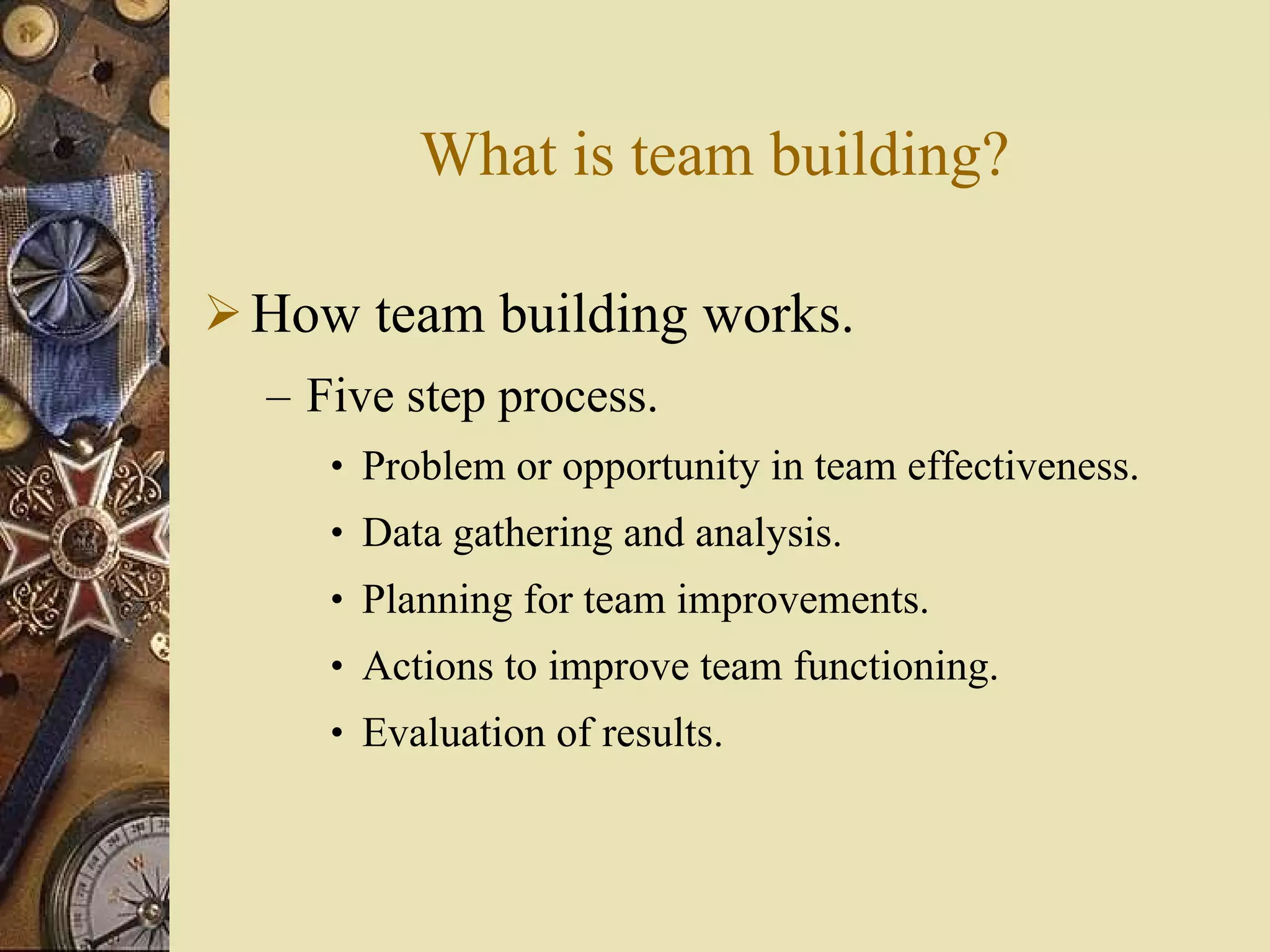
Improving team building capabilities requires structured deliberate practice. Professionals can build these skills using several practical strategies:
- Conduct Regular Retrospectives: Hold recurring post-project sessions focused on workflow improvements rather than personal fault. Ask three core questions: What worked well? What broke down? What will we adjust next time?
- Seek 360-Degree Feedback: Gather anonymous feedback from peers, subordinates, and superiors to spot blind spots in your communication, delegation, and emotional management style.
- Implement Structured Mentorship: Pair senior staff with junior colleagues to practice coaching, active listening, and career alignment skills in low-stakes settings.
- Use Diagnostic Assessments: Tools like Everything DiSC or the Myers-Briggs Type Indicator (MBTI) help leaders recognize different communication styles and adapt their management tactics.
Sustaining Team Building in Remote and Hybrid Workplaces
Managing distributed teams requires evolving standard team building practices. Without natural, in-person interactions, leaders must create structured opportunities for team cohesion and alignment.
- Hybrid Team Building Pillars
- Asynchronous Communication
- Intentional Virtual Cohesion
Asynchronous Documentation over Constant Meetings
Remote team building relies on clarity over real-time oversight. Leaders must build clear asynchronous systems—using platforms such as Jira, Confluence, or Notion—ensuring all team members can access project contexts, goal matrices, and historical decisions without needing immediate meetings.
Intentional Virtual Cohesion
In remote setups, casual workplace interactions must be planned intentionally rather than left to chance. Effective virtual strategies include:
- Structured Virtual Coffee Chats: Pairing distributed colleagues across departments for low-pressure background conversations.
- Dedicated Non-Work Channels: Creating designated chat spaces for shared hobbies, book recommendations, or technical interests.
- Asynchronous Recognition: Publicly celebrating individual contributions in group messaging channels to maintain visibility across time zones.
Frequently Asked Questions (FAQ)
What is the most important team building skill for a leader?
While several competencies matter, active listening combined with psychological safety creation forms the foundation of team building. Without active listening, leaders fail to catch operational bottlenecks, miss underlying personal conflicts, and assign tasks incorrectly. Establishing an environment where employees feel safe speaking up ensures all other leadership tactics function effectively.
Can team building skills be learned, or are they natural traits?
Team building skills are learned behaviors developed through training, deliberate practice, self-awareness, and real-world experience. While natural empathy or high extraversion can provide an initial advantage, effective conflict resolution, structured delegation, and process optimization rely on systematic practices that can be mastered over time.
How do you demonstrate team building skills on a resume?
Instead of simply listing "team building" under your skill section, demonstrate your capabilities using quantifiable accomplishment statements. Highlight achievements such as: "Restructured a 12-person cross-functional team, reducing project delivery cycle times by 22%," or "Implemented weekly retrospective processes that improved team-wide quarterly retention rates by 15%."
What is the main cause of team building failures?
The primary driver of team building failure is an absence of goal clarity paired with low psychological safety. When group members do not understand their specific responsibilities or fear harsh consequences for minor mistakes, trust erodes. This leads to defensive behaviors, departmental silos, and declining operational output.
Recommended Next Steps for Team Leaders
To systematically improve your team building capabilities, start by diagnosing your team's current development stage using Tuckman's framework. Identify whether your group is navigating initial orientation (Forming), unresolved friction (Storming), process standardization (Norming), or high-output execution (Performing).
Next, select one high-impact action to implement over the next 30 days:
- Schedule a structured project retrospective to identify operational friction points.
- Draft a clear team charter establishing shared communication guidelines and decision-making norms.
- Conduct one-on-one alignment conversations focused on career growth and individual strengths.
Focusing on targeted, structural improvements helps transform basic team dynamics into long-term organizational success.
Image Gallery