Best Ceiling Fans Review: Comprehensive 2026 Buying Guide and Airflow Evaluation
Choosing the best ceiling fan requires balancing room dimensions, ceiling height, airflow volume measured in cubic feet per minute (CFM), and motor technology. Modern high-performance ceiling fans prioritize Direct Current (DC) motors...
Choosing the best ceiling fan requires balancing room dimensions, ceiling height, airflow volume measured in cubic feet per minute (CFM), and motor technology. Modern high-performance ceiling fans prioritize Direct Current (DC) motors for low energy consumption and whisper-quiet operation, alongside integrated LED lighting, damp or wet weather ratings, and smart home automation capabilities.
Contents
Core Evaluation Metrics: How to Benchmark Ceiling Fan Performance
Evaluating ceiling fans requires looking past purely decorative finishes to assess underlying mechanical design, aerodynamic performance, and structural build quality. The right fan improves room comfort, supports primary heating and cooling systems, and operates reliably for years.
Airflow Volume (CFM) = Air Velocity × Sweep Area Motor Efficiency = CFM Generated ÷ Watts Consumed
1. Airflow Volume and CFM Ratings
Airflow is measured in Cubic Feet per Minute (CFM), representing the total volume of air a fan moves at maximum speed.
- Low Airflow (< 3,000 CFM): Suitable only for small bedrooms, walk-in closets, or breakfast nooks (under 100 sq. ft.).
- Medium Airflow (3,000 – 5,000 CFM): Adequate for standard bedrooms and small home offices (100 to 200 sq. ft.).
- High Airflow (5,000 – 7,500 CFM): Recommended for spacious living rooms, primary bedroom suites, and open-concept dining areas (200 to 400 sq. ft.).
- Commercial-Grade Airflow (> 7,500 CFM): Necessary for double-height great rooms, large outdoor patios, and industrial spaces.
Modern testing standards established by the U.S. Department of Energy require ceiling fan manufacturers to list CFM efficiency, expressed as CFM per watt. High-efficiency fans generate over 100 CFM/watt, while lower-performing units drop below 50 CFM/watt.
2. Motor Engineering: Direct Current (DC) vs. Alternating Current (AC)
The motor is the mechanical heart of any ceiling fan. Two primary motor architectures dominate the market today:
- Direct Current (DC) Motors: DC motors convert incoming AC household power into direct current using an internal transformer and electronic controller. They consume up to 70% less electricity than standard AC motors, operate virtually silently, and offer fine-grained speed control (typically 6 distinct speed settings). DC motors allow direct rotational reversal via handheld remotes or smart apps without requiring physical switches on the motor housing.
- Alternating Current (AC) Motors: AC motors remain prevalent in budget-friendly fixtures. While mechanically robust, AC motors draw more wattage, produce slight electrical humming at low speeds, and usually limit control to 3 preset speeds. Reversal requires flipping a manual mechanical switch located on the switch housing.
3. Blade Pitch and Aerodynamics
Blade pitch—the angle at which the blade is set relative to the horizontal plane—directly governs how effectively air is scooped and propelled downward.
- Sub-Optimal Pitch (< 12 degrees): Common in low-cost fans. Shallow blade angles slice through air with minimal resistance, keeping motor costs down, but produce poor airflow velocity regardless of motor speed.
- Optimal Pitch (12 to 15 degrees): Standard for quality residential fans. This angle balances air resistance and motor torque, delivering optimal CFM without overheating the motor windings.
- High-Performance Pitch (16 to 25 degrees): Reserved for heavy-duty DC motor fans and industrial models designed to move large volumes of air across vast square footage.
Blade count plays a secondary role compared to pitch and motor output. While 3-blade configurations offer slightly less drag and higher air speeds, 5-blade designs operate marginally quieter and deliver a smoother, softer breeze profile.
Top Ceiling Fan Categories and Recommended Specifications
Evaluating performance across specific home layouts clarifies which ceiling fan design best serves each spatial environment.
CEILING FAN SELECTION MATRIX
| Room Type / Need | Key Specification | Recommended Motor & Span |
|---|---|---|
| Small Bedrooms (< 144 ft²) | Low Profile / Hugger | 42"–48" AC or DC Motor |
| Great Rooms (> 300 ft²) | High CFM (> 6,500) | 60"–72" Premium DC Motor |
| Covered Patios | Damp-Rated (UL 507) | 52"–60" ABS/Composite Blades |
| Exposed Outdoor Structures | Wet-Rated (UL 507) | 52"+ All-Weather Synthetic |
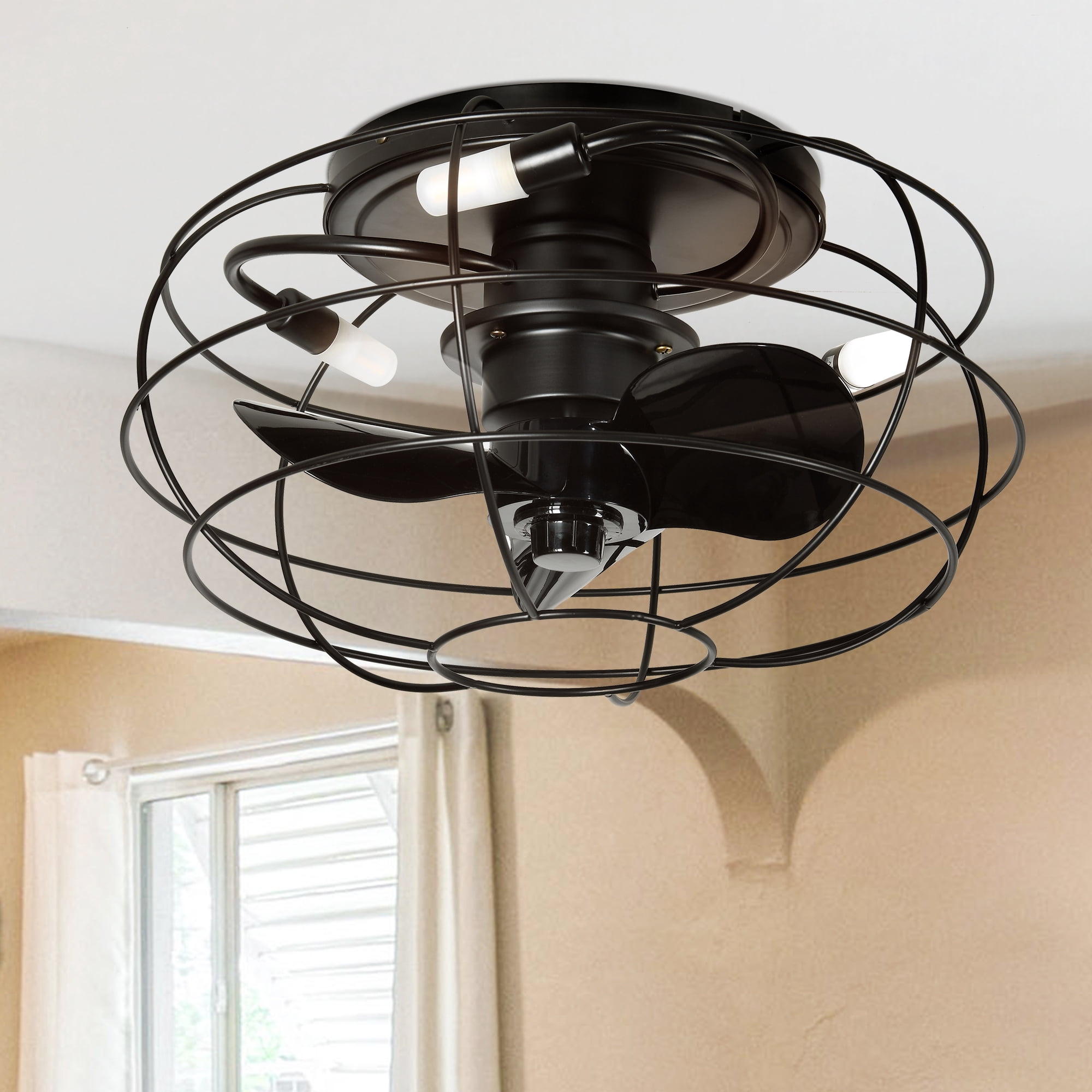
| Low Ceilings (< 8 feet) | Flush Mount Assembly | Compact Housing, 52" Span |
1. Best Overall Performance: High-Efficiency DC Motor Fans
Top-tier overall performance models pair an electronically commutated DC motor with precision-balanced composite blades. These units achieve CFM ratings between 6,000 and 8,000 while drawing under 35 watts of power at peak output.
Modern units integrate continuously dimmable LED arrays (2700K to 3000K warm white color temperatures with High Color Rendering Index ratings above 90 CRI) that replace standard light bulbs. They are ideal for main living rooms, master bedrooms, and open floor plans where whisper-quiet operation and minimal power consumption are paramount.
2. Best Smart Ceiling Fans: Integrated Ecosystem Control
Smart ceiling fans incorporate native Wi-Fi or Matter-enabled control boards alongside radio-frequency remotes. These fans interface directly with platforms such as Amazon Alexa, Google Home, and Apple Home, permitting voice commands, automated scheduling, and temperature-triggered speed adjustments based on connected room sensors.
Smart software platforms also enable features like "breeze mode," which randomly modulates motor speed to simulate natural wind currents, and scheduled operational adjustments that optimize indoor air circulation alongside home HVAC thermostats.
3. Best Low Profile (Hugger) Fans: Low-Ceiling Solutions
Standard downrod mounting is unsafe for room heights under 8 feet. Low profile or "hugger" ceiling fans bolt directly to the ceiling mounting plate, maximizing headroom compliance with building safety codes that dictate blade edges must remain at least 7 feet above the finished floor.
Flush-mount fan designs intentionally modify blade pitch to counteract the "cavitation effect," where proximity to the ceiling restricts air intake. By optimizing upper blade aerodynamics, high-grade hugger models deliver upward of 4,500 CFM despite tight vertical clearances.
4. Best Outdoor Ceiling Fans: Damp vs. Wet-Rated Standards
Outdoor installations require adherence to Underwriters Laboratories (UL 507) environmental ratings to prevent electrical shorts, fire hazards, and blade warping:
- Damp-Rated Fans: Designed for covered, moisture-prone locations protected from direct precipitation, such as screened porches, covered patios, bathrooms, and utility spaces. Motors feature sealed housing, and blades use weather-resistant materials like ABS plastic or treated marine-grade plywood.
- Wet-Rated Fans: Engineered for open, direct-weather exposures such as exposed pergolas, lanai structures, and roofless decks. Wet-rated fans feature fully sealed motor casings, waterproof electrical connections, UV-stabilized synthetic blades, and weather-tight light kits capable of withstanding direct rain and pressure-hose washdowns.
Technical Comparison of Ceiling Fan Configurations
The comparative matrix below details performance metrics across core ceiling fan categories to simplify purchase decisions:
| Product Category | Typical Blade Span | Motor Type | Average Max CFM | Energy Draw (Max Speed) | Recommended Room Size | UL Location Rating |
|---|---|---|---|---|---|---|
| Compact Bedroom | 42" – 48" | AC or DC | 3,200 – 4,200 CFM | 25W – 55W | Up to 144 sq. ft. | Dry |
| Standard Living Room | 52" – 56" | DC Motor | 5,500 – 7,000 CFM | 18W – 38W | 144 – 250 sq. ft. | Dry or Damp |
| Great Room / Vaulted | 60" – 72"+ | DC Motor | 7,500 – 10,500+ CFM | 30W – 65W | 250 – 400+ sq. ft. | Dry |
| Flush-Mount Hugger | 48" – 52" | AC or DC | 3,800 – 5,000 CFM | 20W – 60W | Up to 225 sq. ft. | Dry or Damp |
| All-Weather Outdoor | 52" – 65" | Sealed DC | 5,800 – 8,200 CFM | 25W – 45W | Outdoor (Varies) | Wet Rated |
Room Sizing, Ceiling Height, and Downrod Guidelines
Installing a ceiling fan with incorrect dimensions leads to poor airflow, excessive mechanical strain, or unsafe physical clearance.
- Ceiling Surface
- Downrod Length
- Fan Housing (Must be ≥ 7 ft above floor)
- Finished Floor
Blade Span vs. Room Area Calculations
To calculate the minimum suggested blade span for rectangular or square spaces, use the following interior layout guidelines:
- Small Rooms (up to 100 sq. ft.): Select a 36-inch to 48-inch blade span. Ideal for home offices, laundry rooms, and small bedrooms.
- Medium Rooms (100 to 225 sq. ft.): Select a 52-inch to 56-inch blade span. Fits standard master bedrooms, formal dining rooms, and average living areas.
- Large Rooms (225 to 400 sq. ft.): Select a 60-inch to 70-inch blade span. Suitable for open-plan great rooms, large basements, and master suites.
- Extra-Large Open Spaces (over 400 sq. ft.): Install multiple 52-inch/60-inch fans spaced evenly, or opt for a single architectural fan measuring 84 to 96 inches.
Downrod Selection Matrix
For optimal airflow, fan blades should hang between 8 and 9 feet above the finished floor. Hanging a fan too close to the ceiling restricts air intake behind the blades, while hanging it too low reduces ambient clearance and coverage area.
Use this clearance chart to select downrod lengths based on flat ceiling heights:
- 8-Foot Ceiling: Flush-mount (Hugger) assembly or standard 3-inch downrod.
- 9-Foot Ceiling: 6-inch downrod.
- 10-Foot Ceiling: 12-inch downrod.
- 12-Foot Ceiling: 24-inch downrod.
- 14-Foot Ceiling: 36-inch downrod.
- 16-Foot Ceiling: 48-inch downrod.
For vaulted or sloped ceilings, ensure the ceiling canopy supports angle mounting (typically up to 30 degrees off-horizontal without requiring an aftermarket sloped ceiling adapter kit). Always verify that downrod length permits adequate clearance between blade tips and adjacent sloped walls.
Technical Comparison: AC Motors vs. DC Motors
Understanding the differences between AC and DC motor hardware explains price discrepancies and long-term operating costs.
AC Motor System:
- AC Line Power
- Simple Stator
- 3 Fixed Speeds (Higher Wattage)
DC Motor System:
- AC Line Power
- Inverter Controller
- Precision Brushless DC Stator
- 6 Variable Speeds (Low Wattage)
Energy Efficiency and Operating Costs
DC ceiling fan motors utilize internal electronic commutators to generate magnetic fields that rotate the rotor. Because energy is lost neither through brush friction nor simple thermal dissipation, DC motors draw significantly less wattage.
- Average AC Fan Consumption (High Speed, Light Off): 60 to 75 Watts.
- Average DC Fan Consumption (High Speed, Light Off): 25 to 35 Watts.
- Average DC Fan Consumption (Low Speed, Light Off): 3 to 7 Watts.
Over 10 years of regular continuous use, a DC ceiling fan reduces electrical consumption considerably, helping offset its higher initial purchase price.
Operational Noise and Control Mechanics
AC motors operate directly on 60 Hz alternating current. Under heavy load or when modulated via inexpensive solid-state wall dimmers, AC stators often emit an audible 60 Hz magnetic hum.
DC motors rectify incoming AC power into clean direct current, eliminating low-frequency electrical hum. Consequently, DC fans operate near silently, making them preferred choices for acoustics-sensitive spaces like nurseries, home studios, and bedrooms.
Additionally, DC motor controllers allow micro-step speed options (typically 6 granular settings compared to 3 on AC fans) and effortless rotational reversal via digital wireless remote controls.
Installation Prerequisites and Electrical Compliance
Installing a ceiling fan requires proper electrical support and structural framing. Standard lighting fixture boxes cannot support the dynamic loads generated by moving fan blades.
- Structural Framing / Ceiling Joist
- Fan-Rated Outlet Box (Must be UL-Listed for Fan Support; supports up to 35 lbs or 70 lbs)
- Mounting Bracket
- Downrod & Fan
1. Electrical Box Ratings (UL Listed Fan Boxes)
National Electrical Code (NEC) standards require ceiling fans to be anchored to outlet boxes specifically marked "Listed for Fan Support."
- Standard Light Fixture Boxes: Rated only for static loads up to 50 lbs. They lack the threaded reinforcement and metal gauge thickness required to endure rotational vibration and dynamic forces.
- Fan-Rated Outlet Boxes: Feature heavy-duty steel construction, threaded 10-24 machine screws, and reinforced mounting brackets attached directly to ceiling joists. Heavy-duty boxes are rated to support dynamic loads up to 35 lbs or 70 lbs, depending on the specification.
- Retrofit Expansion Braces: For ceilings where joists are not exposed, adjustable metal brace bars can be inserted through a cut hole in the drywall to lock firmly between adjacent ceiling joists without needing attic access.
2. Wiring Requirements and Control Options
Ensure the branch circuit supplying the junction box is turned off at the main breaker before performing installation work. Modern ceiling fans use two primary electrical configurations:
- Two-Wire Setup (Hot Neutral & Ground): Standard supply wiring. Hot (black) and Neutral (white) supply continuous power to the fan's internal receiver canopy module. The user controls fan speeds, direction, and integrated light dimming using a handheld wireless remote or paired smartphone app.
- Three-Wire Setup (Fan Hot, Light Hot, Neutral, & Ground): Features a secondary switched hot wire (typically red). This setup permits dual wall-switch operation, allowing independent hardwired toggle controls for the fan motor and light kit without relying on remotes or receivers.
Frequently Asked Questions
What CFM rating do I need for a standard bedroom?
For a standard bedroom measuring between 120 and 180 square feet, target a ceiling fan that delivers between 4,000 and 5,500 CFM on its high speed setting. Pair this with a 52-inch blade span to achieve effective air mixing at low, quiet speeds.
Can I install a ceiling fan on an 8-foot ceiling?
Yes, but you must select a low-profile or flush-mount (hugger) ceiling fan. NEC guidelines mandate that fan blades hang at least 7 feet above the floor for occupant safety. Low-profile designs mount directly to the ceiling plate, securing appropriate clearance while maintaining adequate airflow.
How do seasonal rotational changes affect heating and cooling?
- Summer Mode (Counterclockwise Rotation): Blades push air straight down, creating a wind-chill effect on skin that makes the room feel up to 4 degrees cooler. This allows you to set the central air conditioning thermostat higher without sacrificing comfort.
- Winter Mode (Clockwise Rotation at Low Speed): Blades draw cool air upward, displacing trapped warm air near the ceiling and pushing it gently down along walls. This redistributes heat evenly without creating a chilly breeze, reducing heating costs.
What is the difference between damp-rated and wet-rated ceiling fans?
Damp-rated fans are built for covered high-moisture spaces protected from direct precipitation, such as screened porches, covered verandas, or bathrooms. Wet-rated fans feature fully sealed motor housings, waterproof wiring leads, and UV-proof construction, allowing them to withstand direct exposure to rain, snow, and hose-down cleaning.
Why does my ceiling fan wobble, and how can I fix it?
Wobble is typically caused by uneven blade weight distribution, bent blade irons, or a loose mounting bracket. First, ensure the ceiling junction box is fan-rated and firmly anchored to structural framing. Check that all blade assembly screws are tight. If wobbling persists, use a blade leveling kit (containing plastic alignment clips and adhesive lead counterweights) to isolate and balance the lighter blade.
Is a DC motor ceiling fan worth the extra cost?
For frequently used spaces like living rooms and main bedrooms, yes. DC motor fans consume up to 70% less energy than standard AC models, run virtually silent without electrical humming, and provide expanded speed selection (typically 6 speeds versus 3). Their whisper-quiet operation and lower long-term operating costs justify their higher upfront investment.
Final Summary and Practical Recommendation
When selecting a ceiling fan, begin by identifying your space's room square footage and ceiling height. Choose a fan with a UL-listed fan outlet box and select an appropriate mounting system: a flush-mount model for 8-foot ceilings or an extended downrod for ceilings 9 feet and above.
For primary indoor living areas and noise-sensitive bedrooms, select a DC motor ceiling fan with a minimum rating of 5,000 CFM and 13+ degree blade pitch to secure whisper-quiet performance and maximum energy efficiency.
If installing outdoors, verify environmental exposure: opt for damp-rated units under fully covered roofs and wet-rated units for open, weather-exposed structures.
Image Gallery