Is Prince a Good Tennis Brand? A Comprehensive Evaluation for Tennis Players
Yes, Prince is a highly respected tennis brand with a legacy of groundbreaking innovation. Best known for introducing oversized frames and O3 port technology, modern Prince racquets excel in arm comfort, control, and classic flexible f...
Yes, Prince is a highly respected tennis brand with a legacy of groundbreaking innovation. Best known for introducing oversized frames and O3 port technology, modern Prince racquets excel in arm comfort, control, and classic flexible feel. Flagship lines like the Tour, Phantom, and Ripstick provide top-tier performance for intermediate and advanced players prioritizing joint safety and precision.
Contents
The Heritage and Evolution of Prince Tennis
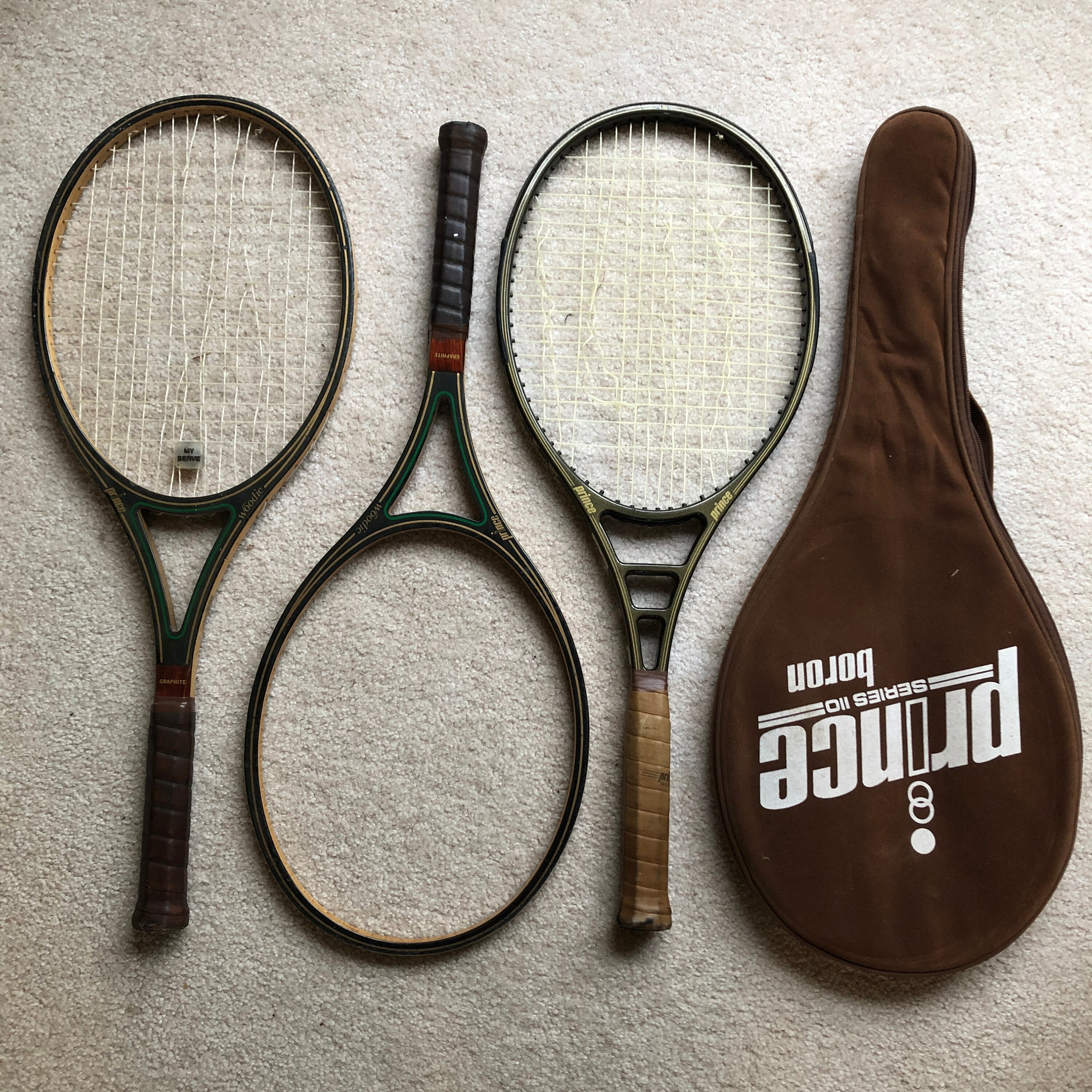
Founded in 1970 in Princeton, New Jersey, Prince initially manufactured tennis ball machines before revolutionizing racquet manufacturing. In 1976, Howard Head—founder of Head Ski Company—patented the Prince Classic, the world's first successful oversized tennis racquet. By increasing the head size from the standard 65–70 square inches to 110 square inches, Prince dramatically expanded the sweet spot, making the sport far more accessible to recreational players and empowering pros like Pam Shriver and Andre Agassi early in their careers.
Throughout the 1980s, 1990s, and 2000s, Prince dominated professional courts. Iconic players such as Michael Chang, Jennifer Capriati, Patrick Rafter, and Maria Sharapova won Grand Slam titles using Prince frames like the Original Graphite 107 and the Prince O3 White.
Following ownership restructurings in the 2010s under Authentic Brands Group, Prince adjusted its market positioning. Rather than competing purely for high-cost ATP/WTA player endorsements against mass-market giants like Wilson, Babolat, and Head, Prince refocused on racquet engineering, niche performance models, and player-centric design. Today, Prince maintains a devoted global following due to its commitment to low stiffness ratings, arm health, and tactile court feedback.
Key Technologies That Define Prince Performance
Prince has consistently relied on structural engineering to distinguish its racquets from competitors. Understanding these core technologies helps explain how modern Prince frames perform on court.
Textreme and Twaron Material Integration
Prince utilizes Textreme, an advanced carbon fiber fabric woven using thin flat tapes rather than traditional round carbon yarns. This spread-tow structure allows carbon fibers to pack more tightly together, resulting in a material that is roughly 20% lighter than standard carbon fiber composites without sacrificing torsional stability.
In modern models, Prince reinforces Textreme with Twaron, an aramid fiber similar to Kevlar. Twaron dampens harsh impact vibrations and enhances sound feedback upon contact. The combination of Textreme and Twaron allows Prince to build racquets that feel solid against heavy incoming balls while maintaining lower frame stiffness.
O3 Port Technology (O-Ports vs. Traditional Grommets)
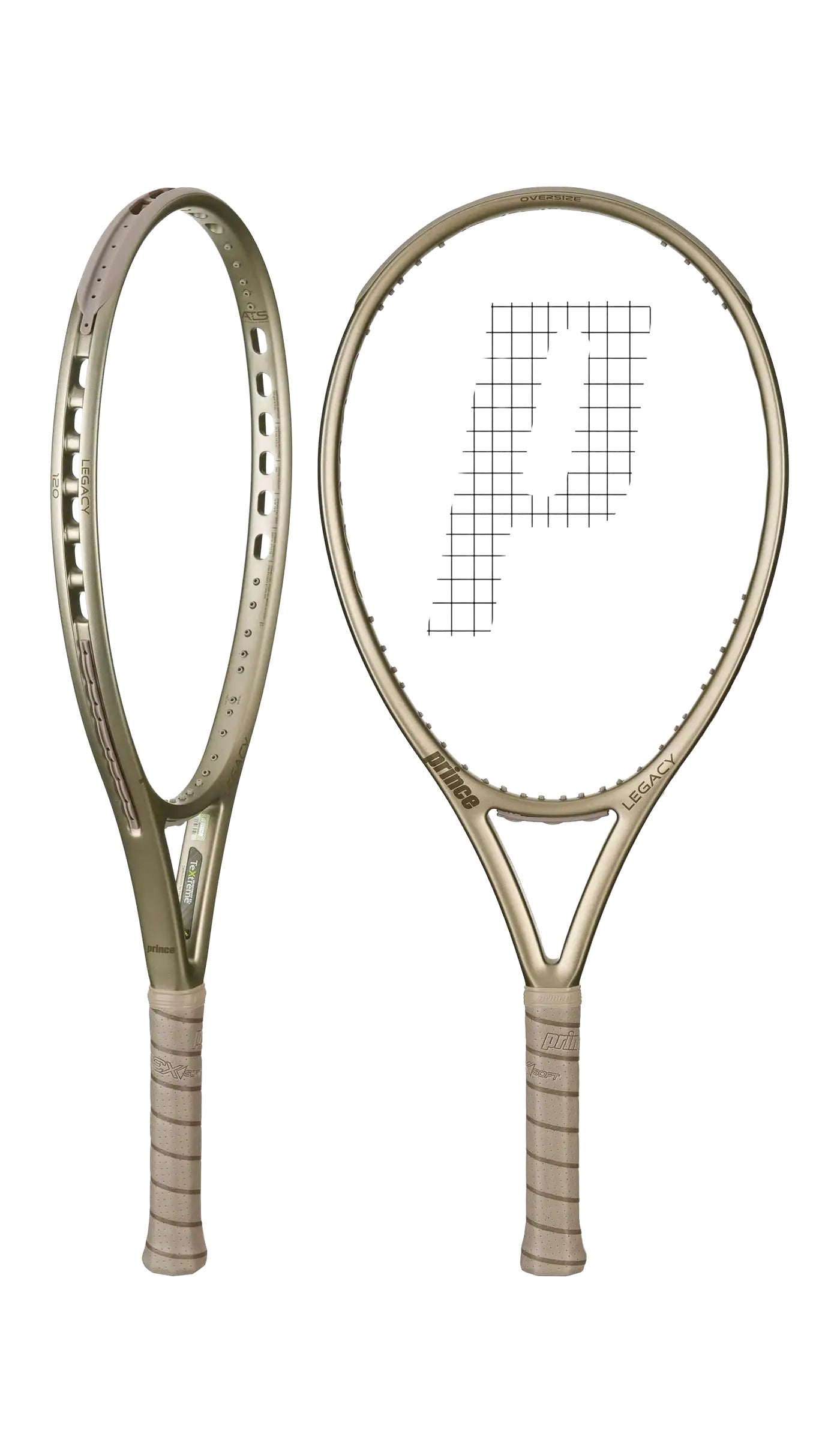
Introduced in the mid-2000s, O3 Port Technology remains one of the most radical departures from standard racquet construction. Instead of drilling small pinholes for plastic grommets, Prince molds large wind-tunnel-tested openings directly into the frame.
- Standard Grommet Frame:
- Frame Wall
- Pin Hole Grommet
- Restricts String Movement
- O3 Port Frame:
- Molded Arch
- Wide Open Hole
- Unrestricted String Bed Movement
This structural alteration yields two main performance benefits:
- Enhanced Aerodynamics: Air flows directly through the ports rather than around a solid beam, increasing swing speed.
- Expanded Sweet Spot: Because strings pass through large open ports rather than rigid grommet holes, the string bed can deflect across a much wider surface area. This generates added trampolining, dampens off-center hits, and absorbs shock before it reaches the player's elbow or shoulder.
Anti-Torque System (ATS)
The Anti-Torque System (ATS) places Textreme and Twaron at the 2 o'clock and 10 o'clock positions in the racquet head, in addition to the shaft. Positioning rigid structural material at these perimeter points limits frame twisting during off-center contact, enhancing direction control and shot predictability without requiring a stiff, uncomfortable frame layup.
Analyzing Prince’s Core Racquet Lineup
Prince structures its racquet offerings into distinct families tailored to specific playing styles, swing speeds, and physical needs.
| MAX CONTROL & FLEX (Phantom Series) | BALANCED SPEED (Tour Series) | MAX POWER & SPIN (Ripstick/Beast) |
|---|---|---|
| Thin beams (16-20mm) | Moderate beams (20-23mm) | Wide beams (25-30mm) |
| Flex ratings < 60 RA | Flex ratings 62-65 RA | Flex ratings > 65 RA |
| Precision & Comfort | All-court Versatility | Easy Depth & Spin |
Prince Tour Series: Balanced Control and Modern Spin
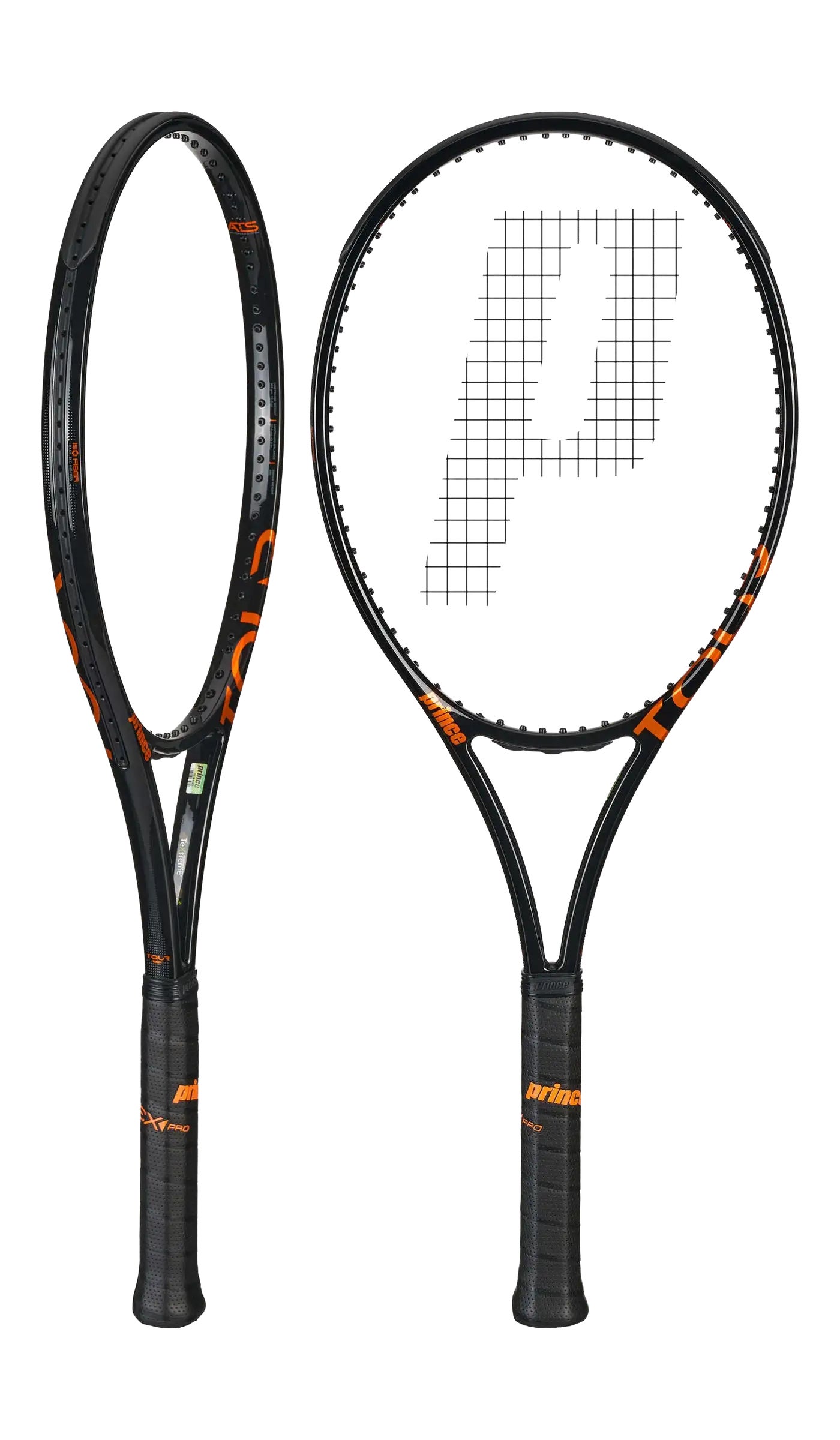
The Tour family serves as Prince’s flagship all-court racquet line, directly competing with the Wilson Blade and Head Radical. Featuring moderate beam widths (typically 20mm to 23mm) and medium stiffness ratings (62 to 65 RA), Tour racquets balance plow-through weight with spin potential. Available in both traditional grommet configurations and O3 port versions, the Tour series appeals to baseline grinders and aggressive all-court players who want predictable depth control.
Prince Phantom Series: Superior Flex, Feel, and Arm Comfort
The Phantom series caters to purists and players with history of tennis elbow (lateral epicondylitis). Featuring ultra-thin, tapered cross-sections—sometimes dipping down to 16mm at the throat—and flex ratings often under 60 RA, the Phantom offers unmatched ball pocketing and flex. Shots sink deep into the string bed, offering precision and tactical control for players who supply their own power through long, fast swings.
Prince Ripstick Series: High Energy, Maximum Power, and Spin
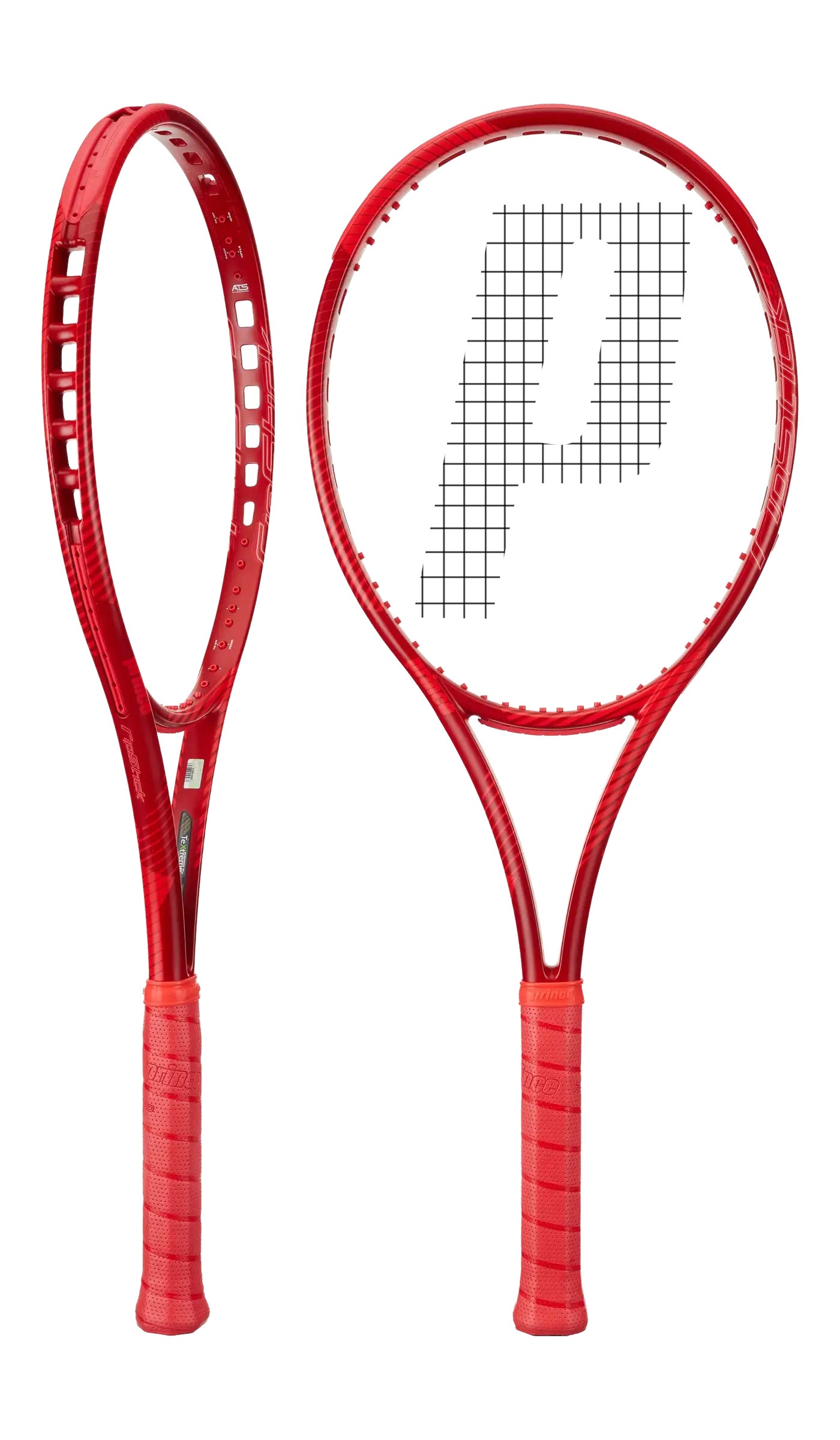
Designed for players needing free depth, heavy topspin, and forgiveness, the Ripstick features aggressive 28mm-to-30mm wide beams and prominent O3 ports. The wide frame geometric design provides stability, while the massive O-ports allow the string bed to snap back dynamically, imparting heavy spin with minimal physical effort.
Prince Beast and Warrior Series: Accessible Power for Intermediate Play
The Beast and Warrior lines bridge the gap between pure comfort and high-energy output. Utilizing crisp, modern graphite layups, these lines deliver responsive pace and a generous sweet spot, making them ideal for intermediate club players, doubles specialists, and players seeking easy access to depth on defensive shots.
Prince Racquet Comparison Matrix
The table below outlines key technical specifications across current primary Prince racquet families to help narrow down selection:
| Racquet Series | Average Beam Width | Typical Flex (RA) | String Pattern Options | Target Player Profile | Standout Characteristic |
|---|---|---|---|---|---|
| Prince Phantom | 16mm – 20mm | 53 – 59 RA | 16x18, 16x20 | Advanced players, traditionalists, players with joint pain | Exceptional flex, deep ball-pocketing, supreme precision |
| Prince Tour | 20mm – 23mm | 62 – 65 RA | 16x19, 18x20 | Intermediate to advanced all-court players | Balanced spin, controllable power, solid plow-through |
| Prince Ripstick | 28mm – 30mm | 67 – 69 RA | 16x15, 16x19 | Beginners, intermediates, spin-focused baseline players | High power, large sweet spot, aggressive string snapback |
| Prince Beast | 24mm – 26mm | 65 – 68 RA | 16x19 | Intermediate club players, doubles players | Crisp contact, consistent depth, firm response |
Pros and Cons of Choosing Prince Tennis Gear
Evaluating Prince requires balancing its mechanical advantages against market realities.
Key Advantages of Prince
- Superior Arm Comfort: Prince racquets consistently feature lower flex ratings and shock-dampening layups compared to industry averages. Players suffering from arm fatigue or tendonitis often find immediate relief switching to Prince.
- Distinctive Feel Options: By offering both traditional grommets and O3 port variants across major lines, Prince gives players a direct choice between crisp feedback and muted, high-forgiveness response.
- High Build Consistency: Prince racquets generally feature tight manufacturing tolerances, ensuring matched pairs of frames exhibit minimal variance in static weight and swingweight.
- Value for Money: Prince frames, string reels (such as Prince Synthetic Gut Duraflex and Prince Warrior Response), and bags are frequently priced more competitively than equivalent flagship products from rival brands.
Potential Drawbacks and Limitations
- Polarizing O3 Port Feel: The muted dampening of O3 ports removes harsh vibrations, but some advanced players report a reduced sensory feedback for precise touch volleys and drop shots.
- Restringing Complexity: Stringing O3 port frames requires locking the turntable or using a specialized brake on the stringing machine to hold the angle while tensioning main strings through open ports.
- Limited Retail Availability: While readily available online through major racquet specialists, physical pro shops carry smaller inventories of Prince gear compared to Wilson or Babolat frames.
How Prince Compares to Top Competitors
To decide if Prince suits your game, it helps to analyze how its characteristics compare to other leading tennis manufacturers.
- Arm Comfort & Flex to Stiffness & Power:
- PRINCE (Phantom)
- Ultra Flexible
- (53-62 RA)
- YONEX
- Medium-Soft
- (60-66 RA)
- HEAD
- Variable Specs
- (60-68 RA)
- WILSON
- Classic
- (62-70 RA)
- BABOLAT
- High Stiffness
- (67-72 RA)
- PRINCE (Phantom)
Prince vs. Wilson
Wilson produces legendary control frames like the Pro Staff and Blade. However, Wilson racquets tend to feel firmer on impact. Prince models like the Phantom flex far more than any current Wilson model, providing a softer, arm-friendly response. Wilson holds a dominant market share on professional tours, whereas Prince targets real-world playability and comfort.
Prince vs. Babolat
Babolat (famous for the Pure Drive and Pure Aero) builds stiffer, high-power frames designed for maximum topspin and power. These stiff frames (often 67 to 72+ RA) can send harsh vibrations down the arm if paired with stiff polyester strings. Prince offers far better joint protection; even high-power models like the Ripstick cushion impact through O3 port dynamics rather than relying purely on stiff frame walls.
Prince vs. Head & Yonex
Yonex and Head produce highly refined racquets with excellent control. Prince competes directly with Yonex’s comfortable flex profile, but Prince stands apart through its unique choice between thin-beam control frames (Phantom) and high-aerodynamic port frames (O3 Tour/Ripstick).
Strings, Bags, and Accessories
Prince’s reputation extends beyond racquets into strings and accessories:
- Prince Synthetic Gut Duraflex: Widely considered the industry gold standard for synthetic gut strings, offering affordable durability, playability, and tension maintenance for recreational players and hybrid setups.
- Prince Phantom Touch / Tour XP: High-performance polyester strings engineered to maintain soft feel and high tension stability for player frames.
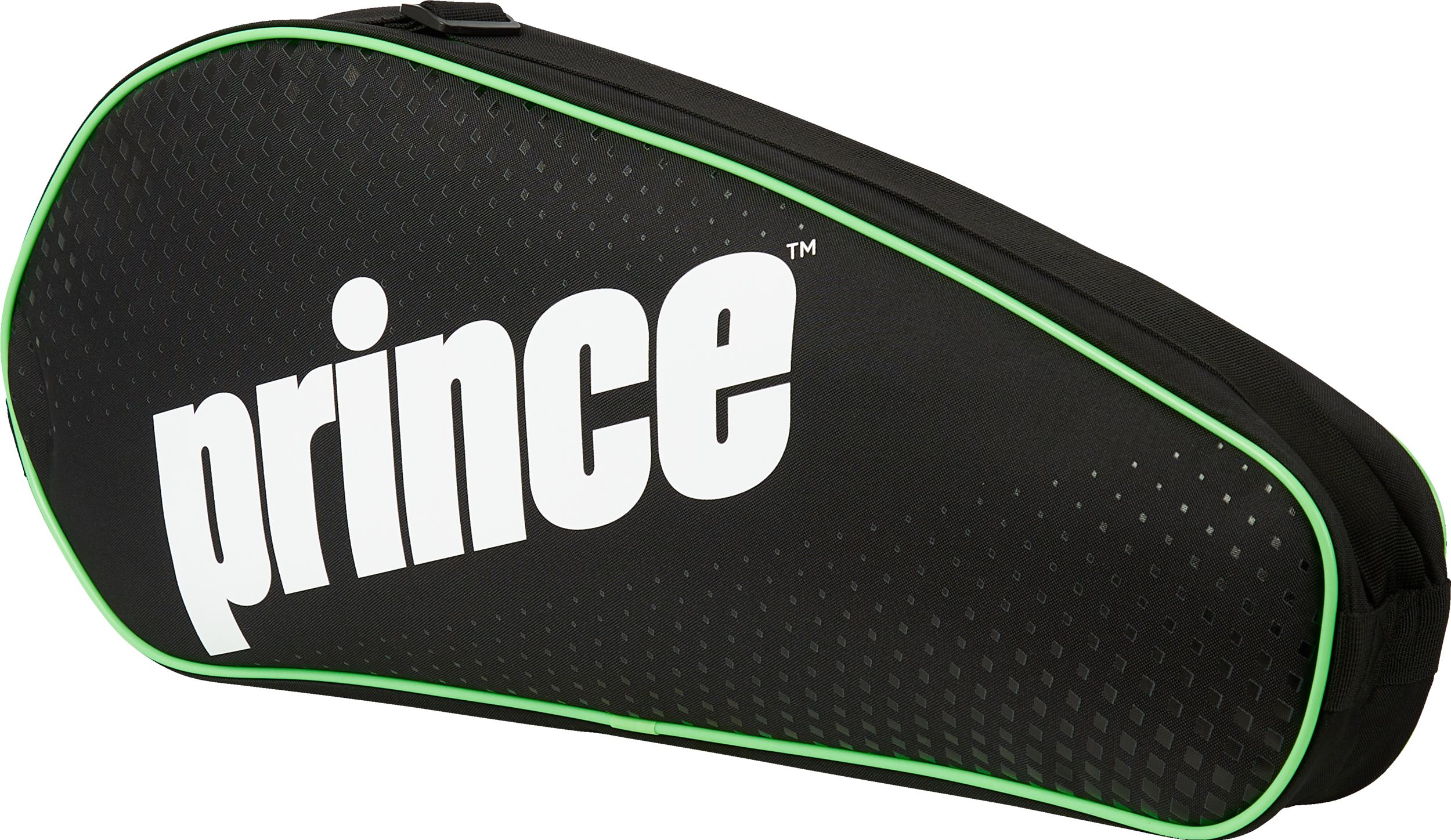
- Bags and Grip Tape: Prince ResiPro and ResiSoft replacement grips remain benchmark products used across various racquet brands for their moisture absorption and tacky texture.
Frequently Asked Questions
Are Prince tennis racquets good for beginners?
Yes. Prince offers beginner-friendly models like the Prince Ripstick and entry-level Beast variants. These racquets feature large head sizes (100–105+ sq inches), wide sweet spots, and light static weights that make it easy for developing players to hit deep, high-clearance shots.
Is Prince still a major tennis brand?
Yes. While Prince modified its marketing model to focus on equipment innovation and direct distribution rather than expensive player sponsorship contracts, it remains a major, highly respected brand. Its racquets are widely stocked by international tennis retailers and preferred by thousands of club and competitive players.
What is the difference between Prince O3 and regular grommet racquets?
Prince O3 racquets feature large molded wind holes instead of small plastic grommet holes. This design lowers air resistance, expands the sweet spot, and absorbs impact shock. Standard grommet models from Prince offer a firmer, crisp hit with more traditional sound and feedback.
Which Prince racquet is best for tennis elbow?
The Prince Phantom series—specifically models like the Phantom 100 or Phantom 93P—is widely regarded as one of the best lines for players with tennis elbow. Its low frame stiffness (under 60 RA) and thin beam profile absorb impact forces before they travel up the arm.
What string tension works best for Prince O3 frames?
Because O3 ports allow strings to move freely, the string bed can feel slightly softer than standard frames strung at the same tension. Many players prefer stringing O3 frames 2 to 4 pounds higher than their typical tension to achieve their preferred level of control.
Final Verdict and Recommendation
Prince remains a top-tier tennis brand that delivers exceptional equipment engineering, particularly for players who prioritize comfort, flex, and precision control over hollow, ultra-stiff frame power.
- Choose a Prince Phantom if you have full, fast strokes, value traditional flex, or suffer from arm and elbow pain.
- Choose a Prince Tour if you are an intermediate or advanced player looking for a balanced, modern all-court racquet that competes directly with top control frames.
- Choose a Prince Ripstick or Beast if you want fast swing speeds, high baseline topspin, and easy power without sacrificing shock absorption.
To select your ideal frame, demo two variations of your chosen line—one with traditional grommets and one with O3 ports—to determine which impact feel best complements your timing and swing path.
Image Gallery