Benito Santiago Net Worth Explained: Career Salary, MLB Pension, and Financial Legacy
Former Major League Baseball catcher Benito Santiago holds an estimated net worth of $8 million to $12 million. Built over a 20-season MLB career spanning from 1986 to 2005, his wealth originates primarily from cumulative playing salar...
Former Major League Baseball catcher Benito Santiago holds an estimated net worth of $8 million to $12 million. Built over a 20-season MLB career spanning from 1986 to 2005, his wealth originates primarily from cumulative playing salaries totaling roughly $34.7 million, supplemented by endorsement contracts, baseball memorabilia sales, and a fully vested Major League Baseball pension.
Contents
Benito Santiago Financial Overview
Benito Santiago was one of baseball's premier catchers throughout the late 1980s and 1990s. Famous for his powerful throwing arm—often throwing out base-stealers directly from his knees—and his explosive offensive output, Santiago transitioned from an underpaid rookie phenom into one of the highest-paid catchers of his era.
Understanding a retired athlete's net worth requires distinguishing between gross career earnings and retained wealth. While headline salary figures reflect total contracts signed, taxes, management fees, cost of living, and investment outcomes significantly shape the final balance sheet.
| Financial Metric | Detail / Estimated Value |
|---|---|
| Estimated Net Worth | $8 Million – $12 Million |
| Total MLB Career Salary Earnings | ~$34.7 Million (Gross) |
| MLB Playing Career | 1986–2005 (20 Seasons) |
| Peak Single-Season Salary | $4.5 Million (1995, Cincinnati Reds) |
| Primary Wealth Drivers | MLB Salary, Fully Vested MLB Pension, Endorsements |
| Key Career Accolades | 1987 NL Rookie of the Year, 5× All-Star, 3× Gold Glove, 4× Silver Slugger |
Breakout into Major League Baseball: Early Salary Growth (1986–1992)
Benito Santiago signed with the San Diego Padres as an amateur free agent from Puerto Rico in 1982. When he made his permanent major league debut late in 1986, league rules mandated standard minimum salaries. In 1987, his official rookie season, Santiago earned approximately $62,500—the league minimum at the time.
That 1987 campaign proved historic. Santiago hit .300 with 18 home runs and set a major league rookie record with a 34-game hitting streak. He won the National League Rookie of the Year Award unanimously, immediately changing his leverage in future contract negotiations.
Benito Santiago Salary Growth (San Diego Padres):
- 1987: $62,500 (League Minimum / Rookie Year)
- 1988: $250,000 (First Major Salary Bump)
- 1990: $1.25M (Arbitration / Gold Glove Years)
- 1992: $3.30M (Final Season with Padres)
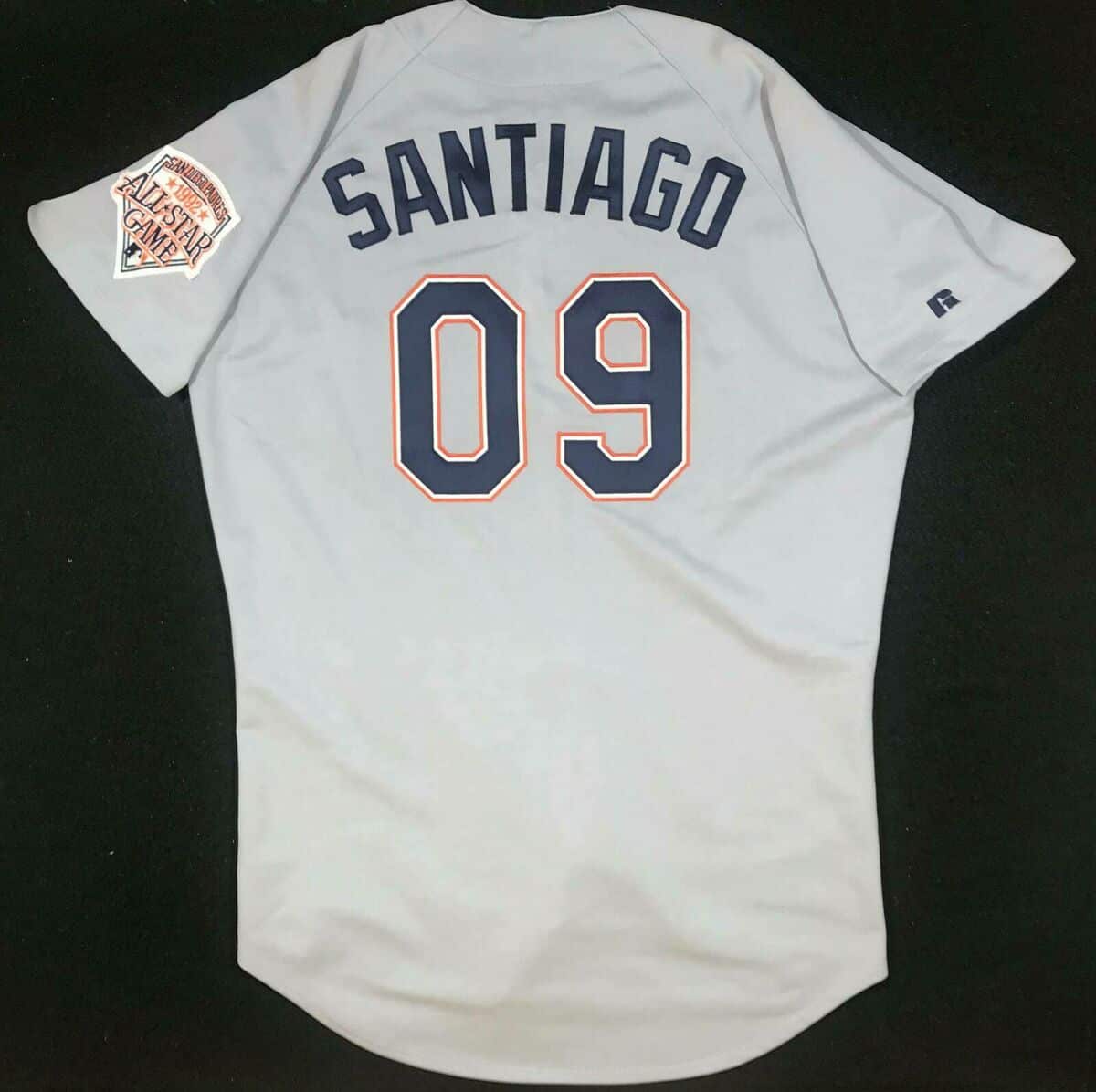
Through the salary arbitration process, Santiago's compensation scaled rapidly as his awards stacked up, including three consecutive Gold Gloves (1988–1990) and four National League All-Star selections as a Padre:
- 1988–1989: After his rookie breakout, San Diego renewed his contract for $250,000 in 1988, raising it to over $600,000 in 1989 as he secured his first Gold Glove and All-Star honors.
- 1990–1991: Santiago crossed the million-dollar threshold in 1990, earning $1.25 million, followed by $2.5 million in 1991.
- 1992: In his final arbitration-eligible year before true free agency, Santiago earned $3.3 million from the Padres.
By the time Santiago departed San Diego at the end of the 1992 season, his gross earnings with the franchise stood at approximately $8 million.
Free Agency and High-Value Contracts (1993–2000)
The launch of the Florida Marlins expansion franchise in 1993 created a booming market for established veteran talent. The Marlins targeted Santiago to serve as the inaugural face of their defense, signing him to a multi-year deal that made him one of the highest-paid catchers in baseball.
Free Agency & Journeyman Phase (1993–2000 Gross Salaries):
- Florida Marlins (1993–1994): ~$7.2 Million
- Cincinnati Reds (1995): ~$4.5 Million
- Philadelphia Phillies (1996): ~$2.25 Million
- Toronto / Chicago (1997–1998): ~$4.3 Million
The Florida Marlins Deal
Santiago signed a two-year contract with Florida worth over $7 million. He earned $3.2 million in 1993 and $4.0 million during the strike-shortened 1994 season. This contract anchored his career wealth accumulation, establishing a multi-million-dollar baseline earnings rate.
Cincinnati Reds and Philadelphia Phillies
Following his stint in Florida, Santiago hit free agency again:
- Cincinnati Reds (1995): Signed a one-year deal worth $4.5 million, marking the single highest base salary season of his entire career. He proved his worth by hitting 11 home runs and driving in 44 runs in 81 games.
- Philadelphia Phillies (1996): Signed a one-year contract for $2.25 million. Santiago delivered an exceptional offensive performance, hitting 30 home runs and driving in 85 runs, both career highs.
Late 1990s Transition Period
Between 1997 and 2000, injuries and age slowed Santiago's production, leading to shorter-term contracts:
- Toronto Blue Jays (1997–1998): Signed a two-year deal worth roughly $4.3 million. However, a severe car accident in early 1998 in Florida caused knee injuries that sidelined him for most of the season, after which he was traded to the Chicago Cubs.
- Cincinnati Reds (2000): Returned to Cincinnati on a low-risk, one-year contract valued at under $1 million after spending 1999 recovering and working back through independent baseball.
Despite injury setbacks, Santiago’s earnings from 1993 through 2000 added more than $18 million to his career total, according to financial data tracked by Baseball-Reference.
The San Francisco Giants Resurgence and Final Seasons (2001–2005)
Many analysts assumed Santiago's career was winding down by 2001. However, his move to the San Francisco Giants sparked a second peak in both performance and earning power.
Late-Career Earnings (2001–2005):
- 2001 (SF Giants): ~$800,000 (Base + Incentives)
- 2002 (SF Giants): ~$2.15 Million (NLCS MVP Season)
- 2003 (SF Giants): ~$4.0 Million (Multi-Year Extension)
- 2004 (KC Royals): ~$2.15 Million
- 2005 (PIT Pirates): ~$500,000 (Final Season)
The San Francisco Career Revival
In 2001, Santiago signed a modest deal with San Francisco for under $1 million. He surprised baseball critics by catching 133 games, batting .263, and hitting 10 home runs.
The Giants rewarded him with an extended contract for 2002 and 2003:
- 2002 Season: Earning $2.15 million, Santiago earned his fifth All-Star selection, won his fourth Silver Slugger Award, and was named the 2002 National League Championship Series (NLCS) MVP after helping lead the Giants to the World Series.
- 2003 Season: Santiago earned $4.0 million in 2003, putting up 20 home runs and 56 RBIs while providing veteran defense behind the plate.
Kansas City Royals and Pittsburgh Pirates
Santiago finished his playing career with short contracts:
- Kansas City Royals (2004): Signed a two-year contract worth $4.3 million, but was limited by a hand injury after receiving a $2.15 million salary for the 2004 season.
- Pittsburgh Pirates (2005): Ended his 20-year career in Pittsburgh, appearing in 23 games before retiring.
Across his 20 active MLB seasons, Santiago gathered $34.7 million in gross base compensation.
Gross Salary vs. Realized Net Worth
A common misconception in sports finance is equating gross playing salary directly to current net worth. Professional athletes face high tax liabilities, institutional fees, and maintenance costs that substantially reduce gross revenue.
Gross MLB Salary ($34.7M):
- Federal & State Income Taxes (~40%–45%): -$14.5M to -$15.6M
- Agent, Legal & Financial Advisory (~5%): -$1.7M
- Living Expenses & Lifestyle Maintenance: -$8.0M to -$10.0M
- Retained Wealth & Investments (Estimated: $8M – $12M)
Key Deductions from Santiago's Gross Earnings
- Federal and State Taxes: Major League Baseball players are subject to combined federal, state, and local income taxes. Additionally, the "jock tax" forces players to pay state income taxes in every state where they play away games. Combined tax burdens routinely absorbed 40% to 45% of Santiago’s income.
- Agent and Professional Fees: Sports agents typically take between 3% and 5% of gross contract value. Accountancy, legal, and financial management services add further annual costs.
- Post-Career Preservation: Maintaining real estate, covering personal expenses, and managing family requirements across a multi-decade post-retirement period gradually reduce liquid capital unless offset by investment yield.
Taking these structural reductions into account, a gross career total of $34.7 million naturally yields an estimated net worth in the $8 million to $12 million range, assuming prudent investment management.
MLB Pension Plan and Post-Career Financial Security
One of the most critical structural components of Benito Santiago’s long-term financial security is the Major League Baseball Players Association Pension Plan. The MLB pension is widely recognized as one of the most generous retirement funds in professional sports.
Pension Structure and Vesting
- Full Vesting: An MLB player needs just 10 full years of credited service to receive the maximum benefit under the union plan. Santiago logged 20 years of active service, comfortably qualifying for the upper bracket of pension payments.
- Payout Schedule: Retired players who elect to begin receiving pension payments at age 62 receive the maximum annual payout, which for veteran players of Santiago's generation exceeds $200,000 per year index-adjusted.
- Healthcare Benefits: MLB players achieve lifetime medical coverage after just 43 days of service, eliminating major post-career health insurance overhead for long-tenured veterans.
This pension annuity provides a secure financial floor that protects Santiago’s base net worth from market volatility or asset depreciation.
Endorsements, Memorabilia, and Post-Playing Income
While playing contracts constituted the majority of Santiago’s earnings, off-field income streams contributed to his total wealth balance.
- Equipment Endorsements: As a prominent backstop during the late 1980s and 1990s, Santiago secured equipment and apparel contracts with major brands like Rawlings, Mizuno, and Nike. Equipment manufacturers paid catchers of his caliber annual retainers to wear their gear on national broadcasts.
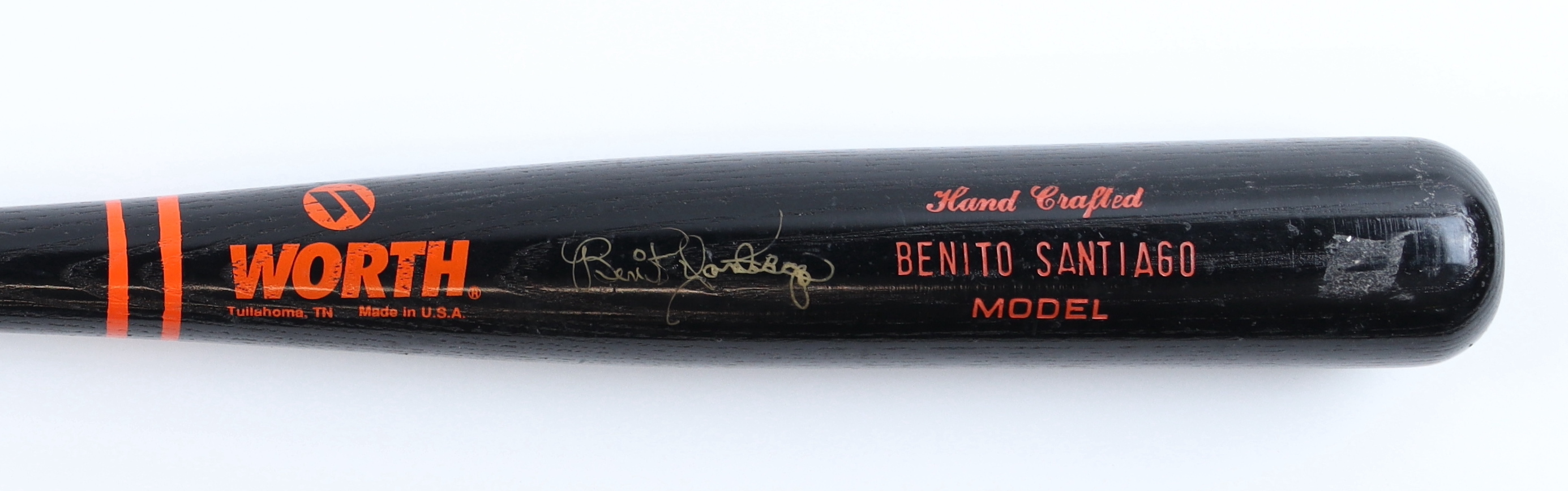
- Autographs and Memorabilia: Santiago remains a popular figure among autograph collectors, particularly in San Francisco and San Diego. Participation in sports card shows, fan conventions, and private signing sessions continues to provide regular income.
- Coaching and International Baseball: Following his MLB retirement, Santiago took on sporadic coaching roles and remained involved in international baseball events, supplementing his post-career earnings.
Frequently Asked Questions
What is Benito Santiago’s estimated net worth?
Benito Santiago’s estimated net worth is between $8 million and $12 million. This wealth was accumulated through 20 seasons of MLB salaries, endorsement deals, post-retirement income, and a fully vested MLB pension.
How much money did Benito Santiago make in MLB salaries?
During his 20-season career from 1986 to 2005, Benito Santiago earned approximately $34.7 million in gross base salaries. His highest single-season earnings came in 1995 with the Cincinnati Reds, where he earned $4.5 million.
What was Benito Santiago’s biggest MLB contract?
Santiago’s largest individual contract by annual value was his one-year, $4.5 million deal with the Cincinnati Reds in 1995. He also signed multi-year deals worth over $7 million with the Florida Marlins (1993–1994) and over $6 million with the San Francisco Giants (2002–2003).
Does Benito Santiago receive an MLB pension?
Yes. Because Santiago logged 20 years of MLB service—double the 10-year threshold required for maximum benefits—he receives the maximum allowable MLB pension payout, which provides over $200,000 annually if deferred until age 62, alongside lifetime health coverage.
Why did Benito Santiago throw from his knees?
Santiago popularized throwing to second base directly from his knees to reduce his pop-up time and surprise base-stealers. His elite arm strength made the unconventional technique effective, helping him win three consecutive Gold Glove Awards from 1988 to 1990.
Key Financial Takeaways
Benito Santiago’s overall financial journey demonstrates how long-term consistency in high-level professional sports translates into lasting wealth:
- Leveraging Early Success: Santiago used his historic 1987 Rookie of the Year campaign to maximize arbitration payouts early in his career.
- Capitalizing on Expansion: Timing his first full free agency with the 1993 arrival of the Florida Marlins allowed him to secure top-market contract rates.
- Late-Career Value Creation: Rather than retiring after injuries in the late 1990s, his 2001–2003 revival with the San Francisco Giants added millions to his career total and secured an NLCS MVP title.
- Institutional Pension Backing: Reaching 20 years of MLB service guaranteed top-tier retirement income via the MLBPA pension structure, protecting his accumulated wealth throughout retirement.
Image Gallery