Dr. Kristen Holmes Age, Biography, and Performance Science Career
Dr. Kristen Holmes is estimated to be approximately 50 to 51 years old, based on her collegiate athletic career at the University of Iowa, where she graduated in 1997. As the Vice President of Performance Science at WHOOP, her age ofte...
Dr. Kristen Holmes is estimated to be approximately 50 to 51 years old, based on her collegiate athletic career at the University of Iowa, where she graduated in 1997. As the Vice President of Performance Science at WHOOP, her age often attracts interest from longevity enthusiasts keen to understand how she applies her research on biological aging, sleep, and circadian health to her own lifestyle.
Contents
Executive Profile and Biographical Timeline
Dr. Kristen Holmes is a prominent figure in executive leadership, sports science, and physiological research. Before establishing herself as a leading expert in human performance technology, she spent over a decade coaching elite collegiate athletes and competing at the international level. Her career spans elite athletics, high-level university coaching, doctoral research, and corporate technology leadership.
Understanding her age and professional trajectory requires examining her transition from an elite multi-sport athlete in the mid-1990s to an NCAA championship-winning coach, and ultimately to an executive leading research at the forefront of wearable health technology.
Collegiate Athletics and International Competition (1993–2000)
Dr. Holmes attended the University of Iowa, competing as a dual-sport varsity athlete in field hockey and basketball. During her undergraduate tenure, she earned 3-time All-American honors and 4-time All-Big Ten selections in field hockey, graduating with a Bachelor of Arts in Political Science in 1997. Assuming standard university entry ages of 18 in 1993, her birth year falls around 1975.
Following her collegiate career, she represented the United States as a member of the U.S. National Field Hockey Team from 1995 through 2000. Competing at the international level exposed her firsthand to the physiological demands of elite training, recovery management, and peak physical conditioning—experiences that later formed the foundation of her research in autonomic nervous system balance and human performance.
Princeton University Coaching Era (2002–2015)
In 2002, Dr. Holmes was appointed Head Coach of the Women's Field Hockey program at Princeton University. Over her 13-season tenure, she transformed the program into a national powerhouse, accumulating one of the most successful coaching records in Ivy League history:
- 12 Ivy League Titles: Winning 12 conference championships in 13 seasons.
- 2012 NCAA National Championship: Leading Princeton to its first-ever NCAA Division I National Championship in field hockey, becoming the first Ivy League program to win an NCAA field hockey title.
- Coaching Honors: Named NFHCA National Coach of the Year in 2012 and earned multiple regional and Ivy League Coach of the Year awards.
During her time at Princeton, Dr. Holmes became increasingly interested in the data driving athlete availability, recovery, and stress resilience. Recognizing that physical conditioning alone did not guarantee peak game-day execution, she began integrating emerging biometric monitoring, sleep tracking, and rest protocols into her team’s training regimens.
Advanced Academic Degrees and Research (2012–2021)
To build a rigorous scientific foundation beneath her practical performance strategies, Dr. Holmes pursued advanced graduate education while coaching and managing executive responsibilities:
- Master of Arts (Columbia University, 2012): Earned an M.A. in Sports Psychology from Columbia University, focusing on the psychological drivers of team dynamics, stress management, and elite execution.
- Doctor of Philosophy (University of Queensland, 2021): Completed her Ph.D. in Human Performance, Gender Difference, and Rest Recovery at the University of Queensland under the mentorship of leading exercise physiologists. Her doctoral dissertation evaluated circadian biology, autonomic nervous system recovery, and physiological resilience in high-performing populations.
Corporate Executive Leadership at WHOOP (2016–Present)
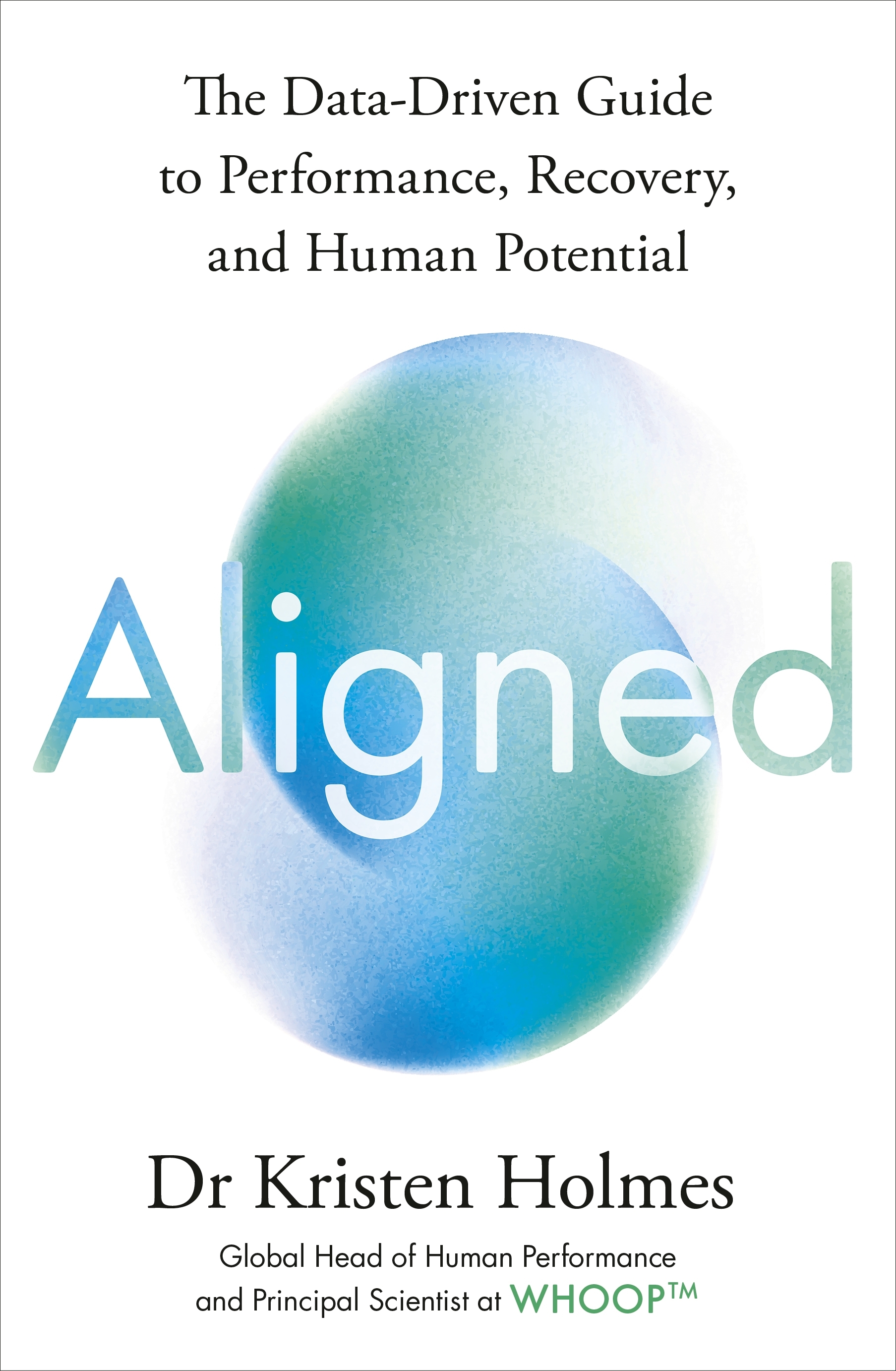
In 2016, Dr. Holmes joined WHOOP, human performance data company, as Vice President of Performance Science. In this capacity, she leads the organization’s research initiatives, driving studies on biometric tracking, heart rate variability (HRV), sleep architecture, and stress mitigation.
She serves as Principal Investigator on operational research projects collaborating with academic institutions, military units, and professional athletic leagues. In addition to her research operations, she hosts The WHOOP Podcast, where she interviews biomedical researchers, neuroscientists, and elite performers on physiological optimization.
Milestone Summary and Academic Background
The following table summarizes the key phases of Dr. Kristen Holmes' professional and academic development.
| Milestone / Period | Organization / Institution | Role / Qualification | Primary Focus & Achievements |
|---|---|---|---|
| 1993–1997 | University of Iowa | B.A., Student-Athlete | 3x All-American, 4x All-Big Ten in Field Hockey |
| 1995–2000 | U.S. Field Hockey Association | U.S. National Team Athlete | International competition, elite physiological conditioning |
| 2002–2015 | Princeton University | Head Coach, Women's Field Hockey | 12 Ivy League Titles, 2012 NCAA Division I National Champions |
| 2010–2012 | Columbia University | Master of Arts (M.A.) | Sports Psychology, stress resilience, cognitive performance |
| 2016–Present | WHOOP, Inc. | VP of Performance Science | Research leadership, scientific study design, biometric product development |
| 2017–2021 | University of Queensland | Doctor of Philosophy (Ph.D.) | Research on physiological stress, autonomic recovery, circadian biology |
Physiological Aging vs. Chronological Age in Dr. Holmes' Research
Public search interest in "Dr. Kristen Holmes age" stems not only from biographical curiosity, but also from her public commentary regarding chronological age versus biological (or physiological) age.
In longevity science and human performance, chronological age refers strictly to the number of calendar years elapsed since birth. In contrast, biological age reflects functional biomarkers, cellular health, metabolic stability, and autonomic nervous system tone.
[Chronological Age] --> Fixed calendar calculation (Years since birth) vs. [Biological / Bio-Age] --> Dynamic physiological biomarkers (HRV, Sleep, Circadian Stability)
Dr. Holmes’ work emphasizes that while chronological age is fixed, biological aging is highly malleable. Through intentional behavioral choices, individuals can alter key biomarkers associated with systemic aging.
1. Heart Rate Variability (HRV) as a Biomarker of Youthfulness
Heart Rate Variability measures the beat-to-beat variation in time intervals generated by the heart, reflecting the balance between the sympathetic ("fight or flight") and parasympathetic ("rest and digest") branches of the autonomic nervous system.
As individuals age chronologically, baseline HRV typically trends downward, reflecting a reduction in parasympathetic tone and cardiac flexibility. Dr. Holmes' research highlights that maintaining high HRV relative to one's age cohort correlates with superior stress resilience, faster recovery from physical exertion, and preserved cardiovascular capacity.
2. Circadian Health and Cellular Repair
Circadian alignment plays a fundamental role in controlling metabolic homeostasis, hormone secretion (including human growth hormone and melatonin), and cellular repair mechanisms. Dr. Holmes frequently emphasizes that circadian disruption—caused by irregular sleep schedules, late-night light exposure, and delayed meal timing—accelerates physiological aging.
By maintaining consistent sleep-wake timing, individuals stabilize their internal central biological clock (located in the suprachiasmatic nucleus of the brain). This alignment optimizes deep sleep (Slow Wave Sleep) and REM sleep, which are vital for physical restoration and cognitive maintenance as the body matures.
3. Autonomic Stress Load and Recovery
Chronic stress elevation accelerates biological aging by maintaining elevated cortisol levels, suppressing immune function, and disrupting metabolic processes. Dr. Holmes advocates for proactive recovery protocols—such as breathwork, cold/heat therapy, deliberate light exposure, and strategic rest—to counteract autonomic stress accumulation.
Core Research Focus Areas at WHOOP
As Head of Performance Science, Dr. Holmes oversees research examining how lifestyle behaviors influence human capacity. Her scientific contributions center on several core pillars.
Female Physiology and Performance Dynamics
Historically, athletic and physiological research heavily favored male cohorts. Dr. Holmes has championed research focused on female physiology, particularly how hormonal fluctuations across the menstrual cycle impact heart rate variability, baseline body temperature, sleep efficiency, and training capacity. Her work helps female athletes optimize training loads based on specific physiological phases rather than generic training templates.
Behavioral Architecture and Sleep Consistency
A primary theme in Dr. Holmes' publications is sleep consistency—going to bed and waking up within a narrow timeframe each day. Her research demonstrates that sleep consistency is often more predictive of recovery quality, mood balance, and cognitive function than absolute sleep duration alone. Stable sleep anchors circadian rhythms, allowing the body to complete necessary repair cycles uninterrupted.
Biometric Tracking in High-Stress Environments
Dr. Holmes has collaborated with tactical populations, including military units and healthcare workers, to examine how continuous biometric tracking influences stress resilience. Her studies evaluate how real-time feedback on strain and recovery alters behavioral choices, helping individuals avoid burnout and maintain functional capacity under continuous strain.
Frequently Asked Questions
What is Dr. Kristen Holmes' estimated age?
Based on her collegiate graduation date from the University of Iowa in 1997, Dr. Kristen Holmes is estimated to be approximately 50 to 51 years old as of 2026.
What are Dr. Kristen Holmes' academic credentials?
Dr. Holmes holds a Bachelor of Arts in Political Science from the University of Iowa (1997), a Master of Arts in Sports Psychology from Columbia University (2012), and a Ph.D. in Human Performance, Gender Difference, and Rest Recovery from the University of Queensland (2021).
What role does Dr. Kristen Holmes hold at WHOOP?
Dr. Kristen Holmes serves as the Vice President of Performance Science at WHOOP. In this role, she directs performance research, leads scientific studies, contributes to biometric algorithm development, and hosts The WHOOP Podcast.
What sport did Dr. Kristen Holmes coach at Princeton University?
Dr. Holmes was the Head Coach of the Women's Field Hockey team at Princeton University from 2002 to 2015. She led the program to 12 Ivy League titles and the 2012 NCAA Division I National Championship.
What is the difference between biological age and chronological age according to performance science?
Chronological age measures the precise time elapsed since birth. Biological age evaluates physiological health using functional biomarkers such as Heart Rate Variability (HRV), resting heart rate, sleep efficiency, and metabolic resilience. While chronological age cannot be changed, biological age can be lowered or maintained through behavioral choices like regular sleep schedules, proper nutrition, and targeted recovery.
What are Dr. Holmes' core recommendations for improving sleep architecture?
Dr. Holmes recommends prioritizing sleep consistency (consistent sleep and wake times), securing bright natural sunlight exposure within one hour of waking, avoiding heavy meals and alcohol close to bedtime, and maintaining a cool, dark sleeping environment to maximize slow-wave and REM sleep phases.
Practical Takeaways for Applying Dr. Holmes' Performance Protocols
For individuals seeking to apply the physiological insights championed by Dr. Kristen Holmes to optimize their own longevity and performance, consider implementing these evidence-based principles:
- Establish Strict Sleep Consistency: Aim to go to bed and wake up within a 30-to-45-minute window every day of the week to reinforce your circadian clock.
- Prioritize Early-Morning Sunlight: Expose your eyes to outdoor daylight for 10–15 minutes shortly after waking to stimulate early cortisol release and set your nighttime melatonin timer.
- Monitor Autonomic Balance: Track metrics like Heart Rate Variability (HRV) and Resting Heart Rate (RHR) to gauge physiological recovery before engaging in high-intensity physical strain.
- Align Nutrition with Circadian Rhythms: Finish your final meal 2–3 hours before sleep to prevent elevated nighttime core body temperatures and digestion-induced sleep fragmentation.
- Implement Strategic Autonomic Regulation: Utilize structured breathwork techniques (such as physiological sighs or box breathing) during periods of acute stress to reactivate parasympathetic tone rapidly.
Image Gallery