Santander Bank in Spain: Size, Reach, and Regulatory Scrutiny Analysis
Banco Santander stands as Spain's largest banking institution and a Global Systemically Important Bank (G-SIB). Operating across Europe, North America, and South America, its massive footprint creates a unique operational profile. Sant...
Banco Santander stands as Spain's largest banking institution and a Global Systemically Important Bank (G-SIB). Operating across Europe, North America, and South America, its massive footprint creates a unique operational profile. Santander's financial scale subjects it to intense regulatory scrutiny from the European Central Bank, Banco de España, and international oversight authorities enforcing capital adequacy and compliance standards.
Contents
Domestic Dominance and Global Footprint of Banco Santander
Banco Santander, S.A. occupies a foundational position within Spain’s domestic economy while maintaining one of the most geographically diversified balances of any European financial institution. Founded in Santander, Cantabria, the bank evolved through decades of strategic domestic consolidation—most notably the 2017 acquisition of Banco Popular Español—and aggressive international expansion across Latin America, the United Kingdom, and the United States.
- BANCO SANTANDER, S.A. (Global Systemically Important Bank (G-SIB))
- DOMESTIC MARKET (SPAIN)
- Retail & Corporate Market Share Leadership
- Public Sector Financing
- INTERNATIONAL REACH (MULTINATIONAL HUBS)
- Europe (UK, PL)
- North Amer. (US, MX)
- South Amer. (BR, CL, AR)
- DOMESTIC MARKET (SPAIN)
In Spain, Santander functions as a primary engine for retail deposit-taking, mortgage underwriting, corporate lending, and public sector debt financing. Its domestic operations serve tens of millions of retail and commercial clients. The institution's market power allows it to shape lending conditions across Spain, though it also concentrates systemic risk within the Iberian financial ecosystem.
Beyond the Iberian Peninsula, Santander operates a decentralized subsidiary model. Unlike centralized international banking structures, Santander's subsidiaries—such as Santander UK, Banco Santander Brasil, and Santander Bank, N.A. in the United States—are structurally self-sufficient in capital and liquidity. This structural design insulates the parent company in Madrid from localized financial contagion in any single geographic market.
However, this model requires navigating distinct legal frameworks, macroeconomic environments, and local regulatory requirements simultaneously.
Domestic Market Position in Spain
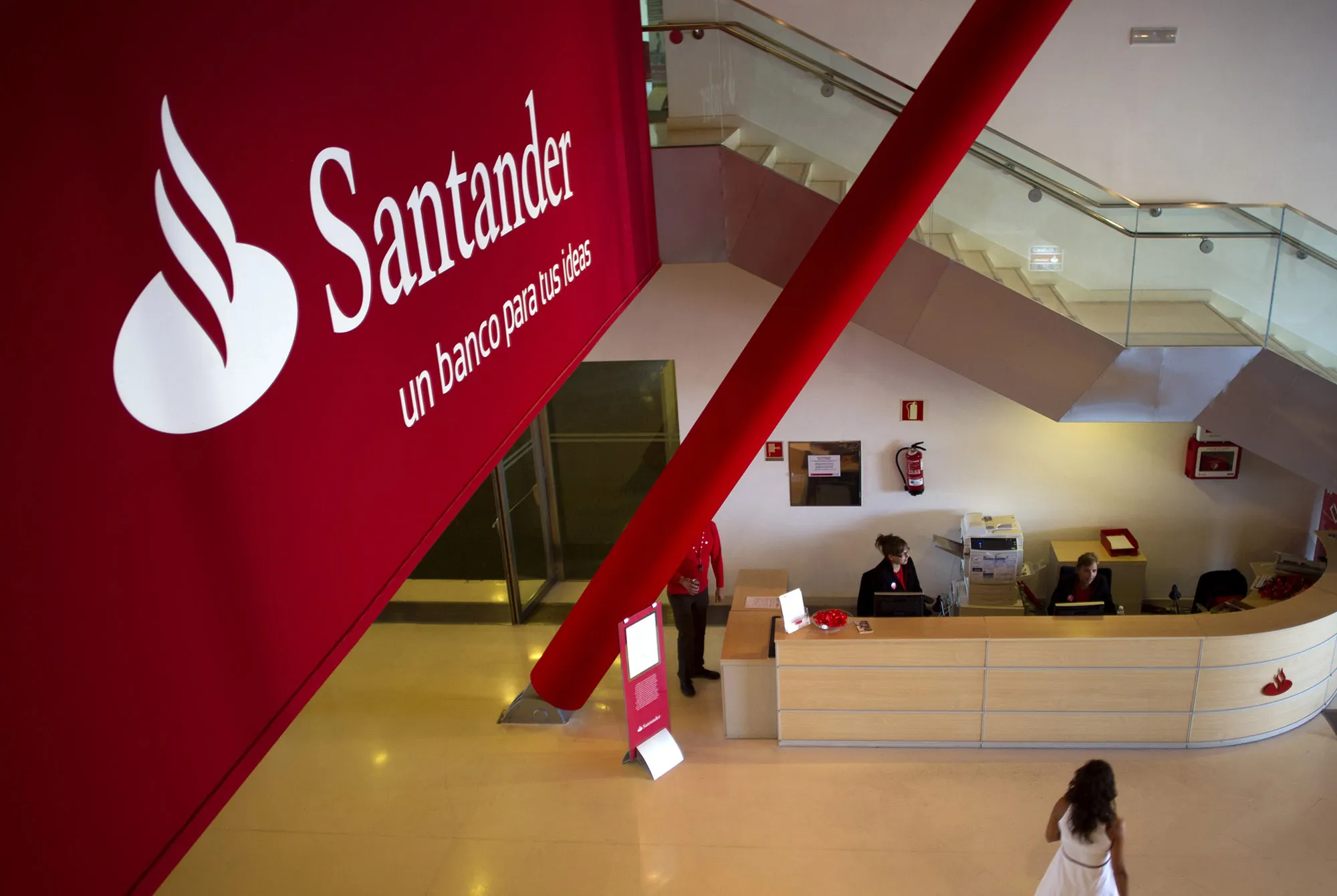
Within the Spanish domestic landscape, Santander maintains leadership alongside major peers like CaixaBank and BBVA. The integration of Banco Popular consolidated Santander’s position in small and medium-sized enterprise (SME) financing, a critical sector for Spain's economic output. Santander’s Spanish retail branch network, despite undergoing digital transformations and physical consolidation, remains one of the densest financial service channels in the country.
- Retail and Commercial Banking: High market share in personal current accounts, consumer loans, and commercial credit lines.
- Corporate and Investment Banking (CIB): Dominant underwriter for Spanish corporate debt, trade finance, and cross-border merger and acquisition (M&A) advisory.
- Wealth Management and Insurance: Expanding footprint in private banking, mutual fund distribution, and bancassurance partnerships across Spain.
Key Metrics: Scale, Operations, and Regulatory Oversight
To evaluate Banco Santander’s operational scale alongside its supervisory environment, the table below highlights its core structural metrics, regional distribution, and primary regulatory jurisdictions.
| Operational Dimension | Domestic Scope (Spain) | International Footprint | Supervisory Authority |
|---|---|---|---|
| Primary Business Focus | Retail Banking, SME Financing, Corporate Credit, Wealth Management | Commercial Banking, Auto Finance, Trade Services, CIB | European Central Bank (ECB), Banco de España |
| Structural Architecture | Parent Bank Direct Operations & Domestic Subsidiaries | Autonomous Ring-Fenced Subsidiaries | Host-Country Central Banks & National Regulators |
| Key Geographic Markets | Spain, Portugal | United Kingdom, United States, Mexico, Brazil, Chile, Poland | Federal Reserve (US), PRA/FCA (UK), BCB (Brazil) |
| Systemic Importance | Domestic Systemically Important Institution (D-SII) | Global Systemically Important Bank (G-SIB) | Financial Stability Board (FSB), Basel Committee |
| Primary Regulatory Focus | Consumer Protection, Mortgage Laws, Domestic Bank Taxes | Cross-Border AML/KYC, Sanctions, Capital Extraction Rules | Single Supervisory Mechanism (SSM), SRB, FinCEN |
Ongoing Regulatory Scrutiny and Compliance Frameworks
As a designated Global Systemically Important Bank (G-SIB), Banco Santander is subject to continuous, multi-layered regulatory oversight. Its complex international legal structure requires strict adherence to European Union directives, Spanish national laws, and host-country regulatory standards.
- BANCO SANTANDER GOVERNANCE
- EUROPEAN UNION SUPERVISION
- ECB (SSM) Direct Oversight
- SRB / DORA
- SPANISH NATIONAL REGULATION
- Banco de España
- CNMV & Tax Authorities
- INTERNATIONAL HOST JURISDICTIONS
- US Fed / OCC AML / OFAC
- UK PRA / FCA Conduct Risk
- EUROPEAN UNION SUPERVISION
1. European Central Bank (ECB) and Single Supervisory Mechanism (SSM)
Under the EU’s Single Supervisory Mechanism, the European Central Bank directly supervises Santander alongside Banco de España. The ECB conducts annual Supervisory Review and Evaluation Processes (SREP) to evaluate the bank’s risk profile, business model, and capital adequacy.
- Pillar 2 Requirements (P2R): The ECB imposes bank-specific capital requirements to cover risks underestimated or uncovered by standard Pillar 1 rules.
- Stress Testing: Santander must participate in regular European Banking Authority (EBA) stress tests, proving its balance sheet can absorb severe macroeconomic shocks, sovereign debt devaluation, or real estate downturns.
- Digital Operational Resilience Act (DORA): EU frameworks mandate strict controls over ICT (Information and Communication Technology) risk management, third-party vendor oversight, and cybersecurity incident reporting.
2. Anti-Money Laundering (AML) and Sanctions Compliance
Operating across Latin America, Europe, and the United States places Santander under intense scrutiny regarding Know Your Customer (KYC) policies, Anti-Money Laundering protocols, and international economic sanctions compliance.
Regulators, including the United States Department of the Treasury's Office of Foreign Assets Control (OFAC) and the UK Financial Conduct Authority (FCA), mandate rigorous monitoring of cross-border wire transfers and correspondent banking channels. Failure to detect illicit fund flows or manage high-risk corporate accounts exposes global banks to substantial regulatory fines, deferred prosecution agreements, and reputational damage. Consequently, Santander continuously invests in automated transaction monitoring architectures and risk-scoring algorithms to meet multi-jurisdictional compliance mandates.
3. Conduct Risk, Consumer Protection, and Spanish Domestic Litigation
In its home market of Spain, Santander faces judicial and regulatory oversight concerning consumer protection standards and historical banking practices.
- Mortgage Cost Allocation (Gastos Hipotecarios): Spanish legal rulings have mandated that banks reimburse certain administrative, notary, and management fees improperly charged to mortgage borrowers in historic contracts.
- Revolving Credit Cards (Tarjetas Revolving): High-interest consumer lending products have faced court challenges under Spain's historic Usury Act (Ley de Azcárate), compelling financial institutions to recalculate interest charges and refund excess payments.
- Spanish Financial Sector Tax: Spanish legislative measures introducing temporary or permanent taxes on bank net interest income and fee revenues add operational compliance burdens and impact domestic profitability margins.
Capital Adequacy, Resolution Planning, and Risk Management
To maintain market stability, international bank capital regulations demand that Santander hold robust financial buffers capable of absorbing potential credit defaults, operational failures, or trading losses.
Common Equity Tier 1 (CET1) and MREL Obligations
The bank must maintain a solid Common Equity Tier 1 (CET1) capital ratio, which measures core equity capital against risk-weighted assets (RWA). A high CET1 ratio ensures that Santander can absorb unexpected losses while continuing normal operations.
Additionally, under European resolution rules enforced by the Single Resolution Board (SRB), Santander must meet strict Minimum Requirement for Own Funds and Eligible Liabilities (MREL) targets. MREL ensures that if a institution experiences severe financial distress, it possesses sufficient bail-in-able debt instruments to absorb losses and recapitalize itself without relying on public taxpayer funds.
- SANTANDER CAPITAL & ABSORPTION BUFFERS
- [CET1] Common Equity Tier 1 (Core Capital / Loss Absorption)
- [AT1] Additional Tier 1 Capital (Hybrid Debt / CoCos)
- [Tier 2] Subordinated Debt & Capital Reserves
- [MREL] Bail-in-able Debt Instruments (Resolution / SRB Target)
Managing Credit Risk in Volatile Markets
Because Santander maintains a substantial portion of its business in emerging markets—most notably Brazil, Mexico, and Argentina—it manages elevated foreign exchange volatility and sovereign risk. While these geographic hubs often provide higher net interest margins than European markets, they require sophisticated hedging, local currency liquidity management, and conservative provisioning models under International Financial Reporting Standards (IFRS 9).
Implications for Stakeholders: Investors, Corporate Clients, and Retail Users
The intersection of Santander's footprint and rigorous regulatory compliance shapes how various stakeholders interact with the bank.
- SANTANDER ECOSYSTEM IMPACT
- INVESTORS
- Regulatory CAP
- Dividend Caps
- Compliance Cost Impact
- CORPORATE CLIENTS
- Strict KYC/AML
- Multi-Currency Cross-Border Trade Services
- RETAIL USERS
- Enhanced Fraud Protection
- Transparent Fee Structures
- INVESTORS
For Institutional Investors and Shareholders
Institutional investors evaluating Santander must balance its geographic diversification and high earnings capacity against the regulatory compliance costs associated with G-SIB status. Regulatory capital mandates directly dictate the volume of surplus capital available for share buybacks and dividend distributions.
For Corporate and Business Clients
Businesses operating in Spain or using Santander’s cross-border banking rails experience stringent onboarding protocols. Corporate treasurers must provide detailed beneficial ownership disclosures, source-of-funds verification, and ongoing transaction documentation to satisfy European and international AML regulations. However, for multinational enterprises, Santander’s international subsidiary network offers single-institution trade financing and treasury management services across major economic corridors.
For Retail Depositors and Borrowers
Retail customers in Spain benefit from European Deposit Guarantee Schemes (DGS), which cover eligible deposits up to €100,000 per depositor. Furthermore, legal and regulatory scrutiny over consumer lending has led to greater fee transparency, standardized mortgage disclosures, and improved digital application security across Santander's consumer banking channels.
Frequently Asked Questions
Is Banco Santander classified as a Global Systemically Important Bank (G-SIB)?
Yes. Banco Santander is designated as a G-SIB by the Financial Stability Board (FSB) and the Basel Committee on Banking Supervision. This classification requires the institution to maintain additional capital buffers, undergo intensive regulatory oversight, and maintain comprehensive resolution plans to prevent systemic disruptions to the global financial system.
Which primary authorities regulate Banco Santander in Spain?
In Spain, Santander is primarily supervised by the European Central Bank (ECB) through the Single Supervisory Mechanism (SSM), working alongside Banco de España. Securities and market conduct oversight is managed by the Comisión Nacional del Mercado de Valores (CNMV).
How does Santander handle international cross-border compliance?
Santander operates a decentralized subsidiary model where international units—such as those in the US, UK, and Brazil—are autonomous in capital and liquidity. Each subsidiary must comply with its local national regulators (e.g., the US Federal Reserve or the UK Prudential Regulation Authority) alongside group-level compliance policies established by the parent company in Madrid.
What are the main regulatory risks affecting Santander's domestic profitability?
Key domestic regulatory risks include national banking taxes, evolving legal standards on historical consumer credit products (such as revolving credit cards and mortgage expense allocations), and rising operational costs associated with compliance, cyber resilience under DORA, and digital data protection mandates.
How do regulatory capital requirements impact customer deposits and lending?
Capital rules like CET1 ratios and MREL obligations require Santander to hold high-quality capital reserves against its loans. This ensures depositor safety and overall financial stability, though it can influence interest rate pricing on consumer and commercial loans as the bank optimizes its risk-weighted asset profile.
Strategic Takeaways and Actionable Next Steps
Understanding Banco Santander's balance of market reach and regulatory obligations requires assessing both its systemic balance sheet and compliance risk profile.
- Review Regulatory Filings: Analysts and corporate decision-makers should inspect Santander’s quarterly financial reports and Pillar 3 disclosures to track capital adequacy ratios (CET1), liquidity coverage ratios (LCR), and MREL compliance relative to ECB benchmarks.
- Evaluate Cross-Border Risk Exposure: Businesses utilizing Santander’s international trade networks should evaluate local economic conditions and regulatory changes in both European markets and Latin American subsidiaries.
- Monitor Domestic Regulatory and Legal Developments: Investors and commercial clients should track rulings by Spanish courts and the European Court of Justice (ECJ) regarding consumer banking conduct, as well as legislative updates to Spanish banking sector taxation.
- Assess Compliance Architecture for Corporate Onboarding: Corporate treasurers preparing to establish international credit facilities or treasury accounts with Santander should gather comprehensive ownership documentation early to streamline KYC and AML review processes.
Financial & Legal Disclaimer: This analysis is published for informational and educational purposes only and does not constitute formal financial, legal, or investment advice. Regulatory compliance requirements, financial capital metrics, and institutional oversight structures are subject to continuous change by supervisory bodies. Stakeholders must consult certified legal counsel or independent financial advisors for tailored professional advice before executing financial decisions or institutional engagements.
Image Gallery