How to Measure a Serving Rice Portion: Uncooked vs. Cooked Conversion Guide
A single serving of rice is standardly defined as 1/4 cup of dry (uncooked) rice, which weighs approximately 45 to 50 grams. When cooked, this portion absorbs water and expands to roughly 1/2 cup to 3/4 cup of cooked rice, weighing bet...
A single serving of rice is standardly defined as 1/4 cup of dry (uncooked) rice, which weighs approximately 45 to 50 grams. When cooked, this portion absorbs water and expands to roughly 1/2 cup to 3/4 cup of cooked rice, weighing between 90 and 100 grams. Measuring rice by weight with a digital kitchen scale yields the highest accuracy for nutritional tracking.
Contents
Understanding Standard Rice Serving Sizes
Determining an exact serving of rice can cause confusion because nutritional labels, dietary recommendations, and culinary recipes often use different reference points. The U.S. Department of Agriculture (USDA) and the U.S. Food and Drug Administration (FDA) define standard serving sizes on commercial packaging based on Reference Amounts Customarily Consumed (RACC). For dry rice, the standard label serving size is typically 45 grams (about 1/4 cup dry).
When evaluating cooked rice, dietary guidelines such as USDA MyPlate count 1/2 cup of cooked rice as one "ounce-equivalent" of grains. However, many adult dietary plans treat 1 full cup of cooked rice (approximately 150 to 200 grams) as a practical single meal portion, which yields roughly 200 to 240 calories depending on the specific variety.
It is essential to distinguish between a nutritional serving size listed on a package and a personally intended meal portion. A nutrition facts panel provides metrics based on uncooked dry weight because raw grains have a stable, non-variable moisture content. Once water is introduced during cooking, the volume and weight of the final dish fluctuate based on cooking methods, liquid-to-rice ratios, and evaporation rates.
The Math of Rice Expansion: Dry to Cooked Ratios
When rice cooks, starch molecules (amylose and amylopectin) absorb water and gelatinize. This process causes the grain to expand significantly in both volume and weight. The extent of expansion depends heavily on the botanical variety, grain length, and processing method.
- Dry Rice
- Water Absorption
- Heat Gelatinization
- ~2.5x to 3x Yield Increase
Long-Grain White Rice (Jasmine, Basmati)
Long-grain white rice varieties generally follow a 1:3 volume yield ratio. One cup of dry long-grain white rice absorbs enough water to yield approximately 3 cups of cooked rice. In terms of mass, 50 grams of dry white rice typically yields about 130 to 150 grams of cooked rice, depending on whether it is prepared soft or al dente.
Short-Grain and Medium-Grain White Rice (Sushi, Arborio)
Short-grain varieties contain higher proportions of amylopectin, making them stickier and denser. These grains tend to retain slightly less volumetric water space between kernels than long-grain varieties. They typically follow a 1:2.5 or 1:3 expansion ratio by volume, resulting in a heavier, more compact cooked portion.
Brown and Whole-Grain Rice
Whole-grain brown rice retains its fibrous bran layer and germ, which slows down water absorption and limits kernel expansion compared to polished white rice. Brown rice typically expands at a 1:2.5 ratio by volume. A 45-gram dry serving of brown rice yields approximately 110 to 120 grams of cooked rice.
Wild Rice
Wild rice is technically an aquatic grass seed rather than a true rice grain. It features a tough outer sheath that splits open during cooking, causing substantial expansion. Wild rice can expand to 3.5 or 4 times its original volume, turning a 1/4 cup dry portion into nearly 1 full cup of cooked grain.
Method 1: Measuring by Weight (The Gold Standard)
Measuring rice using a digital kitchen scale is the most precise method available. Volumetric tools like cups can vary based on how tightly grains pack together, but mass remains absolute. Weight measurement is particularly critical for individuals managing diabetic diets, tracking athletic macro-nutrients, or following strict caloric targets.
- Place Bowl on Scale
- Press Tare / Zero
- Add Rice to Desired Grams
Steps for Measuring Dry Rice by Weight:
- Place a clean, dry mixing bowl or your rice cooker inner pot onto a digital kitchen scale.
- Press the Tare or Zero button to offset the weight of the container.
- Set the measurement unit to grams (g) for optimal precision.
- Pour the dry rice into the container until it reaches your desired portion target (e.g., 45g for a single standard serving, or 180g for four servings).
Steps for Portioning Cooked Rice by Weight:
- Place your meal prep container or dining plate on the digital scale and zero out the display.
- Scoop the warm, cooked rice onto the container.
- Target 100 grams for a conservative 1/2-cup equivalent serving, or 150–200 grams for a standard main-dish meal portion.
Note on Macro Tracking: Always log your intake using the state (raw vs. cooked) specified in your nutrition database app. Raw measurements eliminate variables introduced by added cooking liquid or evaporation losses.
Method 2: Measuring by Volume (Standard Cups vs. Rice Cooker Cups)
Using standard volumetric measuring cups is common in home kitchens, but it introduces two potential sources of error: packing density and non-standard cup definitions.
The Rice Cooker Cup Deception
One of the most widespread mistakes in home cooking is confusing a standard US measuring cup with the plastic measuring cup included with electric rice cookers.
- Standard US Measuring Cup: 240 milliliters (8 fluid ounces).
- Japanese Rice Cooker Cup (Gō / 合): 180 milliliters (approximately 6 fluid ounces, or 3/4 of a standard US cup).
If a rice recipe or nutrition label calls for "1 cup of dry rice," using the plastic cup provided with your rice cooker will under-portion your meal by 25 percent. Always verify which measurement tool your recipe or device manufacturer references.
- Standard US Cup (240 mL)
- 8 fluid ounces
- Rice Cooker Cup / Gō (180 mL)
- 6 fluid ounces
Best Practices for Volumetric Measurement:
- Use Dry Measuring Cups: Use nested metal or plastic cups designed for dry ingredients rather than liquid measuring glass Pyrex jugs. Dry cups allow you to level the top flat.
- The Scoop-and-Level Technique: Dip the measuring cup loosely into the rice container, fill it to overflowing, and sweep a flat butter knife edge across the top rim. Do not pack or press the rice down, as this increases the weight per cup unpredictably.
Method 3: Visual and Hand Portioning Estimates
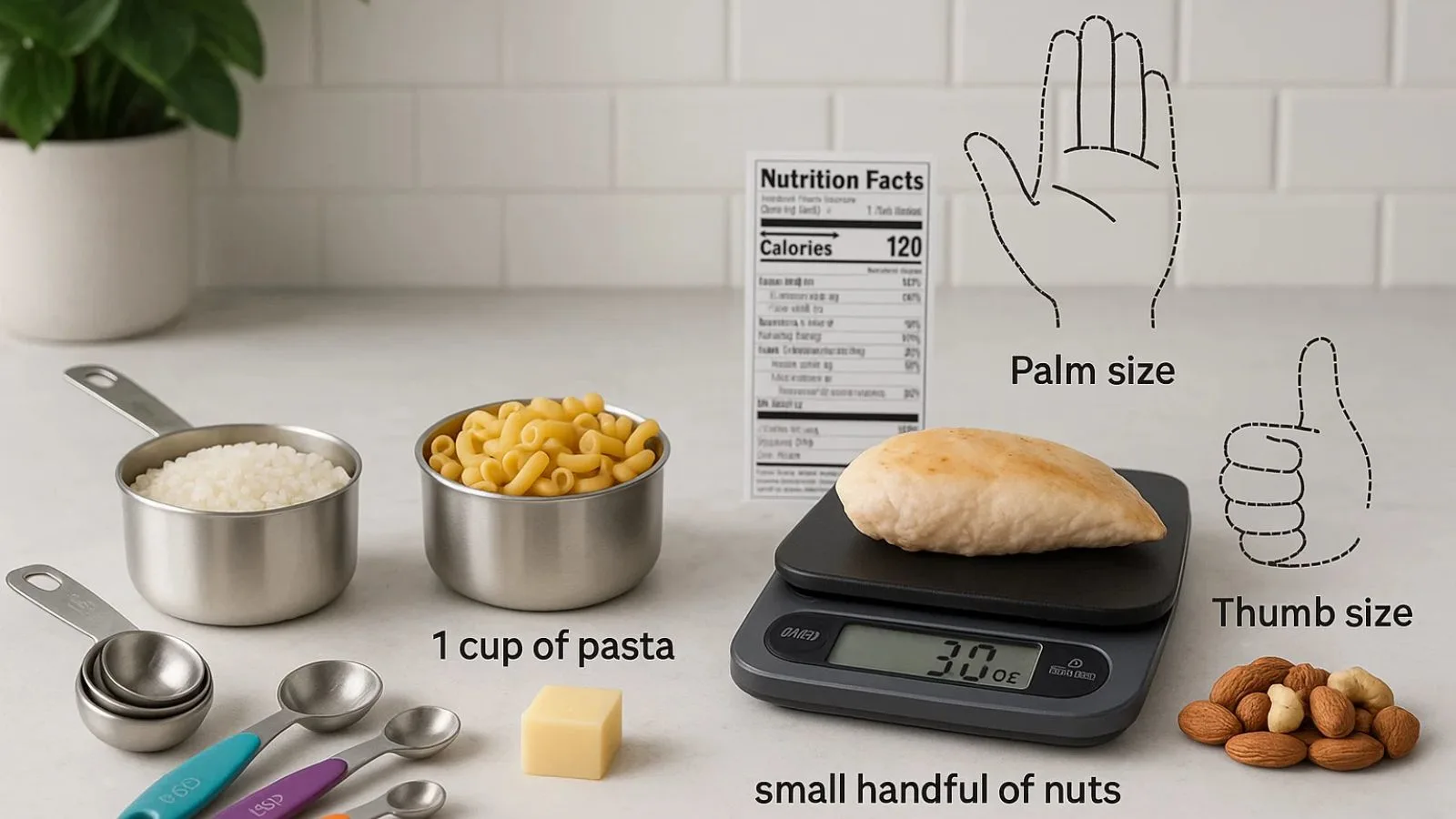
When a digital scale or measuring cups are unavailable—such as when dining out or traveling—hand-based visual estimates provide a reliable secondary option.
| Visual Reference / Hand Cue | Estimated Cooked Rice Volume |
|---|---|
| Cupped Palm | ~1/2 Cup Cooked (~90–100g) |
| Tight Closed Fist / Tennis Ball | ~1 Cup Cooked (~150–180g) |
| Standard Baseball | ~1.25 Cups Cooked (~200g) |
- One Cupped Palm: A single cupped palm of cooked rice equals roughly 1/2 cup (a single standard side serving).
- A Closed Fist: A tight fist equivalent in size to a tennis ball represents roughly 1 cup of cooked rice (a standard meal portion for an active adult).
- Two Hands Cup-Together: Joining both hands into a open bowl shape represents approximately 1.5 to 2 cups of cooked grain.
Detailed Rice Portion & Yield Comparison Table
The following table provides verified conversion estimates across popular rice varieties, comparing uncooked weight, uncooked volume, cooked volume, cooked weight, and approximate caloric density based on standard data from the USDA FoodData Central.
| Rice Variety | Uncooked Weight (g) | Uncooked Volume (US Cup) | Yield Expansion Ratio | Cooked Weight (g) | Cooked Volume (US Cup) | Calories (Cooked Portion) |
|---|---|---|---|---|---|---|
| Long-Grain White | 45 g | 1/4 Cup | 1:3.0 | ~135 g | ~3/4 Cup | ~160 kcal |
| Jasmine White | 45 g | 1/4 Cup | 1:2.8 | ~125 g | ~3/4 Cup | ~160 kcal |
| Basmati White | 45 g | 1/4 Cup | 1:3.0 | ~135 g | ~3/4 Cup | ~150 kcal |
| Short-Grain Sushi | 50 g | 1/4 Cup | 1:2.5 | ~125 g | ~5/8 Cup | ~170 kcal |
| Medium-Grain Brown | 45 g | 1/4 Cup | 1:2.5 | ~110 g | ~5/8 Cup | ~150 kcal |
| Arborio (Risotto) | 50 g | 1/4 Cup | 1:2.6 | ~130 g | ~2/3 Cup | ~170 kcal |
| Wild Rice | 40 g | 1/4 Cup | 1:3.8 | ~150 g | ~1 Cup | ~140 kcal |
Note: Values are calculated for plain rice cooked in water without added oils, butter, or salt. Added fats will increase the final caloric count significantly.
Common Rice Measurement Mistakes to Avoid
1. Logging Cooked Weight Against Raw Macro Entries
Fitness and food-tracking databases contain separate entries for "white rice, raw" and "white rice, cooked." Entering 150 grams of cooked rice under a "raw" database entry will falsely over-report your intake by nearly triple the actual calories consumed. Always verify that your selected tracking entry matches the exact state of the food you weighed.
2. Ignoring Water Evaporation Variables
If you cook rice in an open pot on the stove, water evaporates rapidly. If you cook the same amount of rice in a sealed electric pressure cooker, virtually no water escapes.
Although both methods start with 100 grams of dry rice, the stove top version might yield 240 grams of final cooked weight (denser, drier), while the pressure cooker version might yield 300 grams (wetter, softer). The caloric content remains identical, but the weight per serving shifts. To control for this, rely on raw starting weights whenever possible.
3. Mixing Up Liquid and Dry Measuring Tools
Liquid measuring cups feature spouts and lines below the top rim, making it difficult to sweep away excess dry grains accurately. Using a liquid cup for dry rice often results in over-filling by 10 to 15 percent.
Practical Application: Meal Prepping and Batch Cooking Math
When preparing food in bulk for the week, calculating individual servings from a large cooked pot requires a simple two-step formula.
Total Batch Formula:
- Step 1: Total Dry Weight × Yield Multiplier = Estimated Cooked Yield
- Step 2: Total Cooked Yield Weight ÷ Desired Number of Portions = Per-Portion Weight
Meal Prep Calculation Example:
Suppose you want to prepare 5 lunch meals for the week, with each meal containing 1 standard serving of dry brown rice (45g per serving).
- Calculate Raw Total: Multiply 45g by 5 servings = 225 grams of dry brown rice.
- Cook the Batch: Cook the 225 grams of rice according to package directions.
- Weigh the Final Cooked Pot: Suppose the final cooked weight of the entire batch equals 600 grams.
- Divide by Portions: Divide the total cooked weight (600g) by the number of planned meals (5).
- Target Portion Weight: Scoop 120 grams of cooked rice into each individual lunch container.
This method guarantees equal macro distribution across all prepped meals, regardless of how much water evaporated during cooking.
Frequently Asked Questions
How many grams of cooked rice equal one standard serving?
A standard side serving of cooked rice (1/2 cup volume) weighs approximately 90 to 100 grams. A larger meal portion (1 full cup volume) weighs between 150 and 180 grams, depending on the variety and moisture level.
Should I measure rice before or after cooking for weight loss?
Measuring rice before cooking (raw dry weight) is the most accurate method for weight management. Raw grain weight is consistent because it is unaffected by cooking time, stove heat variations, or liquid absorption levels.
Why does my rice cooker cup measure differently than my standard measuring cup?
Rice cooker manufacturers use the traditional Japanese unit of liquid measurement called a gō (合), which equals 180 mL. Standard US measuring cups are 240 mL. The lines on the inside of a rice cooker pot are calibrated specifically to match the 180 mL plastic cup included in the box.
Does rinsing rice change its weight or serving size?
Rinsing rice under cold water removes surface starch and adds a small amount of temporary water weight if allowed to sit damp. However, rinsing does not change the core grain weight or nutritional value. To ensure accurate measurement, weigh your rice dry before rinsing it.
How many calories are in 1 cup of cooked white rice versus brown rice?
One cup of cooked long-grain white rice contains roughly 200 to 240 calories, while 1 cup of cooked long-grain brown rice contains approximately 215 to 230 calories. While their caloric contents are similar, brown rice provides higher dietary fiber and micro-nutrient density.
Final Recommendation: Next Actions for Kitchen Precision
To achieve consistent, accurate portion control when preparing rice:
- Invest in a Digital Kitchen Scale: Switch from volume-based measuring cups to a digital scale set to grams. Weighing dry rice directly in your cooking vessel provides unmatched accuracy and reduces cleanup.
- Establish Your Personal Portion Target: Determine your meal goals. If tracking calories strictly, benchmark your portions at 45g dry (yielding ~120g cooked) for light meals, or 75g dry (yielding ~200g cooked) for higher-energy demands.
- Audit Your Cooking Tools: Check whether your current rice scoop is a 180 mL rice cooker cup or a 240 mL standard US cup to prevent systematic portioning errors in daily cooking.
Image Gallery