7 Ways to Control Emotions: Evidence-Based Regulation Strategies
Controlling emotions does not mean suppressing them; it involves regulating your psychological and physiological responses to internal and external triggers. By combining cognitive techniques like reappraisal with physiological groundi...
Controlling emotions does not mean suppressing them; it involves regulating your psychological and physiological responses to internal and external triggers. By combining cognitive techniques like reappraisal with physiological grounding exercises, you can effectively manage intense feelings, respond thoughtfully under pressure, and build long-term emotional resilience.
Contents
Disclaimer: This guide is provided for educational and informational purposes only and does not constitute medical or psychological advice. If you are experiencing severe emotional distress, panic attacks, or symptoms of a mental health condition, consult a licensed mental health professional.
Understanding Emotional Regulation vs. Emotional Suppression
Before applying specific techniques, it is crucial to distinguish between emotional regulation and emotional suppression.
- Emotional Suppression occurs when an individual consciously attempts to hide or inhibit outward signs of emotion (such as holding back tears or masking anger). Research in affective neuroscience demonstrates that suppression increases autonomic nervous system arousal—elevating heart rate and blood pressure—while doing little to alleviate the actual subjective experience of distress. Over time, chronic suppression can contribute to anxiety, depression, and burnout.
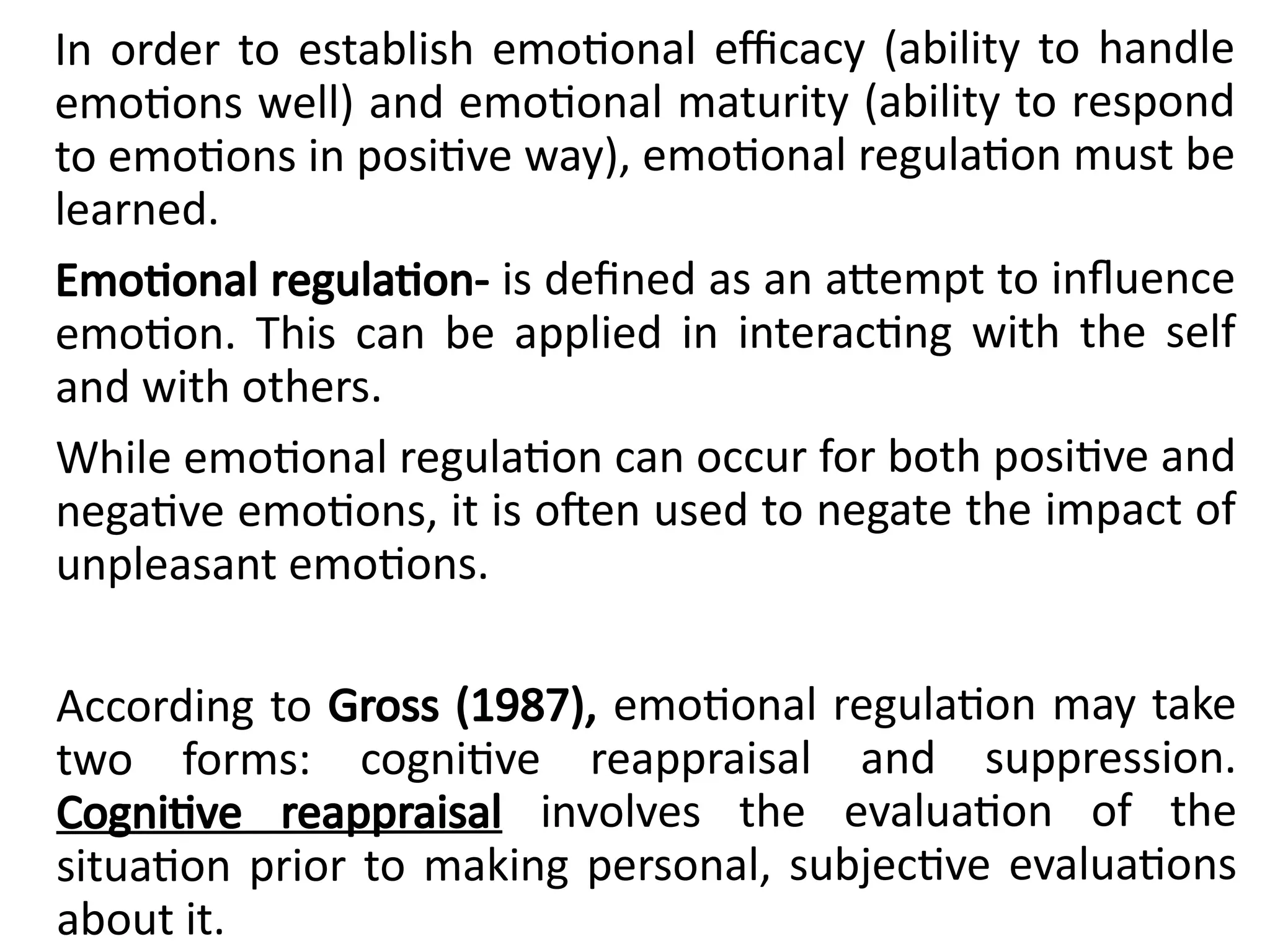
- Emotional Regulation, by contrast, refers to monitoring, evaluating, and modifying the intensity and duration of emotional reactions. Formulated in the Process Model of Emotion Regulation developed by psychologist James Gross at Stanford University, regulation can occur at various stages of the emotion-generative process. This ranges from selecting which situations to enter, altering the environment, shifting attention, changing how a situation is evaluated, to altering the physiological response.
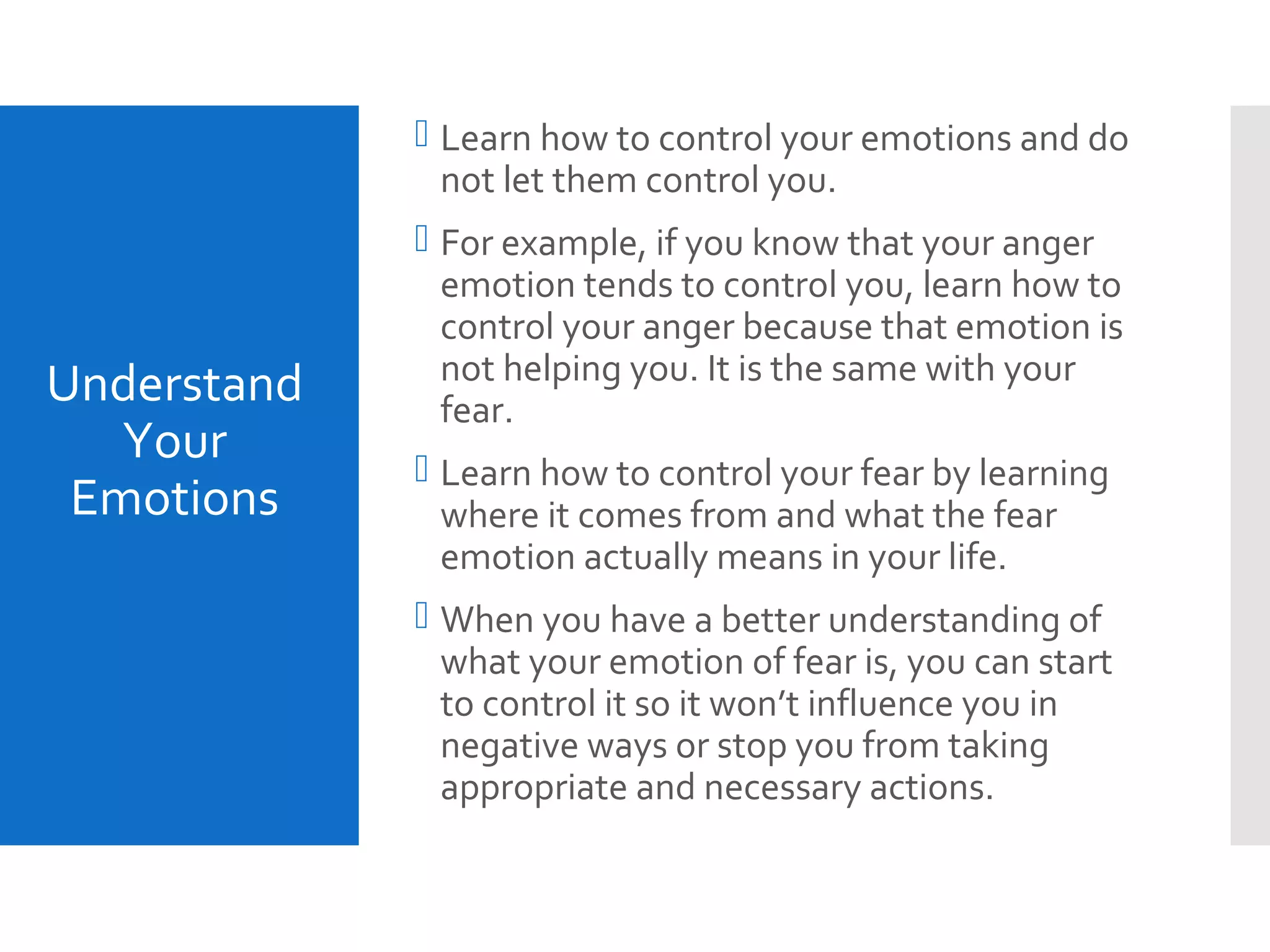
When learning how to control emotions, the goal is not to eliminate feelings such as anger, fear, sadness, or frustration. Emotions serve as vital informational signals. The goal is to prevent emotional responses from hijacking the prefrontal cortex—the region of the brain responsible for executive function, logical decision-making, and impulse control—so you can act deliberately rather than react impulsively.
7 Evidence-Based Ways to Control Emotions
The following seven strategies integrate principles from Cognitive Behavioral Therapy (CBT), Dialectical Behavior Therapy (DBT), and modern neurobiology.
1. Practice Affect Labeling (Name the Emotion)
When an intense emotion takes hold, the brain's threat center—the amygdala—becomes hyperactive. Affect labeling is the practice of puting feelings into specific words. Research conducted at the UCLA Social Cognitive Neuroscience Laboratory using functional Magnetic Resonance Imaging (fMRI) shows that identifying and verbalizing an emotion decreases neural activity in the amygdala and increases activity in the right ventrolateral prefrontal cortex.
To use affect labeling effectively:
- Move beyond basic words: Instead of saying "I feel bad," identify the exact emotion, such as "I feel overlooked," "I am experiencing acute frustration," or "I feel anxious about an uncertain outcome."
- Use objective language: Frame the experience using neutral phrasing: "I am noticing a sensation of anxiety" rather than "I am anxious." This creates psychological distance between your core identity and the temporary emotional state.
2. Utilize Cognitive Reappraisal (Reframing the Narrative)
Cognitive reappraisal involves changing how you interpret a situation to alter its emotional impact. Automatic thoughts often contain cognitive distortions—such as catastrophizing, black-and-white thinking, or mind-reading—which amplify emotional distress.
To implement cognitive reappraisal in real time, question the validity of your immediate thoughts:
- Identify the automatic thought: "My supervisor did not reply to my message immediately; they must be dissatisfied with my performance."
- Examine the evidence: What objective evidence supports or contradicts this conclusion?
- Generate alternative explanations: "My supervisor may be in a meeting, handling an urgent matter, or away from their desk."
- Adopt a neutral or constructive framing: "Delayed communication is normal in a busy work environment and does not indicate poor performance."
By changing the cognitive appraisal of an event before an emotional response fully matures, you directly decrease the intensity of physiological arousal.
3. Leverage the Physiological Sigh and Controlled Breathwork
Emotions drive immediate autonomic changes: rapid heart rate, shallow breathing, and muscle tension. Attempting to reason your way out of a severe emotional spike using logic alone can be difficult because high physiological arousal inhibits executive functioning. In such moments, physical tools are essential.
The physiological sigh is an autonomic pattern identified by neurobiologists, consisting of two rapid inhalations through the nose followed by an extended exhalation through the mouth:
- Inhale deeply through the nose to fill the lungs.
- Take a second, quick inhalation at the top to inflate collapsed alveoli in the lungs.
- Exhale slowly and fully through the mouth, making the exhalation significantly longer than the intake.
Repeating this pattern two to three times triggers parasympathetic activity by slowing the heart rate via the vagus nerve. Extended exhalations signal to the brain that the immediate environment is safe, restoring emotional equilibrium rapidly.
4. Implement Somatic Grounding (The 5-4-3-2-1 Technique)
High emotional distress often causes cognitive hyper-fixation on past events (rumination) or future threats (anxiety). Somatic grounding redirects attention away from internal distress and re-anchors it in the immediate physical environment.
The 5-4-3-2-1 sensory grounding technique acts as an attentional reset:
- Identify 5 things you can see around you (e.g., a pen on the desk, the texture of a wall).
- Identify 4 things you can physically feel (e.g., your feet against the floor, the pressure of your back against the chair).
- Identify 3 distinct sounds you can hear (e.g., the hum of an air conditioner, distant traffic).
- Identify 2 things you can smell (e.g., coffee, fresh air).
- Identify 1 thing you can taste (e.g., a sip of water or the residual taste of toothpaste).
By engaging the sensory processing centers of the brain, you force the nervous system to shift focus from internal cognitive loops to real-time sensory data.
5. Create Strategic Distance (Tactical Time-Outs)
When emotional intensity exceeds a controllable threshold, attempting to resolve an argument or complete a complex task often leads to escalation. The impulse to react immediately is a hallmark of emotional hijacking.
Creating strategic distance relies on the principle of stimulus control:
- Acknowledge the limit: Explicitly state your intention to pause. For instance: "I am feeling overwhelmed right now and want to handle this discussion constructively. I need 20 minutes to clear my head before we continue."
- Set a specific timeframe: Always define when you will return to the issue to prevent the pause from becoming passive-aggressive stonewalling or avoidance.
- Engage in low-stimulation activity: Use the break to walk, drink water, or perform breathing exercises. Avoid ruminating on the conflict or seeking validation on social media, as this maintains physiological arousal.
6. Apply "Opposite Action" (DBT Protocol)
Developed as part of Dialectical Behavior Therapy (DBT), the Opposite Action technique relies on the premise that emotions produce specific behavioral urges. Anger urges an attack or argument; fear urges avoidance or escape; sadness urges withdrawal and isolation.
When an emotion is unjustified by objective facts or when acting on the emotional urge would be counterproductive, perform the exact physical opposite of the urge:
- For Anger: If the urge is to yell, speak in a quiet, measured tone. If the urge is to lean forward aggressively, step back and relax your posture.
- For Fear or Anxiety: If the urge is to avoid a presentation or meeting, approach the situation directly in small, structured steps.
- For Sadness: If the urge is to stay in bed and isolate, get up, walk outside, or engage with another person.
Executing the opposite physical action sends feedback to the brain's emotional circuitry that the threat or offense is not critical, gradually weakening the original emotional impulse.
7. Differentiate Between Problem-Focused and Emotion-Focused Coping
According to the stress and coping model formulated by psychologists Richard Lazarus and Susan Folkman, effective stress management requires matching your strategy to the controllable nature of the stressor.
- Problem-Focused Coping: Use this when the situation causing the emotion is within your direct control. Take actionable steps: create a project plan, resolve an explicit error, or draft a budget. Resolving the underlying problem eliminates the source of emotional distress.
- Emotion-Focused Coping: Use this when the situation is completely outside your control (e.g., macroeconomic shifts, weather events, decisions made by third parties). Focus entirely on managing your internal reaction through acceptance, mindfulness, re-prioritization, or seeking support.
Attempting to use problem-focused coping on an uncontrollable situation leads to chronic frustration, while using emotion-focused coping on a solvable problem leads to procrastination and unnecessary stress.
Comparison of Emotional Regulation Techniques
| Technique | Primary Mechanism | Best Used For | Time to Effect | Target Brain/Body System |
|---|---|---|---|---|
| Affect Labeling | Cognitive identification | Moderate anxiety, rising anger, emotional confusion | 1–3 minutes | Prefrontal Cortex / Amygdala |
| Cognitive Reappraisal | Thought reframing & logic | Catastrophizing, persistent worry, cognitive distortions | 5–15 minutes | Dorsolateral Prefrontal Cortex |
| Physiological Sigh | Autonomic modulation | Acute panic, rapid heart rate, intense stress spikes | 30–60 seconds | Vagus Nerve / Parasympathetic Nervous System |
| Somatic Grounding | Attentional shift via sensory input | Dissociation, overwhelming anxiety, intrusive panic | 2–5 minutes | Sensory Cortices / Somatosensory System |
| Tactical Time-Out | Environmental stimulus control | Escalated interpersonal conflict, rage, overwhelm | 15–30 minutes | Behavioral / Autonomic system cool-down |
| Opposite Action | Behavioral feedback loop | Unhelpful behavioral urges, phobic avoidance, withdrawal | Ongoing during task | Limbic-Motor System Feedback |
| Problem vs. Emotion Coping | Contextual action matching | Chronic work stress, systemic changes, long-term goals | Days to weeks | Executive Functioning & Metacognition |
Common Pitfalls in Emotional Management
Applying emotional regulation strategies requires avoiding several common conceptual and practical mistakes:
Confusing Regulation with Toxic Positivity
Emotional regulation does not require forcing a positive outlook on genuinely difficult situations. Denying legitimate sadness, grief, or anger prevents healthy processing. Validating that a situation is difficult while managing your physiological reaction to it is the goal of healthy regulation.
Over-Reliance on Venting
A common myth is that "venting" anger or frustration is necessary to release emotional pressure. Psychological research demonstrates that unconstrained venting—such as screaming, punching objects, or repeatedly recounting a negative story—actually prolongs and intensifies anger by reinforcing the neural pathways associated with arousal and hostility.
Using Avoidance as a Primary Strategy
Consistently removing yourself from challenging situations (such as public speaking, difficult conversations, or evaluations) prevents you from developing distress tolerance. While tactical time-outs are valuable short-term measures, chronic avoidance strengthens fear and anxiety over time.
When to Seek Professional Support
While self-regulation strategies are effective for daily stressors, severe emotional dysregulation can indicate underlying clinical conditions that warrant professional evaluation. Consider seeking support from a clinical psychologist, licensed therapist, or psychiatrist if you experience any of the following:
- Pervasive Emotional Inflexibility: Inability to calm down hours or days after a minor trigger.
- Impairment in Functioning: Difficulty keeping a job, maintaining relationships, or carrying out daily responsibilities due to emotional outbursts.
- Dissociation or Depersonalization: Feeling detached from your body, environment, or reality during moments of distress.
- Safety Risks: Thoughts of self-harm, suicidal ideation, or impulses to harm others.
Evidence-based therapies such as Dialectical Behavior Therapy (DBT), Cognitive Behavioral Therapy (CBT), and Acceptance and Commitment Therapy (ACT) provide structured environments to safely master emotional regulation.
Frequently Asked Questions
Can you completely eliminate negative emotions?
No, and doing so would be counterproductive. Negative emotions like fear, anger, and sadness are essential evolutionary signals that alert you to potential dangers, boundary violations, or unmet needs. The goal of emotional regulation is to respond to these signals appropriately rather than letting them dictate irrational behaviors.
How quickly does the physiological sigh work to reduce emotional stress?
The physiological sigh can begin slowing your heart rate and reducing sympathetic nervous system arousal within 30 to 60 seconds. Performing two to three controlled sighs engages the vagus nerve and promotes parasympathetic activation almost immediately.
What is the difference between emotional regulation and self-control?
Self-control typically refers to resisting short-term temptations to achieve long-term goals (such as delaying gratification). Emotional regulation specifically focuses on managing, altering, and navigating emotional states and physiological arousal. Effective emotional regulation often enhances self-control by preventing emotional impulses from overriding rational goal-seeking behavior.
Why does venting often make me feel angrier instead of relieved?
Venting maintains high physiological arousal and forces the brain to continuously focus on the stressor. Because memory and neural pathways are strengthened through repetition, venting reinforces the emotional and behavioral scripts of anger, making future emotional outbursts more likely.
What should I do if grounding exercises do not stop a panic attack?
Grounding techniques are designed to anchor focus, but during a full-scale panic attack, intense physiological symptoms can make focused exercises difficult. If grounding does not immediate halt a panic attack, switch to simple physiological interventions like extended exhalations or applying a cold compress to your face (activating the mammalian dive reflex), and allow the adrenaline spike to natural dissipate over 10 to 20 minutes without fighting the sensation.
Practical Next Steps
Building emotional regulation skills requires deliberate, daily practice before acute crises occur.
- Select One Technique: Choose one foundational strategy, such as affect labeling or the physiological sigh, to practice during low-stress situations over the next week.
- Conduct Daily Audits: At the end of each day, take two minutes to review moments of distress. Identify which emotions were present, how you reacted, and which regulation strategy could be applied next time.
- Build a Personal Regulation Toolkit: Identify 2–3 physiological and cognitive techniques that reliably lower your distress baseline, and document clear action steps for high-stress scenarios.
Image Gallery