Why Batch Cooking Works for Busy Families: Reclaiming Time and Health in 2026
Batch cooking works for busy families because it consolidates food preparation into a single session, reducing daily kitchen labor by up to 80%. By preparing multiple portions or entire meals ahead of time, families can enjoy nutritiou...
Batch cooking works for busy families because it consolidates food preparation into a single session, reducing daily kitchen labor by up to 80%. By preparing multiple portions or entire meals ahead of time, families can enjoy nutritious, home-cooked dinners in minutes, significantly lowering decision fatigue and grocery expenses while improving dietary consistency.
Contents
The Evolution of Meal Management in 2026
As we navigate 2026, the pressures on the modern household have reached a peak. Between hybrid work schedules, extracurricular commitments, and the rising cost of fresh produce, the traditional model of cooking a unique meal from scratch every evening has become unsustainable for many. Batch cooking—the practice of preparing large quantities of specific components or entire meals to be consumed later—has transitioned from a "frugal living" hack to a core survival strategy for the time-poor.
The success of batch cooking lies in its ability to decouple the labor of preparation from the act of consumption. In a standard routine, a family might spend 45 to 60 minutes each evening prepping, cooking, and cleaning. Over a week, this totals seven hours of kitchen time. Batch cooking compresses this into a single three-hour window on a weekend, effectively "buying back" four hours of mid-week time that can be redirected toward rest, exercise, or family engagement.
Understanding the Efficiency Factor
The primary reason batch cooking is so effective is the elimination of repetitive setup and cleanup tasks. When you cook seven separate meals, you wash the cutting board seven times, preheat the oven seven times, and chop onions seven times. Batch cooking exploits economies of scale.
The Power of "Mise en Place" at Scale
In professional kitchens, mise en place refers to having everything in its place before service. For a busy family, batch cooking applies this concept to the entire week. Chopping five kilograms of carrots takes only marginally longer than chopping five individual carrots, but it only requires one cleanup of the food processor or knife and board.
Furthermore, batch cooking allows for better utilization of kitchen appliances. A large stockpot or a commercial-grade multi-cooker can handle a triple batch of chili just as easily as a single serving. By maximizing the capacity of your tools, you reduce the energy consumption of your home and the physical toll of standing in the kitchen every evening.
Reduction of Decision Fatigue
Psychologists have long noted that "decision fatigue" peaks in the late afternoon. For parents finishing a workday, the question "What’s for dinner?" is often the most taxing hurdle of the day. Batch cooking removes this mental load entirely. When the meal is already prepared and simply requires reheating, the cognitive energy required to feed the family drops to near zero, preventing the "panic ordering" of expensive and often less nutritious takeout.
Financial Advantages and Waste Mitigation
In 2026, grocery inflation and supply chain shifts have made food waste a significant financial drain. The average household loses hundreds of dollars annually to wilted vegetables and expired proteins. Batch cooking acts as a hedge against these losses.
Strategic Bulk Purchasing
Batch cooking encourages—and often requires—buying in bulk. Whether it is a ten-pound bag of rice or a wholesale pack of chicken thighs, the cost per serving is significantly lower when purchased in larger quantities. Because batch cooking uses these ingredients immediately, the risk of them spoiling in the back of the refrigerator is eliminated.
Zero-Waste Cooking
When you prepare meals in batches, you are more likely to use the entirety of an ingredient. A bunch of celery that might otherwise see two stalks used for a salad and the rest discarded can be fully integrated into a large-scale soup or stew base. Furthermore, the scraps from a massive batch-cooking session can be immediately boiled down into a rich bone or vegetable broth, which can then be frozen for the following week’s meals.
Comparison of Meal Preparation Strategies
| Strategy | Prep Time (Weekly) | Daily Effort | Variety Level | Cost Efficiency |
|---|---|---|---|---|
| Traditional Cooking | 7–10 Hours | Very High | High | Low |
| Component Batching | 3–4 Hours | Moderate | Very High | High |
| Full Meal Freezing | 4–5 Hours | Very Low | Moderate | Very High |
| Meal Kits | 1 Hour (Admin) | High | Moderate | Very Low |
Technical Prerequisites: Setting Up for Success
To make batch cooking work effectively, a family needs more than just recipes; they need a functional infrastructure. Without the right tools, the process can become disorganized and frustrating.
Storage Solutions and Inventory Management
The most common point of failure in batch cooking is poor storage. Investing in high-quality, uniform containers is essential.
- Glass Containers: Preferred for reheating and longevity. They do not leach chemicals and are oven-safe.
- Silicone Bags: Excellent for space-saving in freezers, especially for soups and sauces.
- Vacuum Sealers: These are the gold standard for preventing freezer burn, extending the life of batch-cooked meals from weeks to months.
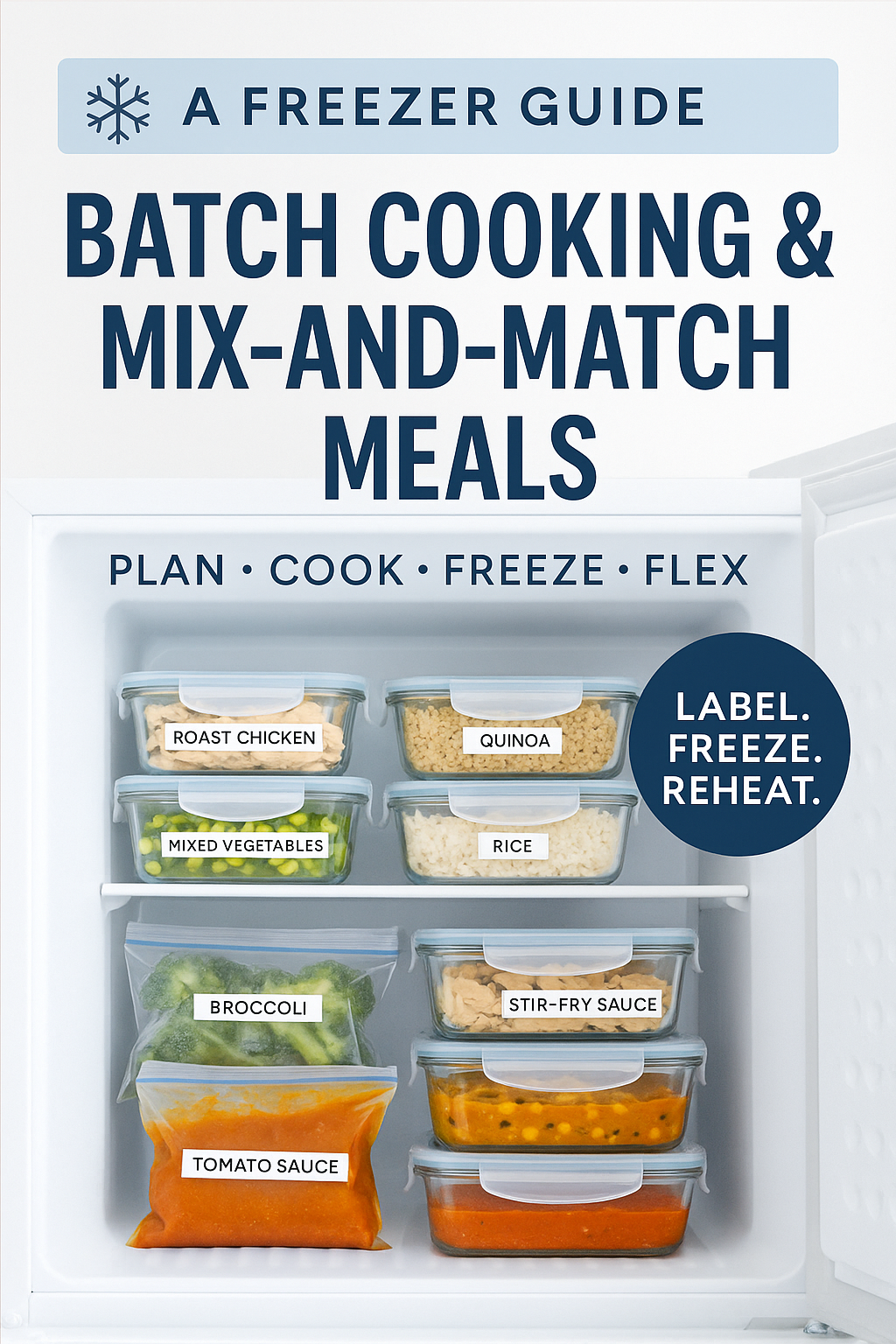
Labeling is equally critical. Every container should be marked with the contents and the date of preparation. In the busy environment of a family kitchen, an unlabelled container of "mystery red sauce" often ends up in the trash rather than on the dinner table.
Essential Hardware
While a standard stove is sufficient, specific tools can drastically improve the batch cooking experience. A large-capacity slow cooker or a multi-cooker allows for hands-off cooking of proteins. High-speed blenders are necessary for large batches of sauces or hidden-veg purees for children. If space allows, a secondary chest freezer is the single most impactful investment a family can make to support a long-term batch cooking habit.
Methods of Batch Cooking
There is no one-size-fits-all approach to batch cooking. Families usually find success by blending three main methodologies based on their specific tastes and schedules.
1. The Component Method
Instead of cooking full meals, you prepare large quantities of "building blocks." This might include a large pot of quinoa, roasted root vegetables, grilled chicken breasts, and two different sauces (like a pesto and a tahini dressing). During the week, these components are assembled into "bowls" or wraps. This method provides the most variety and is ideal for families with picky eaters or varying dietary requirements.
2. The "Dump-and-Go" Freezer Method
This involves prepping raw ingredients and placing them into freezer bags. For example, sliced beef, peppers, onions, and fajita seasoning are bagged together. On the day of consumption, the contents are dumped into a slow cooker or pressure cooker. The "cooking" happens while the family is at work or school, ensuring a fresh-tasting meal with almost zero active time.
3. The Full-Meal Prepping Method
This is the classic approach: cooking large batches of finished dishes like lasagna, shepherd’s pie, or vegetable curry. These are portioned into family-sized or individual containers and frozen. Reheating is the only step required. This method offers the lowest daily effort but requires the most significant upfront time investment on the cooking day.
Health and Nutritional Consistency
Batch cooking provides a level of control over nutrition that is nearly impossible to achieve with processed convenience foods or restaurant meals.
- Sodium and Sugar Control: By making sauces and bases from scratch in large batches, families can eliminate the hidden sugars and excessive sodium found in jarred alternatives.
- Hidden Nutrition: Batch cooking is an excellent opportunity to "bulk up" meals with pureed vegetables. A large batch of marinara sauce can easily hide pureed carrots, zucchini, and bell peppers, increasing the fiber and micronutrient intake of the entire family without altering the flavor profile.
- Portion Management: When meals are portioned ahead of time, it discourages overeating. In 2026, as health awareness regarding metabolic syndrome increases, having pre-set portions helps maintain caloric goals.
Safety and Quality Control
When handling large volumes of food, safety is paramount. The USDA Food Safety and Inspection Service provides strict guidelines that batch cookers must follow to prevent foodborne illness.
- The Two-Hour Rule: Perishable foods should never stay in the "Danger Zone" (between 40°F and 140°F) for more than two hours. Large pots of chili or stew should be divided into smaller, shallow containers so they cool rapidly in the refrigerator.
- Thawing Protocols: Never thaw batch-cooked meals on the counter. Always thaw in the refrigerator overnight or use the defrost setting on a microwave followed by immediate reheating.
- Freezer Burn Prevention: Ensure as much air as possible is removed from packaging. Air is the primary cause of the crystalline structures that degrade the texture of frozen food.
Overcoming "Meal Boredom"
One of the primary critiques of batch cooking is the repetition of eating the same thing multiple days in a row. Experienced batch cookers avoid this through a "rolling inventory" system. Instead of eating all of this week's batch, you freeze half and eat half of a batch from two weeks ago. This creates a diverse "freezer library" of options, allowing family members to choose different meals on the same night if necessary.
Frequently Asked Questions
Is batch cooking more expensive upfront?
While the initial grocery bill for a batch cooking session is higher because you are buying in bulk, the "cost per meal" is significantly lower. Most families find that their total monthly food expenditure drops by 15% to 25% due to fewer emergency grocery trips and reduced reliance on takeout.
How long does batch-cooked food stay fresh in the freezer?
Most cooked meals maintain peak quality for 2 to 3 months in a standard freezer. If vacuum-sealed, this can extend to 6 months or more. While the food may be safe to eat after this point, the texture and flavor often begin to degrade.
Can I batch cook if I have a small kitchen?
Yes. The key is organization. Clean as you go and use "vertical" space by using stackable containers. You don't need to cook 20 meals at once; even "double-batching" your Tuesday night dinner to provide a meal for the following Monday makes a measurable difference.
Which foods do not freeze well?
Avoid freezing fried foods (they become soggy), high-moisture vegetables like cucumbers or lettuce, and cream-based sauces that aren't stabilized (they may break or curdle). Grains like pasta should be cooked slightly al dente if they are intended for the freezer, as they will soften further during the reheating process.
How do I start without feeling overwhelmed?
Start with one meal type. Choose one recipe you already love—like a bolognese or a bean chili—and simply triple the recipe. Freeze the extra portions. Once you see the benefit of having those "free" meals available, you can gradually expand into more complex component batching.
Strategic Recommendation for Busy Families
To successfully implement batch cooking in 2026, the most practical next step is to perform a "Kitchen Audit." Clear out your freezer to make space, purchase a set of stackable, uniform glass containers, and commit to one "Prep Sunday." Start with a base protein, such as shredded chicken or seasoned ground beef, that can be transformed into three different meals (e.g., tacos, pasta sauce, and salad toppers). This minimizes the risk of meal boredom while maximizing the efficiency of your time and budget.
Image Gallery