How North America Moon Sighting Shapes Calendars
In North America, the observation of the new crescent moon is the primary mechanism for determining the start of months in the Islamic (Hijri) calendar. Because this calendar is strictly lunar, each month begins upon the verified visua...
In North America, the observation of the new crescent moon is the primary mechanism for determining the start of months in the Islamic (Hijri) calendar. Because this calendar is strictly lunar, each month begins upon the verified visual sighting of the hilal—the thin crescent moon—which dictates the timing of religious observances, holidays, and community scheduling across the continent.
Contents
The Mechanics of the Hijri Calendar
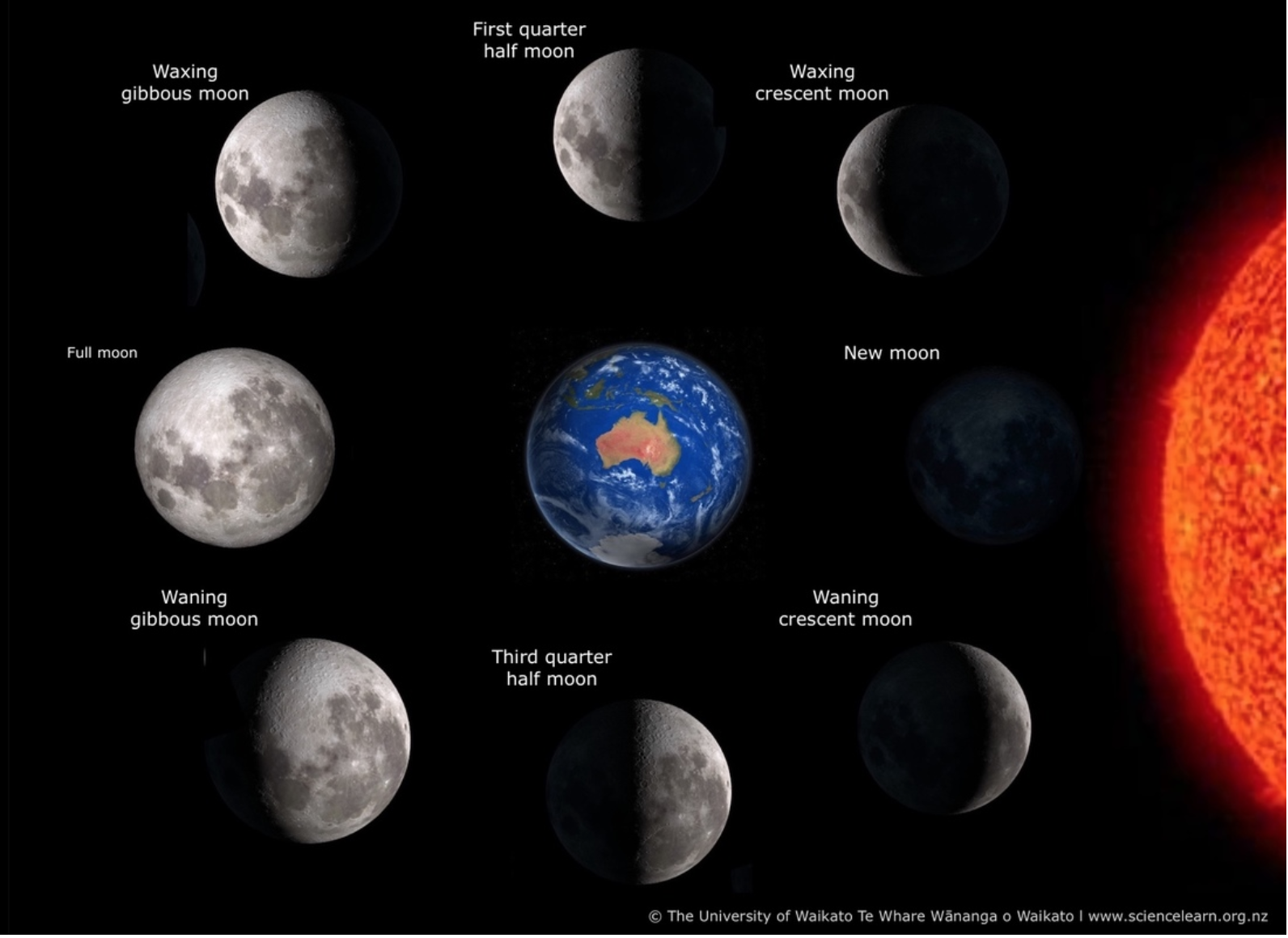
The Islamic calendar is a strictly lunar system, meaning it tracks the cycles of the moon rather than the solar year. A lunar month lasts approximately 29.5 days, resulting in a year of about 354 or 355 days. Because this is roughly 11 days shorter than the Gregorian solar calendar, Islamic months rotate through the solar seasons over a 33-year cycle.
The central pillar of this system is the hilal. Unlike solar-based calendars that rely on fixed mathematical dates, the Hijri calendar relies on the physical observation of the moon. If the moon is sighted after sunset on the 29th day of the current month, the following day marks the first of the new month. If the moon is not sighted—or if atmospheric conditions render it invisible—the current month is rounded out to 30 days, and the new month begins the following day.
The North American Context: Sighting vs. Calculation
The methodology for determining the start of the month is a subject of significant discourse within North American Muslim communities. There are generally three approaches currently used to navigate these requirements:
- Local Sighting: This traditional approach requires a physical sighting of the moon within one’s local geographic region. Proponents argue this most closely adheres to the Prophetic tradition of "fasting when you see it." However, this can lead to fragmented observance, where cities only a few hundred miles apart begin the month on different days due to cloud cover or visibility variables.
- Regional/Continental Sighting: This method relies on the testimony of sightings from anywhere within North America. Organizations such as the Fiqh Council of North America (FCNA) often facilitate this process by aggregating verified reports from across the continent. This seeks to unify the community under a single calendar while maintaining the reliance on actual visual observation.
- Astronomical Calculation: This approach uses precise celestial mechanics to predict the birth of the new moon. Advocates of this method argue that because modern astronomy can predict the moon's position with near-perfect accuracy, it removes the uncertainty of human error and weather-related obstacles, allowing for standardized, pre-published calendars.
Impact on Daily Life and Religious Observance
For the millions of Muslims living in North America, the lack of a single, universally accepted calendar methodology creates practical challenges. Because North American secular life is structured around the Gregorian calendar, dates for essential religious observances like Ramadan (a month of fasting) and the two Eids (religious festivals) must be managed alongside work, school, and government schedules.
When local sightings differ, families living in the same metropolitan area may observe holidays on different days. This affects school attendance, workplace holiday requests, and community cohesion. For example, a student might have to choose between observing Eid on the day their local mosque deems correct or the day their national organization recognizes.
Comparison of Timing Methodologies
| Methodology | Basis | Reliability | Community Impact |
|---|---|---|---|
| Local Sighting | Human Eye | Variable (Weather-dependent) | Highly localized/fragmented |
| Continental Sighting | Verified Reports | Moderate | High unity across time zones |
| Calculation | Celestial Math | High (Predictable) | Uniform/Fixed scheduling |
Challenges in North American Verification
Geography plays a significant role in the sighting of the moon. North America is vast, spanning multiple time zones and latitudes. A new crescent moon that is visible in the southwestern United States may be entirely invisible in the northeastern provinces of Canada due to the curvature of the earth and the orientation of the moon's crescent.
Organizations tasked with verifying sightings must navigate the "witness testimony" process carefully. This involves confirming the credibility of observers, ensuring they understand the difference between the hilal and other light sources (such as airplanes or high-altitude clouds), and reconciling reports that may conflict across different regions. In 2026, many organizations now use digital platforms to centralize these reports, allowing for a more rapid verification process that keeps pace with the needs of a mobile, modern population.
The Role of Meteorological Constraints
Weather remains the ultimate variable in North American lunar observation. Unlike regions with arid climates where the sky is frequently clear, North America experiences diverse weather patterns that can obscure the western horizon during the critical window—the short period after sunset when the crescent is most visible.
When the horizon is obscured by heavy cloud cover, storm systems, or pollution, the community must default to the "completion of 30 days" rule. This fallback ensures that the calendar maintains its integrity, even when physical observation is impossible. However, the recurring nature of these weather events has driven the move toward more sophisticated, calculated models that provide a reliable "default" schedule while leaving room for the verification of physical sightings.
Integrating Tradition with Modern Scheduling
To reconcile the lunar requirement with the demands of the Gregorian environment, many communities now utilize a hybrid approach. They publish "projected calendars" at the start of the year based on astronomical calculations to assist with long-term planning, such as booking banquet halls for Eid celebrations or requesting time off from employers.
These projected dates are explicitly labeled as tentative. As the month approaches, the community shifts to the verification process. This "plan-ahead" strategy allows for both religious compliance and the operational efficiency required to function in a secular society.
Frequently Asked Questions
Why is there no single North American calendar for Islamic dates? There is no central religious authority in North America that mandates a single methodology for moon sighting. Different community centers and scholarly organizations follow different interpretations of Islamic law, leading to variations in which sighting method is prioritized.
Can I rely on a calendar I found online for my religious holidays? Most online calendars are based on calculations. While they are usually accurate for planning purposes, they may differ by one day from the actual start of the month based on a physical sighting. It is best to verify dates with your local religious community or mosque.
What happens if the moon is not sighted anywhere in North America? If no verified sightings are reported across the continent, the tradition dictates that the current month is considered 30 days long. The following day automatically becomes the first of the new month.
Do atmospheric conditions affect the reliability of sightings? Yes. High-altitude moisture, light pollution in urban areas, and mountainous terrain can significantly hinder the ability to spot the thin crescent moon. This is why many organizations prefer reports from high-elevation, clear-sky locations.
How do I request time off for religious holidays with this uncertainty? Many professionals request time off for two consecutive days to account for the possibility of a one-day shift in the lunar calendar. Providing your employer with an explanation of the lunar cycle ahead of time is often helpful for scheduling purposes.
Next Steps for Community Planning
To effectively manage these variations, begin by identifying which methodology your local community or national organization follows. If you require certainty for travel or professional obligations, check the websites of major regional Islamic organizations for their established sighting protocols for the current year. By understanding these mechanisms, you can better plan your calendar and participate in the observations that remain central to the community experience.
Image Gallery