Willie Nelson’s Nationality: Exploring the Life of an Unmistakably American Icon
Willie Nelson’s nationality is American. Born on April 29, 1933, in Abbott, Texas, Nelson is a native-born citizen of the United States. Throughout his storied career, he has become more than just a citizen; he is a primary architect o...
Willie Nelson’s nationality is American. Born on April 29, 1933, in Abbott, Texas, Nelson is a native-born citizen of the United States. Throughout his storied career, he has become more than just a citizen; he is a primary architect of modern American culture, blending country, jazz, and folk into a uniquely national sound.
Contents
As of 2026, Willie Nelson remains one of the most recognizable figures in the world, standing as a living testament to the resilience and evolution of the American spirit. To understand why his nationality is described as "unmistakably American," one must look beyond his birth certificate and examine his deep roots in the Texas soil, his influence on the American musical canon, and his lifelong commitment to the nation’s rural working class.
The Texas Roots of a National Treasure
Willie Nelson was born during the height of the Great Depression in Abbott, a small farming community in Hill County, Texas. This specific geographic and temporal origin is critical to his identity. The hardships of the 1930s in the American South shaped his worldview, instilling a sense of populist advocacy and rugged individualism that would later define his "Outlaw Country" persona.
Raised by his paternal grandparents, Alfred and Nancy Nelson, Willie was immersed in the musical traditions of the American South from a young age. He wrote his first song at age seven and joined his first band at age ten. His early exposure to gospel music in the local Methodist church and the polka music popular in the surrounding Czech and German immigrant communities in Texas created a hybrid musical foundation. This melting pot of influences is, in itself, a reflection of the American experience—taking disparate cultural threads and weaving them into something entirely new.
His service in the United States Air Force also reinforces his national identity. Nelson enlisted in 1950 and served for approximately nine months before being medically discharged due to back problems. While his military tenure was brief, it aligns with the traditional trajectory of many American men of his generation, further cementing his ties to the national fabric.
Redefining the American Sound: From Nashville to Austin
While Nelson’s nationality is a matter of legal fact, his "unmistakable" Americanness is often attributed to his rebellion against the rigid structures of the music industry. In the 1960s, Nelson moved to Nashville, Tennessee, where he found success as a songwriter for others, penning hits like "Crazy" for Patsy Cline and "Hello Walls" for Faron Young. However, his own performing style—characterized by off-beat phrasing and a stripped-down aesthetic—did not fit the polished "Nashville Sound" of the era.
In 1972, frustrated by the industry's constraints, Nelson moved back to Texas, specifically Austin. This move was a pivotal moment in American music history. He became the face of the "Outlaw Country" movement, which prioritized artistic freedom over commercial conformity. By bridging the gap between the conservative country music crowd and the "hippie" counterculture of the 1970s, Nelson helped unify a fractured American youth. His 1975 album Red Headed Stranger and his 1978 collection of standards, Stardust, proved that his appeal was universal across the United States, transcending regional and political divides.
Farm Aid and the Defense of the American Heartland
Perhaps no initiative defines Willie Nelson’s American identity more clearly than Farm Aid. In 1985, following a remark by Bob Dylan at Live Aid about the plight of American farmers, Nelson, along with Neil Young and John Mellencamp, organized a benefit concert to raise money for family farmers in the U.S.
For over four decades, including through the mid-2020s, Nelson has served as the president of the Farm Aid board. This organization has raised tens of millions of dollars to prevent farm foreclosures and promote a resilient, family-farm-centered system of agriculture. Nelson’s advocacy for the "American Heartland" is not merely a philanthropic hobby; it is a core component of his public identity. He views the independent farmer as the backbone of the nation’s security and character, a stance that resonates deeply with the Jeffersonian ideals of American agrarianism.
Cultural Symbolism: Trigger, the Braids, and the IRS
Certain physical and historical artifacts associated with Willie Nelson have become symbols of American folklore.
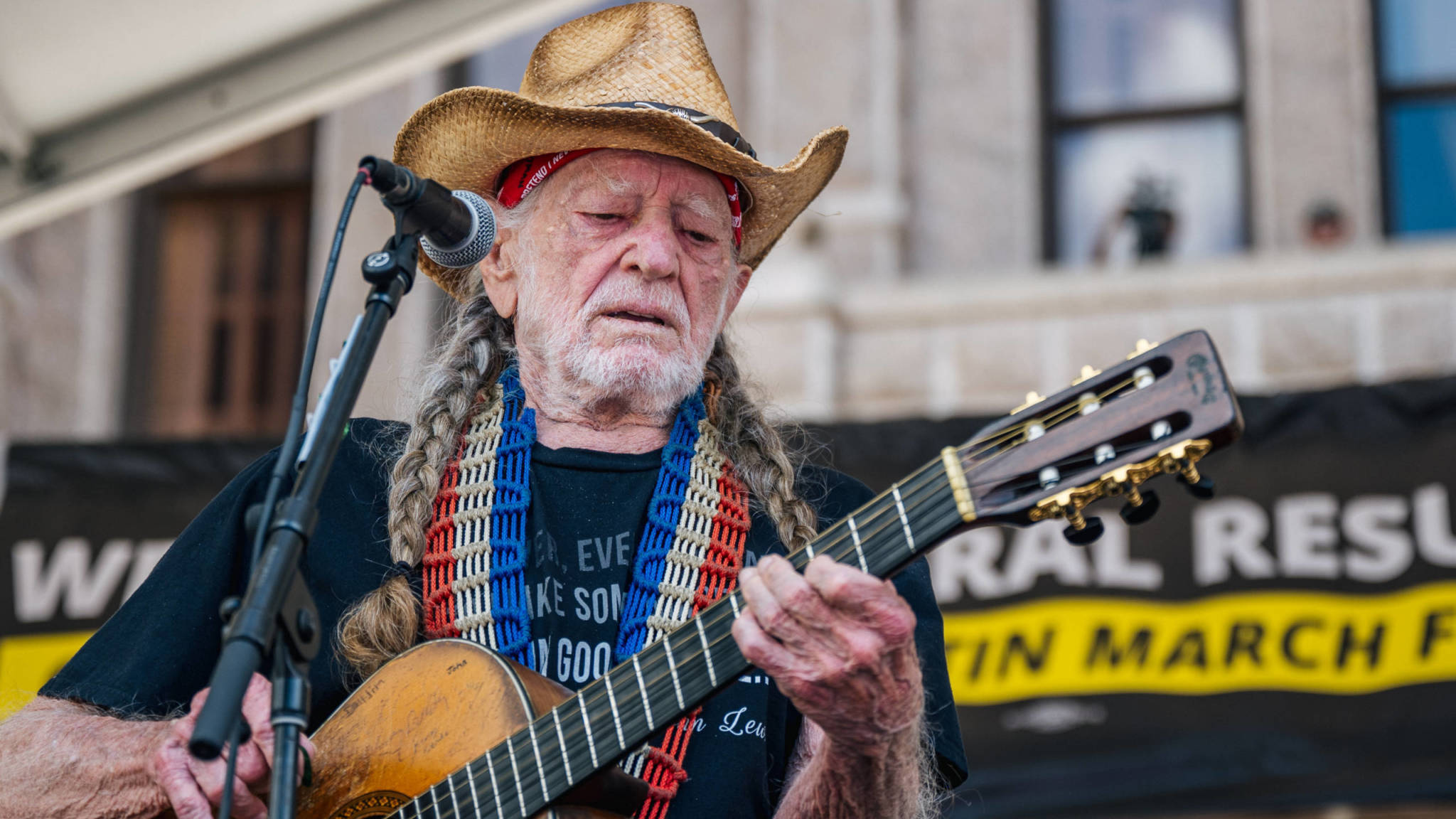
- Trigger: His Martin N-20 nylon-string classical guitar, nicknamed "Trigger," is one of the most famous instruments in history. Its worn-out appearance, featuring a large hole worn through the wood from decades of strumming, symbolizes the American work ethic—it is a tool that has been used until it is nearly broken, yet it continues to produce beautiful music.
- The IRS Tapes: In the early 1990s, Nelson faced a highly publicized battle with the Internal Revenue Service (IRS) over a $16.7 million tax debt. Rather than disappearing, he released the album The IRS Tapes: Who'll Buy My Memories? to pay off his debt. His ability to navigate a quintessential American bureaucratic struggle with transparency and humor only increased his standing as a "lovable outlaw" in the eyes of the public.
- Activism and Advocacy: Nelson’s long-standing support for the legalization of marijuana was once considered radical but has moved into the American mainstream over the last two decades. His stance was always rooted in an American philosophy of personal liberty and the reduction of government overreach.
Summary of Identity Markers
| Feature | Details | Significance to American Identity |
|---|---|---|
| Place of Birth | Abbott, Texas, USA | Legal citizenship and Southern cultural roots. |
| Military Service | U.S. Air Force (1950) | Participation in a core national institution. |
| Musical Genre | Outlaw Country / American Standards | Fusion of diverse American musical traditions. |
| Philanthropy | President of Farm Aid (1985–Present) | Support for the American family farm and rural economy. |
| Honors | Kennedy Center Honors; Library of Congress Gershwin Prize | Official recognition as a national cultural leader. |
The Global Ambassador of Americana
While Willie Nelson’s nationality is American, his influence is global. However, unlike pop stars who adapt their sound to fit international trends, Nelson’s international appeal lies in his authentic representation of American "Americana." When he performs in Europe, Australia, or Japan, he is received as the quintessential American troubadour.
His discography, which includes over 100 albums, serves as a chronological record of 20th and 21st-century American life. From the dust-covered roads of the Great Depression to the digital age of 2026, Nelson’s voice has remained a constant. He has collaborated with everyone from Frank Sinatra and Ray Charles to Snoop Dogg and Kacey Musgraves, demonstrating an American ability to find common ground across different genres and generations.
Frequently Asked Questions
Was Willie Nelson born in the United States?
Yes, Willie Nelson was born in Abbott, Texas, on April 29, 1933. He is a natural-born citizen of the United States. His upbringing in rural Texas during the Great Depression was foundational to his songwriting and his public persona as a representative of the American working class.
Did Willie Nelson serve in the American military?
Willie Nelson enlisted in the United States Air Force in 1950 after graduating from high school. He served for nine months before being medically discharged due to back issues. Despite the brevity of his service, he has remained a consistent supporter of American veterans throughout his career.
Is Willie Nelson of any other nationality?
No, Willie Nelson is exclusively an American citizen. While his ancestry includes English, Irish, and Scottish roots—common among many families in the American South—his nationality and cultural identity are purely American.
Why is Willie Nelson called an "American Icon"?
He is considered an icon because his life and work embody several American ideals: artistic independence, the "outlaw" spirit, advocacy for the underdog (specifically family farmers), and the blending of diverse cultural influences into a cohesive whole. His longevity in the industry, spanning over seven decades, has made him a multi-generational symbol of the country.
Where does Willie Nelson live currently?
As of 2026, Willie Nelson primarily resides on his ranch, "Luck, Texas," located in Spicewood, near Austin. The ranch is often used as a film set and a venue for musical events, further cementing his ties to the Texas landscape he has called home for most of his life.
Conclusion and Next Actions
To appreciate the "unmistakable" nature of Willie Nelson’s American nationality, one should explore his work within the context of the American experience. For those looking to understand his impact, the most practical next step is to listen to his seminal 1975 album, Red Headed Stranger, which redefined the American concept album. Additionally, those interested in his social contributions should visit the official Farm Aid website to see how his American advocacy continues to support the nation’s agricultural infrastructure. Whether through his music or his activism, Nelson remains a definitive figure in the ongoing story of the United States.
Image Gallery