Comprehensive Guide to Publicly Traded Telehealth Companies in 2026
Publicly traded telehealth companies are firms listed on major stock exchanges that provide medical consultations, remote patient monitoring, and digital health infrastructure via telecommunications technology. These entities allow inv...
Publicly traded telehealth companies are firms listed on major stock exchanges that provide medical consultations, remote patient monitoring, and digital health infrastructure via telecommunications technology. These entities allow investors to participate in the virtual care market while offering healthcare providers and patients scalable solutions for remote diagnosis, treatment, and chronic disease management.
Contents
As we navigate through 2026, the telehealth landscape has transitioned from an emergency alternative to a foundational pillar of the global healthcare delivery system. The "pure-play" telehealth era has evolved into a sophisticated market of integrated health-tech platforms. For investors, clinicians, and health systems, understanding the nuances of these publicly traded entities is essential for navigating the current valuations and service models that define modern medicine.
The Evolution of the Virtual Care Market in 2026
The trajectory of telehealth since the early 2020s has been marked by significant consolidation and a pivot toward "hybrid care." In 2026, the market is no longer defined merely by video calls between doctors and patients. Instead, it is characterized by the integration of Artificial Intelligence (AI), Remote Patient Monitoring (RPM), and asynchronous communication.
Publicly traded companies in this sector have shifted their focus from raw user acquisition to sustainable unit economics and margin expansion. This shift was necessitated by the higher interest rate environments of the mid-2020s, which forced companies to move away from "growth at any cost" toward a focus on EBITDA (Earnings Before Interest, Taxes, Depreciation, and Amortization) and free cash flow.
Today, the market is broadly divided into three segments:
- Direct-to-Consumer (D2C) Platforms: Focusing on cash-pay models and lifestyle conditions.
- Enterprise Solutions: Partnering with health insurers (payers) and large employers.
- Infrastructure Providers: Providing the software "pipes" that allow traditional hospitals to operate virtually.
Leading Publicly Traded Telehealth Companies
Teladoc Health, Inc. (NYSE: TDOC)
Teladoc remains the largest dedicated telehealth provider by volume and revenue. By 2026, Teladoc has largely moved past the integration challenges of its early-2020s acquisitions (notably Livongo) and has successfully positioned itself as a "whole-person" virtual care provider.
Its business model relies heavily on its Integrated Care segment, which serves health plans and employers. A key driver for Teladoc in 2026 is its "BetterHelp" mental health division and its chronic care management tools. The company’s ability to use predictive analytics to identify patients at risk of escalating chronic conditions has made it a preferred partner for large-scale enterprise contracts.
Hims & Hers Health, Inc. (NYSE: HIMS)
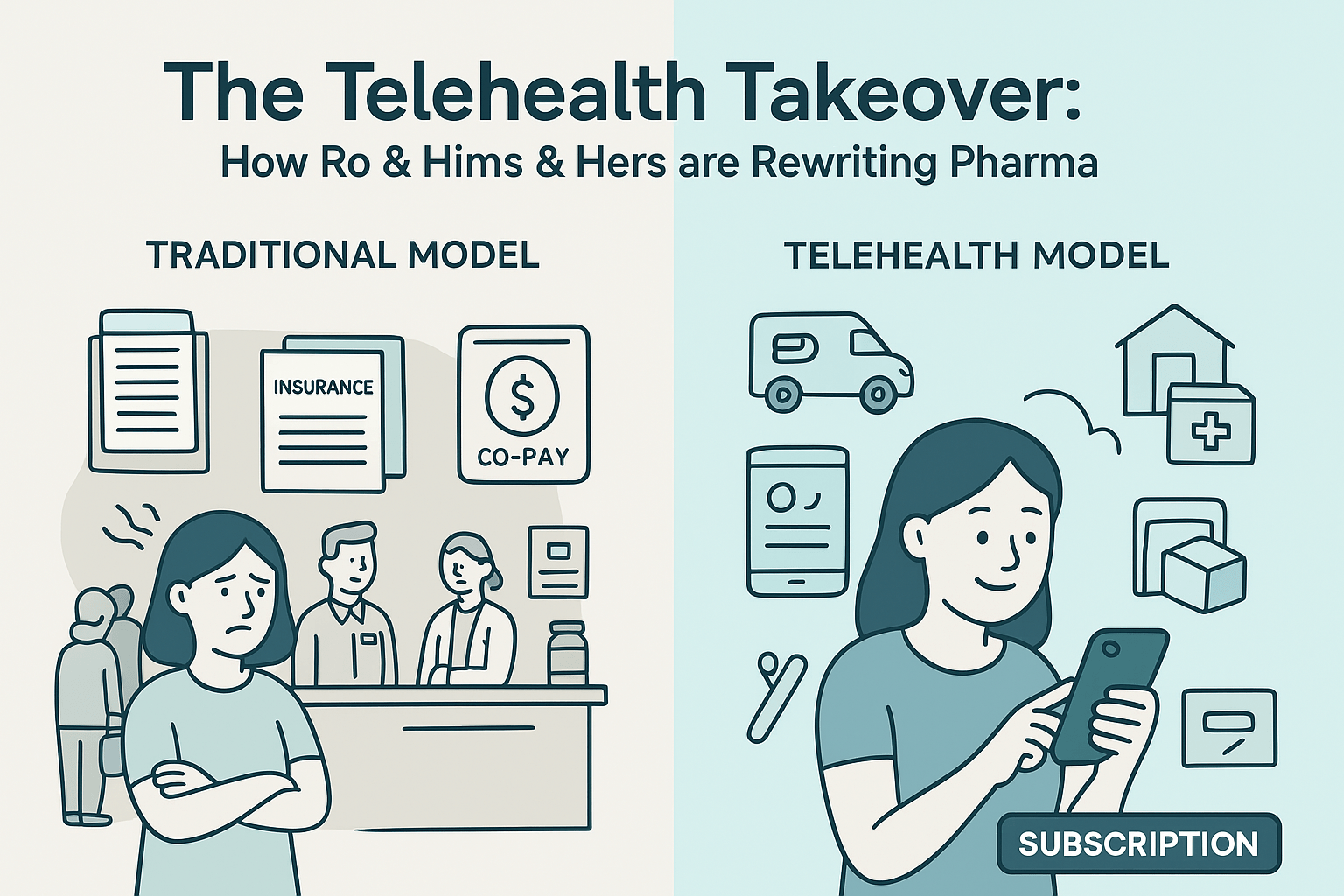
Hims & Hers has emerged as a powerhouse in the D2C space. Unlike companies that rely on insurance reimbursements, Hims & Hers focuses on a subscription-based, cash-pay model. Their success in 2026 is rooted in their "Personalized Meds" initiative, where they offer customized dosages and formulations for weight loss, hair loss, and sexual health.
The company's expansion into GLP-1 weight loss medications and cardiovascular health has significantly broadened its Total Addressable Market (TAM). From an investment perspective, Hims & Hers is often evaluated on its customer acquisition cost (CAC) and long-term value (LTV) metrics, which have shown resilience due to high brand loyalty.
American Well Corporation (Amwell) (NYSE: AMWL)
Amwell represents the infrastructure-first approach. Its primary product is the Converge platform, which serves as the digital backbone for many of the world’s largest health systems and insurers. In 2026, Amwell’s value proposition lies in its ability to enable "hybrid care"—allowing a hospital to see a patient virtually for a follow-up and then seamlessly transition them to an in-person specialist if needed.
Amwell has increasingly leaned into government contracts and international partnerships, positioning itself as a modular software-as-a-service (SaaS) provider rather than just a network of doctors.
Doximity, Inc. (NYSE: DOCS)
While often categorized as a professional network (the "LinkedIn for Doctors"), Doximity is a critical player in telehealth via its Dialer tool. In 2026, Doximity’s telehealth features are utilized by a vast majority of U.S. physicians to conduct secure, HIPAA-compliant video and voice calls from their own personal devices.
Doximity’s financial profile is distinct from Teladoc or Amwell; it boasts significantly higher margins because it functions as a high-margin software platform funded primarily by pharmaceutical marketing budgets and health system recruiting fees, rather than per-visit clinical fees.
Comparison of Major Public Telehealth Entities (2026 Data)
| Company | Ticker | Primary Business Model | Key Growth Driver in 2026 |
|---|---|---|---|
| Teladoc Health | TDOC | B2B / Enterprise / Insurance | Chronic Care Management & Mental Health |
| Hims & Hers | HIMS | D2C / Subscription / Cash-pay | Weight Loss & Personalized Formulations |
| Amwell | AMWL | SaaS / Infrastructure / Hybrid | Health System Digital Transformation |
| Doximity | DOCS | Professional Network / SaaS | AI-powered Clinical Documentation |
| Walgreens (VillageMD) | WBA | Hybrid Retail / Virtual | Community-based Primary Care Integration |
Diversified Giants with Dominant Telehealth Divisions
In 2026, some of the most influential "telehealth" companies are not pure-play tech firms but rather massive healthcare and retail conglomerates that have acquired or built significant virtual capabilities.
- UnitedHealth Group (NYSE: UNH): Through its Optum division, UnitedHealth operates one of the most comprehensive virtual care networks in the world. Their "Optum Virtual Care" is integrated directly into their insurance plans, creating a closed-loop system that optimizes costs.
- CVS Health (NYSE: CVS): Following its acquisitions of Signify Health and Oak Street Health, CVS has integrated virtual care into its "HealthHUB" strategy. They focus heavily on home health and virtual primary care for the Medicare Advantage population.
- Amazon.com, Inc. (NASDAQ: AMZN): Through Amazon Clinic and One Medical, Amazon provides a seamless, tech-first primary care experience. In 2026, Amazon’s ability to link telehealth visits with Rx delivery via Amazon Pharmacy remains a major competitive advantage.
Key Metrics for Evaluating Telehealth Stocks
When analyzing publicly traded telehealth companies in 2026, traditional metrics like the Price-to-Earnings (P/E) ratio are often supplemented by industry-specific Key Performance Indicators (KPIs):
- Member Months / Subscription Count: For B2B companies like Teladoc, the number of covered lives (and the revenue per member per month) is a primary indicator of stability.
- Utilization Rates: A high number of registered members is useless if they do not use the service. Investors look for rising utilization rates as a sign of "stickiness."
- Customer Acquisition Cost (CAC) Payback Period: Particularly for D2C companies like Hims & Hers, the speed at which a company recovers the cost of marketing to a new patient is vital for assessing long-term profitability.
- Gross Margin on Clinical Services: Telehealth companies face a "labor problem"—they must pay doctors. Companies that use AI to handle administrative tasks or triage (asynchronous care) typically see better margins.
Regulatory and Technological Tailwinds in 2026
The landscape for these companies is heavily influenced by the Centers for Medicare & Medicaid Services (CMS). By 2026, many of the temporary waivers granted during the early 2020s have been codified into permanent law, particularly regarding the ability to prescribe certain medications via telehealth and the reimbursement parity for mental health services.
Furthermore, Generative AI has become a margin-expander. Publicly traded companies are now using AI to:
- Draft clinical notes during visits (reducing "pajama time" for doctors).
- Automate insurance coding and billing.
- Provide 24/7 "triage bots" that resolve minor queries without requiring a high-cost human physician.
Risks and Operational Challenges
Despite the growth, the sector faces persistent risks. Regulatory fragmentation remains a hurdle, as medical licensing is still largely governed at the state level in the U.S., limiting the ability of telehealth companies to deploy their physician workforce across borders efficiently.
Additionally, Cybersecurity is a paramount concern. In 2026, the cost of data breaches in healthcare is at an all-time high. Public companies must invest heavily in encrypted infrastructure to maintain patient trust and avoid devastating litigation or regulatory fines from the Department of Health and Human Services (HHS).
Financial Disclaimer: This article is for informational purposes only and does not constitute financial or investment advice. Investing in the stock market involves risk, and the telehealth sector can be volatile. Consult with a qualified financial advisor before making any investment decisions.
Frequently Asked Questions
What is the most profitable publicly traded telehealth company?
As of 2026, Doximity (DOCS) remains one of the most profitable in terms of net margins because its business model is centered on software and advertising rather than the direct delivery of clinical labor. Among clinical providers, Hims & Hers (HIMS) has shown strong profitability due to its cash-pay, subscription-based model that avoids the complexities of insurance reimbursement.
How do telehealth companies make money?
Telehealth companies primarily use three revenue models:
- Per-Visit Fees: Charging a flat fee for each consultation (common in D2C).
- Subscription/PMPM: Charging insurance companies or employers a "Per Member Per Month" fee regardless of how many visits occur.
- SaaS Licensing: Charging hospitals and clinics a fee to use their software platform (e.g., Amwell).
Does insurance cover telehealth services from these companies?
Yes, in 2026, almost all major private insurers (UnitedHealthcare, Aetna, Cigna) and government programs (Medicare/Medicaid) cover virtual visits. However, the level of coverage depends on the specific plan and the "parity laws" in the patient's state, which dictate whether virtual visits must be reimbursed at the same rate as in-person visits.
Is Amazon a telehealth company?
Amazon is considered a "diversified giant" in the space. While it is primarily an e-commerce and cloud company, its ownership of One Medical and Amazon Clinic makes it one of the most significant players in the virtual primary care market. It leverages its logistics network to provide a "one-stop shop" for diagnosis and prescription delivery.
What are the main risks of investing in telehealth stocks?
The primary risks include changes in government reimbursement rates (CMS), shifts in state licensing laws, and intense competition from traditional health systems that have built their own virtual platforms. Furthermore, the rapid pace of AI development means companies that do not integrate these tools quickly may lose their competitive edge.
Next Steps for Stakeholders
For those looking to engage with publicly traded telehealth companies in 2026, the first step is to categorize the entity by its primary revenue driver—is it a software company, a clinical service provider, or a retail-hybrid?
- Investors should focus on companies with high retention rates and those that have successfully integrated AI to lower clinical costs.
- Healthcare Providers should evaluate these companies' platforms (like Amwell or Doximity) for ease of use and interoperability with existing Electronic Health Records (EHRs).
- Patients should look for platforms that offer integrated prescription delivery and chronic care tools to maximize the value of their virtual interactions.
Image Gallery