Why the Five Factor Personality Test PDF Is Often Misunderstood
The Five Factor personality test PDF is often misunderstood because it presents a high-level summary of a complex, multidimensional psychological model that is frequently stripped of its normative data and expert context. Without dynam...
The Five Factor personality test PDF is often misunderstood because it presents a high-level summary of a complex, multidimensional psychological model that is frequently stripped of its normative data and expert context. Without dynamic scoring and comparison against a representative population, a static PDF result often leads users to view personality as rigid "types" rather than fluid, spectrum-based traits.
Contents
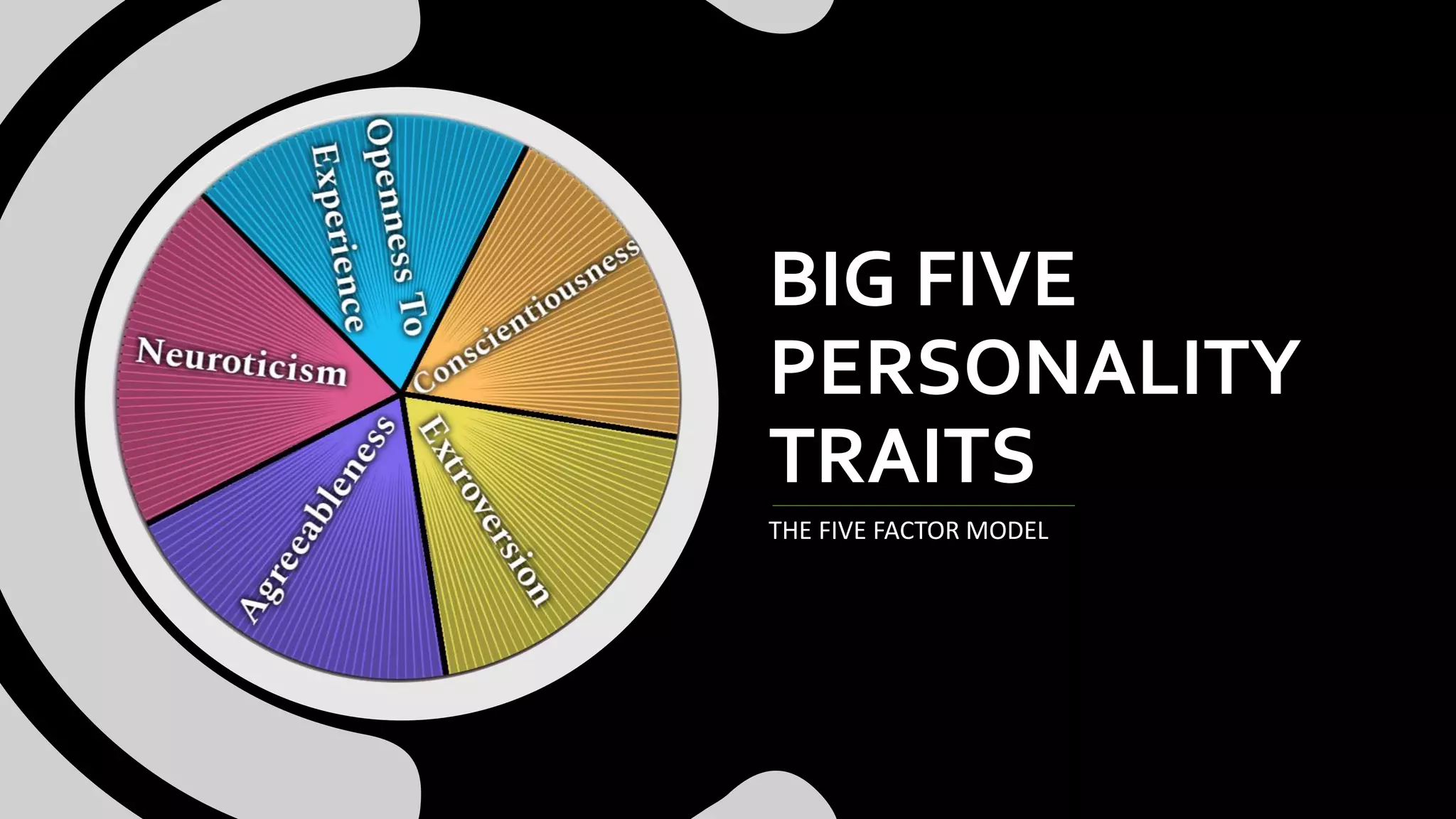
The Five Factor Model (FFM), commonly known as the Big Five, is the gold standard in contemporary psychological research. Unlike many popular personality quizzes that categorize individuals into neat, colorful boxes, the Big Five measures personality across five broad dimensions: Openness to Experience, Conscientiousness, Extraversion, Agreeableness, and Neuroticism (OCEAN). However, when these assessments are distributed as static PDF documents—often for self-administration or in simplified corporate workshops—the nuance of the psychometric science is frequently lost.
As of 2026, while digital, adaptive assessments have become the industry standard, the "personality test PDF" remains a common entry point for students and professionals. This accessibility is a double-edged sword, leading to several systematic misunderstandings regarding what the scores actually signify.
The Trait vs. Type Confusion
One of the most persistent misunderstandings stemming from Five Factor PDFs is the tendency to interpret results as "types." In the world of psychometrics, a "type" implies a distinct category—you are either an Introvert or an Extrovert. The Five Factor Model, however, is built on traits, which exist on a continuous spectrum.
When a user looks at a PDF result and sees a score for "Extraversion," they often assume a high score makes them "an extrovert." In reality, the FFM suggests that most people fall somewhere in the middle of the bell curve. A static PDF rarely does a good job of explaining that a score of 60% on the Extraversion scale does not mean you are 60% extroverted; it means you scored higher than 60% of the reference population.
The "type" fallacy is dangerous because it encourages labels that can limit personal growth or justify behavior. If a PDF suggests someone is "low in Agreeableness," that individual might adopt a "that’s just who I am" mentality, failing to realize that traits are descriptive of tendencies, not prescriptive of all future actions.
The Absence of Normative Data
A raw score on a personality test is essentially meaningless without a norm group. If you take a Five Factor test on a PDF and score a 32 out of 40 on Conscientiousness, you might assume you are highly organized and disciplined. However, if the average person in your demographic (age, culture, profession) scores a 36, your score of 32 actually places you below the mean.
Most free or widely circulated PDFs do not include up-to-date normative tables. Professional psychometric tools use massive databases to compare an individual’s score against thousands of others to determine a percentile rank. Without this comparison, a PDF score is just a number in a vacuum. By 2026, the gap between these "raw" PDF scores and sophisticated, AI-enhanced normative assessments has widened, making the static PDF even more prone to misinterpretation.
The "N" Word: Misunderstanding Neuroticism
Perhaps the most misunderstood dimension in any Five Factor PDF is Neuroticism. In common parlance, "neurotic" is a pejorative term associated with being "crazy" or "unstable." In the context of the Big Five, Neuroticism simply measures emotional stability and the tendency to experience negative emotions like anxiety, anger, or depression.
High scores in Neuroticism are often viewed as a "bad grade" on a personality test PDF. This is a fundamental misunderstanding of the model. Every trait has evolutionary advantages and disadvantages. For example, high Neuroticism can be associated with increased vigilance, greater attention to detail in high-stakes environments, and a more realistic (if more pessimistic) appraisal of risks. Conversely, extremely low Neuroticism can lead to overconfidence or a lack of urgency in the face of genuine threats.
Facets: The Hidden Layers of Personality
The "Five" in Five Factor refers only to the broad domains. Each of these domains is comprised of several facets—more specific traits that provide the real "color" of a person's personality. Most common PDFs only provide a score for the five main domains, which can be highly misleading.
Consider the domain of Openness to Experience. Its facets include:
- Imagination
- Artistic Interests
- Emotionality
- Adventurousness
- Intellect
- Liberalism (in the sense of being open to new ideas)
A person could score "average" on Openness on a simplified PDF because they are very high in "Intellect" but very low in "Artistic Interests." By averaging these together into a single domain score, the PDF hides the person's true nature. Misunderstanding occurs when a user sees an average score and thinks they are "not very creative," when in fact they might be highly intellectual but simply disinterested in the arts.
Comparing PDF-Based Assessments vs. Digital Psychometrics
To understand why the PDF format is so frequently misinterpreted, it is helpful to compare it to the modern standards of psychological testing used in 2026.
| Feature | Static PDF Assessment | Professional Digital Assessment |
|---|---|---|
| Scoring Method | Manual calculation (prone to error) | Algorithmic/Automated |
| Comparison | Self-referenced (Raw scores) | Norm-referenced (Percentiles) |
| Depth | Domain-level only (5 scores) | Facet-level analysis (30+ scores) |
| Context | Generic descriptions | Job-specific or clinical context |
| Reliability | Variable (often unverified versions) | High (validated against IPIP/NEO-PI-R) |
| Bias Control | No social desirability checks | Built-in validity scales |
The Problem of Self-Report Bias in Static Documents
All Five Factor tests—whether PDF or digital—are typically self-report inventories. This means the test relies on the user’s own perception of their behavior. The misunderstanding here lies in the belief that the test is an objective measurement of "who you are."
On a static PDF, there are no mechanisms to account for "Social Desirability Bias" (the tendency to answer in a way that makes one look good). In a high-stakes environment, such as a job application, a candidate might see questions related to Conscientiousness (e.g., "I am always prepared") and subconsciously or consciously inflate their score. Professional digital systems often use "ipsative" questions—forcing a choice between two equally positive or negative traits—to mitigate this bias. A PDF almost never has this level of sophistication, leading to results that reflect the user's "ideal self" rather than their "actual self."
Context and State vs. Trait
Another frequent misunderstanding is the failure to distinguish between a "state" (how you feel right now) and a "trait" (how you generally behave). Personality traits are meant to be stable over time. However, if a person takes a Five Factor test PDF during a particularly stressful week, their Neuroticism score may be artificially high, and their Extraversion score artificially low.
Users often take their PDF results as a permanent "DNA map" of their psyche. Psychologists emphasize that while traits are stable, they are not fixed. Environment and life circumstances can shift where a person falls on the spectrum. Misinterpreting a PDF result as a fixed destiny ignores the human capacity for adaptation and the impact of environmental context.
Best Practices for Interpreting a Big Five PDF
If you must use a PDF version of a Five Factor test, it is essential to approach the results with a critical eye. The International Personality Item Pool (IPIP) provides one of the most reliable sources for these items, but the following steps should be taken to avoid common pitfalls:
- Seek Facet-Level Data: If the PDF only gives you five scores, find a version that breaks them down into sub-scales.
- Use a Reliable Source: Ensure the PDF is based on validated research (such as the NEO-PI-R or the BFI-2) rather than a "pop-pyschology" imitation.
- Acknowledge the Bell Curve: Remember that "average" is the most common result for most people on most traits. Being average is not a failure; it signifies flexibility.
- Consider Your State: Reflect on whether your current mood or life situation is influencing your answers.
- Consult a Professional: If the results are being used for career coaching or clinical purposes, an interpretation by a trained psychologist is vastly superior to a self-guided PDF review.
Frequently Asked Questions
Is the Five Factor Model the same as Myers-Briggs (MBTI)?
No. The Myers-Briggs Type Indicator (MBTI) is based on Jungian archetypes and categorizes people into 16 "types." The Five Factor Model is an empirical, trait-based system used by the scientific community because it has higher reliability and validity. While MBTI is popular for team building, FFM is preferred for academic research and professional selection.
Can my Big Five scores change over time?
Yes, but generally not drastically. Research shows a phenomenon called the "Maturity Principle," where people tend to become more Agreeable, more Conscientious, and less Neurotic as they age. However, your relative ranking compared to your peers usually remains fairly stable.
Why do some Five Factor PDFs have different names for the traits?
Different researchers use slightly different terminology. For example, "Neuroticism" is sometimes called "Emotional Stability" (the reverse score), and "Openness to Experience" is sometimes referred to as "Intellect" or "Culture." Regardless of the name, the underlying psychological constructs remain the same.
Are free Five Factor PDFs accurate?
Accuracy depends on the source. Many free PDFs use the public-domain IPIP (International Personality Item Pool) questions, which are scientifically valid. However, the accuracy of the interpretation is usually low because these free versions lack the massive normative databases required to give you an accurate percentile rank.
Can I fail a Five Factor personality test?
No. There are no "right" or "wrong" personalities. Every point on the spectrum of the five traits has potential strengths and weaknesses. A person low in Conscientiousness might be more adaptable and better at "big picture" thinking, while someone high in the same trait might be better at execution and detail-oriented tasks.
Practical Recommendation
When reviewing a Five Factor personality test PDF, treat it as a conversation starter rather than a final verdict. Use the results to reflect on your tendencies and how they interact with your current environment. If you are using these tests for professional development or hiring in 2026, move away from static documents and toward validated, online psychometric platforms that provide normative comparisons and facet-level insights. This ensures that the complexity of human personality is respected rather than reduced to a misunderstood number on a page.
Image Gallery