How the Customer Cohort Shapes Growth Strategies
Customer cohorts shape growth strategies by providing a granular view of user behavior over time, allowing businesses to move beyond aggregate data to identify exactly when and why users churn or convert. By analyzing specific groups b...
Customer cohorts shape growth strategies by providing a granular view of user behavior over time, allowing businesses to move beyond aggregate data to identify exactly when and why users churn or convert. By analyzing specific groups based on acquisition dates or behaviors, companies can optimize marketing spend, refine product features, and maximize lifetime value.
Contents
Understanding the Fundamental Role of Cohort Analysis in 2026
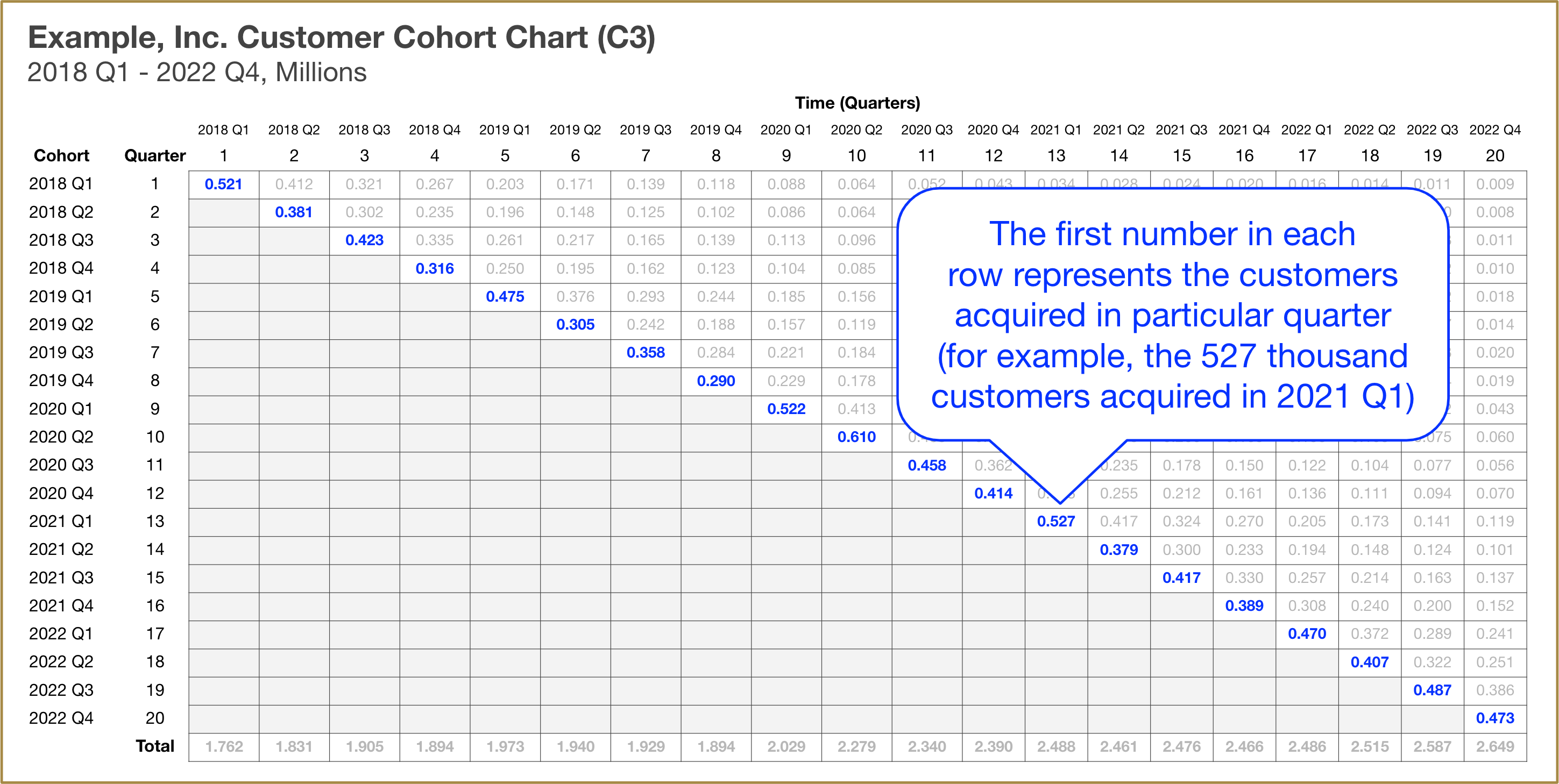
In the current business landscape of 2026, the reliance on aggregate "vanity metrics"—such as total registered users or raw website traffic—has largely been replaced by sophisticated cohort-based intelligence. A customer cohort is a group of users who share a common characteristic during a specific time frame. Traditionally, this is defined by their "birth date" or the moment they performed their first transaction. However, modern growth strategies now leverage both acquisition cohorts and behavioral cohorts to drive decision-making.
The primary reason cohorts are essential for growth is that they neutralize the "noise" of growth. When a company is growing rapidly, new users often mask the fact that old users are leaving. This is known as the "leaky bucket" problem. Cohort analysis allows a growth lead to isolate a group of customers who joined in, for example, January 2026, and track their retention and spending habits independently of the customers who joined in February or March. This isolation is the only way to determine if product improvements or marketing shifts are actually yielding a higher quality of customer over time.
Without this segmentation, a business might see increasing revenue and assume success, while in reality, they are simply spending more on acquisition to replace a rapidly churning base. Shaping a growth strategy around cohorts ensures that the foundation of the business—retention—is solid before scaling acquisition efforts.
The Distinction Between Acquisition and Behavioral Cohorts
To effectively shape a growth strategy, a business must distinguish between two primary types of cohorts. Each offers different levers for growth and requires different analytical approaches.
Acquisition Cohorts: Measuring Lifecycle and Churn
Acquisition cohorts group users by the time they started their relationship with the brand. In 2026, most CRM and analytics platforms automate this by daily, weekly, or monthly buckets. These cohorts are vital for identifying the "retention curve." A growth strategy shaped by acquisition cohorts focuses on the timeline of the customer journey. If data shows a significant drop-off in the third week for every cohort regardless of when they joined, the growth strategy must prioritize the "Week 3" experience, perhaps through automated re-engagement campaigns or simplified onboarding.
Behavioral Cohorts: Identifying Power Users
Behavioral cohorts group users based on specific actions they take within a product or service. For instance, a software company might create a cohort of users who "completed the profile setup" versus those who did not. By comparing these groups, the company can see if profile completion correlates with long-term retention. If the "completed profile" cohort has a 40% higher lifetime value (LTV), the growth strategy shifts to making profile completion a mandatory or heavily incentivized part of the user flow. This moves the strategy from reactive (fixing churn) to proactive (encouraging high-value behaviors).
How Cohorts Influence Marketing Spend and Channel Optimization
One of the most immediate impacts of cohort analysis is the optimization of the Customer Acquisition Cost (CAC). Not all acquisition channels are created equal, and aggregate data often hides this reality. A growth strategy informed by cohorts looks at the "Payback Period" and LTV per channel.
For example, a company might find that customers acquired through social media advertisements have a low initial CAC but churn within two months. Conversely, customers acquired through search engine optimization (SEO) or specialized webinars might have a higher initial CAC but remain active for over a year.
By analyzing these cohorts separately, the 2026 growth lead can reallocate budget from "low-cost, low-quality" channels to "high-cost, high-value" channels. This strategy prioritizes long-term profitability over short-term user growth. Furthermore, cohort data allows for "look-alike" modeling. By identifying the characteristics of the cohorts with the highest retention, marketing teams can tune their targeting parameters to find more individuals who mirror those successful groups.
| Metric | Low-Retention Cohort (Example) | High-Retention Cohort (Example) | Strategic Impact |
|---|---|---|---|
| Initial CAC | $15.00 | $45.00 | High-retention costs 3x more to acquire. |
| Month 6 Retention | 5% | 45% | Low-retention cohort is effectively lost. |
| Average Revenue Per User (ARPU) | $20.00 | $85.00 | High-retention users spend significantly more. |
| LTV:CAC Ratio | 1.3:1 | 4.2:1 | High-retention cohort is the primary growth engine. |
| Payback Period | 1 Month | 4 Months | Strategy must account for longer cash-flow cycles for high-value users. |
Shaping Product Development Through Cohort Trends
Growth is not solely the responsibility of the marketing department; it is intrinsically linked to product-market fit. Cohort analysis serves as a "truth serum" for product updates. When a new version of a mobile app is released in June 2026, the June cohort's behavior should be compared against the May cohort (the previous version).
If the June cohort shows a sharper decline in daily active usage, the product team has immediate, quantifiable evidence that the update may have introduced friction or removed a valued feature. This allows for rapid pivoting. A growth strategy shaped by these insights is agile; it relies on "Natural Experimentation." Instead of wondering why overall engagement is dipping, the team can point to a specific cohort influenced by a specific change.
Moreover, cohorts help identify "feature fatigue." If older cohorts are gradually using a product less while newer cohorts are highly active, it suggests that the product is great for beginners but lacks the depth to keep long-term users engaged. The growth strategy would then shift toward building "sticky" features or loyalty programs specifically for those veteran cohorts.
Leveraging Predictive Cohorts and AI in 2026
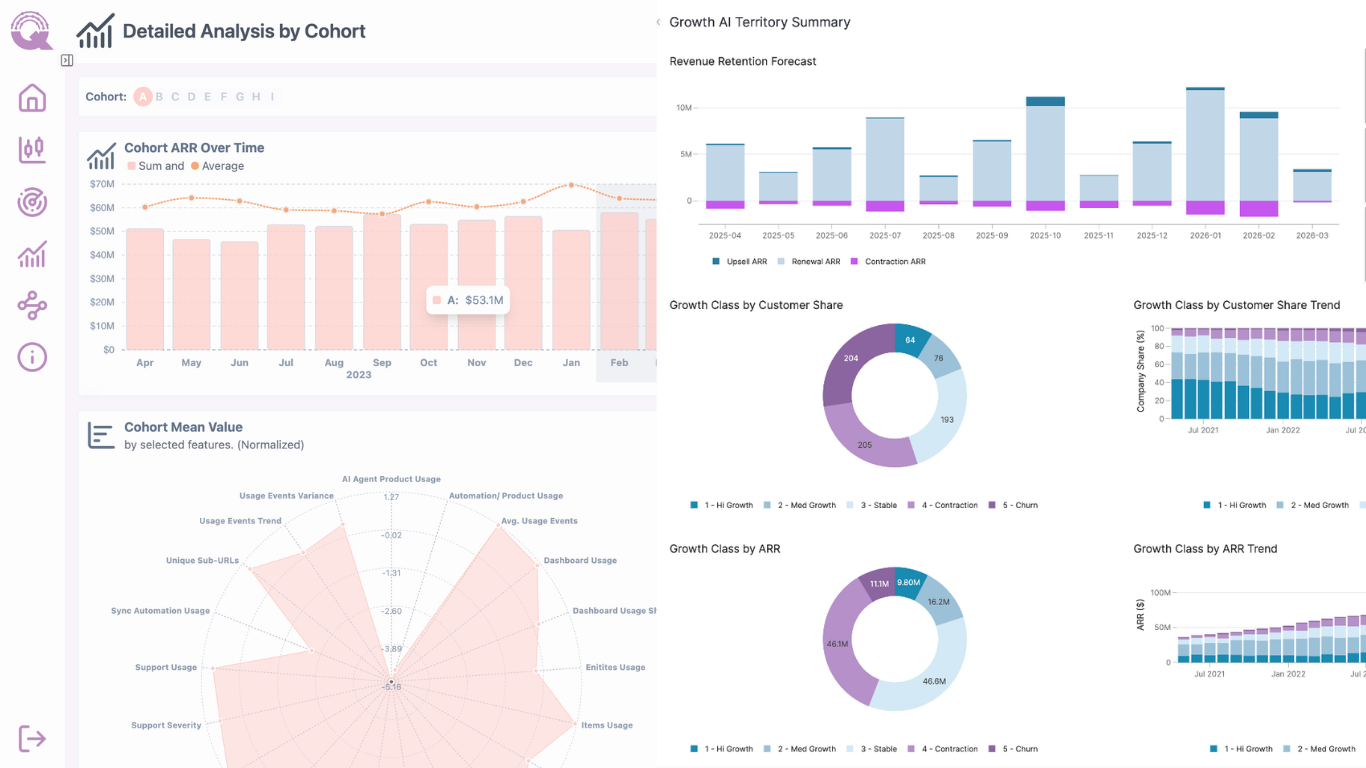
As we operate in 2026, the integration of artificial intelligence into cohort analysis has moved from experimental to standard practice. Predictive cohorting involves using machine learning to assign new users to a "predicted value" cohort within hours of their first interaction.
By analyzing the first few clicks or the source of the lead, AI models can predict with high accuracy whether a user belongs to a high-churn cohort or a high-LTV cohort. This shapes growth strategies by enabling "Real-Time Personalization." If a user is flagged as part of a high-churn cohort, the system can automatically trigger a discount offer or a personalized outreach from a customer success representative to preemptively address the churn risk.
This level of granularity ensures that growth strategies are not just looking backward at what happened last month, but are actively shaping the future behavior of the current month's cohort. It allows for a more efficient allocation of human resources, focusing high-touch support on the customers who are most likely to provide long-term value.
Common Pitfalls in Cohort-Based Growth Strategies
While cohort analysis is powerful, it is not without its challenges. One common mistake is over-segmentation. If a business breaks cohorts down too far—for example, by day, by city, and by device type—the sample sizes become too small to be statistically significant. A growth strategy built on a cohort of five people is prone to noise and can lead to incorrect conclusions.
Another pitfall is ignoring external seasonality. A cohort that joins in December might behave differently due to holiday spending habits rather than the effectiveness of a growth strategy. In 2026, sophisticated analysts ensure they normalize their data against year-over-year trends to ensure that "growth" isn't just a temporary seasonal spike.
Finally, there is the risk of "analysis paralysis." Knowing that a cohort is churning is useless unless there is a clear operational path to intervene. A successful strategy must pair data analysis with actionable triggers.
Frequently Asked Questions
What is the ideal time frame for a cohort analysis?
The ideal time frame depends on your business's sales cycle. For SaaS products with monthly subscriptions, weekly or monthly cohorts are standard. For high-frequency apps like social media or delivery services, daily cohorts may be necessary to capture rapid behavior changes. In 2026, most enterprises use a "rolling cohort" view that updates in real-time.
How does cohort analysis help in determining product-market fit?
Product-market fit is often defined by a "flat" retention curve. If you plot your cohorts on a graph and the line eventually levels off (e.g., at 20% retention) rather than dropping to zero, you have found a group of people for whom your product provides lasting value. Growth strategies should only be scaled aggressively once this "flattening" is observed in recent cohorts.
Can cohort analysis be used for offline businesses?
Yes. Retailers and service providers use loyalty programs or credit card data to track customer cohorts. For example, a restaurant group might track a cohort of customers who first visited during a "Summer Festival" to see how many return during the winter. This shapes their seasonal promotion strategies.
What is the difference between a cohort and a segment?
A segment is a broad group based on a static characteristic (e.g., "users in New York" or "female users"). A cohort is a group that shares a common event within a specific time period (e.g., "users who signed up in New York during January"). All cohorts are segments, but not all segments are cohorts. Cohorts are inherently time-bound.
How do you calculate the Lifetime Value (LTV) of a cohort?
To calculate a cohort's LTV, you sum the total revenue generated by that specific group over a set period and divide it by the initial number of members in that cohort. In 2026, this is often projected forward using decay models that account for the cohort's specific churn rate, providing a "Predictive LTV."
Practical Recommendation for Implementing Cohort-Driven Growth
To begin shaping your growth strategy through cohorts, start by auditing your Retention Curve. Map out your last six monthly acquisition cohorts on a single line graph. Identify where the steepest drop-off occurs—this is your "Retention Chasm." Instead of spending more on new ads, focus your 2026 growth strategy entirely on bridge-building activities (onboarding, email triggers, feature education) at that specific time interval. Once the retention curve for new cohorts begins to stabilize at a higher level, you can confidently increase your acquisition budget, knowing that your growth is built on a sustainable foundation rather than a fleeting spike in user numbers.
Image Gallery