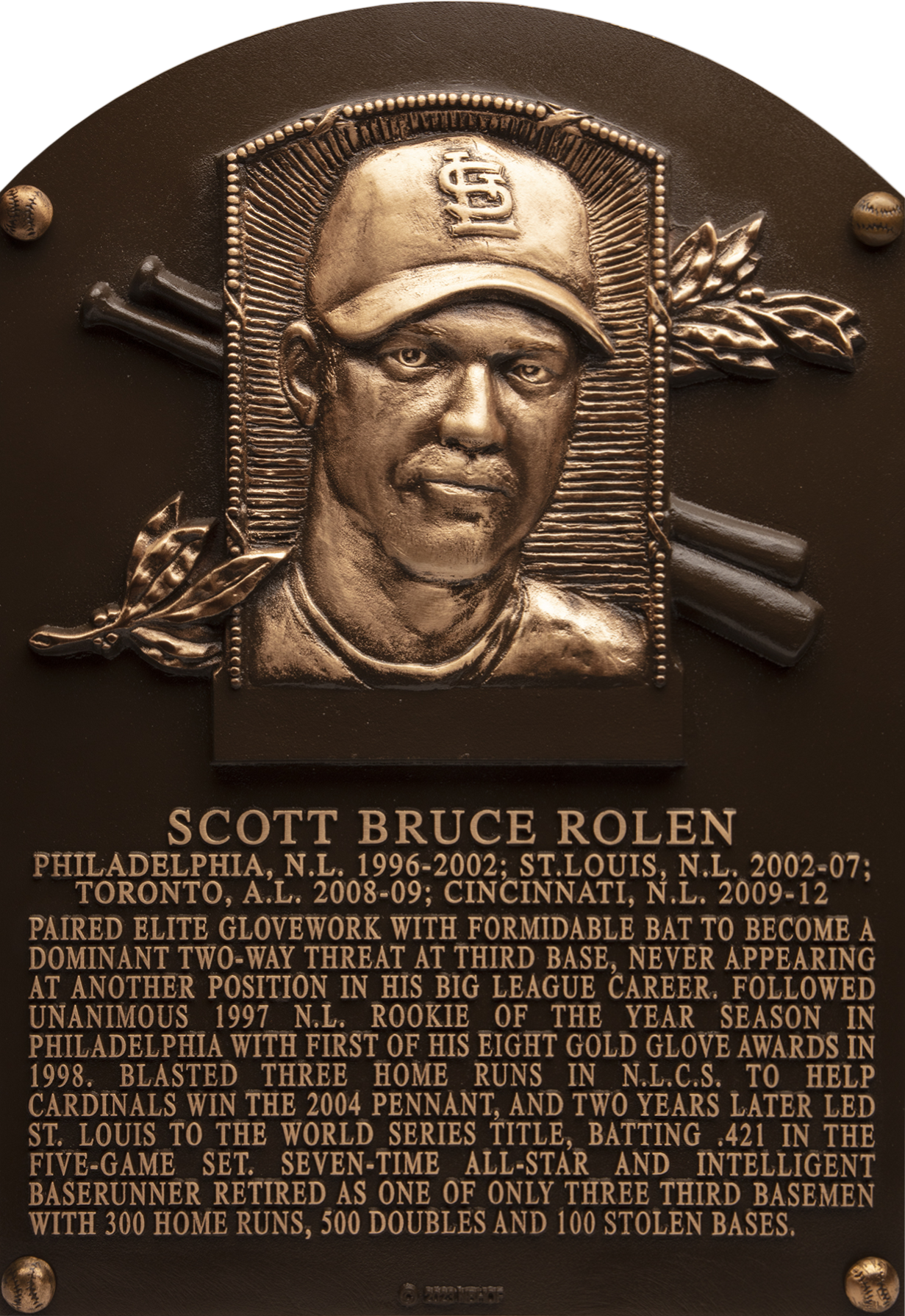
Scott Rolen Is a Hall of Fame Third Baseman: A Legacy of Excellence
Scott Rolen is a Hall of Fame third baseman whose induction into the National Baseball Hall of Fame in 2023 cemented his status as one of the most complete players of his generation. Renowned for his combination of elite defensive prow...
Scott Rolen is a Hall of Fame third baseman whose induction into the National Baseball Hall of Fame in 2023 cemented his status as one of the most complete players of his generation. Renowned for his combination of elite defensive prowess and consistent offensive production, Rolen redefined the expectations for the "hot corner" during his seventeen-season career from 1996 to 2012.
Contents
The Path to Cooperstown: Career Overview
Scott Rolen entered Major League Baseball (MLB) as a highly touted prospect for the Philadelphia Phillies. He quickly justified the hype, earning the National League Rookie of the Year award in 1997. Over the next decade and a half, he would play for the Phillies, St. Louis Cardinals, Toronto Blue Jays, and Cincinnati Reds, leaving an indelible mark on each franchise.
Rolen’s career is defined by his consistency. He finished his career with 316 home runs, 1,287 runs batted in, and a lifetime .281 batting average. While these offensive numbers are impressive, they only represent half of his value. His defensive metrics remain among the best in the history of the sport, often cited by advanced analytics as a primary driver for his eventual election to the Hall of Fame.
Defensive Mastery at the Hot Corner
The primary argument for Scott Rolen’s Hall of Fame candidacy was his glove. Third base is a position that requires rapid reflexes, a strong arm, and the ability to handle high-velocity ground balls. Rolen displayed these traits throughout his tenure, earning eight Gold Glove Awards—a testament to his sustained excellence.
Beyond traditional statistics like fielding percentage, advanced metrics such as Defensive Runs Saved (DRS) and Ultimate Zone Rating (UZR) frequently highlight Rolen as one of the greatest defensive third basemen to ever play the game. He possessed a unique ability to play deep behind the bag while still having the lateral quickness to cut off balls destined for the hole between third and shortstop. His transition to the Hall of Fame was bolstered by the realization that his defensive impact saved as many runs as some of the era's elite hitters produced.
Statistical Comparison and Hall of Fame Credentials
When evaluating Hall of Fame candidates, analysts often utilize Wins Above Replacement (WAR) to compare players across different eras. By the time he retired, Rolen had accumulated a WAR of 70.1. Historically, this mark is consistent with other Hall of Fame third basemen, placing him in the upper echelon of the position.
The following table compares Rolen’s career achievements against the standard benchmarks expected for a Cooperstown inductee.
| Metric | Scott Rolen Career Total | Hall of Fame Context |
|---|---|---|
| Games Played | 2,038 | High level of career durability |
| Hits | 2,077 | Solid milestone for position players |
| Home Runs | 316 | Strong power metrics for 3B |
| Gold Glove Awards | 8 | Top-tier defensive recognition |
| All-Star Selections | 7 | Consistent seasonal recognition |
| Career WAR | 70.1 | Exceeds average HOF third baseman |
Impact Beyond the Numbers
While statistics provide a clear path to understanding Rolen's talent, his impact on the clubhouse and team dynamics was equally significant. During his time with the St. Louis Cardinals, he was a linchpin of the 2006 World Series championship team. His leadership style, often described as quiet but intense, helped stabilize the defensive side of the ball for numerous pitching staffs.
Rolen’s tenure in the league also coincided with an era where players began to focus more heavily on conditioning and advanced defensive positioning. He adapted well to these changes, maintaining his defensive performance well into his late thirties. His ability to remain an asset on the field during the later stages of his career is a key reason he remained on the Hall of Fame ballot for several years before securing his place in the gallery of greats.
Addressing Common Misconceptions
Some critics initially hesitated to support Rolen’s candidacy, often pointing to his relatively modest hit total compared to players like Cal Ripken Jr. or Adrian Beltre. However, this perspective overlooks the era in which Rolen played. Injuries shortened several of his prime seasons, and the environment of the league during his peak years favored high-strikeout environments, making his high on-base percentage and defensive value even more statistically significant when adjusted for league averages.
Furthermore, the "Hall of Fame" definition has evolved. In 2026, the consensus among baseball historians is that a player's total value—offensive, defensive, and baserunning—must be considered holistically. Scott Rolen is the quintessential example of the "all-around player" that modern analytical models prioritize.
Frequently Asked Questions
Why did it take Scott Rolen multiple years to be elected to the Hall of Fame?
Rolen was elected in his sixth year of eligibility. Hall of Fame voting often requires voters to shift their perspective from traditional counting stats (like 3,000 hits) toward modern metrics that better capture defensive and positional value. As the electorate became more familiar with metrics like WAR, his support grew steadily each year.
How do Scott Rolen’s defensive stats compare to other third basemen?
Rolen ranks among the top defensive third basemen in history. His 8 Gold Gloves put him in rare company, surpassed only by Brooks Robinson and Mike Schmidt. His defensive impact is widely considered a cornerstone of his Hall of Fame case.
What is the significance of the 2006 World Series to his legacy?
The 2006 championship with the St. Louis Cardinals served as a career peak. Rolen provided critical defensive plays and offensive output that validated his reputation as a "winning player" who could perform under the intense pressure of postseason baseball.
Did Scott Rolen play for any team other than the Cardinals and Phillies?
Yes, he played for the Toronto Blue Jays and the Cincinnati Reds. His time in Toronto saw him serve as a mentor to younger players, and his tenure in Cincinnati allowed him to extend his career as a veteran leader.
How should fans evaluate "all-around" players like Rolen?
Evaluating players like Rolen requires looking past batting average or home run totals alone. Fans should consider the total number of runs a player contributes through hitting and the number of runs they prevent through fielding. When these are combined, the total value becomes clear.
Next Steps for Baseball Enthusiasts
To better appreciate the career of Scott Rolen, fans are encouraged to visit the National Baseball Hall of Fame and Museum in Cooperstown, New York, or explore the digital archives hosted by the official MLB database. By reviewing his game logs and defensive highlight reels, it becomes evident why he is regarded as one of the most complete third basemen to ever take the field.
Image Gallery