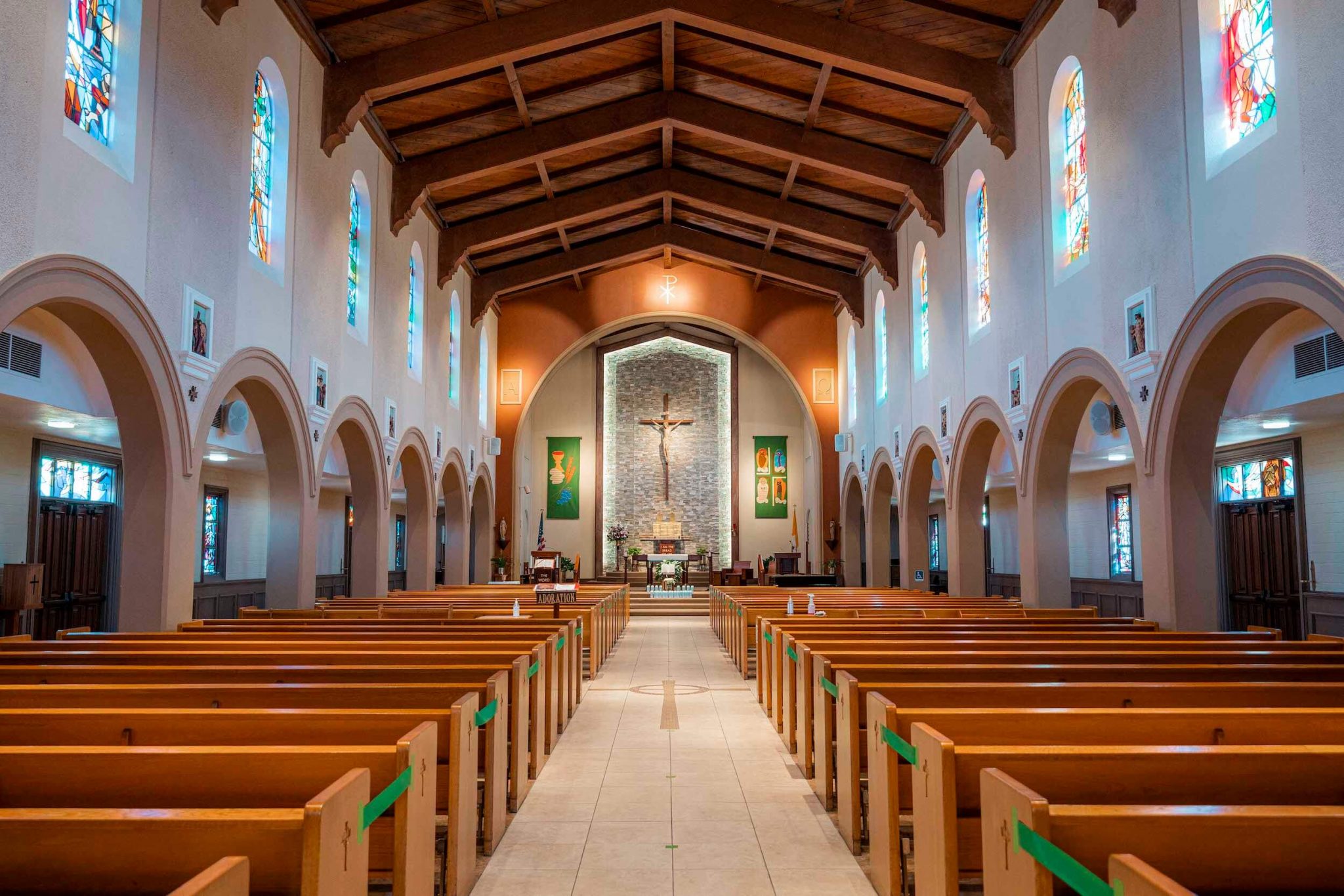
Our Lady of Perpetual Help Catholic Church: Devotion, Liturgical Life, and Parish Guide
An Our Lady of Perpetual Help Catholic Church is a parish or shrine dedicated to the Virgin Mary under the historic Byzantine Marian icon entrusted to the Redemptorist Order. Parishes bearing this dedication center their liturgical lif...
An Our Lady of Perpetual Help Catholic Church is a parish or shrine dedicated to the Virgin Mary under the historic Byzantine Marian icon entrusted to the Redemptorist Order. Parishes bearing this dedication center their liturgical life on the Mass, regular Eucharistic Adoration, the Sacrament of Reconciliation, and the traditional perpetual novena devotions held every Wednesday.
Contents
While hundreds of Roman Catholic and Eastern rite parishes share this titular patronage across the globe, they are unified by the veneration of the miraculous thirteenth-to-fifteenth-century icon whose original resides in the Church of Saint Alphonsus Liguori in Rome. Whether you are looking to attend your local OLPH parish for the first time, seeking the canonical requirements for receiving sacraments, or researching the doctrinal theology behind the Perpetual Help devotion, this guide details parish structure, liturgical customs, and the spiritual framework governing these communities.
Understanding the Devotion: The Icon and Its Theological Significance
Every Catholic church consecrated under the title of Our Lady of Perpetual Help derives its identity from the sacred image of the Theotokos of the Passion. Understanding this image is essential to understanding the spiritual ethos of the parish.
The original icon depicts the Virgin Mary holding the Christ Child, who looks upward toward the Archangels Michael and Gabriel. These angels hover with the instruments of the Crucifixion—the cross, the nails, the lance, and the sponge filled with vinegar. In startling detail, the Christ Child grips His mother’s right hand while His sandal dangles loose from His foot, illustrating the sudden fright of His divine vision of the Passion and His flight to maternal protection.
Key Iconographic Details and Marian Dogma
Catholic sacred art within OLPH parishes operates under strict theological norms defined by the Council of Trent and the Second Vatican Council. The icon contains four distinct theological layers:
- The Gold Background: Symbolizes the eternal, uncreated light of the Kingdom of God, reminding worshippers that the communion of saints exists beyond earthly time.
- The Greek Inscriptions: Abbreviated titles identify the figures: MP-ΘY (Meter Theou, Mother of God), IC-XC (Iesous Christos, Jesus Christ), OAM (Archangel Michael), and OAΓ (Archangel Gabriel).
- The Colors of Mary's Vestments: Mary wears a dark blue mantle over a red tunic. In Byzantine iconography, blue represents humanity, while red signifies royalty or divinity. This visual code affirms the dogma of the Incarnation: Christ took human flesh through Mary.
- The Gaze of the Blessed Virgin: Mary looks directly at the viewer rather than at her Son. Her steady, sorrowful expression calls the faithful to prayer, highlighting her role as Mediatrix and Comforter of the Afflicted.
Typical Liturgical Schedule and Sacramental Life
While specific schedules differ between individual diocesan parishes and national shrines, churches named Our Lady of Perpetual Help share common devotional structures across their liturgical calendars.
The Wednesday Perpetual Novena
The hallmark of any parish under this dedication is the weekly Novena to Our Lady of Perpetual Help. Established globally following Pope Pius IX’s 1866 decree instructing the Congregation of the Most Holy Redeemer (Redemptorists) to "make her known throughout the world," this service typically takes place on Wednesday mornings or evenings.
The structure of the novena includes:
- Exposition of the Blessed Sacrament: Many parishes precede or conclude the novena prayers with Eucharistic Benediction.
- The Novena Prayers: Recitation of the traditional petitions for temporal and spiritual favors, spiritual healing, and the intentions of the universal Church.
- The Reading of Petitions and Thanksgivings: Parishioners submit written intentions, which are offered collectively before the altar.
- The Hymn Mother Dearest, Mother Fairest or Immaculate Mary: Traditional congregational singing concluding the devotion.
Core Sacramental Operations
Like any Catholic parish governed by the Code of Canon Law (CIC), OLPH parishes provide regular access to the seven sacraments.
| Sacramental Offering | Standard Parish Frequency / Requirement | Canonical & Practical Guidelines |
|---|---|---|
| Holy Mass (Sacrifice of the Eucharist) | Daily (Morning/Noon) and Weekend Anticipated (Vigil) through Sunday Evening | Canon 904; fulfills Sunday obligation under Canon 1247. Celebrated according to the Roman Missal (Third Edition). |
| Sacrament of Penance (Reconciliation) | Weekly (Saturdays 3:30–4:30 PM, Wednesdays during Novena, or by appointment) | Canon 960 requires individual, integral confession of all mortal sins by number and kind. |
| Holy Baptism | Monthly communal celebrations or scheduled private rites | Requires at least one practicing Catholic godparent (Canon 874) and parental preparation classes. |
| Confirmation | Annual diocesan visitation or Easter Vigil (OCIA/RCIA) | Conferred upon candidates who have completed comprehensive catechetical preparation and service requirements. |
| Sacrament of Holy Matrimony | Scheduled by reservation; requires a 6- to 12-month preparation period | Requires pre-marital inventory (such as FOCCUS), Natural Family Planning (NFP) coursework, and diocesan retreat. |
| Anointing of the Sick | Emergency on-call availability; semi-annual communal healing Masses | Governed by Canon 1004; administered to baptized Catholics facing critical illness, advanced age, or major surgery. |
Registering and Engaging with an OLPH Parish
Joining an Our Lady of Perpetual Help parish involves clear canonical and pastoral steps. Under Canon 107 of the Code of Canon Law, a Catholic acquires a proper pastor and parish by establishing domicile (residing within the geographical boundaries of the parish territory). However, personal parishes and non-territorial affinities are widely recognized across modern dioceses.
Step 1: Formal Parish Registration
Merely attending Sunday services does not constitute canonical parish membership. Registration creates an official record used to verify active practice when requesting sacraments, acting as a godparent or Confirmation sponsor, or enrolling children in parochial schools or religious education programs.
Administrative Registration Protocol
Contact the parish administrative office to complete the parish census form, either via physical documentation or the church's parish management portal. Have your baptismal certificate, marital status documentation, and contact records ready.
Step 2: Participation in the Order of Christian Initiation of Adults (OCIA)
Unbaptized adults or those baptized in non-Catholic Christian communions seeking entry into full communion at an OLPH church enter through the Order of Christian Initiation of Adults (formerly RCIA).
- Inquiry Period (Pre-Catechumenate): Exploration of the faith and initial discernment.
- Catechumenate: In-depth doctrinal instruction across Scripture, the Catechism of the Catholic Church, and liturgical practice.
- Purification and Enlightenment: Coinciding with the liturgical season of Lent, culminating in the Scrutinies.
- Sacraments of Initiation: Reception of Baptism (if needed), Confirmation, and First Holy Communion at the Easter Vigil.
Step 3: Stewardship, Tithing, and Ministries
Active parishioners support the material and pastoral needs of the church through the three traditional pillars of Catholic stewardship: time, talent, and treasure.
- Liturgical Ministries: Altar servers, lectors, Extraordinary Ministers of Holy Communion (instituted under diocesan certification), cantors, and ushers.
- Charitable Outreaches: Parish chapters of the Society of Saint Vincent de Paul, food pantries, and Gabriel Project initiatives supporting pregnant women in need.
- Devotional Fraternities: The Legion of Mary, Knights of Columbus councils, and altar societies dedicated to church vestment care and altar maintenance.
Prominent Parishes and Shrines Dedicated to Our Lady of Perpetual Help
Due to the broad international spread of this devotion, several notable shrines serve as primary pilgrim destinations and regional centers of Marian piety.
The Basilica of Our Lady of Perpetual Help (Boston, Massachusetts)
Widely known as "The Mission Church," this landmark basilica was established by the Redemptorists in 1870 in Boston's Mission Hill neighborhood. Designed in Romanesque Revival style, the basilica gained widespread renown for reported miraculous physical healings taking place during its perpetual novena services in the late nineteenth and twentieth centuries. It remains a major center for pilgrimage, sacramental life, and inner-city urban outreach.
The Church of Saint Alphonsus Liguori (Rome, Italy)
Located on the Via Merulana in Rome, the Church of Saint Alphonsus (Chiesa di Sant'Alfonso di Liguori all'Esquilino) is the physical home of the original, miraculous icon of Our Lady of Perpetual Help. Built in the late nineteenth century by architect George Wigley, this neo-Gothic church stands directly above the historic site of Saint Matthew's Church, where the icon was originally venerated for centuries prior to its disappearance during the Napoleonic campaigns.
The National Shrine of Our Lady of Perpetual Help (Baclaran, Philippines)
Commonly called Baclaran Church, this national shrine in Parañaque, Metro Manila, represents one of the largest active Marian pilgrimage sites in the world. Operating 24 hours a day to accommodate rotating shifts of pilgrims, the church draws tens of thousands of worshippers every Wednesday to participate in perpetual novenas conducted in Tagalog and English.
Canonical and Pastoral Comparative Analysis: Parish Structures
Understanding where an OLPH parish fits within the broader diocesan framework helps parishioners navigate sacramental administration, canon law, and parish leadership.
| Structural Category | Diocesan Parish Dedicated to OLPH | Redemptorist / Religious Order OLPH Parish | Cathedral / Diocesan Shrine Dedicated to OLPH |
|---|---|---|---|
| Ecclesiastical Authority | Directly under the Local Ordinary (Diocesan Bishop) and Diocesan Priests | Under the Religious Superior (CSsR) in union with the Local Ordinary | Supervised by a Rector reporting directly to the Bishop |
| Pastoral Focus | General geographic parish ministry, K-8 Catholic education, local pastoral care | Heavy emphasis on missions, Redemptorist spirituality, confessions, and perpetual novenas | Regional pilgrimage destination, major archdiocesan liturgies, non-territorial administration |
| Financial Administration | Governed by Canon 537 Parish Finance Council; reports to Diocesan Chancery | Managed under religious community constitutions in conjunction with parish councils | Funded by pilgrimage offerings, special endowments, and diocesan subsidies |
| Sacramental Registration | Maintains primary canonical registers for designated geographic territory | Maintains local sacramental registers; accepts members across broader regions | Sacramental registers vary; typically refers marriages and baptisms to home parishes |
Common Misconceptions Regarding the Perpetual Help Devotion
When attending an Our Lady of Perpetual Help church, newcomers and non-Catholics often encounter misunderstandings regarding the nature of the devotions held there.
Misconception 1: Marian Veneration Replaces Christocentric Worship
A frequent criticism is that an intense focus on Our Lady of Perpetual Help detracts from the adoration due to Jesus Christ. Catholic dogmatic theology makes a strict, non-negotiable distinction between latria and hyperdulia:
- Latria: The supreme adoration, sacrificial worship, and honor due solely to the Triune God (Father, Son, and Holy Spirit). The Sacrifice of the Holy Mass consists purely of latria.
- Hyperdulia: The highest form of veneration and honor accorded to the Virgin Mary as the Mother of God, distinct in kind and infinitely inferior to the divine worship owed to God.
- Dulia: The reverence given to the saints and angels.
At every OLPH parish, the icon itself constantly points the believer back to Christ. Mary's hand does not clasp her Son's hand tightly; instead, her open palm presents Christ to the world as the source of salvation, embodying her scriptural command at Cana: "Do whatever he tells you" (John 2:5).
Misconception 2: Novenas Function as Superstitious Guarantees
Another common misunderstanding is that completing nine consecutive weeks of the Wednesday Novena guarantees an answer to a petition like an automatic transaction. The Catholic Church explicitly condemns superstition (Catechism of the Catholic Church, §2111). Novena prayers represent persistent, humble intercession patterned after the nine days the Apostles and the Virgin Mary spent in prayer between the Ascension of Christ and the descent of the Holy Spirit at Pentecost (Acts 1:14). Favors granted through the novena are attributed to God's providence through Our Lady's intercession, not to the ritualistic formula itself.
Frequently Asked Questions
What happens during a Wednesday novena at an Our Lady of Perpetual Help Catholic Church?
A typical Wednesday novena includes exposition of the Blessed Sacrament, the recitation of formal petitions to Our Lady of Perpetual Help, prayers for the sick, the reading of submitted intentions, and Benediction. Many parishes offer the Sacrament of Reconciliation immediately before or during the service to help the faithful prepare their hearts.
The devotion follows a structured booklet containing prayers composed specifically for the Redemptorist devotion. Parishioners unite their private intentions with the universal needs of the Church, singing traditional Marian hymns and receiving the Eucharistic blessing.
Can non-Catholics attend services at an Our Lady of Perpetual Help church?
Yes, non-Catholics are welcome to attend all public liturgies, novena devotions, and prayer services at any Catholic church.
While non-Catholics are encouraged to join in the prayers, singing, and community life of the parish, canonical guidelines prohibit non-Catholics from receiving Holy Communion. Instead, non-Catholics may remain seated or come forward with their arms crossed over their chest to receive a pastoral blessing from the priest.
How do I schedule a Mass intention at an Our Lady of Perpetual Help parish?
To schedule a Mass intention for a living person or the repose of the soul of a deceased loved one, contact the parish office or visit during administrative hours.
Canon law allows a priest to accept a small voluntary offering (a Mass stipend, customarily $10 to $20 depending on diocesan guidelines) associated with applying the fruits of the Mass for that specific intention. Parishes issue a Mass card that can be presented to the recipient or their family confirming the date and time of the liturgy.
What is the canonical process to get married at an Our Lady of Perpetual Help parish?
Engaged couples must contact the parish priest at least six months prior to their prospective wedding date to begin pre-marital preparation.
The process requires verifying canonical freedom to marry (including obtaining recently issued baptismal certificates with notations), completing pre-marriage inventory sessions (such as FOCCUS), participating in a diocesan-approved marriage preparation retreat, and attending instruction in Natural Family Planning. If either party was previously married, an ecclesiastical annulment must be granted before scheduling a ceremony.
Why do some OLPH parishes belong to the Redemptorist Order instead of the local diocese?
Pope Pius IX specifically entrusted the original icon of Our Lady of Perpetual Help to the Congregation of the Most Holy Redeemer (Redemptorists) in 1866, charging them with spreading devotion to the icon globally.
Consequently, Redemptorist communities built many of the primary shrines, basilicas, and urban parishes bearing this name. While dioceses also establish their own diocesan-staffed OLPH parishes, Redemptorist parishes retain a distinctive missionary and community-based charism directly connected to their founder, Saint Alphonsus Liguori.
Whether your goal is to locate a local parish for weekly worship, participate in the Wednesday Perpetual Novena, or pursue full sacramental initiation into the Roman Catholic Church, your local Our Lady of Perpetual Help Catholic Church provides a stable, tradition-anchored home. Contact your local parish office, verify their current Mass and confession schedules, and schedule an appointment with pastoral staff to take your next step into active parish life.
Image Gallery