Day Trading in a Roth IRA: Rules, Limits, and Account Setup
You can day trade in a Roth IRA, but critical federal regulations and brokerage restrictions apply. While profits grow tax-free, traders cannot use leveraged margin, execute short sales, or deduct capital losses. Furthermore, active tr...
You can day trade in a Roth IRA, but critical federal regulations and brokerage restrictions apply. While profits grow tax-free, traders cannot use leveraged margin, execute short sales, or deduct capital losses. Furthermore, active traders must navigate settlement rules and account balance requirements to avoid severe trading violations.
Contents
How Day Trading Works Inside a Roth IRA
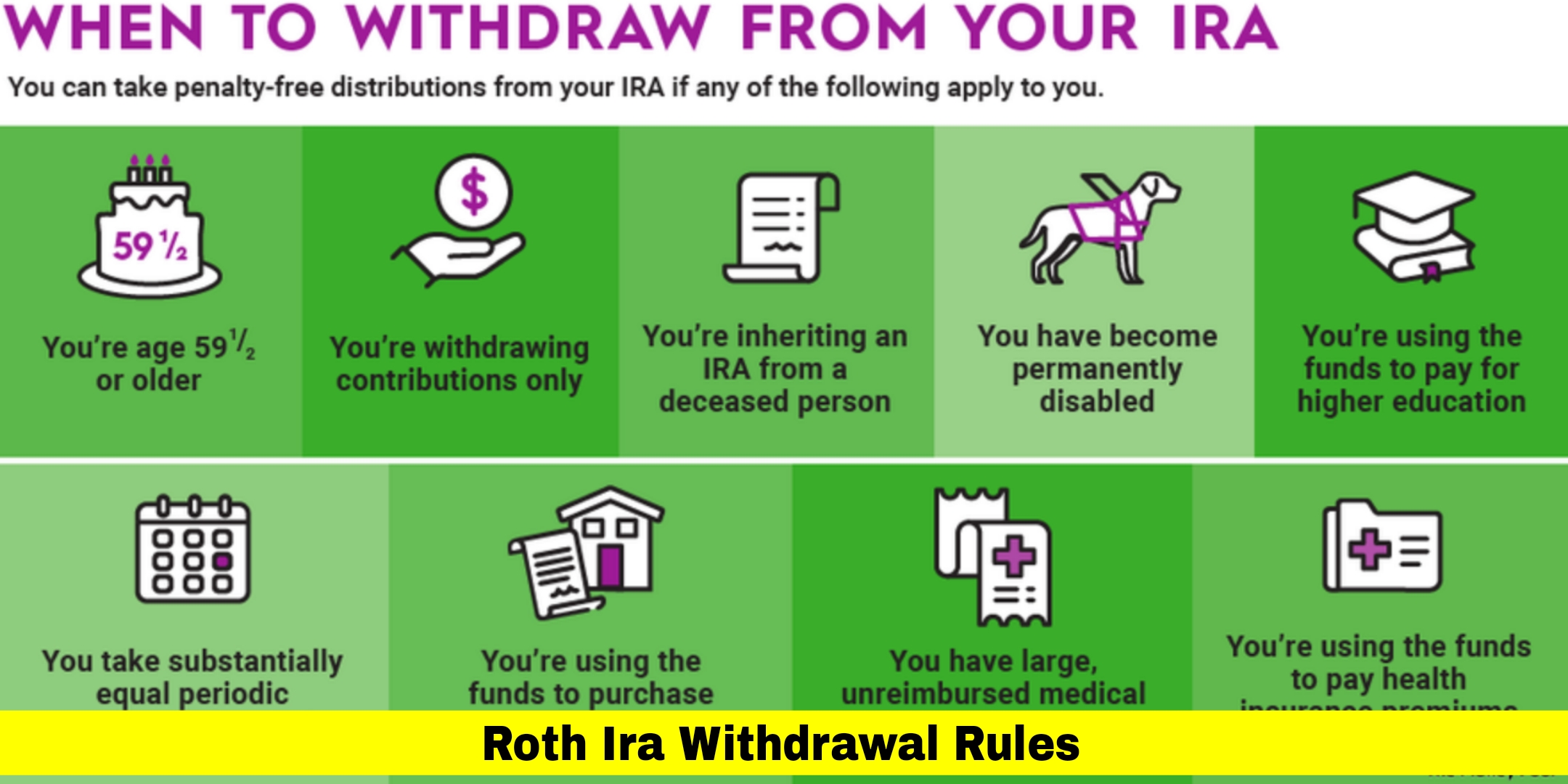
A Roth IRA is an individual retirement account funded with post-tax dollars. Under normal conditions, assets held within a Roth IRA generate interest, dividends, and capital gains that accumulate entirely tax-free. When qualified distributions begin after age 59½ (and provided the account has been open for at least five years), all withdrawals are tax-exempt.
Because of these tax advantages, many active traders attempt to execute day trading strategies—defined by the Financial Industry Regulatory Authority (FINRA) as purchasing and selling the same security within the same trading day—inside a Roth IRA. Tax-free compounding means a successful intraday trader does not pay short-term capital gains taxes, which can reach up to 37% at the federal level for high earners in taxable individual accounts.
However, trading actively inside a retirement vehicle requires a thorough understanding of the Internal Revenue Code (IRC) and broker-dealer operating rules. The Internal Revenue Service (IRS) strictly limits borrowing against retirement accounts, which alters how standard day trading mechanics function. While active trading is entirely legal within a Roth IRA, traders must sacrifice the primary tool used by standard retail day traders: financial leverage.
Major Restrictions and Limits on Roth IRA Day Trading
While standard taxable brokerage accounts allow traders to utilize 4:1 intraday margin leverage, short positions, and complex options strategies, retirement accounts operate under structural restrictions.
1. Prohibition of Margin Borrowing and Short Selling
Under IRS rules governing tax-advantaged accounts, account holders cannot borrow funds against the account equity to create financial leverage. In a standard brokerage account, margin allows a trader with $30,000 in equity to control up to $120,000 in buying power during market hours. In a Roth IRA, every position must be funded 100% by existing cash reserves.
Because short selling requires borrowing shares from a broker dealer to sell them on the open market, short selling is strictly prohibited in a Roth IRA. Traders seeking downside exposure must rely on alternative strategies, such as purchasing put options or inverse exchange-traded funds (ETFs), subject to options approval levels.
2. Cash Account vs. Limited Margin IRA Accounts
Because standard margin leverage is banned, Roth IRA day trading occurs under one of two operating structures:
- Standard Cash Account: Trades are executed using cleared cash. If you buy a stock and sell it on the same day, you must wait for the transaction to clear before using those settled funds again.
- Limited Margin Account: Many major brokerages offer "limited margin" for IRAs. Limited margin does not allow you to borrow money or trade on leverage. Instead, it allows you to trade on unsettled funds instantly, eliminating the waiting period between trade execution and settlement.
To qualify for limited margin, most financial institutions require account holders to maintain a minimum total account value (typically $25,000) and obtain higher-level trading approval.
3. The Pattern Day Trader (PDT) Rule in Retirement Accounts
FINRA Rule 4210 defines a Pattern Day Trader (PDT) as any customer who executes four or more "day trades" within five business days, provided those trades represent more than 6% of the customer's total trade activity during that window.
- In a Cash Account: The PDT rule does not officially trigger margin calls because cash accounts do not offer margin. However, cash account day traders face cash settlement restrictions and potential Good Faith Violations (GFVs).
- In a Limited Margin IRA: The PDT rule does apply. If your account value drops below $25,000 while classified as a Pattern Day Trader in a limited margin IRA, your broker will restrict the account to position-closing trades only until the minimum equity balance of $25,000 is restored.
4. Options Trading Tier Restrictions
Options trading inside a Roth IRA is restricted to non-leveraged, defined-risk strategies. Brokerages assign options trading levels based on experience and account type:
- Allowed (Tier 1 & Tier 2): Covered calls, cash-secured puts, long calls, long puts, and defined-risk multi-leg spreads (such as vertical spreads or iron condors) if the account has limited margin approval.
- Prohibited (Tier 3 & Naked Options): Naked options (uncovered options) and short options positions that require naked share delivery are strictly forbidden because they carry undefined market risk.
5. Inability to Harvest Capital Losses
In a taxable trading account, day trading losses can be used to offset realized capital gains. Under current tax laws, up to $3,000 of excess net capital losses can also offset ordinary income each year, with remaining losses carried forward indefinitely.
In a Roth IRA, capital losses cannot be deducted. If an aggressive day trading strategy wipes out $50,000 of principal inside a Roth IRA, that loss cannot offset income taxes or capital gains outside the IRA. Furthermore, because contribution limits restrict how much money can be deposited each year, replacing lost capital inside a retirement account can take years or decades.
Comparing Account Types for Active Day Trading
Understanding how a Roth IRA compares to standard taxable margin accounts and traditional cash accounts helps clarify which account structure aligns with your trading approach.
| Feature / Restriction | Taxable Margin Account | Standard Cash Account (Roth IRA) | Limited Margin Roth IRA |
|---|---|---|---|
| Tax on Capital Gains | Taxed (Short-Term / Long-Term) | Tax-Free (Qualified Distributions) | Tax-Free (Qualified Distributions) |
| Intraday Margin Leverage | Up to 4:1 | None (1:1 Cash Only) | None (1:1 Cash Only) |
| PDT $25,000 Requirement | Mandatory for >3 trades/5 days | Not Applicable | Mandatory |
| Settlement Restriction | Instant (via margin) | T+1 Settlement Window | Waived (Instant Reuse of Cash) |
| Short Selling Stock | Allowed | Strictly Prohibited | Strictly Prohibited |
| Tax-Loss Harvesting | Allowed | Prohibited | Prohibited |
| Good Faith Violations Risk | None | High if trading unsettled cash | None (Waived by broker) |
T+1 Settlement and Good Faith Violations
The U.S. Securities and Exchange Commission (SEC) implemented a standard settlement cycle known as T+1 (Trade Date plus one business day) for US equities, corporate bonds, and municipal securities. Understanding settlement mechanics is essential for trading in a cash-based Roth IRA.
What Is a Good Faith Violation (GFV)?
A Good Faith Violation occurs when a trader buys a security using unsettled funds and then sells that same security before the original funds used to purchase it have fully settled.
Example Scenario:
- Monday Morning: You have $10,000 in settled cash in your Roth IRA cash account. You buy $10,000 worth of Stock A and sell it two hours later for $10,500.
- Monday Afternoon: You now have $10,500 in unsettled cash. Under T+1, this cash will settle on Tuesday.
- Monday Late Afternoon: You use the unsettled $10,500 to buy Stock B.
- The Trigger: If you sell Stock B on Monday afternoon before market close, you commit a Good Faith Violation. You sold Stock B before the funds used to purchase it (from the Stock A trade) had officially settled.
Consequences of Repeated Violations
Federal regulations require brokerages to enforce strict penalties for settlement violations:
- First 2 Violations: Warning issued by the broker-dealer.
- Third Violation within 12 Months: The brokerage is legally required to restrict the account for 90 calendar days. During this period, the account cannot buy securities using unsettled funds; trades can only be placed using fully settled cash available prior to order entry.
Traders operating with limited margin approval avoid Good Faith Violations entirely because the brokerage waives settlement delays for trading execution.
Step-by-Step: How to Set Up a Roth IRA for Active Day Trading
If you decide to day trade inside a Roth IRA, following a structured setup process reduces operational risks and compliance errors.
Step 1: Open a Roth IRA with an Active-Trading Brokerage
Select a financial institution that offers advanced trading software, fast order execution, competitive options pricing, and support for limited margin on IRA accounts. Major platforms like Charles Schwab, Fidelity, Interactive Brokers, and E*TRADE support active IRA trading.
Step 2: Ensure Compliance with Annual Contribution Limits
Fund your account using direct cash contributions up to the annual IRS limit, or complete a roll-over from an existing eligible retirement plan (such as a Traditional IRA or former 401(k)). Note that direct contributions are subject to modified adjusted gross income (MAGI) limits set by the IRS.
Step 3: Apply for Limited Margin Status
If your total account balance exceeds $25,000, apply for Limited Margin through your broker's account management portal. This feature allows you to trade continuously throughout the market day without triggering Good Faith Violations or waiting for T+1 settlement cycles.
Step 4: Request Level 2 Options Approval
If your day trading strategy incorporates options strategies (such as buying options contracts or executing risk-defined spreads), submit an options trading application detailing your financial knowledge and market experience.
Step 5: Establish Strict Risk Rules
Because capital inside a Roth IRA cannot be easily replaced due to annual deposit caps, set firm maximum drawdown limits per trade (e.g., risking no more than 1% to 2% of total portfolio equity on any single position).
Common Risks and Pitfalls to Avoid
While tax-free intraday profits sound appealing, active trading within a Roth IRA carries structural risks:
- Irreplaceable Capital Loss: If an aggressive trading strategy results in severe account drawdowns, you cannot simply write off the losses on your tax returns or deposit tens of thousands of dollars to recapitalize the account immediately.
- Unrealized Slippage on Limited Margin Balances: If account equity falls below the $25,000 minimum threshold in a limited margin IRA, day trading functionality is immediately frozen. Any pending trades may default to standard T+1 settlement cash rules, increasing the risk of inadvertent Good Faith Violations.
- Unrelated Business Taxable Income (UBTI): In rare instances, if a self-directed Roth IRA invests in specialized assets like publicly traded master limited partnerships (MLPs) using financial debt, the earnings may trigger Unrelated Debt-Financed Income (UDFI) or UBTI, subjecting those specific gains to income tax despite being held within an IRA.
- Over-Trading Small Cash Accounts: Traders attempting to day trade in a standard cash account under $25,000 frequently face cash fragmentation—where their capital becomes locked up in settlement cycles, leading to missed opportunities or forced trading violations.
Frequently Asked Questions
Can I get around the $25,000 PDT rule in a Roth IRA?
Yes, if you operate a standard cash Roth IRA account, the Pattern Day Trader rule does not apply. However, you will be constrained by T+1 settlement rules and cannot trade with unsettled funds without risking Good Faith Violations. If you use a limited margin Roth IRA, the $25,000 minimum balance rule is mandatory.
Can you sell short in a Roth IRA?
No. Federal laws prohibit short selling in tax-advantaged retirement accounts because short sales require borrowing securities, creating unbounded leverage liability. Traders looking to profit from declining asset prices can buy inverse ETFs or put options instead.
What happens if I make a day trade in a cash Roth IRA?
Executing a single day trade in a cash account is completely legal. However, the cash used to buy the security will settle one business day (T+1) after the sale. Rebuying another security and selling it before those original funds settle will result in a Good Faith Violation.
Are day trading profits in a Roth IRA taxable?
No. All capital gains realized inside a Roth IRA grow tax-free. As long as withdrawals are qualified (taken after reaching age 59½ and meeting the 5-year account holding requirement), distributions are free from federal and state income taxes.
Can I trade futures or forex in a Roth IRA?
Some brokerages permit futures and foreign exchange (forex) trading within self-directed IRAs. However, these instruments require specific institutional agreements, margin approvals, and specialized accounts, as leverage rules operate differently than standard stock and options markets.
Practical Recommendations for Traders
Day trading in a Roth IRA is best suited for experienced traders who possess a proven, systematic strategy and want to shield high-frequency profits from taxation. To execute this approach safely:
- Maintain an Equity Buffer: Keep your balance comfortably above $25,000 (e.g., $30,000+) if using a limited margin IRA to prevent unexpected margin freezes caused by standard market volatility.
- Utilize Defined-Risk Options: If trading directional moves down, substitute direct short positions with long put options or defined-risk vertical bear spreads.
- Avoid Over-Leveraging Non-Retirement Funds: Reserve aggressive day trading experiments for demo accounts or small taxable accounts where capital losses can be harvested for tax relief.
- Consult a Tax Professional: Tax laws regarding retirement accounts are subject to regulatory shifts. Consult a Certified Public Accountant (CPA) or financial advisor to ensure your trading activities remain fully compliant with IRS code.
Disclaimer: This article is for informational and educational purposes only and does not constitute financial, legal, or tax advice. Trading stocks, options, and other financial instruments carries substantial risk of loss.
Image Gallery