What is an Automatic Volkswagen Beetle? A Guide to Models and Transmissions
An automatic Volkswagen Beetle refers to any version of the iconic VW Beetle equipped with a transmission that does not require the driver to operate a manual clutch pedal. While the original classic Beetle featured a semi-automatic "A...
An automatic Volkswagen Beetle refers to any version of the iconic VW Beetle equipped with a transmission that does not require the driver to operate a manual clutch pedal. While the original classic Beetle featured a semi-automatic "Autostick," modern iterations (1998–2019) utilize sophisticated torque-converter automatics or high-performance Direct Shift Gearboxes (DSG).
Contents
The Volkswagen Beetle is one of the most recognizable vehicles in automotive history, spanning three distinct generations and over eight decades of production. While the "Bug" is often associated with the tactile, simple experience of a four-speed manual, a significant portion of Beetles produced—especially those destined for the North American market—were equipped with automatic or semi-automatic systems. Understanding what an automatic Beetle is requires looking at three distinct eras of technology: the vintage "Autostick," the traditional automatics of the New Beetle era, and the advanced dual-clutch systems of the final generation.
As of 2026, the Volkswagen Beetle remains out of production, with the last units having rolled off the assembly line in Puebla, Mexico, in 2019. However, the secondary market remains incredibly active. For collectors and daily drivers alike, the type of automatic transmission inside a Beetle defines the car’s reliability, driving character, and maintenance requirements.
The Evolution of the Automatic Beetle
The journey from manual to automatic in the Beetle lineup was not a singular event but an evolution that mirrored the advancement of automotive engineering. Each generation of the Beetle approached "automatic" driving differently, catering to the specific needs of the era’s drivers.
The Classic Era: The "Automatic Stick Shift" (1968–1976)
Contrary to popular belief, the classic air-cooled Beetle never featured a fully "hydramatic" automatic transmission like those found in American muscle cars of the 1960s. Instead, Volkswagen introduced the Automatic Stick Shift (often called the Autostick) in 1968.
This was a three-speed semi-automatic system. It lacked a clutch pedal, but the driver still had to move the gear lever through three forward positions (Low, Drive 1, and Drive 2). The system used a vacuum-operated clutch that disengaged the moment the driver touched the gear shifter. A torque converter was added to allow the car to remain stationary while in gear without stalling. While innovative, it was complex to maintain and is now a rarity among classic car collectors.
The New Beetle Era (1998–2010)
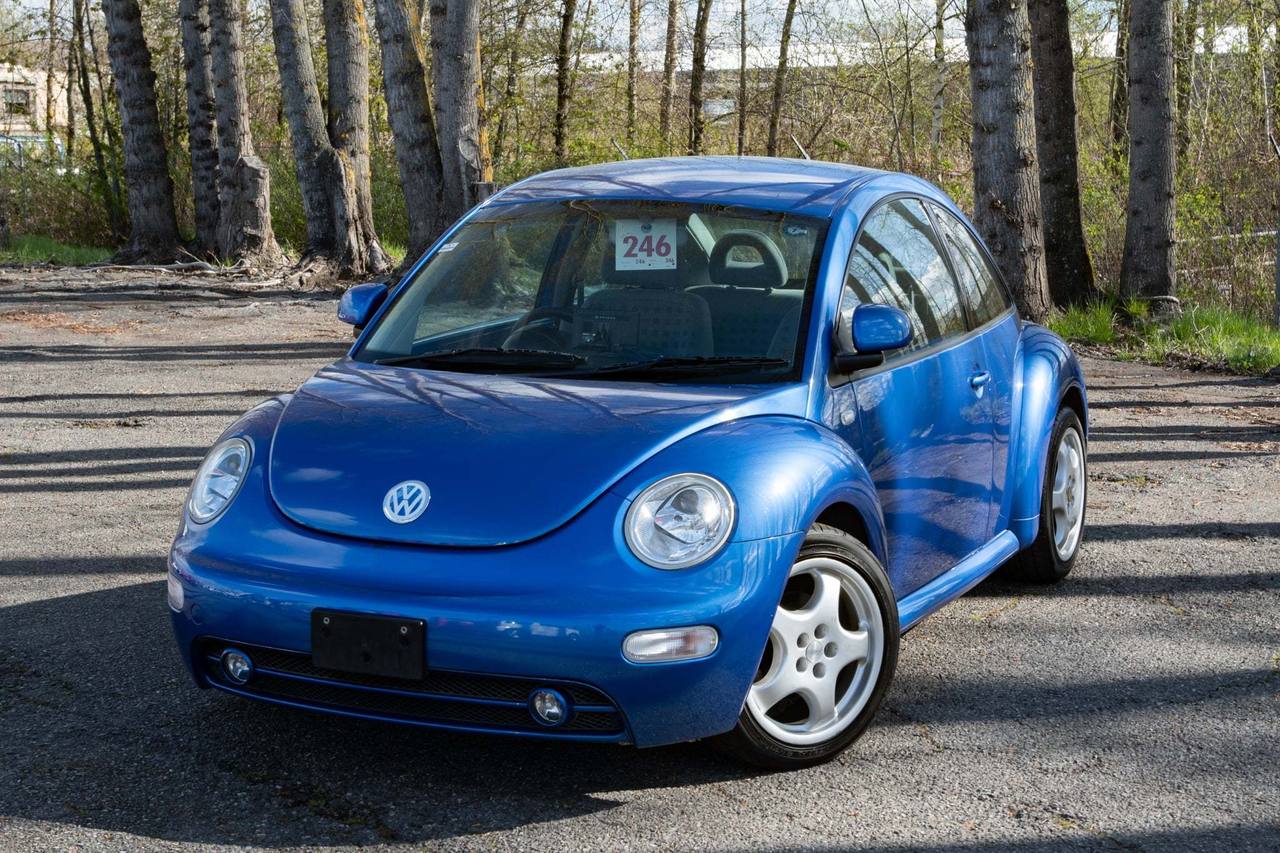
When Volkswagen revived the Beetle in 1998, it was built on the Golf (Mk4) platform. This meant a transition from rear-engine/rear-wheel drive to front-engine/front-wheel drive. The "automatic" options during this period were much more conventional but also more diverse:
- The 4-Speed Automatic (01M): Early New Beetles (1998–2004) typically used a traditional four-speed automatic transmission. This unit is often criticized in the used car market of 2026 for its internal plastic components that tend to degrade over time, leading to "slipping" or harsh shifts.
- The 6-Speed Tiptronic: Around 2005, VW introduced a 6-speed automatic developed by Aisin. This was a significant upgrade in smoothness and fuel efficiency. It featured a manual mode (Tiptronic) that allowed drivers to toggle gears via the shifter.
- Early DSG (Direct Shift Gearbox): In high-performance models like the New Beetle TDI (Turbocharged Direct Injection) or the Turbo S, VW began experimenting with the dual-clutch DSG. This offered lightning-fast shifts but required strict maintenance.
The Modern Era: "The Beetle" (2012–2019)
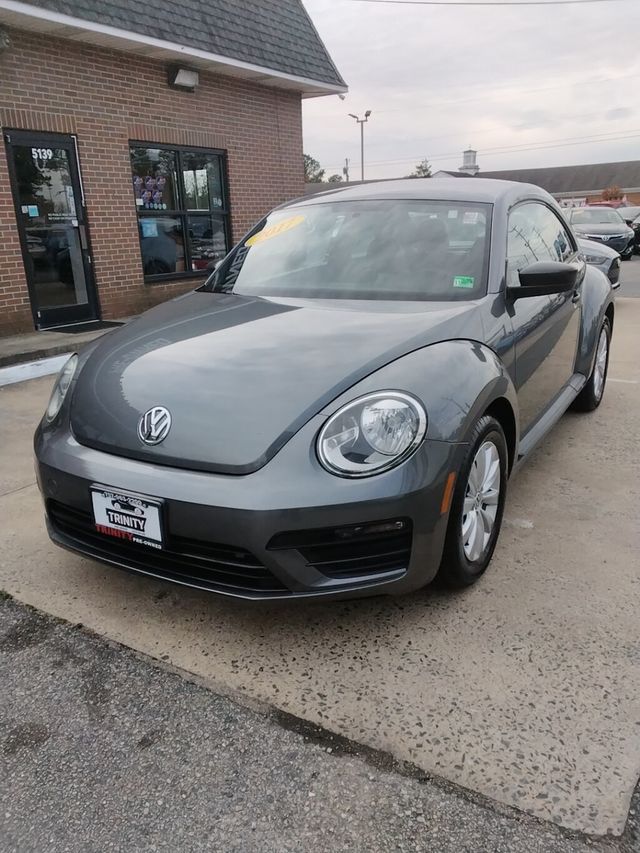
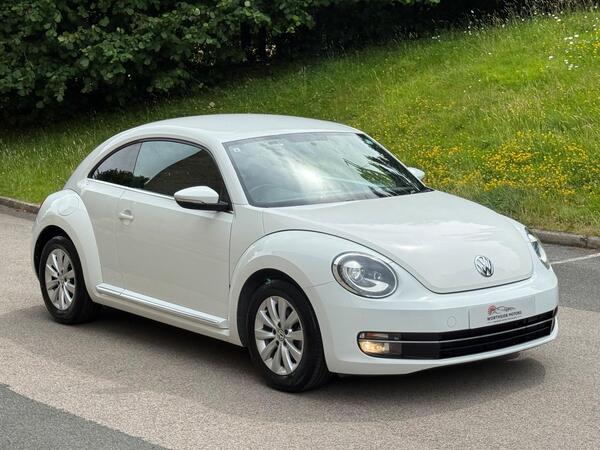
The final generation, simply titled "The Beetle," offered the most refined automatic experiences. Depending on the engine choice—the 2.5L five-cylinder, the 1.8T four-cylinder, or the 2.0T GTI-sourced engine—the transmission varied between a robust 6-speed traditional automatic and a performance-oriented 6-speed DSG.
Technical Breakdown: DSG vs. Traditional Automatic
For a buyer or owner in 2026, the most critical distinction is between the Direct Shift Gearbox (DSG) and the traditional torque-converter automatic. These two systems operate on completely different mechanical principles.
The Traditional Automatic (Tiptronic)
Standard on the 2.5L and 1.8T Beetle models, this transmission uses a fluid coupling (torque converter) to transfer power from the engine to the wheels.
- Why it matters: It provides a very smooth, "creeping" sensation at stoplights and is generally considered more "forgiving" in stop-and-go traffic.
- Maintenance: While VW often marketed these as having "lifetime" fluid, experienced technicians in 2026 recommend a fluid and filter change every 60,000 to 80,000 miles to prevent valve body wear.
The DSG (Dual-Clutch)
Found primarily in the R-Line and TDI Beetle models, the DSG is essentially two manual gearboxes housed in one unit, with two clutches controlled by a computer (the Mechatronic unit). One clutch handles odd gears, while the other handles even gears.
- Why it matters: It shifts faster than a human can, providing a sporty feel and better fuel economy. However, it can feel "jerky" at low speeds or when starting on an incline, as the computer mimics a manual clutch engagement.
- Maintenance: The DSG is high-maintenance. It requires a specific fluid flush and filter replacement every 40,000 miles. Neglecting this service can lead to a failure of the Mechatronic unit, which remains a costly repair in 2026.
| Feature | Classic Autostick | New Beetle (4-Speed) | Modern Beetle (6-Speed Auto) | Modern Beetle (DSG) |
|---|---|---|---|---|
| Era | 1968–1976 | 1998–2005 | 2012–2019 | 2012–2019 |
| Clutch Pedal | No | No | No | No |
| Manual Shifting | Required (3 gears) | Optional (Tiptronic) | Optional (Tiptronic) | Optional (Paddles/Shifter) |
| Primary Benefit | Ease of use for the era | Simplified city driving | Smoothness and reliability | Speed and efficiency |
| Key Risk | Vacuum leaks/Parts rarity | Transmission failure (01M) | Valve body wear | Mechatronic unit failure |
Driving Dynamics: Manual vs. Automatic Beetle
When deciding if an automatic Beetle is "right" for you, it is helpful to compare the experience against the manual counterparts that many purists prefer.
- Ease of Use: The primary reason for the automatic’s popularity is urban accessibility. The manual Beetle (especially the classic air-cooled version) requires significant legwork and "feel" to master. The automatic versions, particularly the post-2012 models with Hill Hold Control, make the car accessible to any driver.
- Fuel Efficiency: In the 1970s, the Autostick was notoriously less efficient than the 4-speed manual. However, by 2019, the DSG-equipped Beetle actually rivaled or beat the manual version in highway MPG due to its ability to optimize shift points more accurately than a human driver.
- Resale Value: In the 2026 used market, automatic Beetles (especially the 2017–2019 Final Editions) often command a premium over manuals because they appeal to a broader demographic of commuters and lifestyle buyers.
Reliability and Maintenance in 2026
If you are looking to purchase an automatic Volkswagen Beetle in 2026, verification of service records is the most important step. Because the Beetle is no longer in production, the longevity of the transmission depends entirely on its historical care.
Common Issues to Watch For
- The "01M" Failure: If looking at a New Beetle (pre-2005), be wary of transmissions that hesitate to go into reverse or "hunt" for gears. These 4-speed units are known for internal seals failing.
- DSG Mechatronic Symptoms: On a 2.0T or TDI Beetle, look for the "Prndl" lights flashing on the dashboard or a harsh "clunk" when downshifting to first gear. These are signs of a failing control unit.
- Shift Solenoids: In the 6-speed Aisin units (2.5L engines), old fluid can cause the solenoids to stick, leading to a "bang" when the car shifts from 2nd to 3rd gear.
Maintenance Recommendations
To keep an automatic Beetle running well beyond 150,000 miles, owners should prioritize:
- Fluid Analysis: Every 50,000 miles, have the transmission fluid checked for burnt smells or metal shavings.
- Software Updates: Volkswagen released several Transmission Control Module (TCM) updates throughout the 2010s to improve shift logic. Ensure the vehicle has the latest software version.
- Cooling System Health: Automatics generate significant heat. Ensure the radiator and transmission cooler lines are free of leaks, as overheating is the number one killer of automatic gearboxes.
Frequently Asked Questions
Did the original VW Beetle have a fully automatic transmission?
No, the classic Beetle never had a fully automatic transmission. It offered the "Automatic Stick Shift," which was a semi-automatic system. It removed the clutch pedal but still required the driver to manually move the gear selector between three ranges.
Is the Beetle's DSG transmission reliable?
The DSG is highly reliable if it is serviced every 40,000 miles. It is a robust performance transmission used across the VW and Audi lineup. However, if the fluid changes are neglected, the internal clutches and the electronic Mechatronic unit can fail prematurely.
Can I convert a manual Beetle to an automatic?
While technically possible, it is economically unfeasible. In addition to the transmission itself, you would need to replace the wiring harness, the Engine Control Unit (ECU), the pedal cluster, and the interior console. It is almost always cheaper to sell the manual and buy an automatic version.
Which year of the automatic Beetle is the most reliable?
Most experts and owners suggest the 2014–2019 models equipped with the 1.8T or 2.0T engines and the 6-speed automatic or DSG. By this time, Volkswagen had resolved most of the electronic and mechanical "bugs" present in the earlier New Beetle generations.
Does an automatic Beetle use more gas?
In older models (pre-2010), yes, the automatic is generally 2–4 MPG less efficient than the manual. In the final generation (2012–2019), the difference is negligible, and the DSG version is often just as efficient as the manual.
Next Steps for Prospective Buyers
If you are searching for an automatic Volkswagen Beetle in 2026, your first action should be to identify which "era" of Beetle fits your lifestyle. For a weekend hobbyist, a 1970s Autostick offers vintage charm, though it requires specialized mechanical knowledge. For a reliable daily driver, target a 2017–2019 Beetle with the 6-speed automatic. Always perform a pre-purchase inspection (PPI) specifically focusing on the transmission's engagement smoothness and ensure that any DSG-equipped model has a documented 40,000-mile service history.
Image Gallery