How Marriage Acts as a Life Event for Insurance: Rules, Deadlines, and Policy Changes
Getting married is officially classified as a Qualifying Life Event (QLE) across the insurance industry. This status unlocks a Special Enrollment Period (SEP), allowing newlyweds to join, adjust, or switch health insurance plans outsid...
Getting married is officially classified as a Qualifying Life Event (QLE) across the insurance industry. This status unlocks a Special Enrollment Period (SEP), allowing newlyweds to join, adjust, or switch health insurance plans outside the standard annual open enrollment window. Marriage also triggers essential updates for life, auto, homeowners, and renters insurance coverage.
Contents
- MARRIAGE (QUALIFYING LIFE EVENT)
- HEALTH INSURANCE
- 30-Day Limit (Employer)
- 60-Day Limit (Marketplace)
- Merge or Keep Plans
- LIFE INSURANCE
- Update Beneficiaries
- Add Optional Coverage
- Adjust Coverage Amounts
- AUTO & PROPERTY
- Combine Auto Policies
- Insure Engagement Rings
- Multi-Policy Discounts
- HEALTH INSURANCE
Disclaimer: Insurance laws, regulatory deadlines, and policy options vary by jurisdiction and policy type. Consult a licensed insurance professional or your human resources department for personalized advice regarding your specific coverage.
What Is a Qualifying Life Event?
A Qualifying Life Event (QLE) is a significant change in your life status that alters your household structure or insurance needs. Under federal regulations established by the U.S. Department of Labor Employee Benefits Security Administration, insurance providers and employer-sponsored group health plans are required to permit plan modifications mid-year when a QLE occurs.
Without a QLE, policyholders are restricted to modifying health insurance plans exclusively during the annual Open Enrollment Period. Marriage qualifies as a major QLE because it changes legal relationships, joint financial liabilities, tax filing status, and eligible dependents.
While health insurance features strict statutory timelines governed by federal law, other insurance sectors—such as term life, auto, and property coverage—also treat marriage as a key operational trigger to adjust risk ratings, combine policies, and update beneficiary designations.
Health Insurance: Enrollment Windows and Requirements
When you marry, you enter a Special Enrollment Period (SEP). This window allows you to enroll in a spouse’s plan, add your spouse to your existing coverage, or select a completely new policy through the public health insurance exchange.
- Timeline:
- Marriage Date
- Employer Window (30 Days) / Marketplace Window (60 Days)
1. Employer-Sponsored Group Health Plans
Under the Health Insurance Portability and Accountability Act (HIPAA), employer-sponsored plans must grant employees a minimum window to make changes following a marriage.
- Standard Window: Most employer plans require notification within 30 days of the marriage date.
- Extended Employer Windows: Some employers offer up to 60 days, though 30 days remains the statutory standard under federal rules.
- Effective Date: Coverage typically becomes effective on the first day of the month following the request, or retroactively to the date of the marriage, depending on plan design and prompt notification.
2. Marketplace Plans (HealthCare.gov or State Exchanges)
If you obtain health coverage through public exchanges, the HealthCare.gov Special Enrollment Period provides broader timelines:
- Standard Window: You have 60 days from the marriage date to pick a plan.
- Prior Coverage Rule: In many state and federal exchanges, at least one spouse must demonstrate they had minimum essential health coverage for at least one day during the 60 days prior to the marriage (unless living abroad or residing in a designated coverage area without options).
Required Verification Documents
Insurance providers require proof of the legal marriage before processing mid-year adjustments. Standard documentation includes:
- Official government-issued marriage certificate (certified copy).
- Proof of prior essential health coverage (if enrolling in Marketplace plans).
- Standard identity documents (Social Security numbers, driver’s licenses, or birth certificates for both spouses).
Comparing Coverage Options
Newlyweds generally have four distinct paths for health coverage:
- Both join Spouse A’s employer plan: Often economical if one employer pays a higher subsidy toward spousal coverage.
- Both join Spouse B’s employer plan: Useful if Spouse B's plan offers superior networks or lower out-of-pocket maximums.
- Maintain separate individual/employer plans: Best when both spouses have affordable, comprehensive employer coverage or distinct specialized healthcare provider needs.
- Enroll in a combined Marketplace plan: Ideal if neither spouse has access to affordable, minimum-value employer insurance.
Life Insurance: Adjusting Coverage and Beneficiaries
Unlike health insurance, individual life insurance policies can technically be purchased at any time during the year. However, marriage serves as the single most critical prompt to evaluate long-term financial protections and beneficiary structures.
- LIFE INSURANCE UPDATES
- GROUP LIFE (EMPLOYER)
- 30-Day QLE Window
- Increase Coverage (Guaranteed Issue)
- Add Dependent Life
- INDIVIDUAL POLICIES
- Apply Anytime
- Calculate Combined Debt
- Update Primary Beneficiary
- GROUP LIFE (EMPLOYER)
Group Life Insurance Special Privileges
Many employers offer basic group life insurance alongside supplemental options. Marriage acts as an event allowing you to:
- Increase coverage limits: Upgrade supplemental life coverage up to a pre-approved "guaranteed issue" limit without undergoing formal medical underwriting.
- Add spousal life coverage: Purchase dependent life insurance for your new spouse directly through payroll deduction.
- Enroll without waiting: Skip the standard open enrollment period to establish basic financial safeguards.
Updating Beneficiary Designations
One of the most frequent administrative oversights after marriage is failing to update primary beneficiaries on existing life insurance policies.
- Primary Beneficiary: The individual designated to receive the death benefit first. Spouses usually update this from parents or siblings to their new partner.
- Contingent Beneficiary: The secondary recipient if the primary beneficiary passes away prior to the insured.
- Wills vs. Beneficiary Form: Contract designations on insurance policies supersede instructions left in a last will and testament. If your ex-partner or parent remains the named beneficiary on your policy, the insurer must pay them upon your death, regardless of what your updated will states.
Recalculating Total Financial Protection Needs
Marriage typically merges debt obligations, housing expenses, and future planning. To determine your updated coverage needs, calculate:
- Debt Obligations: Joint mortgages, personal loans, vehicle loans, and credit cards.
- Income Replacement: How many years of your salary would be necessary to preserve your spouse's current lifestyle?
- Future Obligations: Anticipated child care costs, higher education funds, or shared retirement contributions.
Auto, Homeowners, and Renters Insurance Adjustments
Beyond health and life coverage, marriage directly impacts risk profiles and policy structures for vehicle and property lines.
Auto Insurance Savings and Consolidation
Auto insurance carriers view married drivers as statistically lower risk than single drivers, which often translates into lower premium rates.
- Combining Policies: Merging individual auto policies into a single household policy unlocks multi-car discounts, which can save between 5% and 25% on combined premiums.
- Listing All Drivers: Insurers require all licensed adults residing in the same household to be listed on the auto policy. Failure to disclose a spouse living in the house can result in denied claims if they drive the vehicle and are involved in an accident.
Homeowners and Renters Coverage
Combining two separate households into one residence requires policy consolidation and coverage adjustments:
- Updating Personal Property Limits: Merging furniture, electronics, clothing, and household goods increases the total replacement value of your personal property. Ensure your homeowners or renters policy limits reflect this higher combined total.
- Endorsements for High-Value Items: Standard renters and homeowners insurance policies include capped limits (often $1,500 to $2,500) for loss or theft of jewelry. Valuable items like engagement rings and wedding bands require a specific scheduled personal property endorsement (floater policy) to ensure full coverage against loss, theft, or damage.
Comparison Matrix: Insurance Changes After Marriage
| Insurance Type | Notification Window | Primary Benefit / Action | Documentation Required |
|---|---|---|---|
| Employer Health Plan | 30 Days (HIPAA rule) | Add spouse or switch employer coverage without waiting for open enrollment. | Official marriage certificate |
| Marketplace Health | 60 Days (ACA rule) | Enroll in a new family plan or apply for revised income-based subsidies. | Marriage certificate, proof of prior coverage |
| Group Life Insurance | 30 to 60 Days | Increase coverage without medical underwriting; add spouse life coverage. | Employer QLE form, marriage certificate |
| Individual Life | Anytime | Recalculate financial needs; update primary and contingent beneficiaries. | Beneficiary designation change form |
| Auto Insurance | Promptly after moving in | Combine policies for multi-car and married driver rate discounts. | Spousal driver's license, vehicle titles |
| Home/Renters | Promptly after moving in | Consolidate property limits; add jewelry floaters for wedding rings. | Proof of address, item receipts/appraisals |
Step-by-Step Checklist for Updating Insurance After Marriage
To avoid missing statutory windows or facing denied claims, follow this step-by-step implementation sequence:
- Obtain certified copies of your marriage certificate.
- Compare both spouses' employer health plans (premiums, deductibles, network providers).
- Notify HR departments within 30 days to execute health and group life adjustments.
- Submit Marketplace QLE applications within 60 days if using state/federal exchanges.
- Update primary and contingent beneficiaries across all life insurance and retirement accounts.
- Call auto insurers to combine vehicle policies and request married-driver discounts.
- Update homeowners/renters policies and add scheduled endorsements for wedding rings.
1. Secure Official Documentation
Request multiple certified copies of your marriage certificate from your county clerk or local vital statistics office immediately following the ceremony. Informational certificates or church commemorative certificates are generally rejected by insurance underwriters.
2. Compare Plan Structures and Out-of-Pocket Costs
Before making health insurance changes, calculate total annual costs across both available employer plans:
$$\text{Total Cost} = (\text{Monthly Premium} \times 12) + \text{Expected Out-of-Pocket Costs}$$
Look closely at:
- Preferred provider networks (confirm primary care physicians and specialists are in-network).
- Prescription drug formularies.
- Deductibles, copays, and out-of-pocket maximum limits.
3. File Formal Notifications Promtly
Log into your employer’s benefits portal or contact human resources to submit the Qualifying Life Event request. Upload the certified marriage certificate promptly to prevent administrative rejection of the enrollment window.
4. Review Property and Auto Policies
Notify your auto and property insurance agents of your change in marital status and shared address. Request explicit quotes for combined auto policies and confirm whether your current renters or homeowners personal property coverage adequately protects your joint possessions.
Common Pitfalls and How to Avoid Them
1. Missing the 30-Day Window
The most critical mistake newlyweds make is assuming they can update health insurance anytime within the first year of marriage. If you miss your employer’s 30-day deadline, you will be forced to wait until the next annual Open Enrollment period, leaving your spouse without coverage or paying higher individual plan rates.
2. Failing to Update Beneficiary Forms
Many individuals update their will after marriage but forget to fill out new beneficiary designation forms with their life insurance carrier. Legally, the contract with the life insurance company takes precedence over a will. Ensure you formally submit updated beneficiary forms directly to your policy administrator.
3. Overlooking Household Driver Requirements
Failing to report your spouse to your auto insurance company after moving into a shared home can be interpreted as material misrepresentation. If an unlisted spouse drives your vehicle and gets into an accident, the insurance carrier may deny the claim.
4. Assuming Wedding Rings Are Fully Covered
Standard homeowners and renters insurance plans cover personal property, but they set strict financial caps on specific item categories like jewelry. If an engagement ring worth $8,000 is stolen, a standard policy with a $1,500 jewelry limit will only reimburse up to that cap. Always purchase a dedicated scheduled personal property floater.
Frequently Asked Questions
How long after getting married do I have to add my spouse to health insurance?
For employer-sponsored health plans governed by HIPAA, you generally have 30 days from the legal date of marriage to request changes. For health insurance purchased through the Health Insurance Marketplace (HealthCare.gov), you have 60 days from the marriage date to complete enrollment under a Special Enrollment Period.
Can I stay on my own health insurance plan after getting married?
Yes. Neither spouse is legally required to join the other's health plan. Married couples can choose to retain their separate individual or employer-sponsored plans if doing so offers better medical coverage, lower overall premiums, or preserves access to preferred healthcare providers.
Does getting married lower your car insurance rates?
In most cases, yes. Actuarial data shows that married drivers tend to be involved in fewer accidents than single drivers. Consequently, insurance providers typically offer lower baseline rates for married individuals and further reduce premiums when couples combine multiple vehicles onto a single policy.
What happens if we miss the Special Enrollment Period window?
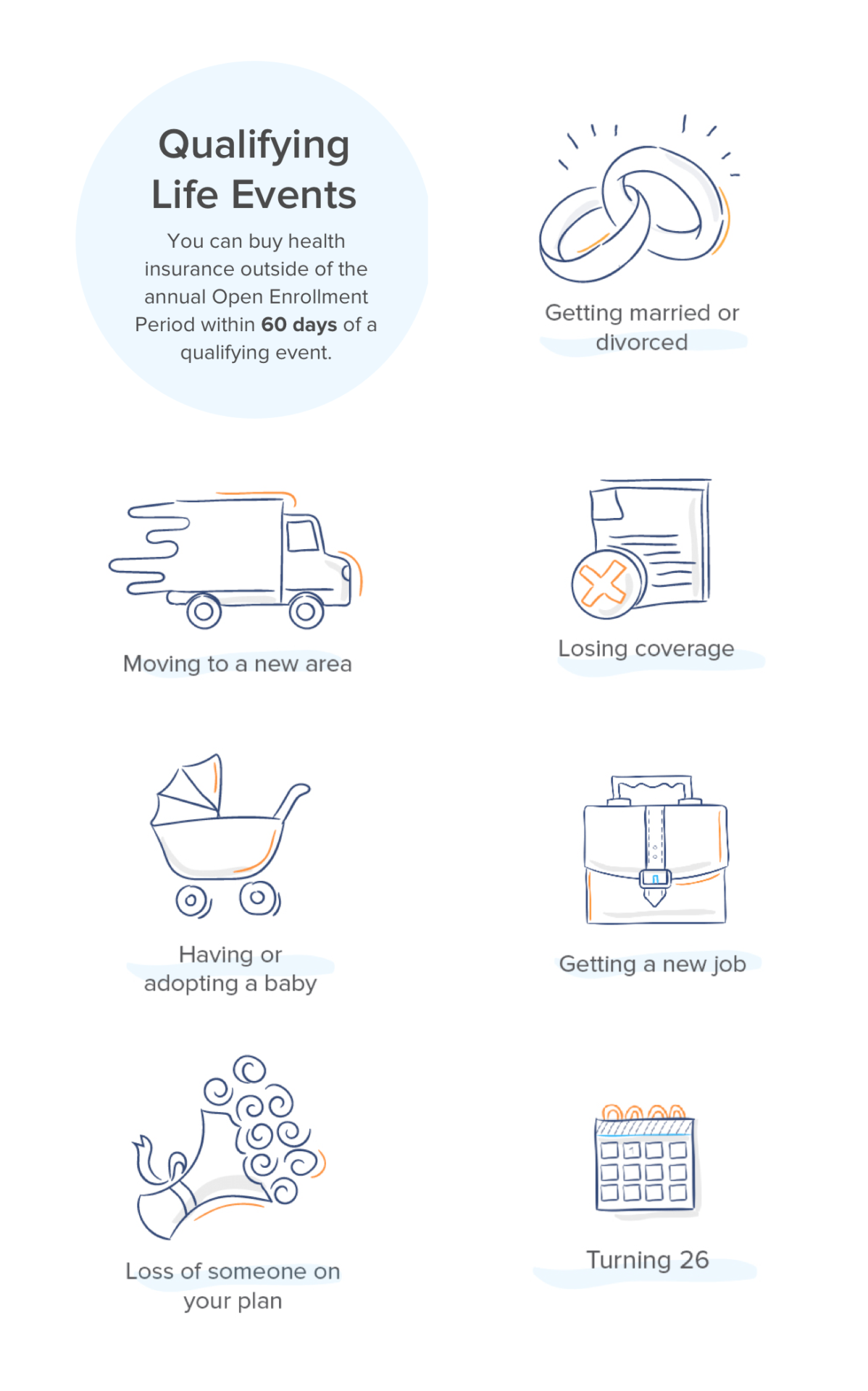
If you miss the 30-day employer or 60-day Marketplace Special Enrollment window, you must wait until the next standard annual Open Enrollment Period to change plans or add your spouse, unless you experience another distinct Qualifying Life Event (such as moving to a new coverage area or having a child).
Is a wedding ring covered by standard homeowners or renters insurance?
Standard homeowners and renters policies provide basic coverage for personal belongings, but theft or loss of jewelry is usually capped at $1,500 to $2,500. To fully protect an expensive engagement ring or wedding band against loss, damage, or theft, you must add a scheduled personal property rider or floater to your policy.
Next Actions: Managing Your Post-Marriage Insurance Transition
To successfully manage your insurance transition after getting married, execute these concrete actions immediately:
- Obtain official records: Secure 3-5 certified copies of your marriage certificate from your local registrar.
- Review health options: Compare your plan options side-by-side using total annual cost estimates (premiums + deductibles) and provider network coverage.
- Submit QLE forms early: Log into your employer's HR portal within 14 days of marriage to ensure you do not miss the 30-day HIPAA window.
- Update financial policies: Contact your life insurance providers to update primary beneficiaries, and consolidate auto/property policies with your insurance agent to capture available multi-policy discounts.
Image Gallery