How Testing Automation Reshapes Education
Testing automation reshapes education by streamlining the delivery, grading, and analysis of assessments, allowing academic institutions to handle growing student enrollments while providing rapid, data-driven feedback that enhances st...
Testing automation reshapes education by streamlining the delivery, grading, and analysis of assessments, allowing academic institutions to handle growing student enrollments while providing rapid, data-driven feedback that enhances student learning outcomes.
Contents
The modern educational landscape faces a continuous struggle between administrative efficiency and instructional depth. Traditional testing methods—ranging from paper examinations to manual digital quiz grading—impose significant operational burdens on educators, often delaying feedback loops by days or weeks.
Into this environment steps testing automation, a methodology originally perfected in the software engineering sector that has been adapted to the academic ecosystem. By applying automated pipelines to test generation, execution, evaluation, and data reporting, educational institutions are fundamentally redefining how they measure knowledge acquisition and competence.
Understanding Testing Automation in Academic Environments
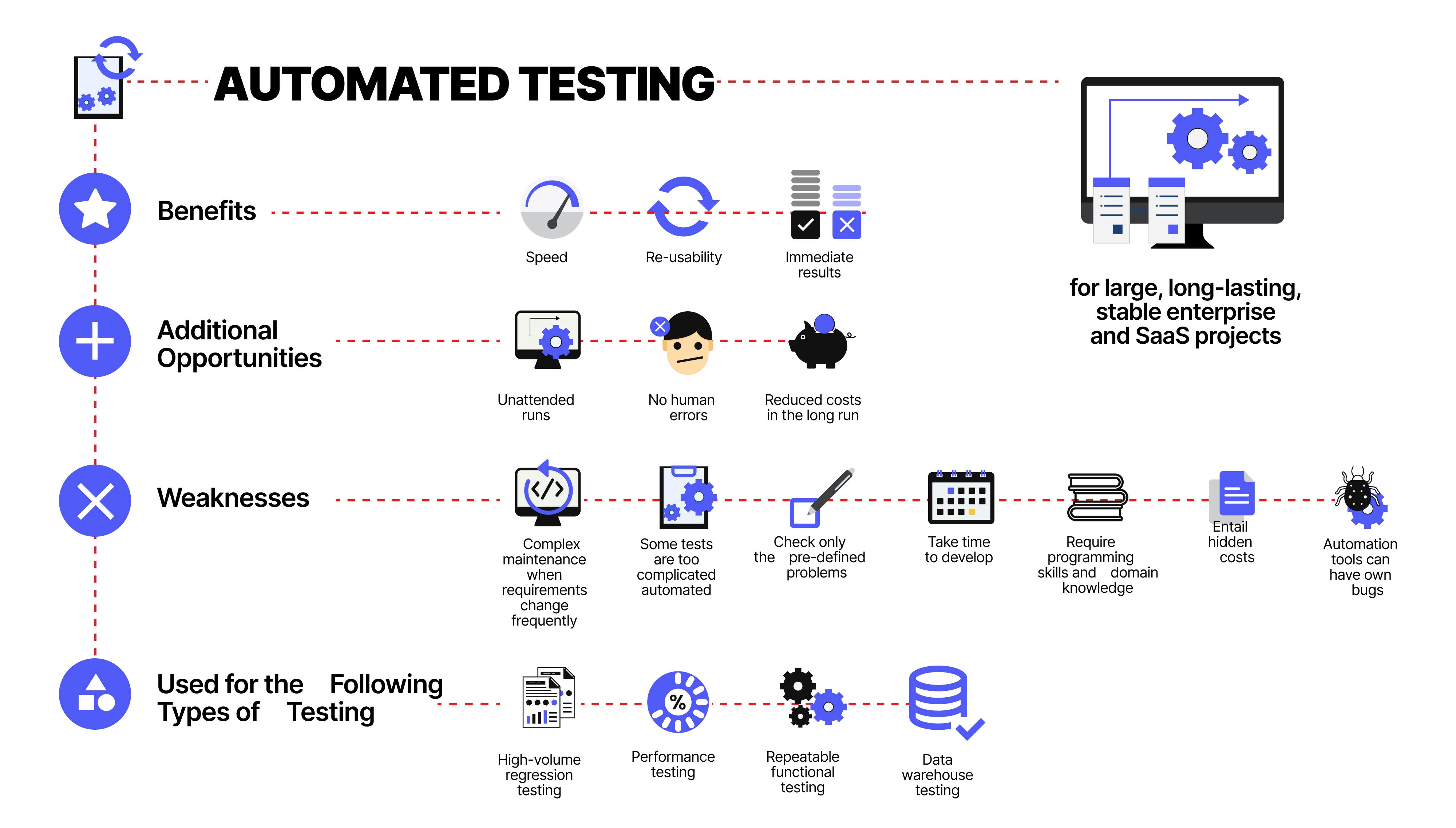
Testing automation in education involves using specialized software frameworks and algorithms to manage the lifecycle of student assessments. Unlike simple automated multiple-choice scoring systems of the past, contemporary educational testing automation encompasses a broad spectrum of capabilities, including continuous integration for coding assignments, automated rubric grading for qualitative essays, and adaptive testing algorithms that alter question difficulty based on real-time student responses.
At its core, this approach seeks to separate mechanical tasks from cognitive ones. Grading routine problem sets, running unit tests against student-submitted programming code, and tabulating standard metrics do not require human pedagogical intervention. By automating these processes, institutions free up faculty members to focus on high-value interactions, such as mentoring students who struggle with specific conceptual barriers or refining curriculum designs.
Furthermore, the integration of automation shifts testing from a periodic, high-stakes evaluation model toward a continuous assessment framework. Students can engage in frequent, low-stakes automated testing to gauge their own understanding of material, utilizing immediate error reporting to correct misconceptions before they compound into major learning gaps.
Key Drivers Behind the Adoption of Automated Assessment
Several compounding pressures within the education sector have accelerated the adoption of automated testing technologies. Understanding these drivers clarifies why institutions from primary schools to massive open online course (MOOC) providers are investing heavily in automated infrastructure.
Scalability and Enrollment Growth
Higher education and corporate training programs have seen exponential growth in remote and hybrid enrollments. Managing cohorts of thousands of students simultaneously makes manual grading completely untenable for instructional staff. Automated testing pipelines scale horizontally, allowing fifty students or fifty thousand students to submit assignments and receive evaluations concurrently without a degradation in response time.
The Demand for Immediate Feedback Loops
Cognitive science consistently demonstrates that the speed of feedback directly impacts learning retention. When a student waits two weeks for an exam score, the neural pathways associated with the original problem-solving process have largely dissolved. Automated testing provides instantaneous feedback, enabling students to understand why a specific answer was incorrect while the thought process is still fresh in their minds.
Academic Integrity and Remote Security
The rapid shift toward digital and remote learning environments introduced acute challenges regarding academic dishonesty. Modern automated testing systems incorporate sophisticated proctoring tools, randomized question pools, and environment-locked browsers that secure the testing perimeter, ensuring that digital assessments maintain institutional standards of integrity.
| Assessment Dimension | Traditional Manual Testing | Automated Testing Systems |
|---|---|---|
| Grading Speed | Days to weeks per cohort | Instantaneous to minutes |
| Operational Cost | High labor cost; requires extensive TA hours | Higher upfront software cost, low marginal cost at scale |
| Feedback Quality | Generic letter grades or marginal comments | Granular, code-level or rubric-specific diagnostics |
| Scalability | Severely constrained by instructor bandwidth | Virtually unlimited concurrent capacity |
Core Components of Educational Testing Automation Frameworks
Implementing an automated testing ecosystem requires a combination of robust software architecture, clear pedagogical standards, and secure execution environments. A comprehensive framework typically relies on three structural layers: authoring, execution, and analytics.
Automated Test Generation and Authoring
The process begins long before a student sits down for an exam. Automated authoring tools utilize item banking and generative algorithms to create diverse variants of test questions. In STEM fields, parameterized questions allow instructors to define a formula rather than a static question; the system automatically generates thousands of unique numerical variations for every student, effectively neutralizing cheating via answer-sharing.
Secure Execution and Sandboxing
For technical disciplines—particularly computer science and data analytics—students submit executable code as their assessment answers. Automated testing frameworks evaluate this code inside isolated virtual environments known as sandboxes. These secure containers execute the student code against a suite of unit tests, checking for logic errors, edge cases, and performance efficiency without risking the host server's security.
Diagnostic Analytics and Reporting
Once testing is complete, automation engines aggregate raw scores into actionable intelligence. Instructors receive visual dashboards highlighting which specific questions or concepts caused widespread failure across the cohort. This data allows educators to dynamically adjust subsequent lectures to address collective misunderstandings rather than moving blindly through a static syllabus.
Operational Limitations and Challenges
Despite its transformative potential, testing automation is not without operational hurdles. Educational institutions must navigate several distinct challenges when deploying these systems across diverse student bodies.
The Problem of Context and Qualitative Depth
While automated systems excel at evaluating binary outcomes, numerical calculations, and syntax rules, they struggle with nuanced, qualitative reasoning. Automated essay scoring (AES) tools powered by natural language processing have improved significantly, yet they frequently measure structural grammar, vocabulary diversity, and length rather than deep critical thinking, original philosophical argument, or creative synthesis. Relying entirely on automation for essay-heavy humanities courses risks reducing writing to a formulaic exercise designed to please an algorithm.
Implementation Costs and Technical Friction
Deploying enterprise-grade testing automation requires substantial financial investment in software licenses, cloud infrastructure, and administrative training. Furthermore, technical friction—such as server outages, browser compatibility issues, or unstable internet connections for remote students—can transform a high-stakes exam into an operational crisis, creating undue stress and equity gaps for students without robust home technology setups.
Practical Steps for Implementing Automated Testing
For educators and institutional leaders looking to introduce or expand testing automation, a structured approach minimizes operational risk and maximizes pedagogical value.
- Audit Existing Curriculum: Identify bottlenecks where manual grading consumes more than fifty percent of instructional time, prioritizing these areas for automation.
- Select Domain-Appropriate Tools: Choose specialized platforms—such as automated code graders for computer science or adaptive quiz engines for mathematics—rather than forcing a single generic tool across all departments.
- Pilot in Low-Stakes Environments: Introduce automated testing through formative quizzes and practice modules before deploying the system for midterms or final examinations.
- Establish Human Oversight Protocols: Design workflows where flagged automated scores, especially edge cases in qualitative assessments or academic integrity violations, are manually reviewed by a human instructor.
- Collect Continuous Student Feedback: Survey students regularly regarding technical usability, clarity of automated feedback, and perceived fairness of the assessment mechanism.
Frequently Asked Questions
Does testing automation completely replace human teachers?
No. Automation handles repetitive mechanical tasks such as scoring multiple-choice questions, executing unit tests on code, and compiling statistical reports. This shifts the instructor's role from a grader to a facilitator, mentor, and curriculum designer who focuses on complex student interactions.
How do automated systems prevent cheating during online exams?
Automated platforms utilize a combination of secure lockdown browsers that prevent users from opening external applications, web camera proctoring with AI behavior monitoring, randomized question banks, and unique parameterized problem sets for each student.
Can automated testing evaluate subjective essays and creative writing?
While natural language processing models can evaluate grammar, structure, and keyword presence in essays, they have severe limitations regarding genuine conceptual understanding, emotional nuance, and original creative thought. Human instructors remain essential for grading complex qualitative work.
What happens if a student experiences technical failure during an automated exam?
Robust testing platforms incorporate autosave features and session-recovery protocols that allow students to resume exams from where they were interrupted. Institutions also maintain IT support hotlines and make-up testing policies to handle severe technical disruptions.
Is testing automation only useful for higher education?
While widely adopted in universities and massive open online courses, testing automation is increasingly utilized in K-12 education for diagnostic math programs, language acquisition software, and formative reading assessments that adapt to individual student reading levels.
Strategic Outlook
The evolution of testing automation in education moves far beyond simple efficiency gains. By decoupling assessment from manual labor, educational institutions can establish responsive, continuous learning environments that adapt to individual student needs in real time. While challenges regarding qualitative evaluation and technical equity require vigilant oversight, the strategic integration of automated testing tools provides a necessary foundation for the future of scalable, data-informed education.
Image Gallery