The Roman Succession in the Ancient Empire: Mechanisms of Power and Political Stability
The Roman succession was characterized by a lack of formal constitutional law, relying instead on a volatile combination of dynastic inheritance, legal adoption, senatorial approval, and military acclamation. This systemic ambiguity al...
The Roman succession was characterized by a lack of formal constitutional law, relying instead on a volatile combination of dynastic inheritance, legal adoption, senatorial approval, and military acclamation. This systemic ambiguity allowed the Empire to adapt to various crises but also served as a primary catalyst for frequent civil wars and political instability throughout its long history.
Contents
The transfer of power in the ancient Roman Empire remains one of the most complex case studies in political science and history. Unlike the clear-cut primogeniture of medieval Europe, where the eldest son typically inherited the throne, the Roman "constitution"—a collection of unwritten traditions and specific laws—never established a definitive rule for who should lead after an emperor’s death. This structural void meant that every succession was a potential crisis, requiring the candidate to balance the competing interests of the Roman Senate, the military, and the Roman populace.
The Augustan Precedent: The Fiction of the Republic
To understand Roman succession, one must look at the foundation laid by Augustus (r. 27 BC – 14 AD). After the chaos of the Roman Republic's collapse, Augustus avoided the title of "King" (Rex), which was loathed by the Roman elite. Instead, he styled himself as Princeps Civitatis ("First Citizen").
Because the office of the Emperor was technically a collection of various Republican powers (such as tribunicia potestas and imperium proconsulare maius) granted to an individual for life, the position was not legally inheritable. When an emperor died, those powers theoretically reverted to the Senate and the People of Rome.
To ensure his chosen heir would succeed him, Augustus pioneered the "co-regency" model. He would have the Senate grant his intended successor specific powers while he was still alive. This created a "heir apparent" who already held the legal authority to rule the moment the senior emperor died. This practice became the standard template for the next three centuries.
The Julio-Claudian Dynasty and the Role of Adoption
The first imperial dynasty, the Julio-Claudians, established the importance of bloodlines, but they also introduced the vital Roman tool of legal adoption. When biological heirs were unavailable or deemed unfit, emperors adopted capable adult males into their family to bridge the gap.
- Tiberius: Adopted by Augustus after several preferred heirs died young.
- Caligula: Succeeded based on his lineage as the grandson of Julia the Elder and the popularity of his father, Germanicus.
- Claudius: Elevated by the Praetorian Guard after Caligula’s assassination, highlighting the military's emerging role as "kingmakers."
- Nero: Adopted by Claudius through the influence of his mother, Agrippina the Younger.
The end of the Julio-Claudian line in 68 AD proved that without a clear heir or a respected military leader, the Roman world would descend into chaos. The resulting "Year of the Four Emperors" (69 AD) demonstrated that "emperors could be made elsewhere than at Rome," as legions in the provinces began to proclaim their own commanders as Caesars.
The Nerva-Antonine Meritocracy: The Five Good Emperors
Historians often cite the period from 96 AD to 180 AD as the peak of Roman stability. During this time, a series of rulers known as the "Five Good Emperors" utilized adoption to select the most capable successor rather than the nearest relative. This "Adoptive Meritocracy" was arguably the most successful succession model in Western history.
- Nerva: A senior senator who, lacking a son, adopted the popular general Trajan to secure military support.
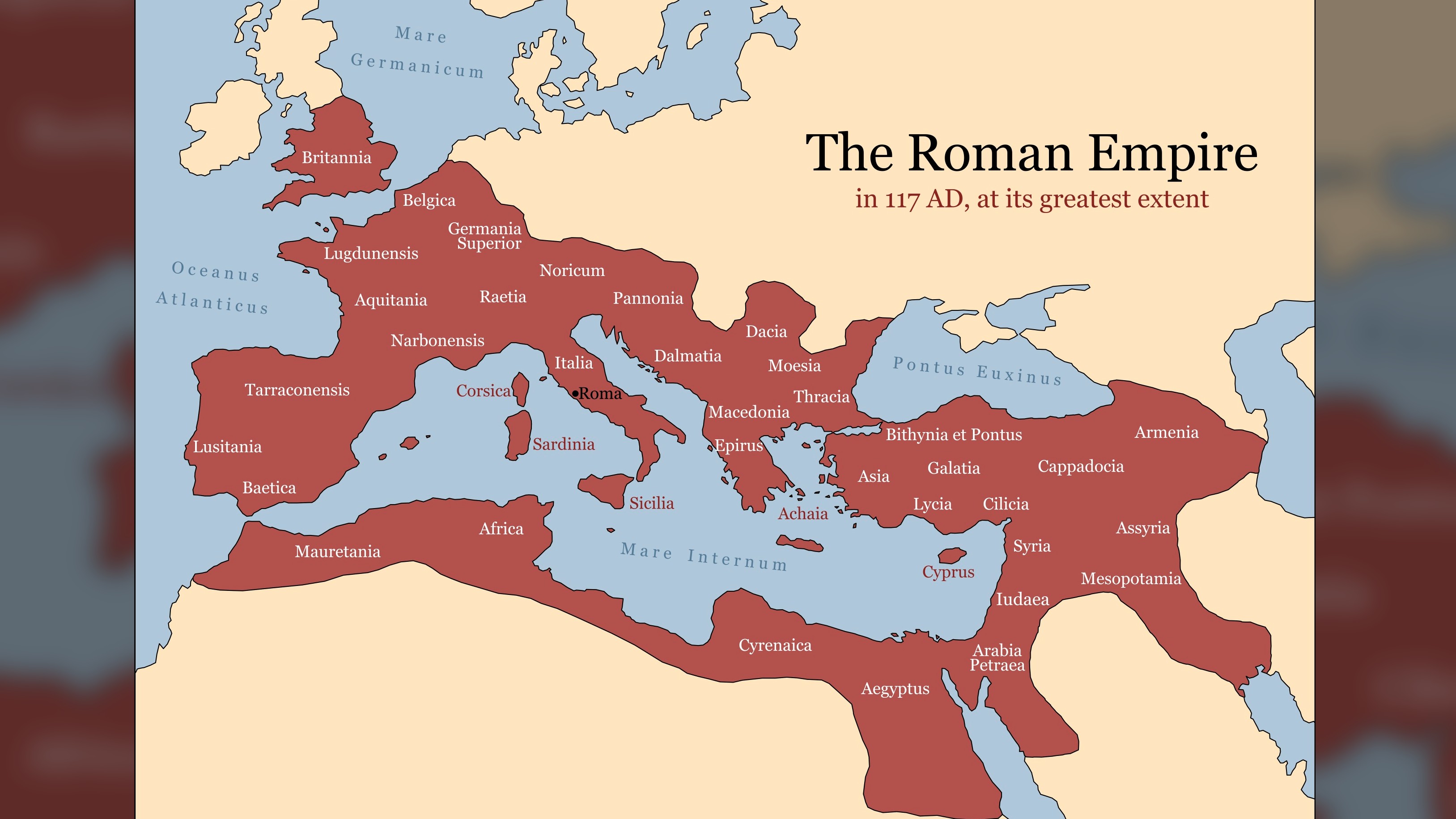
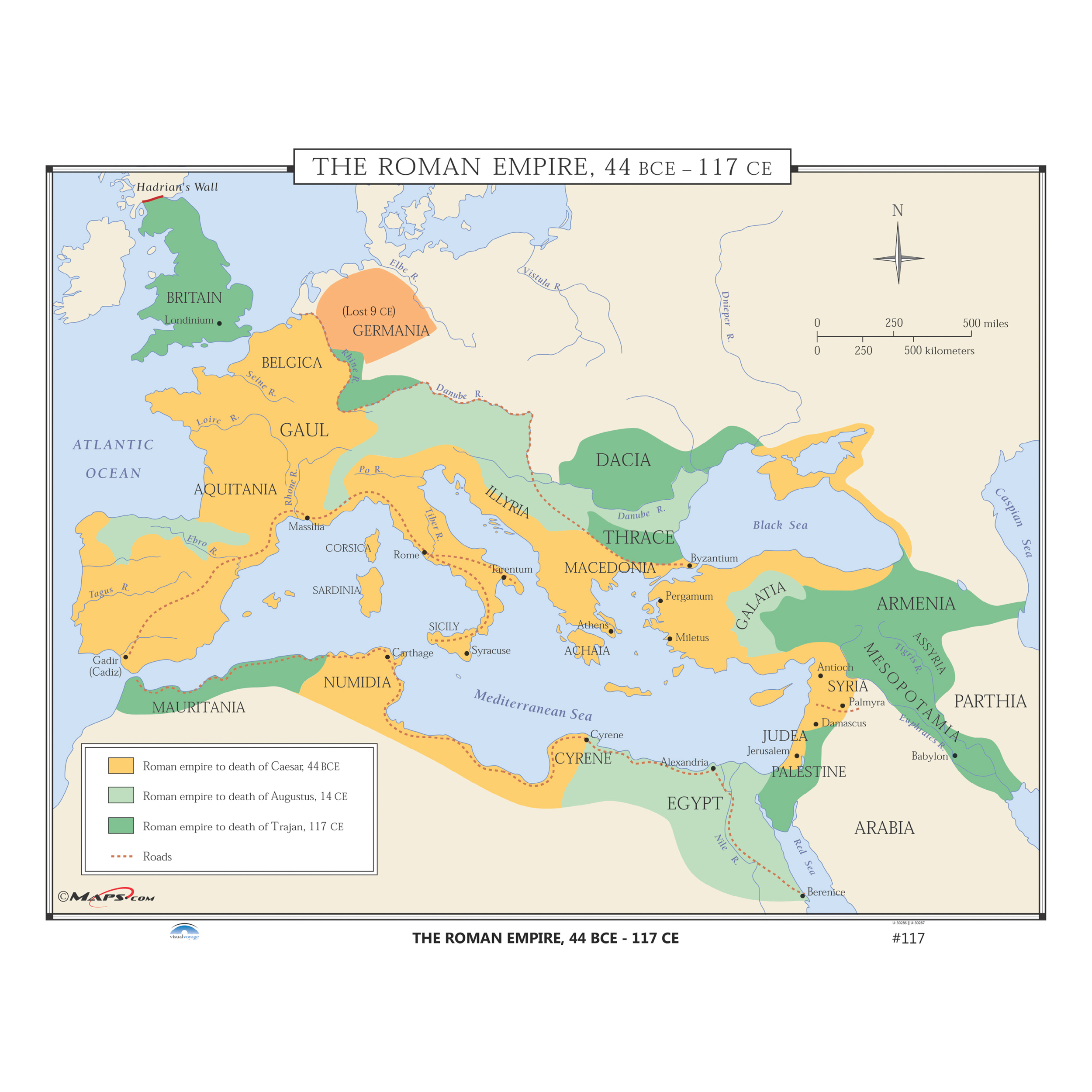
- Trajan: Expanded the empire to its greatest extent and adopted Hadrian.
- Hadrian: Adopted Antoninus Pius on the condition that Antoninus adopt the young Marcus Aurelius.
This system ensured that the man taking the throne had decades of administrative and military experience. However, the system collapsed when Marcus Aurelius chose his biological son, Commodus, to succeed him. Commodus’s disastrous reign ended in assassination, leading to another civil war and the Rise of the Severan Dynasty.
The Military Anarchy and the Crisis of the Third Century
By the 3rd century AD, the veneer of senatorial approval had largely vanished. Succession became an almost entirely military affair. During the "Crisis of the Third Century" (235–284 AD), more than 20 emperors rose and fell, most of them "barracks emperors" proclaimed by their troops.
The average reign during this period was fewer than three years. The primary mechanism of succession was assassination followed by military acclamation. If a general won a significant victory against a barbarian tribe, his soldiers might crown him with laurel; if he stopped paying the "donative" (a cash bonus), they might murder him in favor of someone more generous.
This era underscored a critical flaw: without a centralized, undisputed legal framework for succession, the Roman Empire was vulnerable to any general with a large enough army and a deep enough treasury.
The Tetrarchy: Diocletian’s Administrative Solution
In 284 AD, Diocletian ended the crisis by fundamentally redesigning the imperial office. He recognized that the empire was too large for one man to manage and that succession was its greatest weakness. He established the Tetrarchy ("Rule of Four").
Under this system, the empire was divided into East and West. Each half was ruled by a senior emperor, an Augustus, who was assisted by a junior emperor, a 驻Caesar. After twenty years, the Augusti were supposed to abdicate, the Caesars would become the new Augusti, and two new Caesars would be appointed.
Why the Tetrarchy Failed
While brilliant on paper, the Tetrarchy failed to account for two human factors: personal ambition and the pull of dynastic loyalty. When the first generation of Tetrarchs retired, the sons of the retired emperors (such as Constantine and Maxentius) fought to reclaim their "rightful" inheritance. This led to the wars that eventually saw Constantine the Great emerge as the sole ruler.
Comparison of Roman Succession Models
| Model | Primary Period | Key Mechanism | Main Strength | Primary Weakness |
|---|---|---|---|---|
| Principate (Augustan) | 27 BC – 68 AD | Co-regency & Bloodline | Continuity of the "First Family" | Biological luck; lack of competent heirs. |
| Adoptive (Nerva-Antonine) | 96 AD – 180 AD | Selection by Merit | High quality of leadership | Relied on the current ruler being childless. |
| Military Acclamation | 235 AD – 284 AD | Army support/Coup | Rapid response to threats | Extreme instability; frequent civil war. |
| Tetrarchy | 284 AD – 312 AD | Bureaucratic promotion | Regional security; clear path | Conflict between merit and dynastic pride. |
| Byzantine (Later Empire) | 330 AD – 1453 AD | Divine Right/Co-Emperor | Religious legitimacy | Palace intrigue; lack of military control. |
The Role of the Lex de Imperio
Despite the practical reality of military force, the Romans maintained a legal fiction through the Lex de Imperio. This was a law passed by the Senate for each new emperor, formally conferring the various powers of the office.
A famous example is the Lex de Imperio Vespasiani (c. 69 AD), an inscribed bronze tablet that survives to this day. It explicitly lists the rights of the Emperor Vespasian, such as the right to conclude treaties and the right to intervene in any matter he deemed necessary. This document proves that even after the chaos of civil war, the Romans felt a deep-seated need to ground succession in the framework of the law, even if that law was applied retroactively to a man who had already seized power by force.
Common Pitfalls in the Succession Process
Researching Roman succession often reveals recurring mistakes that led to the downfall of various regimes. Historians in 2026 continue to analyze these patterns to understand the collapse of complex political systems.
- Failure to Manage the Praetorian Guard: The elite bodyguard in Rome often murdered emperors who attempted to reform their privileges or reduce their pay.
- Ignoring the Legions: An emperor who was popular in Rome but neglected the troops on the Rhine or Danube frontiers rarely survived a challenge from a frontier general.
- The "Child-Emperor" Problem: Because there was no regent system defined by law, when a child inherited the throne (such as Valentinian II or Arcadius), the empire was effectively ruled by competing court officials, leading to paralysis.
- Over-reliance on Donatives: Succession often required "buying" the loyalty of the soldiers. This created an inflationary cycle where each new emperor had to pay more than the last, eventually bankrupting the imperial treasury.
FAQs About Roman Succession
Was the Roman Empire a monarchy?
Legally, no. For much of its history, it was technically a "Restored Republic." However, in practice, it functioned as an autocracy. The lack of an official monarchical title is exactly why succession was so legally complicated and often violent.
Who was the first emperor to be chosen by the army?
While the army's influence was always present, Claudius (41 AD) was the first emperor to be explicitly elevated by the military (the Praetorian Guard) before the Senate had any chance to deliberate.
What happened if an emperor died without an heir?
If no co-regent or heir had been named, the Senate theoretically had the right to choose a new princeps. However, in most cases, the nearest large army would proclaim its commander as emperor, forcing the Senate to confirm him or face a siege.
Did Roman women have a role in succession?
Women could not hold the office of emperor, but they were powerful "power-brokers." Women like Livia, Agrippina the Younger, and Julia Domna were instrumental in securing the throne for their husbands or sons, often through marriage alliances, adoption schemes, or political maneuvering.
How did the concept of "The Year of the Four Emperors" start?
It began in 68 AD after Nero’s suicide. Four leaders—Galba, Otho, Vitellius, and Vespasian—claimed the throne in rapid succession. This period proved that military might, rather than senatorial lineage, was the ultimate decider of the Roman succession.
Final Recommendations for Further Study
For those seeking to understand the mechanics of power in the ancient world, studying the Roman succession provides a masterclass in the tension between law and force. As of 2026, the most comprehensive primary sources remain the works of Tacitus, Suetonius, and Cassius Dio.
To truly grasp the technical depth of this subject, one should focus on the transition from the Principate (the "First Citizen" era) to the Dominate (the "Lord and Master" era). This shift, occurring under Diocletian and Constantine, transformed the emperor from a senior magistrate into a quasi-divine autocrat, a change that eventually stabilized the Eastern Roman Empire (Byzantium) for another millennium.
Image Gallery