Life in the Deep Sea Vent Ecosystems: Biological Marvels of the Hydrothermal Frontier
Life in deep-sea vent ecosystems thrives in total darkness, fueled not by sunlight but by the chemical energy of the Earth's interior. Through a process called chemosynthesis, specialized microbes convert toxic minerals from hydrotherm...
Life in deep-sea vent ecosystems thrives in total darkness, fueled not by sunlight but by the chemical energy of the Earth's interior. Through a process called chemosynthesis, specialized microbes convert toxic minerals from hydrothermal fluids into organic matter, supporting complex communities of giant tube worms, blind shrimp, and unique crustaceans at depths exceeding 2,000 meters.
Contents
The Discovery and Geological Foundation of Vent Ecosystems
The realization that complex life could exist without photosynthesis is a relatively recent milestone in biological science. First discovered in 1977 near the Galapagos Rift, hydrothermal vents are essentially underwater geysers. They form along mid-ocean ridges where tectonic plates pull apart, allowing seawater to seep into the Earth's crust. As this water approaches magma chambers, it is heated to extreme temperatures—often exceeding 400°C (752°F)—and becomes enriched with dissolved minerals, including sulfides, iron, copper, and zinc.
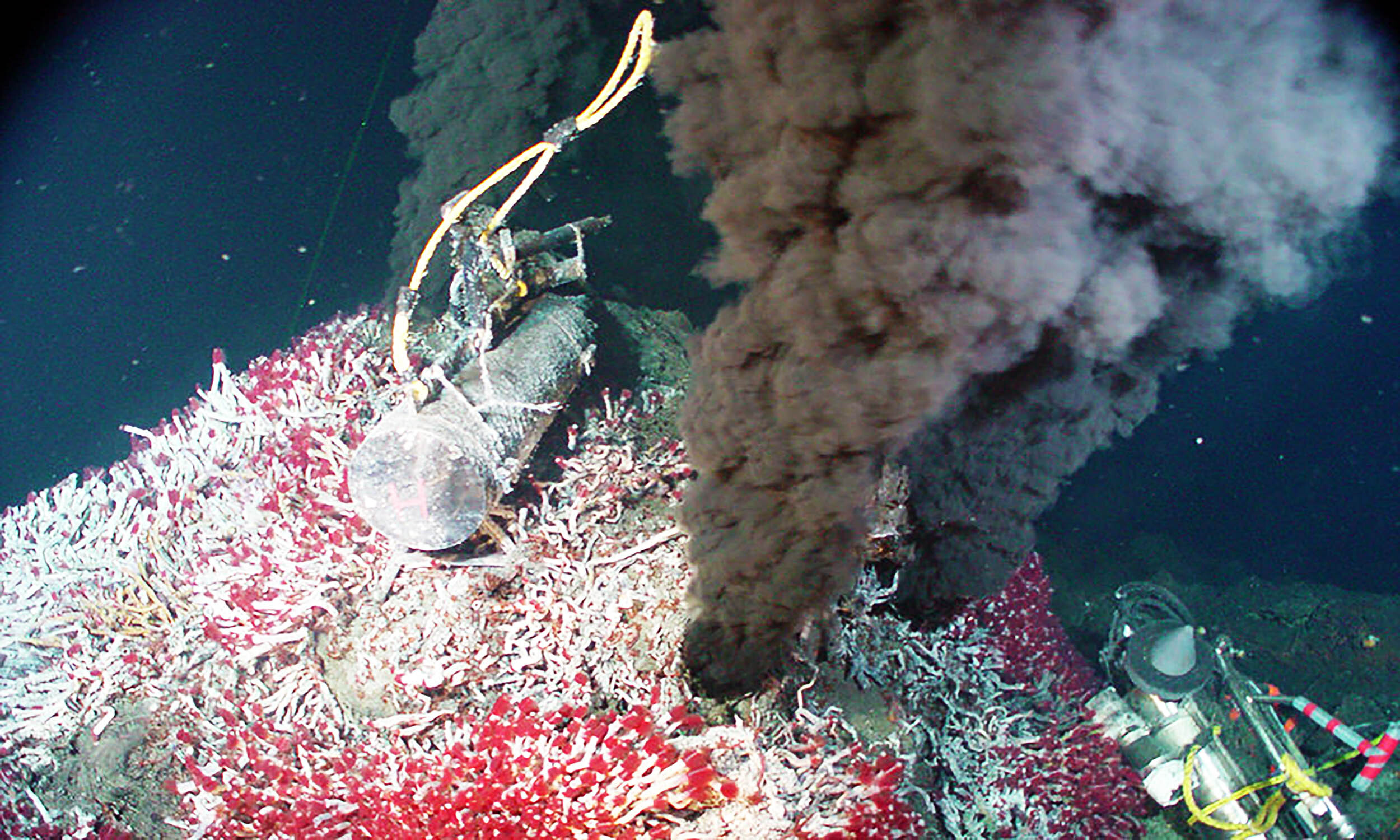
Because of the immense hydrostatic pressure at these depths (often 250 times atmospheric pressure), the water does not boil. Instead, it remains a "supercritical fluid" that erupts back into the frigid, 2°C ambient deep-sea water. As the hot, mineral-rich fluid hits the cold water, the minerals precipitate, building towering chimney-like structures known as "black smokers" or "white smokers," depending on the mineral composition.
By 2026, oceanographers have mapped thousands of these vent sites across the global seafloor, from the East Pacific Rise to the Mid-Atlantic Ridge and the Indian Ocean. Each site acts as a biological "island," separated by vast expanses of barren abyssal plains, yet hosting some of the highest biomass concentrations found anywhere on the planet.
Chemosynthesis: The Engine of the Abyssal Food Web
In terrestrial and shallow-water ecosystems, the food web begins with photosynthesis, where plants and algae use sunlight to convert carbon dioxide and water into glucose. In the deep sea, where sunlight cannot penetrate, life relies on chemosynthesis.
This metabolic process is carried out by chemolithotrophic bacteria and archaea. These microorganisms oxidize chemical compounds—primarily hydrogen sulfide ($H_2S$), methane ($CH_4$), and hydrogen gas—released from the vents to produce the energy required to fix inorganic carbon into organic molecules. These microbes are the primary producers of the vent world. They exist in various forms: as free-living mats covering the seafloor, as "snow" in the water column, or as endosymbionts living inside the tissues of larger animals.
The chemical reaction for the most common form of sulfur-based chemosynthesis can be simplified as follows: $CO_2 + O_2 + 4H_2S \rightarrow CH_2O + 4S + 3H_2O$
This reliance on "geochemical fuel" rather than solar energy makes vent ecosystems independent of the surface world, though many organisms still require the dissolved oxygen present in deep-sea currents, which is originally produced by surface photosynthesis.
Key Species and Specialized Symbiotic Relationships
The fauna of hydrothermal vents is characterized by high levels of endemism; approximately 75% of the species found at vents are not found anywhere else. To survive the toxic concentrations of heavy metals and sulfides, many organisms have developed extraordinary physiological adaptations and symbiotic partnerships.
The Giant Tube Worm (Riftia pachyptila)
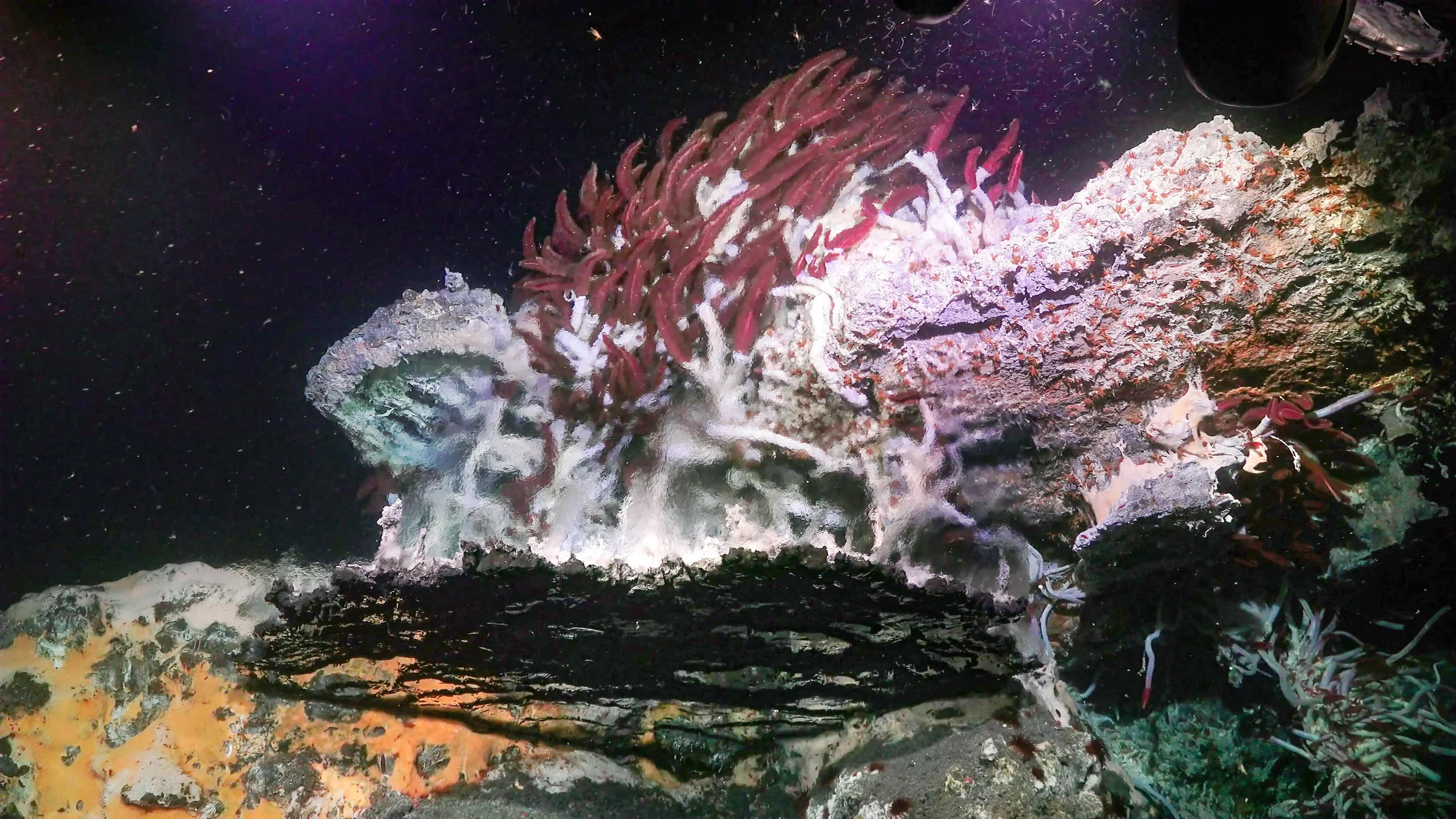
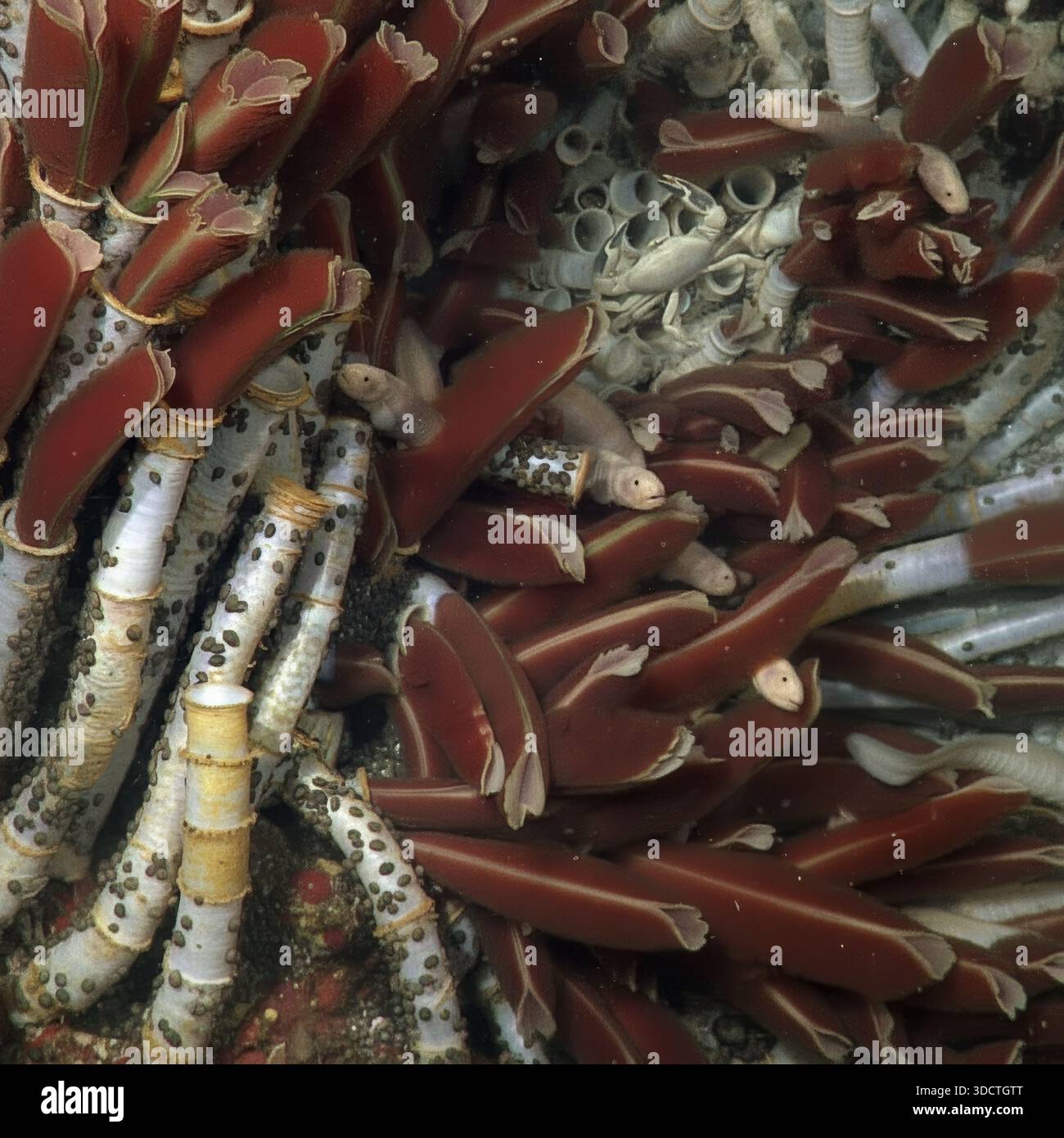
Perhaps the most iconic resident of the East Pacific Rise, Riftia pachyptila can grow up to 2.4 meters in length. These worms lack a mouth, gut, and anus. Instead, they house billions of chemosynthetic bacteria in a specialized organ called a trophosome. The worm's bright red plume, which functions like a gill, absorbs oxygen, carbon dioxide, and hydrogen sulfide from the water and delivers them via its bloodstream to the bacteria. In exchange, the bacteria provide the worm with all its nutritional requirements.
The Pompeii Worm (Alvinella pompejana)
The Pompeii worm holds the record for one of the most heat-tolerant complex organisms. Living on the walls of active black smoker chimneys, its tail can be exposed to temperatures as high as 80°C (176°F), while its head rests in much cooler water. These worms are covered in a thick "fleece" of bacteria, which scientists believe may provide thermal insulation or detoxify the surrounding water.
Vent Shrimp and Yeti Crabs
In the Mid-Atlantic Ridge, the shrimp Rimicaris exoculata swarms around vent chimneys in the thousands. While they lack traditional eyes, they possess a specialized dorsal organ that can detect the faint infrared glow emitted by the hot vent fluids, helping them navigate the thermal gradient. Similarly, the Yeti Crab (Kiwa hirsuta), discovered in the Southern Ocean, uses "furry" claws to farm bacteria, waving them in the mineral-rich flow to encourage microbial growth before harvesting them for food.
Comparison of Hydrothermal Vent Structures
The environment of a vent ecosystem is dictated largely by its mineral output and temperature. The following table compares the two primary types of hydrothermal vents observed by researchers as of 2026.
| Feature | Black Smokers | White Smokers |
|---|---|---|
| Temperature | 300°C to 400°C+ | 250°C to 300°C |
| Primary Minerals | Iron and Copper Sulfides | Barium, Calcium, and Silicon |
| Fluid Appearance | Dark, "smoke-like" particulate | Light, milky, or clear fluid |
| Acidity (pH) | Highly acidic (low pH) | Generally more alkaline |
| Typical Depth | 2,000m to 4,000m | Variable, often shallower than black smokers |
| Common Fauna | Riftia tube worms, Pompeii worms | Vent shrimp, gastropods, anemones |
Biological Adaptations to Extreme Pressure and Toxicity
To thrive in the vent environment, organisms must overcome three primary challenges: crushing pressure, fluctuating temperatures, and chemical toxicity.
- Pressure Resilience: At vent depths, the pressure is sufficient to crush most terrestrial life forms. Deep-sea organisms lack gas-filled spaces (like lungs or swim bladders) that would collapse. Their cell membranes are enriched with polyunsaturated fatty acids, which maintain fluidity and prevent the membrane from becoming rigid and non-functional under high pressure.
- Thermal Regulation: The temperature gradient at a vent is extreme. Water can drop from 350°C to 2°C over a distance of just a few centimeters. Vent animals have evolved specialized enzymes and heat-shock proteins that maintain their shape and function even when exposed to thermal spikes.
- Heavy Metal Detoxification: Vent fluids are rich in lead, arsenic, and cadmium. Many vent species produce metallothioneins—proteins that bind to heavy metals and render them chemically inert—preventing them from interfering with cellular processes.
The Lifecycle of a Vent Ecosystem
Hydrothermal vents are not permanent features. Their existence depends on the underlying volcanic activity. When the "plumbing" of the seafloor shifts due to an earthquake or a depleted magma source, the flow of mineral-rich water stops.
When a vent "shuts off," the primary producers die immediately. Without the chemosynthetic base, the entire colony of tube worms, clams, and crabs perishes within months. However, when a new vent opens elsewhere, it is rapidly colonized. Scientists are still researching how larvae—often microscopic and fragile—travel hundreds of miles across the cold, dark desert of the deep seafloor to find a new vent. Current theories suggest they may use "stepping stones," such as whale falls (sunken whale carcasses) or smaller "cold seeps," to survive the journey.
Scientific and Commercial Significance in 2026
As of 2026, the study of vent ecosystems has moved from pure exploration to high-stakes environmental and biotechnological research.
- Astrobiology: Vent ecosystems serve as the primary model for potential life on icy moons like Jupiter's Europa or Saturn's Enceladus. If these moons have liquid oceans over volcanic cores, chemosynthesis may support extraterrestrial life in their dark depths.
- Biotechnology: The "extremozymes" found in vent microbes have significant industrial value. They are used in high-temperature PCR (polymerase chain reaction) for DNA sequencing, waste treatment, and the development of new detergents that function in extreme conditions.
- Deep-Sea Mining: Vents are surrounded by "Seafloor Massive Sulfides" (SMS) rich in gold, silver, and rare earth elements. In 2026, the International Seabed Authority (ISA) continues to debate the regulations for deep-sea mining. Conservationists argue that mining these sites could cause irreversible damage to these unique biological "oases" and lead to the extinction of species before they are even discovered.
Frequently Asked Questions
What is the difference between a hydrothermal vent and a cold seep?
Hydrothermal vents are fueled by volcanic heat and occur at mid-ocean ridges, while cold seeps are areas where hydrocarbons like methane or oil leak from the seafloor at ambient temperatures. Both support chemosynthetic life, but the species compositions and chemical pathways often differ.
Can vent organisms survive if brought to the surface?
Generally, no. Most vent animals are highly specialized for high-pressure environments. When brought to the surface, the lack of pressure causes their tissues to expand and their cellular structures to fail. Furthermore, the warm surface temperatures are often lethal to species adapted to the cold deep-sea ambient water.
Why is the water at hydrothermal vents so dark?
The "smoke" seen at black smokers is not actually smoke. It is a dense cloud of fine mineral particles (mostly iron sulfides) that precipitate out of the superheated fluid as it cools. This creates the visual effect of dark, billowing smoke.
Do deep-sea vent ecosystems contribute to global carbon cycles?
Yes. Chemosynthetic microbes fix inorganic carbon into organic matter, effectively acting as a carbon sink. While the scale is much smaller than global photosynthesis, these ecosystems play a vital role in the localized carbon cycling of the deep ocean.
How do scientists study these vents in 2026?
Researchers use Remotely Operated Vehicles (ROVs) and Autonomous Underwater Vehicles (AUVs) equipped with 8K cameras and precision sampling arms. These tools allow scientists to observe the vents in real-time and collect biological and chemical samples without risking human divers.
Practical Recommendation for Further Exploration
For those interested in the ongoing preservation and study of these environments, the most critical next step is supporting international deep-sea conservation initiatives. As deep-sea mining interests grow, participating in public commentary sessions held by the International Seabed Authority or following the research of the Woods Hole Oceanographic Institution (WHOI) and NOAA Ocean Exploration is essential for staying informed on the protection of these vulnerable biological frontiers.
Image Gallery