Will Accidental Life Insurance Pay Out for Suicide?
No, accidental life insurance—commonly known as Accidental Death and Dismemberment (AD&D) insurance—will not pay out if a policyholder dies by suicide. AD&D policies strictly cover deaths caused solely by sudden, unforeseen, and uninte...
No, accidental life insurance—commonly known as Accidental Death and Dismemberment (AD&D) insurance—will not pay out if a policyholder dies by suicide. AD&D policies strictly cover deaths caused solely by sudden, unforeseen, and unintentional accidents. Intentional self-inflicted injuries and suicide are universal exclusions written into every accidental death insurance contract.
Contents
If you or someone you know is struggling, distressed, or in crisis, help is available. You are not alone, and compassionate support is free and confidential.
- United States & Canada: Call or text 988 to reach the 988 Suicide & Crisis Lifeline, available 24 hours a day, 7 days a week.
- United Kingdom: Call 111 to reach the NHS mental health services, or call 999 in an immediate emergency.
- International: Find local support resources in your country at Befrienders Worldwide or Find A Helpline.
Understanding how life insurance policies evaluate different causes of death is critical when navigating policy terms, beneficiaries' rights, and claim procedures. While standard life insurance policies handle suicide under specific conditional rules, accidental death policies operate under fundamentally different contractual definitions.
The Difference Between AD&D and Traditional Life Insurance
To understand why accidental life insurance does not cover suicide, it is essential to distinguish between Accidental Death and Dismemberment (AD&D) insurance and traditional life insurance (such as term life or whole life).
- Causes of Death Covered
- Traditional Life (Term / Whole / Universal)
- Medical / Illness / Natural Causes: COVERED
- Intentional Suicide (After 2 Years): COVERED
- AD&D Insurance (Accidental Death)
- Sudden Unintended Accidents Only: COVERED
- Illness / Intentional Suicide Excluded: NO PAYOUT
- Traditional Life (Term / Whole / Universal)
1. Traditional Life Insurance (Term & Permanent)
Traditional life insurance policies are designed to provide comprehensive financial protection regardless of how the insured passes away, subject to very few standard exclusions. These policies cover:
- Natural causes (such as heart disease, cancer, or old age)
- Illnesses and medical complications
- Accidental deaths
- Suicide (provided the death occurs after the policy's initial exclusion window has expired)
Under standard policies regulated under guidelines supported by organizations like the National Association of Insurance Commissioners (NAIC), traditional life insurance provides broad protection because premiums are calculated based on overall mortality risk, age, underwriting health checks, and lifestyle factors.
2. Accidental Death & Dismemberment (AD&D) Insurance
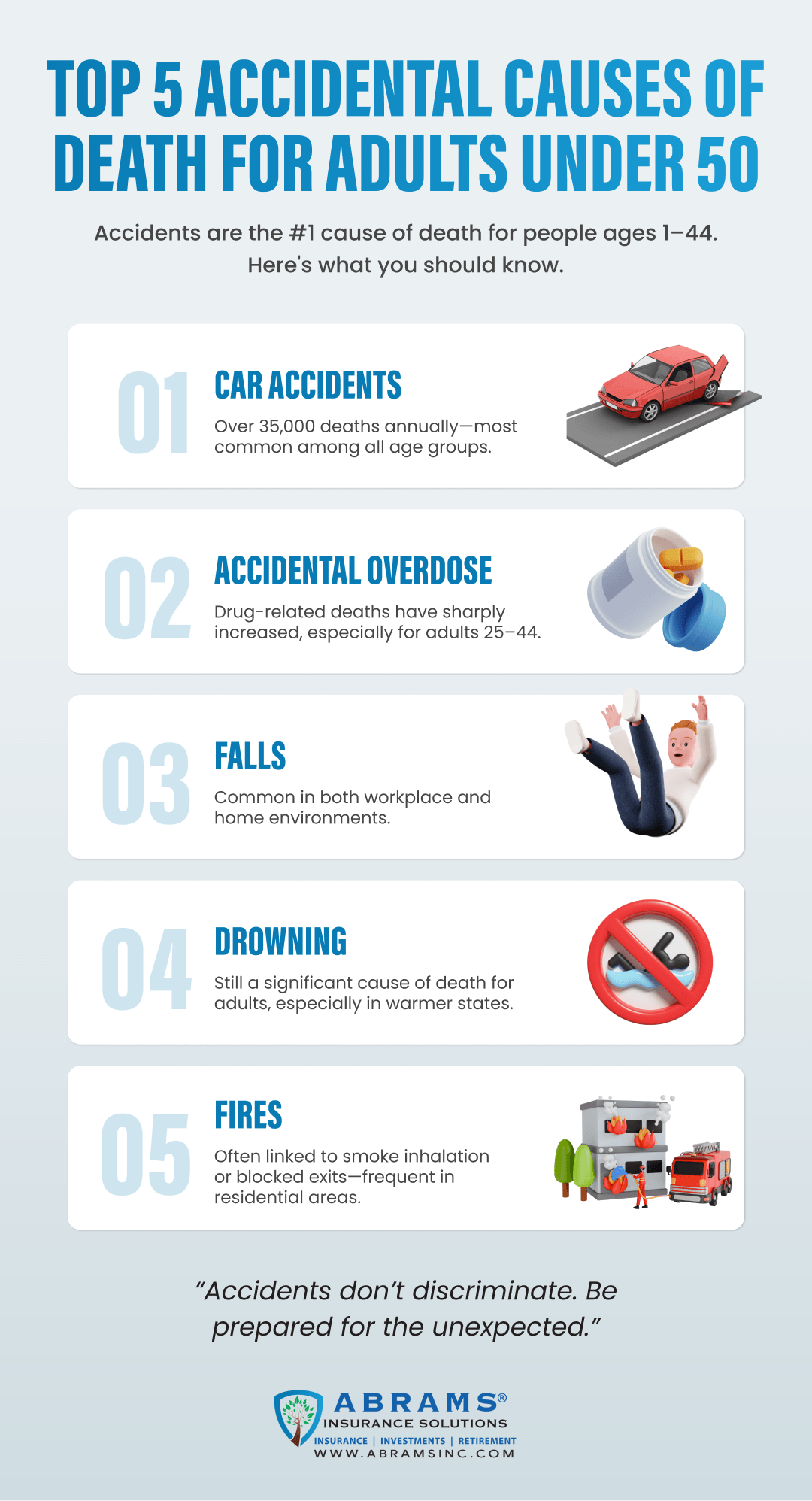
AD&D insurance is a specialized, limited form of coverage. It does not replace comprehensive life insurance; rather, it acts as a supplemental policy that pays out only under very narrow circumstances. AD&D policies cover deaths resulting strictly from external, violent, sudden, and violent accidental means, such as:
- Motor vehicle crashes
- Accidental falls
- Accidental drowning
- Equipment or machinery accidents
- Fatal fires or natural disasters
Because AD&D policies exclude natural deaths, illnesses, and intentional acts, they do not require medical underwriting and feature significantly lower premiums than traditional life insurance. However, the trade-off is a far more restricted scope of coverage.
Contractual Exclusions: Why AD&D Policies Never Cover Suicide
Every insurance policy contains an "Exclusions" section detailing scenarios where the insurer will not pay a claim. In AD&D contracts, the definition of a covered loss explicitly mandates that the death must be purely accidental and independent of all other causes.
Insurance policies define an accident as an event that is unintended, unexpected, and unforeseen. Suicide, legally and contractually, is defined as an intentional act of self-harm leading to death. Consequently, suicide fails the fundamental definition of an "accidental event."
Standard policy language in an AD&D rider or standalone policy typically includes text similar to the following:
"No benefit will be paid if the insured's death results directly or indirectly from intentionally self-inflicted injuries, suicide, or attempted suicide, while sane or insane."
The inclusion of the phrase "while sane or insane" is a critical legal standard in insurance law. This phrasing ensures that even if severe depression, psychosis, or another mental health crisis impaired the individual's mental capacity at the time of the act, the legal exclusion still applies under the AD&D contract.
How Traditional Life Insurance Handles Suicide: The Two-Year Rule
While AD&D policies never pay out for suicide, traditional term life and whole life insurance contracts handle suicide differently through two key contractual clauses: the Suicide Clause and the Incontestability Clause.
The Suicide Exclusion Period
Most standard life insurance policies include a suicide clause that lasts for two years from the policy's effective date (in some states, such as Missouri, state law limits this exclusion window to one year).
- Death within the exclusion period (First 2 Years): If the policyholder dies by suicide within the first two years of purchasing the policy, the insurer will deny the death benefit claim. However, the insurer is legally required to refund all premiums paid up to that point to the named beneficiaries.
- Death after the exclusion period (After 2 Years): Once the two-year window has passed, the suicide exclusion expires completely. If the policyholder dies by suicide after this period, traditional life insurance policies will pay out the full death benefit to the beneficiaries, provided the policy remained active and premiums were up to date.
Policy Reinstatement and Policy Upgrades
It is important to note that if a life insurance policy lapses due to non-payment and is subsequently reinstated, the two-year suicide exclusion clock typically resets from the date of reinstatement. Similarly, if an insured increases their death benefit amount, a new contestability and suicide clause period may apply specifically to the increased coverage portion.
Policy Comparison: AD&D vs. Traditional Life Insurance
The table below outlines how different types of life insurance products handle suicide and accidental death claims:
| Policy Type | Covers Accidental Death? | Covers Natural Death / Illness? | Covers Suicide Within First 2 Years? | Covers Suicide After 2 Years? | Beneficiary Payout Upon Exclusion |
|---|---|---|---|---|---|
| Accidental Death (AD&D) | Yes | No | No | No (Never) | No payout; no premium refund |
| Term Life Insurance | Yes | Yes | No | Yes | Full refund of premiums paid |
| Whole / Universal Life | Yes | Yes | No | Yes | Full refund of premiums paid |
| Group Employer Life | Yes | Yes | Often Waived* | Yes | Full benefit (if waived) or premium return |
| Group Employer AD&D | Yes | No | No | No (Never) | No payout |
*Note: Some basic employer-sponsored group life insurance policies waive the initial suicide exclusion clause for basic coverage amounts, but group AD&D policies maintain the exclusion strictly.
How Claims Are Investigated by Insurance Carriers
When a claim is submitted for an accidental death policy, insurance companies conduct a thorough claim investigation before releasing funds. Because AD&D policies only cover genuine accidents, the burden of proof rests on establishing the exact cause and manner of death.
Key Evidence Reviewed in AD&D Claims
To verify that a death was purely accidental and not the result of suicide or natural causes, claims adjusters examine several official documents:
- The Death Certificate: The official death certificate issued by a coroner or medical examiner lists both the cause of death (e.g., asphyxiation, blunt force trauma) and the manner of death (Accidental, Suicide, Natural, Homicide, or Undetermined). If the manner of death is marked as "Suicide," the AD&D claim is immediately denied.
- Toxicology and Autopsy Reports: Medical examiners test for prescription drugs, illegal substances, and blood alcohol concentration. If toxic levels of substances are found, adjusters evaluate whether the overdose was accidental or intentional.
- Police and Investigative Reports: Law enforcement records, witness statements, scene photos, and digital evidence (such as text messages or browser history) are reviewed to determine the individual's intent.
- Medical Records: Insurers review past psychiatric treatment, notes from healthcare providers, and pharmacy records to evaluate existing mental health conditions if the cause of death is ambiguous.
Ambiguous Cases: Accidental Overdose vs. Suicide
One of the most complex areas in AD&D claims involves fatal drug overdoses or substance toxicity.
- Accidental Overdose: If a person unintentionally ingests a lethal combination of prescribed medications or experiences an accidental drug poisoning without intent of self-harm, some AD&D policies may cover the event. However, many modern AD&D contracts also contain explicit exclusions for deaths resulting from controlled substances consumed without a physician’s prescription, or for acute alcohol toxicity.
- Intentional Overdose: If evidence suggests the overdose was deliberate (such as a suicide note, prior statements of intent, or dangerously high toxicological levels far exceeding accidental misuse), the insurer will classify the event as suicide and deny the claim.
If a death certificate lists the manner of death as "Undetermined," the insurer will typically withhold payout while conducting an independent investigation. Beneficiaries facing a claim denial under an ambiguous death certificate may need to provide additional medical or factual evidence to demonstrate that the event was entirely accidental.
What Beneficiaries Should Know About Employer-Provided AD&D (ERISA Plans)
Many individuals hold AD&D insurance as an inexpensive workplace benefit offered alongside group term life insurance. Workplace benefit plans provided by private employers are governed by federal law under the Employee Retirement Income Security Act (ERISA), managed by the U.S. Department of Labor Employee Benefits Security Administration.
If an employer-sponsored AD&D claim is denied due to a suicide exclusion:
- The Claim Denial Notice: The insurance carrier must issue a written denial detailing the exact contractual provisions and evidence relied upon.
- Administrative Appeal: Under ERISA rules, beneficiaries have a strict timeline (usually 180 days) to file an administrative appeal directly with the insurer before they can file a lawsuit in federal court.
- Legal Representation: Because ERISA litigation does not allow for jury trials and relies heavily on the administrative record compiled during the appeal process, beneficiaries navigating contested AD&D claims often consult experienced ERISA attorneys or state insurance regulators.
Summary of Key Takeaways
- AD&D Insurance Never Covers Suicide: Accidental death insurance policies strictly exclude suicide and self-inflicted injuries under all circumstances, regardless of how long the policy has been active.
- Traditional Life Insurance Covers Suicide After Two Years: Standard term and whole life insurance policies generally pay out the full death benefit for suicide once the policy’s initial one- or two-year contestability period has passed.
- Premium Refunds Differ: If a traditional life insurance policyholder dies by suicide within the exclusion period, the insurer refunds the premiums paid. Under an AD&D policy, no benefit or refund is paid because the risk covered was strictly limited to accidents.
- Investigations Rely on Official Findings: AD&D claims require clear proof of an unintended, external accident as confirmed by death certificates, toxicology tests, and official police reports.
Frequently Asked Questions
Does AD&D pay if a suicide occurred due to an diagnosed mental illness?
No. Standard AD&D policies include explicit language excluding intentional self-inflicted injuries "while sane or insane." Because AD&D contracts limit coverage strictly to external, physical accidents, mental health conditions do not alter the contractual exclusion for suicide.
Will standard term life insurance pay a claim for suicide after two years?
Yes. Once the standard two-year suicide exclusion period (or one-year period, depending on state statutory rules) has expired, traditional term and permanent life insurance policies cover suicide just like any other cause of death, provided premiums were paid continuously.
What happens if the death certificate says the cause of death is "Undetermined"?
If a death certificate lists the manner of death as "Undetermined," the AD&D insurer will not automatically pay the claim. The insurer will launch an investigation to gather secondary evidence. The beneficiary may need to submit supporting documentation, such as expert medical testimony or police investigation conclusions, proving the death was more likely than not accidental.
Does group life insurance provided by an employer cover suicide?
Basic group term life insurance provided by an employer often covers suicide, and some employer plans even waive the standard two-year exclusion period for basic employer-paid coverage. However, supplemental group AD&D policies offered through employers will always exclude suicide.
What should a beneficiary do if an AD&D claim is wrongly denied?
If an AD&D claim is denied because the insurer incorrectly classified an accidental death as suicide, the beneficiary has the right to appeal. The beneficiary should request the complete administrative claim file, collect supporting evidence (such as secondary medical reviews or witness statements), and consider consulting an insurance attorney or filing a complaint with their state's Department of Insurance.
Image Gallery