Mold Remediation in Benjamin: Professional Protocols, Costs, and Moisture Control
Mold remediation in Benjamin involves inspecting indoor moisture sources, containing airborne fungal spores, physically removing contaminated building materials, and restoring safe indoor air quality. Adhering to standard IICRC S520 pr...
Mold remediation in Benjamin involves inspecting indoor moisture sources, containing airborne fungal spores, physically removing contaminated building materials, and restoring safe indoor air quality. Adhering to standard IICRC S520 protocols ensures structural integrity and environmental safety by utilizing HEPA negative air pressure, specialized antimicrobial treatments, and post-remediation verification for residential and commercial properties.
Contents
Understanding Indoor Mold Contamination and Industry Standards
Mold spores exist naturally in indoor and outdoor environments. However, when indoor humidity rises or unaddressed moisture intrusion occurs—whether from plumbing failures, roof leaks, or elevated regional moisture—spores germinate on porous building materials such as drywall, timber framing, carpeting, and ceiling tiles. Within 24 to 48 hours of exposure to moisture, mold colonies begin to feed on organic materials, releasing volatile organic compounds (VOCs), allergens, and potentially mycotoxins into the indoor air supply.
Professional mold remediation is governed by technical guidelines established by the Institute of Inspection, Cleaning and Restoration Certification (IICRC), specifically the IICRC S520 Standard for Professional Mold Remediation. This framework categorizes indoor mold contamination into three distinct condition levels:
- Condition 1 (Normal Fungal Ecology): An indoor environment that has a normal quantity and distribution of airborne mold spores and settled dust, with no active mold growth or hidden moisture reservoirs.
- Condition 2 (Settled Spores): An environment contaminated with settled spores or fungal fragments that were transported from an active growth site elsewhere in the building, but where active growth is not directly occurring on the surface itself.
- Condition 3 (Actual Growth): An indoor environment with active mold growth and high concentration levels of fungal contamination present on surfaces and porous structural elements.
Remediating Condition 3 contamination in Benjamin properties requires far more than surface cosmetic treatment. Simply spraying household bleach or painting over visible growth fails to eliminate deeply rooted hyphae (microscopic root structures) in porous substrates and often introduces excessive water, exacerbating the problem.
The Step-by-Step Professional Mold Remediation Workflow
Effective mold remediation follows a strict technical sequence designed to prevent cross-contamination to unaffected areas of the building while restoring the structure to Condition 1 status.
1. Assessment and Moisture Mapping
Before physical containment or demolition begins, certified technicians conduct a comprehensive inspection to map the extent of moisture penetration and active fungal growth.
- Thermal Imaging: Infrared cameras identify hidden temperature anomalies behind drywall and beneath flooring indicative of trapped water.
- Moisture Meters: Pin-type and pinless moisture meters measure relative moisture content (%MC) in structural wood framing, concrete subfloors, and gypsum board.
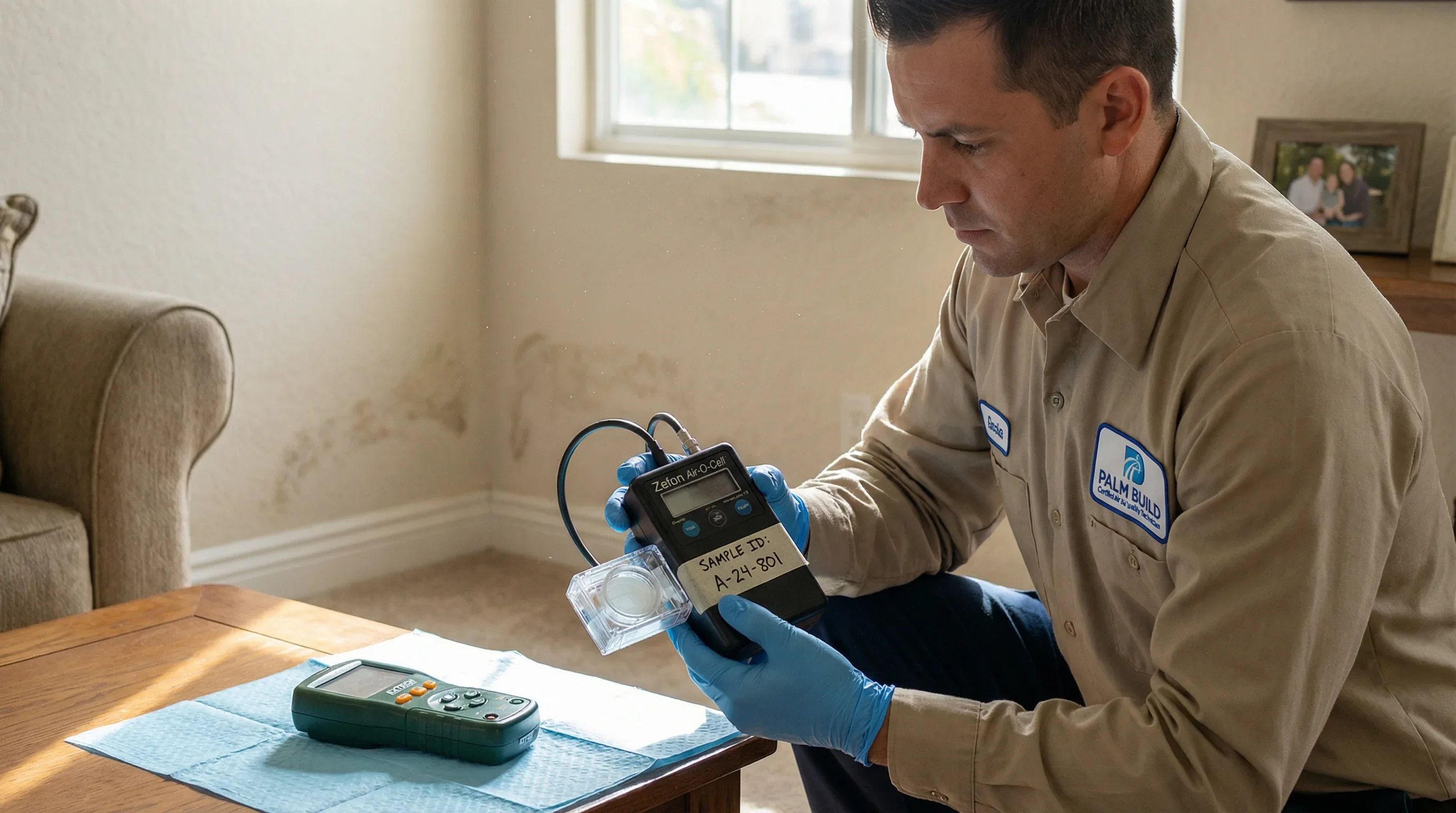
- Environmental Sampling: Surface swab or tape-lift samples, alongside ambient air cassette samples, identify spore concentrations and dominant fungal genera (such as Aspergillus, Penicillium, Cladosporium, or Stachybotrys chartarum).
2. Containment and Negative Air Pressure
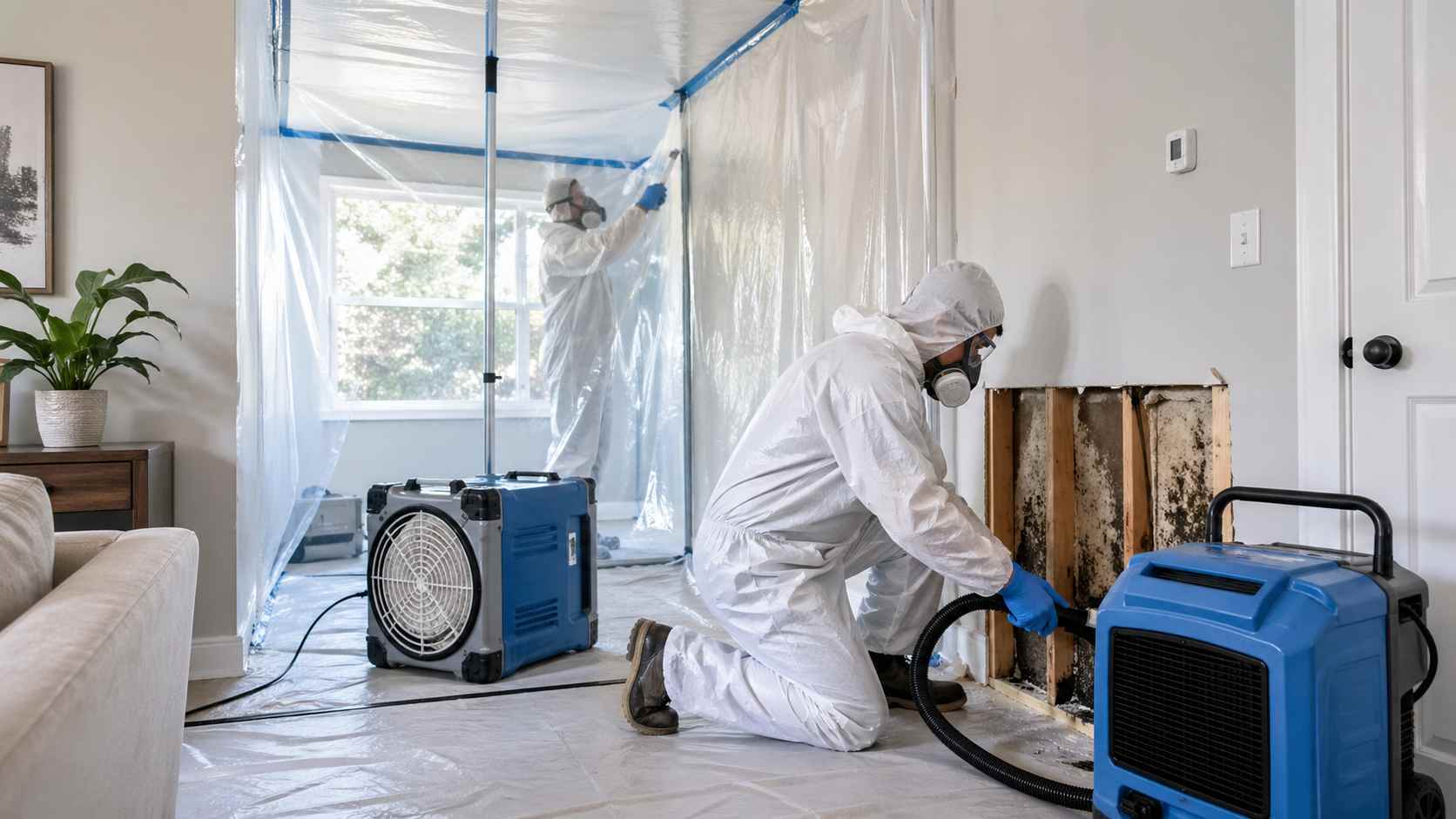
To prevent microscopic spores from dispersing through ductwork or ambient air movement into clean rooms during demolition, technicians establish physical containment barriers.
- Critical Isolation Barriers: Heavy-gauge 6-mil polyethylene plastic sheeting seals off door openings, HVAC registers, plumbing penetrations, and windows surrounding the work zone.
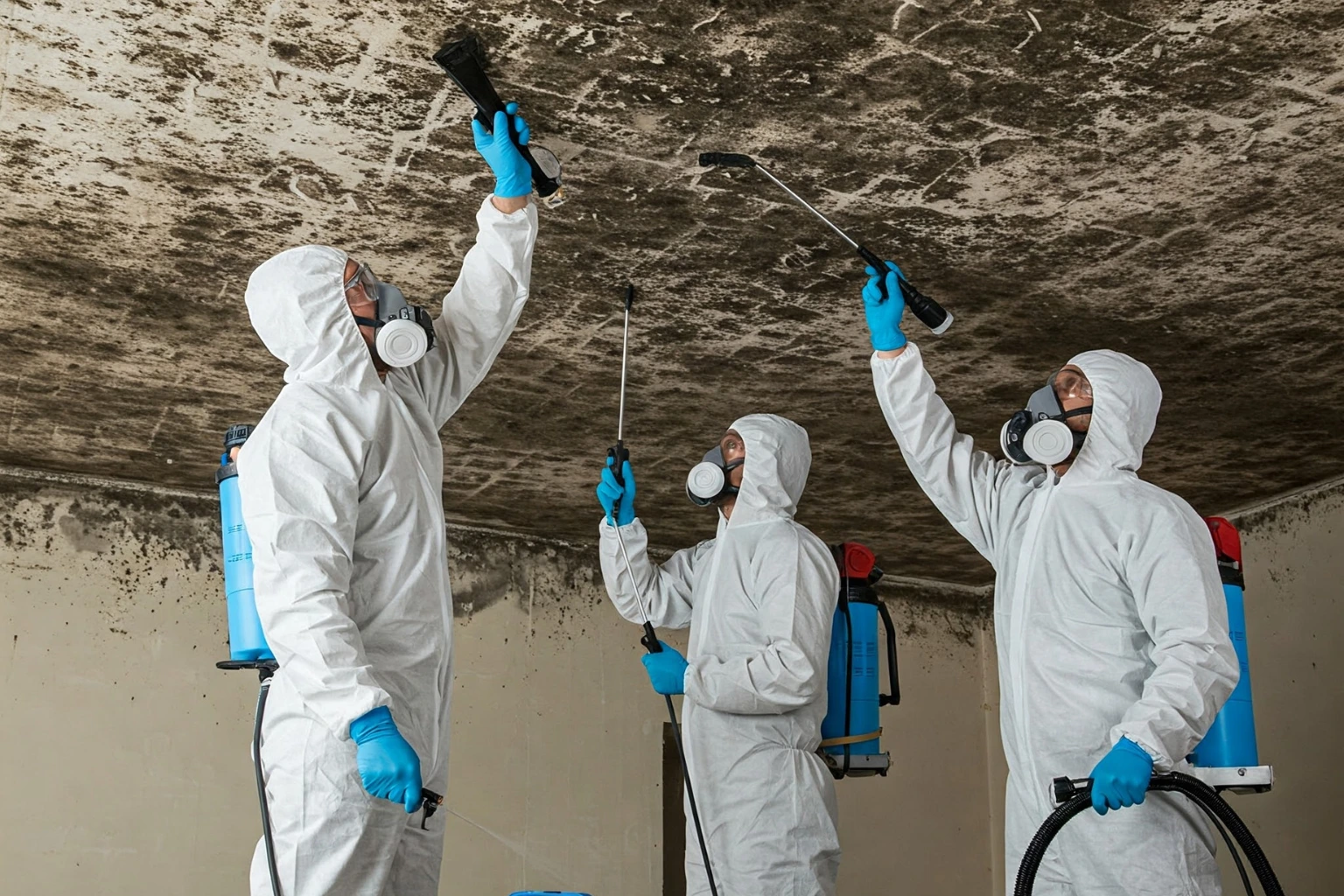
- Decontamination Chambers: Multi-chamber airlocks (dirty room, transition room, clean room) provide controlled entry and egress points for technicians wearing Personal Protective Equipment (PPE).
- Negative Air Machines: HEPA-filtered air scrubbers continuously exhaust air out of the contained space to the building exterior. This creates negative air pressure, ensuring air flows inward into the work zone rather than pushing spores outward into living spaces.
3. High-Efficiency Particulate Air (HEPA) Filtration
Continuous air scrubbing operates throughout the remediation project. HEPA filtration units capture 99.97% of airborne particles down to 0.3 microns in size, effectively trapping fungal spores, hyphal fragments, and fine particulate matter generated during material removal.
Typical Containment Workflow:
- Clean Living Area
- Decontamination Chamber
- Contained Work Zone
- HEPA Air Scrubber / Negative Air
- Exterior Exhaust
4. Removal of Unsalvageable Materials
Contaminated building materials are classified as porous, semi-porous, or non-porous:
- Porous Materials (Discarded): Drywall, fiberglass insulation, acoustic ceiling tiles, carpet padding, and upholstered furnishings with deep fungal penetration cannot be fully sanitized. These items are carefully cut out, double-bagged in heavy 6-mil plastic bags, wiped clean on the exterior, and disposed of according to local waste management regulations.
- Semi-Porous Materials (Restored): Structural wood studs, subflooring, and masonry are remediated through controlled mechanical removal techniques such as wire brushing, HEPA vacuuming, sanding, or media blasting (dry-ice or soda blasting).
- Non-Porous Materials (Sanitized): Glass, metal, smooth hard plastics, and glazed ceramic tiles are cleaned using specialized EPA-registered antimicrobials and detergent solutions.
5. Cleaning, Antimicrobial Treatment, and Drying
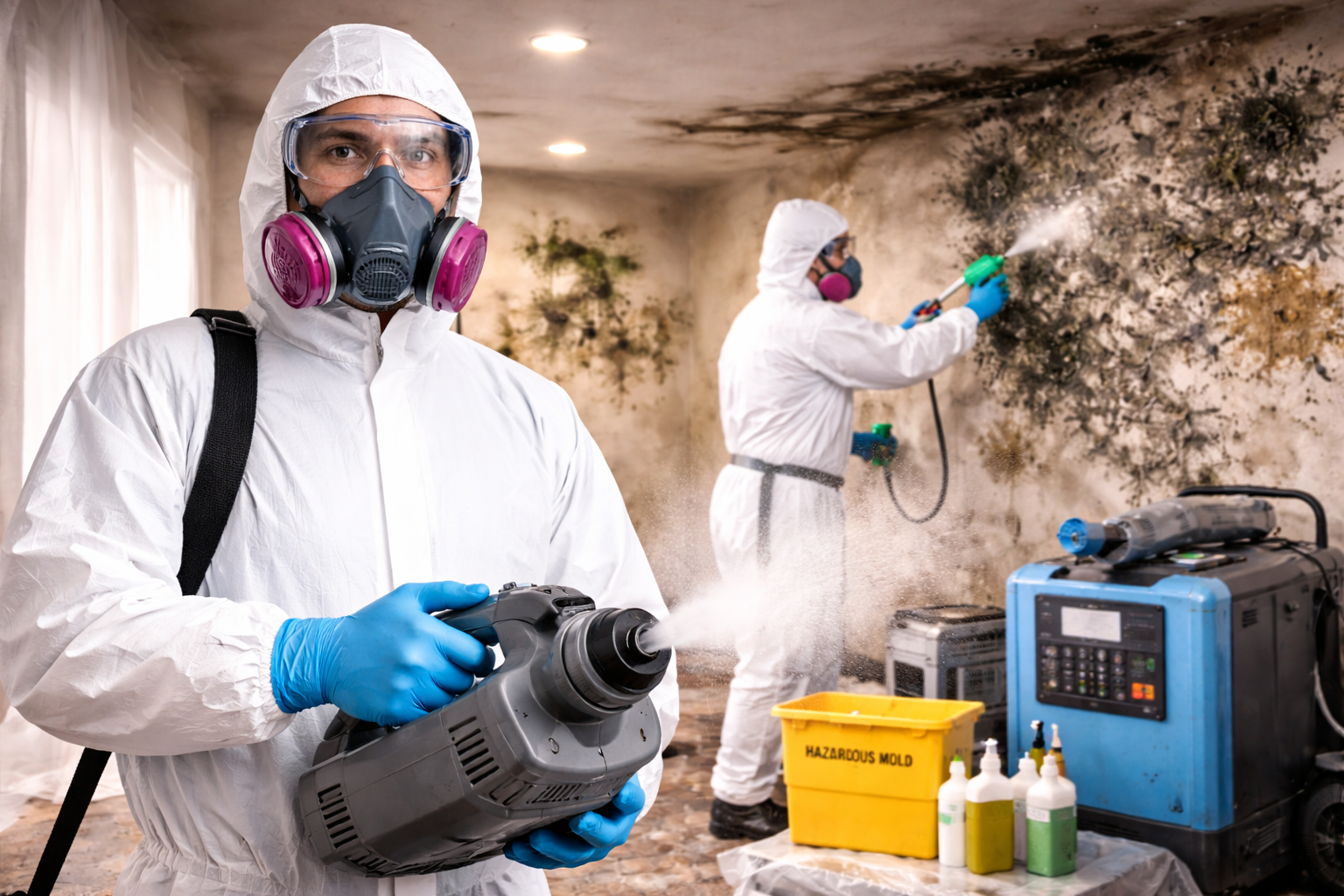
Once damaged materials are removed, all remaining structural surfaces undergo rigorous deep cleaning. Technicians execute a multi-pass cleaning process consisting of HEPA vacuuming, damp-wiping with EPA-registered disinfectant fungicides, and re-vacuuming. Industrial LGR (Low Grain Refrigerant) dehumidifiers and high-velocity air movers run continuously to reduce structural wood moisture content below 15% before any re-building phase begins.
6. Post-Remediation Verification (PRV)
The final stage requires independent clearance testing before containment barriers are removed. A third-party indoor environmental professional (IEP) conducts a visual inspection and collects air and surface samples. A successful PRV clearance confirms:
- The containment zone is physically clean and free of visible dust, debris, and mold growth.
- Moisture levels of structural components have normalized to acceptable dry standards.
- Airborne mold spore counts inside the containment zone are equal to or lower than background samples taken outdoors, with an equivalent distribution of species.
DIY Mold Removal vs. Professional Remediation
Property owners often debate whether to handle mold removal independently or hire certified professionals. According to guidance from the U.S. Environmental Protection Agency (EPA Mold Guidelines), remediation projects covering an area greater than 10 square feet (approximately 3 feet by 3 feet) should be handled by trained remediation specialists.
| Factor | DIY Mold Removal | Professional Remediation |
|---|---|---|
| Recommended Scope | Minor surface spots under 10 sq. ft. | Contaminated areas exceeding 10 sq. ft., HVAC contamination, or sewer back-ups. |
| Personal Safety Gear | Basic N95 mask, household rubber gloves, safety glasses. | Full-face P100 respirator, Tyvek protective suits, nitrile gloves, boot covers. |
| Containment Capability | Minimal (risk of spreading spores throughout HVAC and home). | Professional 6-mil poly containment with continuous HEPA negative pressure. |
| Moisture Identification | Surface visual check only. | Infrared thermal imaging, pin/pinless moisture meters, relative humidity sensors. |
| Verification & Testing | Self-assessment; high rate of hidden recurrence. | Independent Post-Remediation Verification (PRV) and certified lab analysis. |
Improper DIY attempt risks include scrubbing dry mold (which disperses millions of spores into the air), applying bleach to porous wood framing (which leaves water behind and encourages sub-surface fungal hyphae growth), and failing to fix hidden moisture leaks within wall cavities.
Mold Remediation Cost Breakdown in Benjamin
The total investment required for professional mold remediation varies based on the total square footage involved, the accessibility of the affected space (crawlspaces and attics require higher labor costs), and structural reconstruction needs.
| Scope & Damage Level | Typical Cost Range | Primary Remediation Methods | Required Containment Level | Average Project Duration |
|---|---|---|---|---|
| Minor Surface Remediation (<10 sq. ft., localized bathroom tile or window sill) | $350 – $900 | HEPA vacuuming, surface antimicrobial wiping, localized moisture control. | Basic localized drop cloths and spot isolation. | 1 Day |
| Moderate Structural Remediation (10–100 sq. ft., single room wall/ceiling water damage) | $1,500 – $3,500 | Wall cutout, insulation disposal, stud wire-brushing, air scrubbing, structural drying. | Single-room plastic containment barrier with HEPA negative air pressure. | 2 – 3 Days |
| Severe / Whole-House Remediation (>100 sq. ft., flooded basement, crawlspace, or widespread HVAC contamination) | $4,500 – $12,000+ | Full demolition of porous materials, media blasting, HVAC duct restoration, structural drying. | Multi-stage negative pressure containment with decontamination airlocks. | 4 – 7 Days |
Key cost drivers include:
- Accessibility: Crawlspaces with low clearance or tight attic spaces require additional setup labor and personal protective equipment.
- HVAC System Contamination: If mold has colonized the central air handler, ductwork, or cooling coils, specialized mechanical cleaning and duct sanitization are necessary.
- Build-Back Requirements: Basic remediation costs cover containment, removal, cleaning, and drying. Replacing drywall, insulation, painting, and trim represents a separate reconstruction expense.
Preventing Recurrence: Moisture Management and Mold-Resistant Coatings
Remediation is only effective long-term if the underlying moisture source is permanently resolved. Fungal spores cannot germinate without moisture. Property owners in Benjamin should implement a robust moisture management protocol:
1. Relative Humidity (RH) Control
Indoor relative humidity should be maintained consistently between 30% and 50%. During warm or humid months, running central air conditioning or dedicated whole-house dehumidifiers prevents moisture accumulation on cool interior surfaces. Continuous indoor climate monitoring using digital hygrometers allows early detection of humidity spikes.
2. Moisture Barrier and Ventilation Enhancements
- Attics and Crawlspaces: Ensure attic soffit and ridge vents remain unobstructed. Crawlspaces should feature a continuous 6-mil or 8-mil polyethylene vapor barrier laid over exposed soil, with foundation vents inspected or sealed if executing a encapsulated crawlspace design.
- Bathroom and Kitchen Exhausts: High-moisture areas must feature exhaust fans vented directly to the exterior—never into an attic or floor joist cavity.
3. Mold-Resistant Sealants and Coatings
Following successful remediation and structural drying, exposed wood framing and moisture-prone interior surfaces benefit from protective sealants:
- Antimicrobial Primers and Encapsulants: Applying an EPA-registered anti-fungal coating to structural framing seals remaining wood fibers and prevents future fungal growth.
- Mold and Mildew Resistant Paint: In high-moisture rooms like bathrooms, basements, and kitchens, applying specialized moisture-resistant paints—such as premium anti-microbial wall coatings (for example, Benjamin Moore Aura Bath & Spa or Eco Spec WB Interior Latex featuring mildew-resistant elements)—provides a durable barrier against humidity absorption and surface fungal colonization.
Frequently Asked Questions
What causes mold to grow indoors in Benjamin properties?
Indoor mold growth occurs when fungal spores encounter organic building materials combined with elevated moisture. Common triggers include unaddressed plumbing leaks, roof or flashing failures, inadequate attic/crawlspace ventilation, high indoor humidity levels above 60%, and delayed drying after local water intrusion events.
Is professional mold remediation covered by home insurance?
Homeowners insurance coverage depends on the cause of the moisture failure. Standard policies frequently cover mold remediation if the underlying moisture was caused by a sudden and accidental internal discharge, such as a burst plumbing pipe. However, policies typically exclude mold damage resulting from ongoing maintenance neglect, long-term unaddressed leaks, high ambient humidity, or regional flood events unless a separate flood insurance policy is held.
Can I clean mold off drywall using bleach?
Bleach is not recommended for porous surfaces like drywall or bare timber framing. Household bleach consists primarily of water and sodium hypochlorite; the chlorine component remains on the outer surface while the water penetrates porous gypsum or wood, providing moisture that promotes sub-surface fungal root re-growth. Porous materials contaminated with Condition 3 mold growth must be physically removed and replaced.
How long does a typical professional mold remediation project take?
For moderate single-room contamination, remediation generally takes between 2 to 4 days. This window accounts for site inspection, setting up negative pressure containment, physical demolition of unsalvageable drywall and insulation, HEPA vacuuming, antimicrobial treatment, running LGR dehumidifiers to dry framing materials, and conducting final post-remediation clearance air testing.
What is the difference between mold removal and mold remediation?
Complete "mold removal" is an impossible standard because microscopic mold spores exist everywhere in normal ambient air. "Mold remediation" is the accurate industry term; it refers to returning an indoor environment from an unsafe condition (Condition 3 active growth or Condition 2 settled spores) back to a safe, normal fungal ecology (Condition 1) through moisture control, containment, removal of growth, and HEPA air scrubbing.
Recommended Next Steps
If you suspect mold contamination in your Benjamin property, proceed with the following systematic steps:
- Identify and Stop the Moisture Source: Repair active plumbing leaks, roof punctures, or drainage failures immediately. Mold cannot be managed while active moisture ingress continues.
- Isolate Affected Areas: Turn off central HVAC circulation if ductwork is suspected of contamination, and close doors to rooms displaying visible mold growth to prevent spore transfer.
- Perform an Professional Inspection: Schedule an assessment with a certified indoor environmental professional or licensed remediation contractor to assess moisture levels, map contamination boundaries, and develop an IICRC-compliant scope of work.
- Execute Remediation and Post-Clearance: Ensure the contractor uses HEPA negative air containment, safe material disposal methods, and independent third-party clearance testing before signing off on build-back construction.
Image Gallery