The Teaching of John the Baptist: Message, Ethics, and Messianic Herald
John the Baptist taught an urgent message of repentance (metanoia), personal moral renewal, and impending divine judgment, symbolic of a foundational shift in Second Temple Judaism. Operating in the Judean wilderness, he administered a...
John the Baptist taught an urgent message of repentance (metanoia), personal moral renewal, and impending divine judgment, symbolic of a foundational shift in Second Temple Judaism. Operating in the Judean wilderness, he administered a baptism of immersion for the forgiveness of sins, demanded concrete ethical behavior from all social classes, and announced the immediate arrival of the Messiah.
Contents
Historical and Theological Context of John's Ministry
To fully understand the teaching of John the Baptist, one must examine the turbulent socio-political and religious landscape of first-century Judea and Galilee. Operating during the reigns of Roman Emperor Tiberius and local client ruler Herod Antipas, John ministered in a society marked by political oppression, economic strain, and heightened messianic expectation.
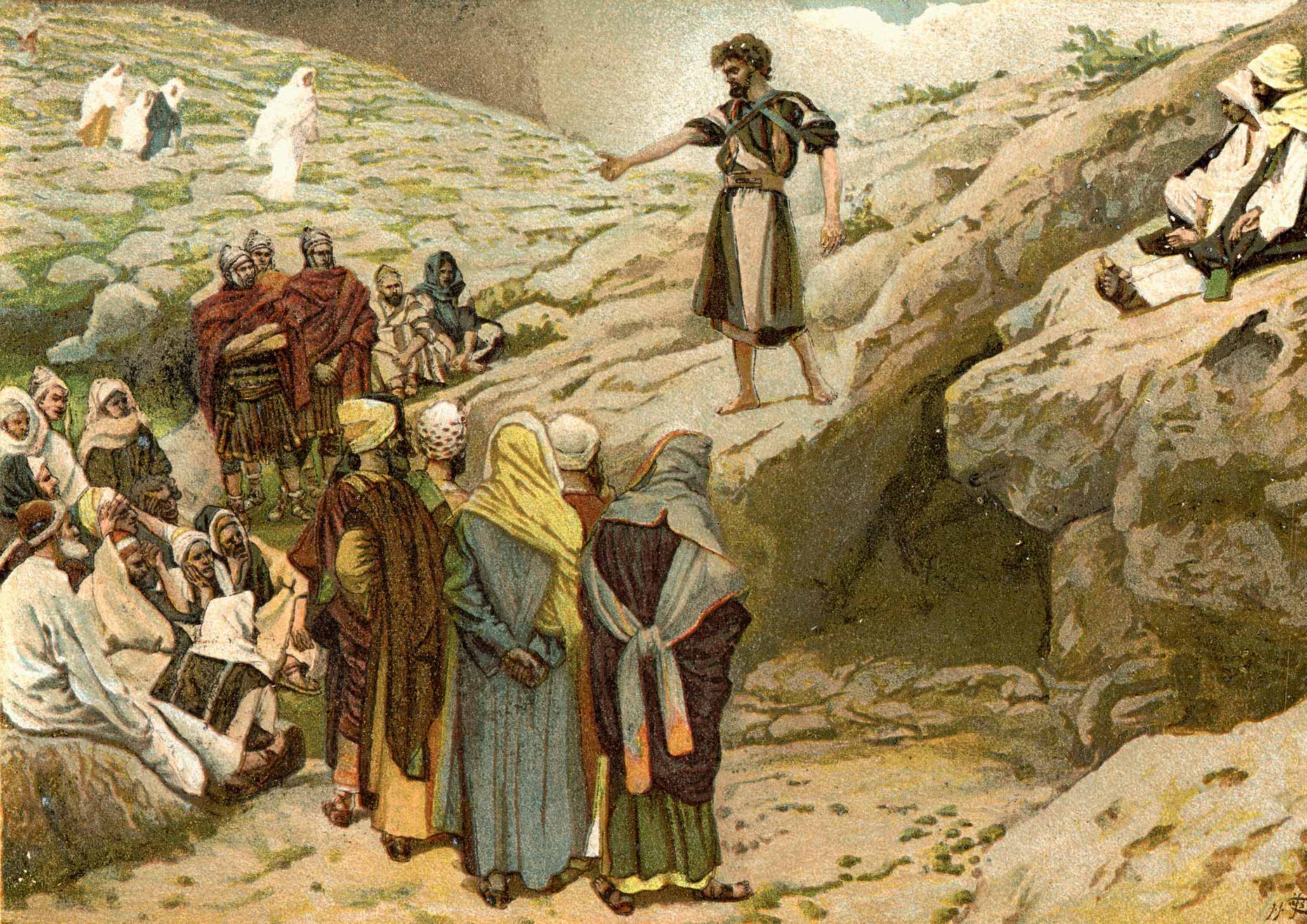
Jewish society during the Second Temple period was diverse, divided into distinct sects such as the Pharisees, Sadducees, Essenes, and Zealots. While the Sadducees maintained control over the Jerusalem Temple aristocracy and the Pharisees emphasized meticulous adherence to oral and written Torah laws, John chose the Judean wilderness as his primary platform. The wilderness carried deep symbolism in Israelite history, evoking memories of the Exodus, spiritual purification, and divine encounter.
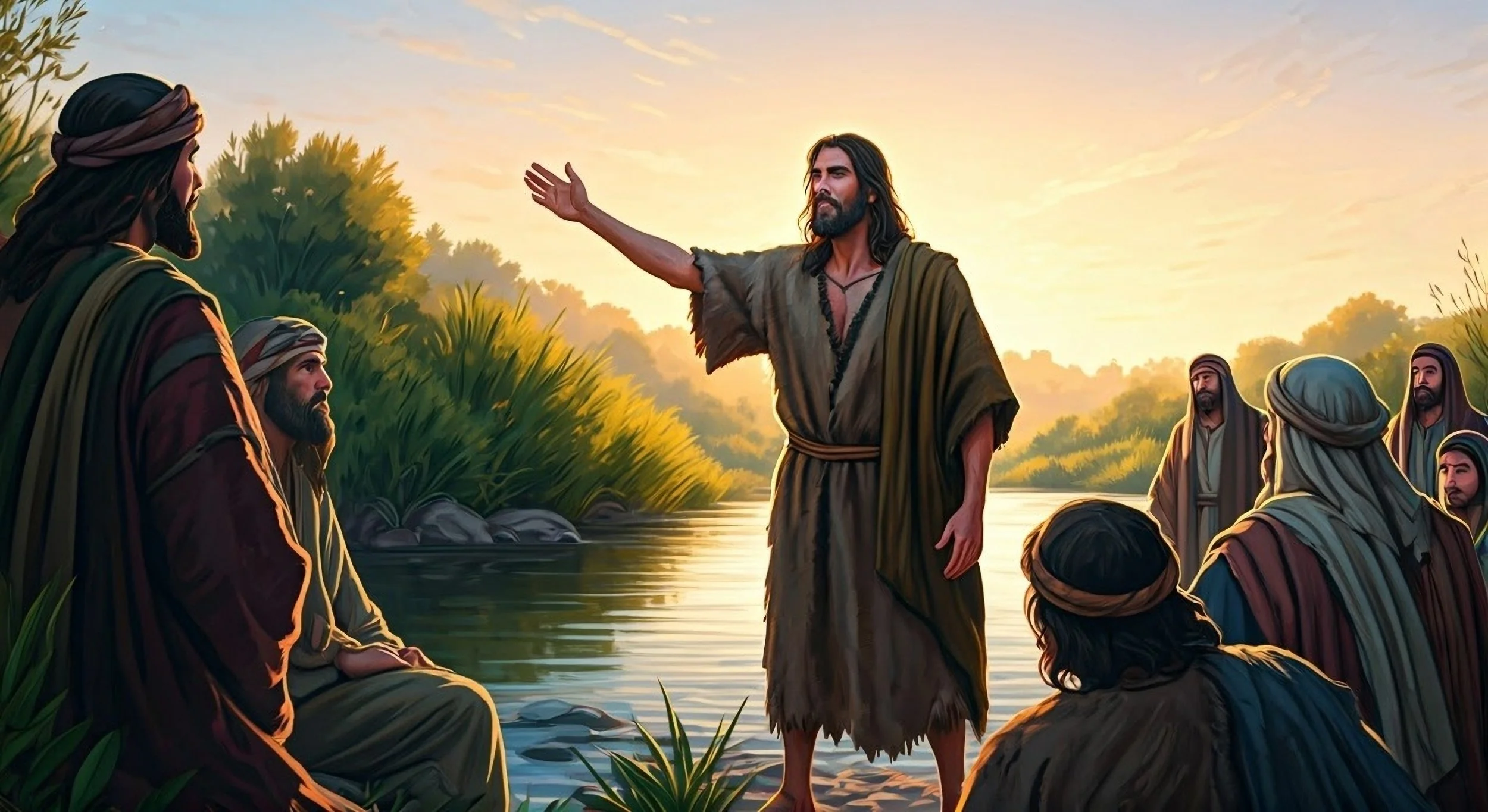
John’s self-conception and message drew heavily upon Hebrew prophetic literature, particularly the Book of Isaiah and the Book of Malachi. By adopting an ascetic lifestyle—wearing clothes of camel’s hair, securing a leather belt, and consuming locusts and wild honey—John explicitly modeled his appearance after the prophet Elijah (2 Kings 1:8). This visual identity aligned with the prophecy in Malachi 4:5–6, which anticipated the return of an Elijah-like figure before the arrival of the "great and awesome day of the Lord."
- Prophetic Promise (Isaiah / Malachi)
- Wilderness Preaching & Asceticism
- Repentance & Immersion (Water Baptism)
- Announcement of the Greater One (Messiah)
Furthermore, John’s movement shared structural similarities with other contemporary Jewish renewal groups, such as the Qumran community associated with the Dead Sea Scrolls. Both emphasized withdrawal to the wilderness, ritual washing, and apocalyptic expectations. However, unlike the secluded community at Qumran, John’s preaching was public, calling all Israel—including tax collectors, soldiers, and religious leaders—to immediate moral reformation.
Core Pillars of John the Baptist's Teaching
John’s proclamations were structured around four key theological and practical pillars: radical repentance, imminent divine judgment, practical social ethics, and the heraldic announcement of the Messiah.
Repentance (Metanoia) and Baptism
At the heart of John's proclamation was the command to repent. In the original Greek of the New Testament Gospels, the word used for repentance is metanoia, which denotes a fundamental change of mind, orientation, and life direction rather than mere emotional regret. In Hebrew prophetic thought, this corresponds to teshuvah—turning away from sin and returning to God.
Unlike the repeatable ritual purifications common in Jewish ritual baths (mikva'ot) or the daily ceremonial ablutions of the Essenes, John’s baptism was typically a unique, unrepeatable act of public commitment. Administered in the Jordan River, this immersion signified:
- Public Confession: Open acknowledgement of personal and collective sin.
- Purification and Forgiveness: A cleansing ritual preparing the individual for God’s coming kingdom.
- Egalitarian Renewal: Demonstrating that physical ancestry from Abraham was insufficient for divine favor without genuine internal transformation.
Imminent Divine Judgment and the Coming Kingdom
John preached an unyielding message of apocalyptic urgency. He warned that God's judgment was not a distant event but an immediate reality. Using vivid agrarian imagery common to first-century Palestine, John emphasized the absolute necessity of producing spiritual fruit:
- The Axe at the Root: John declared that "the axe is already at the root of the trees," warning that every tree failing to produce good fruit would be cut down and thrown into the fire (Luke 3:9).
- The Winnowing Fork: He depicted the coming judgment through the metaphor of threshing grain, where the Messiah would separate the wheat (the righteous) from the chaff (the unrepentant), burning the chaff with unquenchable fire.
This warning challenged the popular assumption among some contemporary religious elites that covenant membership or ancestral lineage guaranteed divine protection.
| Symbol | Theological Meaning |
|---|---|
| Axe at the Root | Immediate, inescapable divine judgment |
| Fruitful Trees | Lives marked by genuine repentance |
| Winnowing Fork | Separation of the righteous and ungodly |
| Unquenchable Fire | Ultimate destruction of unrepentant sin |
Practical Social Ethics and Moral Integrity
While John’s message carried strong apocalyptic themes, his ethical requirements were remarkably grounded and practical. When crowds asked, "What then should we do?" (Luke 3:10–14), John did not instruct them to abandon society or join a monastic desert community. Instead, he demanded radical ethical integrity within their existing vocations:
- General Populace: Anyone with two tunics or extra food was commanded to share with those who had none, promoting community welfare and economic mercy.
- Tax Collectors (Publicani): Frequently despised for systemic extortion, tax collectors were instructed to collect no more than the standard legal rate, targeting financial corruption.
- Soldiers: Instructed not to extort money by threat or false accusation and to be content with their pay, directly condemning the abuse of military authority.
Through these directives, John demonstrated that true repentance must manifest in concrete actions of social justice, fairness, and honesty.
The Herald of the Messiah
John consistently maintained a subordinate role relative to the figure whose arrival he proclaimed. He clearly distinguished between his own preparatory ministry and the decisive work of the coming Messiah:
"I baptize you with water for repentance, but one who is more powerful than I is coming after me; I am not worthy to carry his sandals. He will baptize you with the Holy Spirit and fire." (Matthew 3:11)
In first-century Jewish culture, removing or carrying a master's sandals was a task reserved for the lowest household servants. By claiming unworthiness to perform even this basic task for the coming one, John emphasized the supreme authority of the Messiah. In the Gospel of John, he further encapsulates his mission in the statement: "He must increase, but I must decrease" (John 3:30).
Comparative Analysis: John the Baptist, Jesus, and Second Temple Groups
To understand John's unique position in religious history, it is valuable to compare his teachings and practices with those of Jesus of Nazareth, the Qumran Community, and the Pharisees.
| Feature / Dimension | John the Baptist | Jesus of Nazareth | Qumran Community (Essenes) | Pharisaic Tradition |
|---|---|---|---|---|
| Primary Location | Judean Wilderness / Jordan | Towns, villages, Galilee, Jerusalem | Desert monastic community (Dead Sea) | Urban centers and village synagogues |
| Baptismal Practice | Single, public immersion for repentance | Administered via disciples; spiritual rebirth | Daily, private ritual purification washes | Periodic ritual ablutions (mikveh) for purity |
| Social Engagement | Addressed all classes; ascetic lifestyle | Dined with sinners; accessible, communal | Strict separation from non-members | Selective fellowship focused on purity rules |
| Core Message | Imminent judgment; prepare via repentance | Kingdom of God has arrived; grace and faith | Apocalyptic war of Light vs. Darkness | Strict observance of Written & Oral Law |
| Ethical Focus | Justice, sharing, honest work | Love of enemy, internal heart transformation | Monastic discipline, communal ownership | Legal precision, ritual and moral purity |
Social and Political Impact of John's Preaching
John’s teaching was not limited to individual spiritual renewal; it had profound social and political ramifications across Judea and Perea. His fearless public critique ultimately brought him into direct conflict with both religious leadership and imperial ruling authorities.
Confronting Religious Institutions
When prominent members of the Pharisees and Sadducees came to his baptismal site, John openly challenged their spiritual security, calling them a "brood of vipers" (Matthew 3:7). He warned against relying on patriarchal heritage, stating that God could raise up children for Abraham from the surrounding stones. By decoupling divine favor from Temple rituals and hereditary privilege, John challenged the established religious hierarchy of Jerusalem.
Rebuking Political Power and Execution
John’s moral uncompromising stance extended to the highest political offices. He publicly denounced Herod Antipas, the tetrarch of Perea and Galilee, for marrying Herodias, the former wife of his half-brother Herod Philip. This marriage violated Levitical law (Leviticus 18:16; 20:21) and caused significant political instability with the neighboring Nabataean kingdom, as Herod had divorced his first wife, the daughter of Nabataean King Aretas IV.
According to the Synoptic Gospels, Herod Antipas imprisoned John at the fortress of Machaerus to silence his public denunciations. Herodias sought John's death, which was eventually carried out by decapitation during a royal banquet.
The first-century Jewish historian Flavius Josephus corroborates John’s history in his work Antiquities of the Jews (Book 18, Chapter 5, Section 2). Josephus writes that John was a righteous man who commanded the Jews to exercise virtue, righteousness toward one another, and piety toward God. Josephus notes that Herod feared John's immense influence over the populace might lead to a rebellion, which prompted his execution at Machaerus:
"Herod, who feared lest the great influence John had over the people might put it into his power and inclination to raise a rebellion... thought it best, by putting him to death, to prevent any mischief he might cause."
The Historical Legacy of John's Teaching
John the Baptist’s teaching created a movement that survived his execution and influenced several religious traditions across centuries.
Impact on Early Christianity
John's ministry served as the direct prologue to the public ministry of Jesus. Jesus himself was baptized by John in the Jordan River, an event marked in Christian theology as a key moment of divine revelation. Jesus praised John extensively, declaring that "among those born of women there has not risen one greater than John the Baptist" (Matthew 11:11).
The Book of Acts records that John’s teachings spread widely across the Mediterranean region. In Acts 18:24–25, an eloquent preacher named Apollos is described as teaching accurately about Jesus while knowing only the baptism of John. Similarly, in Acts 19:1–7, the Apostle Paul encountered disciples in Ephesus who had received only John’s baptism, illustrating that distinct communities of John's followers persisted for decades alongside the expanding early Church.
The Mandaean Tradition
A unique historical legacy of John the Baptist exists within Mandaeism, a gnostic, monotheistic religion originating in the Near East. Mandaeans regard John the Baptist (Yahana bar Ram) as their greatest and final prophet. They continue to practice frequent ritual immersions (masbuta) in running river water ("white water"), preserving liturgical elements linked historically to the baptismal traditions of the first century.
Core Elements of John the Baptist's Proclamation
To summarize the core teachings of John the Baptist, his message can be broken down into five distinct points:
- Universal Call to Repentance: No individual is exempt; ancestral heritage offers no protection against divine scrutiny.
- Sacramental Sign of Water Immersion: Baptism serves as an outward public seal of an inward moral decision to abandon sin.
- Vocation-Specific Integrity: True faith manifests through honest business practices, fair governance, and sharing material resources.
- Warning of Immediate Judgment: Time is limited; individuals must produce measurable moral and spiritual fruit.
- Christological Witness: Pointing beyond himself to the Messiah, who would bring the baptism of the Holy Spirit and divine judgment.
Frequently Asked Questions
What was the main purpose of John the Baptist's baptism?
John’s baptism was an outward, public symbol of inward repentance (metanoia) for the forgiveness of sins. It prepared individuals for the immediate coming of God's Kingdom and the arrival of the Messiah. Unlike routine Jewish ritual washings, John’s baptism was typically a non-repeatable act of moral reorientation.
How did John the Baptist's teachings differ from those of Jesus?
While John emphasized impending judgment, the urgent need for repentance, and ascetic wilderness preparation, Jesus emphasized the present reality of the Kingdom of God, divine grace, unconditional forgiveness, and active table fellowship with sinners. John pointed toward the coming Messiah, whereas Jesus claimed to fulfill messianic prophecies.
What practical lifestyle rules did John teach the crowds?
John taught practical social ethics based on fairness and charity. He instructed the general public to share surplus clothing and food with the needy, ordered tax collectors to stop charging beyond legal rates, and commanded soldiers to refrain from extortion and be content with their wages.
Why did Herod Antipas arrest and execute John the Baptist?
According to biblical accounts, John publicly rebuked Herod Antipas for illegally marrying Herodias, his brother’s wife. Historian Flavius Josephus adds that Herod also feared John's widespread popularity and political influence could spark a popular uprising.
Did John the Baptist found a distinct movement that outlived him?
Yes. Communities of John's disciples continued long after his death across Palestine, Asia Minor, and Egypt, as recorded in the Book of Acts. Furthermore, the Mandaean community of the Middle East continues to honor John as their principal prophet and practices frequent river baptisms to this day.
Practical Takeaways for Contemporary Readers
Analyzing the historical and theological legacy of John the Baptist provides clear insights into first-century history and moral philosophy:
- Examine Internal Motivation: John's teaching highlights that external ritual is meaningless without genuine internal transformation and ethical living.
- Practice Vocation-Based Ethics: Rather than requiring radical withdrawal from society, moral integrity is demonstrated in daily life—through fairness in business, justice in governance, and generosity to those in need.
- Understand Historical Context: Recognizing the distinction and overlap between John’s wilderness movement, the Qumran community, and early Christianity offers a clearer understanding of the diverse religious landscape of Second Temple Judaism.
Image Gallery