Understanding EB-2 I-485 Processing Times: Timeline, Factors, and Guidance
For Employment-Based Second Preference (EB-2) applicants, the average processing time for Form I-485 (Application to Register Permanent Residence or Adjust Status) typically ranges between 8 to 24 months. However, your exact timeline d...
For Employment-Based Second Preference (EB-2) applicants, the average processing time for Form I-485 (Application to Register Permanent Residence or Adjust Status) typically ranges between 8 to 24 months. However, your exact timeline depends heavily on USCIS field office workloads, priority date availability under the Department of State Visa Bulletin, background checks, and whether an interview is required.
Contents
Form I-485 and the EB-2 Visa Category
Form I-485 is the final administrative step for an foreign national located inside the United States to transition from a non-immigrant status (such as H-1B, L-1, or O-1) to lawful permanent resident (Green Card holder) status. The EB-2 immigrant classification applies to foreign nationals with advanced degrees or exceptional ability in the sciences, arts, or business.
In standard EB-2 cases, the employer must first secure an approved Program for Electronic Review Management (PERM) labor certification from the U.S. Department of Labor (DOL) before filing Form I-140 (Immigrant Petition for Alien Workers) with U.S. Citizenship and Immigration Services (USCIS). In contrast, EB-2 National Interest Waiver (NIW) applicants can self-petition and bypass the PERM requirement by demonstrating that their proposed endeavor has substantial merit, national importance, and that waiving the job offer requirement benefits the United States.
Regardless of whether an EB-2 petition relies on a traditional PERM or an NIW, Form I-485 cannot be approved until a visa number is immediately available to the applicant based on their Priority Date and country of birth.
Average EB-2 I-485 Processing Timelines
Processing times for Form I-485 vary depending on how USCIS routes the application, the applicant's designated field office, and broader agency backlogs.
| Timeframe | Milestone |
|---|---|
| Month 0 | Form I-485 Filing & Receipt Notice Issued |
| Month 1 - 2 | Biometrics Appointment (Fingerprinting & Photo) |
| Month 3 - 8 | EAD / Advance Parole Work & Travel Authorization (If Requested) |
| Month 8 - 18 | Background Security Checks & Document Adjudication |
| Month 12 - 24 | Final Interview (If Required) or Interview Waiver & Approval |
While the average adjudication period spans 8 to 24 months, individual experiences differ significantly based on operational factors:
- Service Center Initial Review: When first submitted, I-485 filings are sent to a designated USCIS Lockbox and then routed to a service center (such as the Texas Service Center or Nebraska Service Center) or the National Benefits Center (NBC). Initial data entry, receipt generation, and biometrics scheduling occur at this stage.
- Field Office Transfer: Most employment-based I-485 applications are eventually transferred to a local USCIS field office corresponding to the applicant’s place of residence. If the field office is located in a high-density metropolitan area with heavy backlogs, processing times can skew toward the upper end of the 12 to 24+ month range.
- Interview Waiver Trends: USCIS waives personal interviews for a substantial majority of employment-based I-485 applicants whose records show clear eligibility, sufficient documentation, and clean background checks. When an interview is waived, cases processed directly through the National Benefits Center or fast-tracked field offices are frequently approved within 8 to 12 months.
To view current agency processing estimates for your specific location, consult the official USCIS Processing Times tool.
Critical Factors Influencing Your Processing Speed
Understanding why one EB-2 I-485 application takes 8 months while another takes 20 months requires examining the structural and regulatory variables that govern USCIS adjudications.
1. Priority Date Availability and the Visa Bulletin
The single most influential factor in your total timeline is whether your Priority Date remains continuously "current." The U.S. Department of State publishes a monthly Visa Bulletin establishing cut-off dates based on immigrant preference categories and country of chargeability (country of birth).
- Final Action Dates: USCIS cannot grant final approval for an I-485 application unless the applicant’s priority date is earlier than the Final Action Date listed in the active Visa Bulletin for their category and country.
- Retrogression Delays: If the Department of State retrogresses (moves backward) the cut-off date while your I-485 is pending, USCIS must place your application in a paused status known as statutory hold. Your file cannot be approved until your priority date becomes current again, regardless of how long the application has been pending or whether all background checks are completed.
2. Standalone vs. Concurrent Filing
Applicants have two main filing options for Form I-140 and Form I-485:
- Concurrent Filing: Filing Form I-140 and Form I-485 simultaneously when the priority date is current. While this allows applicants to apply early for interim benefits—such as Employment Authorization Documents (EAD) and Advance Parole (AP)—the I-485 cannot be adjudicated until the underlying I-140 petition is approved.
- Standalone Filing: Filing Form I-485 after Form I-140 has already been approved. Standalone applications often proceed smoothly through initial processing because the underlying immigrant preference classification is already established.
3. Background Security Clearance and FBI Name Checks
Every adjustment of status applicant undergoes mandatory security checks, including biometrics collections, criminal record checks, and interagency security screening. Most clearances resolve automatically within weeks. However, if an applicant's name matches a record in a security database, manual review by external agencies (such as the FBI or Department of Homeland Security) can add months to the I-485 timeframe.
4. Requests for Evidence (RFE) and Notices of Intent to Deny (NOID)
If USCIS determines that your submission lacks required documentation, the officer will issue a Request for Evidence (RFE). Common EB-2 I-485 RFEs request:
- Form I-693 (Report of Immigration Medical Examination and Vaccination Record).
- Updated Supplement J (Confirmation of Bona Fide Job Offer or Request for Job Portability).
- Tax returns, W-2s, and recent pay stubs verifying continuous legal status in the U.S.
Receiving an RFE stops the processing clock until USCIS receives and processes your response, typically adding 60 to 120 days to the total timeline.
Phase-by-Phase Timeline of the EB-2 I-485 Process
Tracking your application requires understanding the key milestones from filing to green card delivery.
- Filing & Receipt
- Biometrics Appointment
- Interim Benefits (EAD/AP)
- Adjudication/Interview
- Approval & Card Production
Phase 1: Receipt Notice and Biometrics (Months 1 – 3)
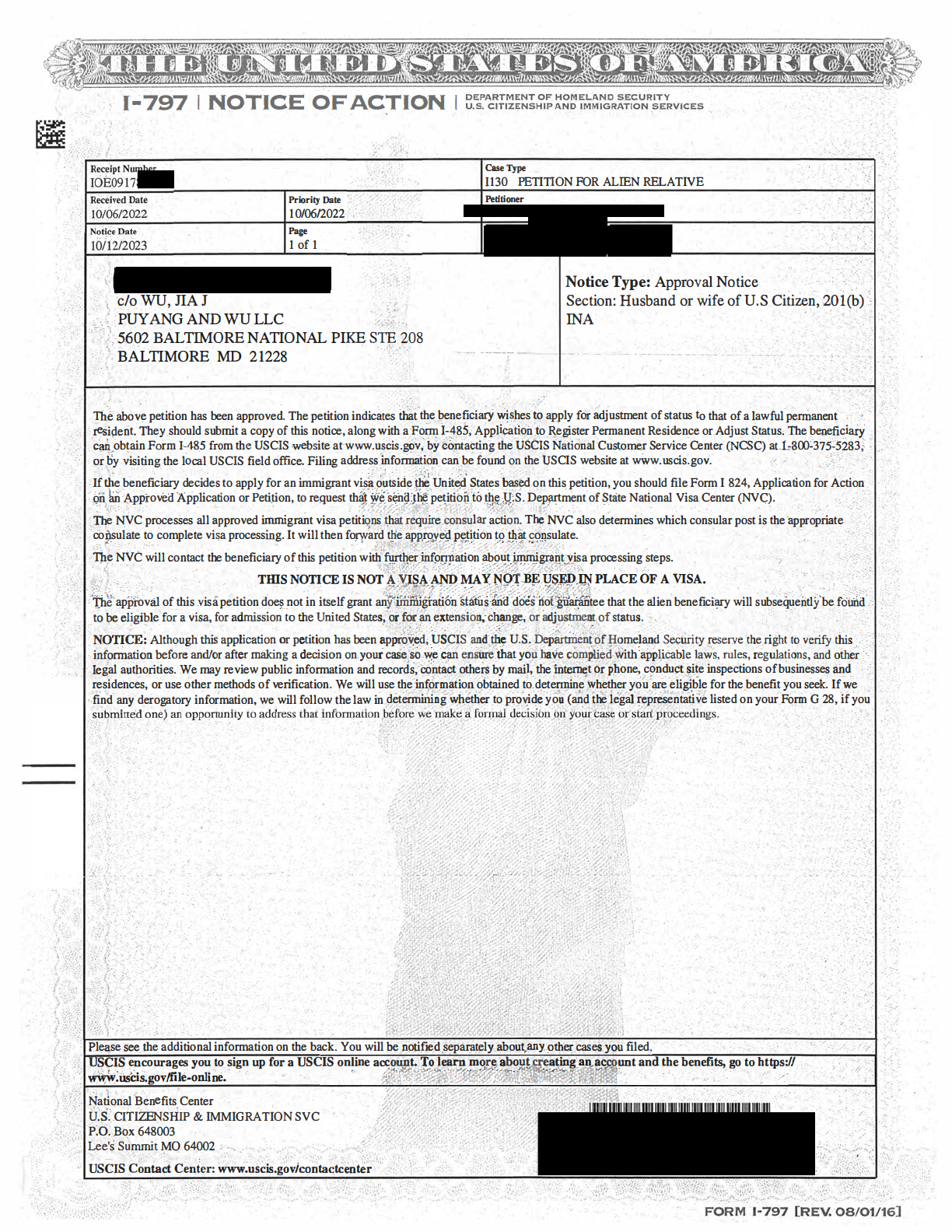
Within 2 to 4 weeks after mailing your I-485 packet, USCIS issues a Form I-797C, Notice of Action, confirming receipt of your application and assigning a unique 13-character receipt number. Approximately 3 to 6 weeks later, USCIS schedules a Biometrics Appointment at a local Application Support Center (ASC) to capture your fingerprints, photograph, and signature.
Phase 2: Interim Work and Travel Authorization (Months 3 – 8)
If you filed Form I-765 (Application for Employment Authorization) and Form I-131 (Application for Travel Document) alongside your I-485, USCIS processes these interim benefits independently of the main green card application.
Upon approval, USCIS issues an Employment Authorization Document (EAD) card or a combined EAD/Advance Parole card. This authorization permits you to work for U.S. employers and travel internationally while your I-485 remains under review.
Phase 3: Supplement J Verification and Medical Examination (Months 6 – 12)
If you filed your I-485 without including Form I-693 (Medical Exam), or if your underlying employment circumstances change under AC21 job portability rules, USCIS will issue an RFE during this period. Submitting Form I-693 signed by a designated Civil Surgeon promptly prevents processing delays.
Phase 4: Final Adjudication and Card Issuance (Months 8 – 24)
Once security clearances clear and your priority date is fully current, an adjudicating officer reviews the file. If an interview is required, your case transfers to your local field office, and an interview notice is mailed 30 to 45 days in advance. If the interview is waived, the officer completes the review directly.
Upon approval, your status changes in the USCIS Case Status Online system to "Card Was Ordered," and your Physical Green Card arrives by mail within 7 to 14 days.
Summary Comparison of I-485 Factors and Milestones
The following table outlines the major steps, standard timeframes, and key factors impacting EB-2 adjustment of status applications:
| Stage / Element | Typical Timeframe | Key Requirements & Dependencies | Common Causes for Delay |
|---|---|---|---|
| Receipt Notice (Form I-797C) | 2 – 4 Weeks | Valid packet delivery to USCIS Lockbox | Lockbox processing volume, fee errors |
| Biometrics Appointment | 3 – 8 Weeks | Attendance at local Application Support Center | Scheduling backlogs, address changes |
| Interim EAD / AP Card | 3 – 8 Months | Filed Forms I-765 and I-131 alongside I-485 | Separate agency processing streams |
| Form I-140 Approval | Varies (15 days via Premium to 6+ months standard) | Approved underlying EB-2 petition | Standard (non-premium) I-140 delays |
| Request for Evidence (RFE) | Response window: 30 – 87 days | Timely submission of medicals (I-693) or Supplement J | Missing documents, medical exam errors |
| Final I-485 Adjudication | 8 – 24 Months | Current Priority Date; completed background checks | Retrogression, field office backlogs, interview queue |
How to Address Unreasonable Processing Delays
If your Form I-485 exceeds the estimated processing timeframe published by USCIS, several administrative and legal mechanisms are available to prompt case action.
1. Submit an e-Request for Case Outside Normal Processing Time
USCIS provides an online service portal allowing applicants to submit an official inquiry once their case passes the target processing threshold. To check whether your case qualifies, enter your receipt number and field office details into the USCIS Processing Times calculator. If eligible, submit a "Case Outside Normal Processing Time" inquiry through the online portal.
2. Contact the USCIS Ombudsman’s Office
The Office of the Citizenship and Immigration Services Ombudsman is an independent division within Homeland Security that assists applicants in resolving administrative bottlenecks. If your e-Request yields no substantive update after 30 days, you can file Form DHS-7001 to request case assistance from the Ombudsman.
3. Seek Congressional Inquiry
U.S. citizens and lawful residents can contact their local Congressional Representative or U.S. Senator's office to request a constituent inquiry on their pending immigration application. Congressional liaisons maintain dedicated channels with USCIS field offices to request status updates on delayed applications.
4. File a Writ of Mandamus Lawsuit
When an I-485 application experiences extraordinary, unreasonable delay—typically pending for 18 to 24 months or more without statutory hold—applicants may file a Writ of Mandamus lawsuit in U.S. District Court. This federal court action petitions a federal judge to order USCIS to perform its administrative duty and render a decision on the pending application. Mandamus lawsuits do not force an approval; rather, they compel USCIS to make a formal determination on the case.
Actionable Steps for EB-2 Applicants
To keep your EB-2 adjustment of status application progressing smoothly, follow these operational best practices:
- Monitor the Visa Bulletin Monthly: Review both the Dates for Filing and Final Action Dates charts released by the Department of State every month to anticipate retrogression or forward movement.
- Submit Complete Medical Records Early: Include a valid, sealed Form I-693 signed by a USCIS-designated Civil Surgeon at the time of your initial filing (or immediately upon receiving an RFE) to avoid extra processing cycles.
- Maintain Lawful Non-Immigrant Status: Keep your underlying work visa status (such as H-1B or L-1) active while your I-485 is pending. Maintaining underlying status provides a safety net if your adjustment application encounters unexpected issues.
- Promptly Report Address Changes: Inform USCIS within 10 days of moving by submitting Form AR-11 online. Failure to update your address can result in missed interview notices or lost Green Cards.
Frequently Asked Questions
Can premium processing speed up my EB-2 I-485 application?
No. Premium processing (Form I-907) is available only for Form I-140 immigrant petitions, not Form I-485 adjustment of status applications. While paying for premium processing accelerates your underlying I-140 approval to 15 calendar days (or 45 days for NIW), your Form I-485 will still adhere to standard agency processing timelines.
Does changing jobs under AC21 affect my I-485 processing time?
Porting your job to a new employer under American Competitiveness in the Twenty-First Century (AC21) guidelines requires submitting Form I-485 Supplement J. While reviewing Supplement J adds an administrative verification step, it generally does not cause significant processing delays provided your new position is in the same or a similar occupational classification.
What happens to my I-485 if my priority date retrogresses?
If the Department of State moves the priority date cut-off backward so that your date is no longer current, USCIS cannot approve your I-485. Your application will remain in a pending "statutory hold" state. You retain your pending applicant benefits—including EAD work permission and Advance Parole travel authorization—until your priority date becomes current again and final adjudication resumes.
Is an interview mandatory for all EB-2 I-485 applicants?
No. USCIS waives the personal interview requirement for many employment-based adjustment applicants when the submitted documentation clearly establishes eligibility, employment authorization is clear, and background security checks reveal no disqualifying factors or concerns.
Can I travel outside the United States while my EB-2 I-485 is pending?
You should not depart the United States without either an approved Advance Parole document (Form I-512L / combo card) or valid, unexpired dual-intent visa status (such as H-1B or L-1). Departing the country without proper travel clearance causes USCIS to consider your Form I-485 abandoned.
Final Guidance and Next Actions
Navigating the EB-2 adjustment of status process requires managing dual tracks: tracking your priority date against the monthly Visa Bulletin and monitoring USCIS field office processing cycles. To avoid unnecessary delays, ensure all documentation—including medical exams, employment verification letters, and status history records—is thorough and up to date.
If your application remains pending past standard published timelines, check your case status online, submit a formal e-Request inquiry, or consult a qualified U.S. immigration attorney to evaluate options such as Ombudsman assistance or judicial intervention.
Disclaimer: U.S. immigration policy and administrative procedures are subject to frequent regulatory updates. This article provides general educational information and does not constitute formal legal representation. For specific legal counsel regarding your adjustment of status application, consult an experienced, licensed immigration attorney.
Image Gallery