Marvin Agustin Net Worth: How the Actor Built a Culinary Empire
Marvin Agustin has an estimated net worth of $5 million to $10 million (approximately ₱280 million to ₱560 million PHP) as of 2026. While he earned substantial income as a top-tier actor and matinee idol in the Philippines, the majorit...
Marvin Agustin has an estimated net worth of $5 million to $10 million (approximately ₱280 million to ₱560 million PHP) as of 2026. While he earned substantial income as a top-tier actor and matinee idol in the Philippines, the majority of his long-term wealth stems from his extensive portfolio of restaurant chains, hospitality ventures, and food delivery platforms.
Contents
Financial Overview: How Marvin Agustin Accumulated Wealth
Marvin Agustin (born Marvin Jay Cuyugan Agustin on January 29, 1979) represents a rare, highly successful transition from mainstream entertainment idol to high-volume restaurateur and food service mogul in the Philippines. Unlike many public figures who rely solely on brand endorsements or real estate passive income, Agustin built scalable corporate entities within the food and beverage (F&B) industry.
- Marvin Agustin Financial Profile
- Entertainment Income
- Film & Television Contracts
- Commercial Endorsements
- Event & Digital Monetization
- Business Equity & F&B
- SumoSam Group Partnerships
- Independent Cloud Kitchens
- Premium Culinary Brands
- Entertainment Income
His wealth breakdown reflects two distinct financial eras:
- The Entertainment Phase (Late 1990s–2000s): High-volume television network exclusivity contracts, blockbuster film royalties, live concert tours, and prime commercial product endorsements.
- The Enterprise & Hospitality Phase (Late 2000s–Present): Founder and multi-brand partner in hospitality groups, cloud kitchens, premium bakery concepts, and international franchise partnerships.
Because Agustin’s corporate holdings are structured under private business groups and joint ventures rather than publicly traded entities, exact net worth figures remain unlisted on formal stock exchanges. Independent media reporting, industry estimates, and hospitality sector valuations consistently place his cumulative net worth between $5 million and $10 million.
The Entertainment Foundation: Prime Acting Earnings and Endorsements
Before establishing his footprint in commercial kitchens, Marvin Agustin was one of the most commercially viable young actors in Philippine television and cinema.
Television Network Contracts and Film Franchise Revenues
Agustin’s career began in the mid-1990s when he joined ABS-CBN’s Talent Center (now Star Magic). As part of youth-oriented shows like Gimik and prime-time dramas, he quickly became a staple of Philippine pop culture. His romantic pairing with actress Jolina Magdangal formed one of the most profitable "love teams" in Philippine entertainment history, driving massive box-office receipts for feature films produced by Star Cinema, including Labs Kita... Okey Ka Lang? (1998) and Hey Babe! (1999).
During the peak of his television career, high-profile actors under network contracts secured substantial monthly retainers, per-episode talent fees, and performance bonuses. Agustin later transferred to GMA Network in the mid-2000s, landing leading roles in major drama series such as Mulawin and I Luv NY, before eventually taking on projects across multiple networks. These multi-year contracts provided the liquidity and initial capital required to seed his early business ventures.
Commercial Brand Partnerships
As a household name, Agustin secured long-term endorsement contracts with national consumer goods, apparel brands, and food products. Endorsement deals in the Philippines often provide lump-sum upfront cash payouts alongside performance bonuses. Rather than liquidating these earnings into lifestyle assets, Agustin systematically diverted his entertainment compensation into business education and venture seed money.
The Culinary Transition: Formal Education and Early Ventures
Agustin’s transition into business was deliberate rather than speculative. Recognizing that celebrity status alone does not ensure business longevity in the competitive F&B sector, he sought formal culinary training.
- Early Waiter Experience
- ISCAHM Culinary Education
- SumoSam Launch (2005)
- Multi-Brand Expansion
Strategic Education at ISCAHM
Early in his youth, prior to entering show business, Agustin worked as a waiter at a local restaurant chain. This early exposure to restaurant operations fueled a long-term passion for hospitality.
At the height of his acting career, Agustin enrolled in the International School for Culinary Arts and Hotel Management (ISCAHM) in Manila. He completed formal studies in culinary arts and kitchen management, gaining technical skills in:
- Commercial kitchen workflow design
- Food cost accounting and yield management
- Menu planning and inventory management
- Food safety and sanitation protocols
This technical background enabled him to talk directly with head chefs, negotiate supplier contracts, and analyze prime cost margins rather than operating merely as a celebrity figurehead.
The Rise of SumoSam and Restaurant Holdings
In 2005, Agustin co-founded SumoSam, a Japanese-American fusion restaurant concept, alongside business partners Ricky Laudico and Raymund Magdaluyo. The initial location targeted high-foot-traffic commercial centers in Metro Manila.
SumoSam hit a sweet spot in the Philippine dining market by offering accessible, high-volume Japanese dining tailored to local tastes. The brand expanded rapidly across major shopping malls throughout Luzon, Visayas, and Mindanao.
The success of SumoSam served as the foundation for broader multi-brand expansion under affiliated hospitality management entities. Agustin and his partners developed, co-owned, or operated numerous restaurant brands, including:
- SumoSam: Japanese fusion dining chain.
- John and Yoko: Modern Japanese dining aimed at cosmopolitan urban centers.
- Mr. Kurosawa: Euro-Japanese concept dining.
- Marciano's: Italian-American fine dining.
- Akira: Teppanyaki and Japanese steakhouse concept.
- Banzai: Massive scale international buffet concept.
By scaling these concepts across dozens of mall locations, Agustin’s business groups built a sustainable revenue model driven by steady foot traffic and corporate catering services.
Modern Business Diversification: Cloud Kitchens and Artisan Brands
In recent years, Agustin adapted his business model to fit changing consumer habits, shifting toward direct-to-consumer e-commerce, cloud kitchens, and premium niche culinary products.
- Modern Ventures Portfolio
- Direct-to-Consumer (By Marvin Agustin)
- Cloud Kitchen Platforms (Secret Kitchen)
- International Franchise Operations
Secret Kitchen and Digital Food Platforms
Recognizing the shift toward online delivery services, Agustin co-founded Secret Kitchen, a cloud kitchen enterprise. Cloud kitchens operate centralized culinary facilities optimized exclusively for online delivery, eliminating the heavy overhead costs of traditional dine-in real estate, front-of-house staff, and expensive interior fit-outs.
Secret Kitchen operates multiple virtual food brands under one roof, leveraging shared inventory and kitchen labor to maximize operational efficiency and profit margins per square meter.
"By Marvin Agustin" Personal Food Brands
During periods of restaurant dine-in restrictions, Agustin developed personal artisanal food products operating directly out of his home kitchen before scaling up commercial production.
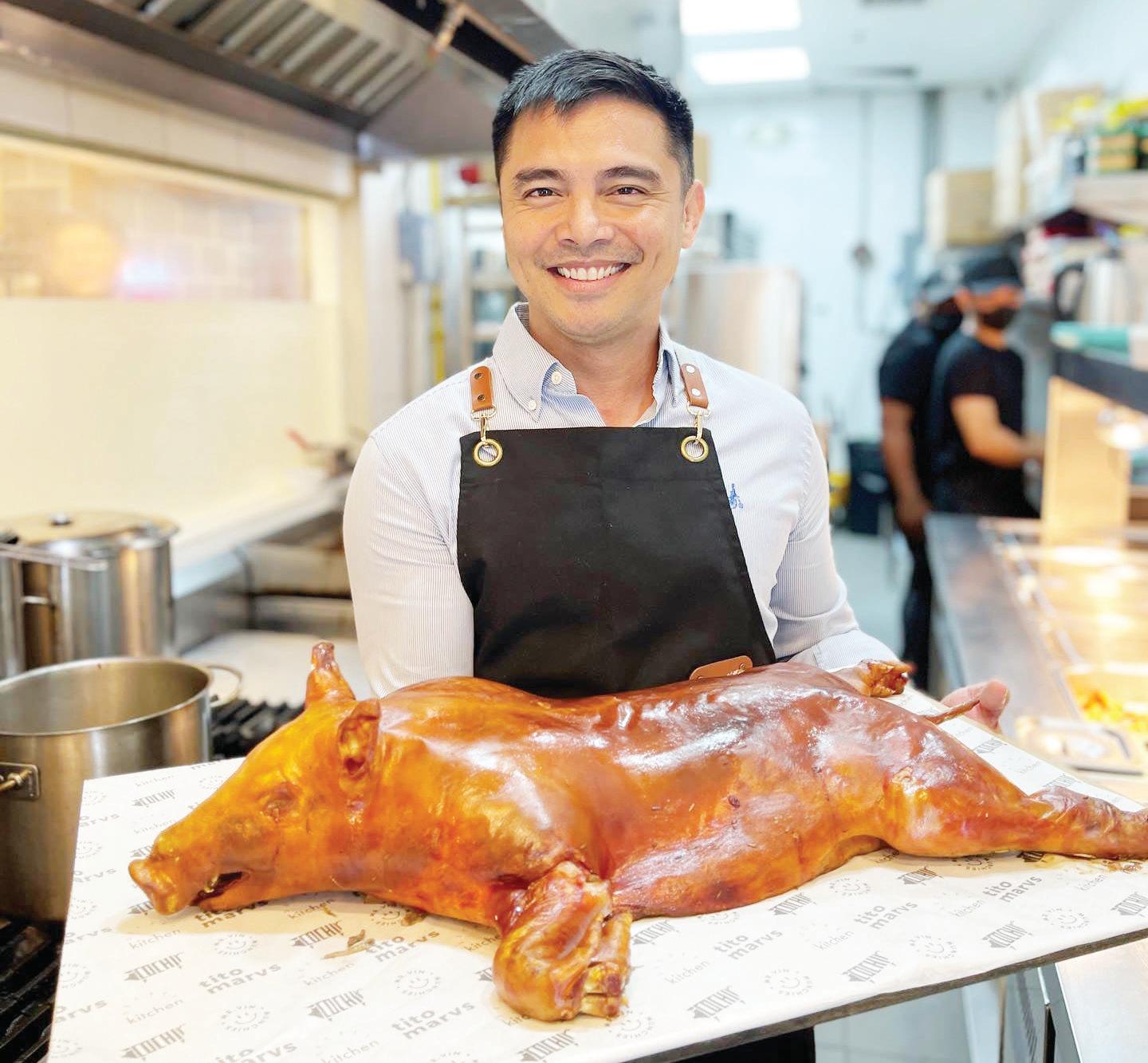
His most notable creation, Cochinillo (roast pig cooked to high crispiness standards), became a viral culinary trend in Metro Manila. Priced as a premium luxury food item for holidays and family celebrations, Agustin leveraged his personal social media platform to drive direct-to-consumer orders without relying on third-party marketing agencies.
His product line expanded into specialized baked goods, including artisan secret cakes, banana loaves, and specialty pastries, establishing a high-margin enterprise that relies on pre-order cash flows and limited inventory waste.
Partnerships and Corporate Holdings
Beyond his home-grown ventures, Agustin has engaged in strategic investment partnerships involving international franchises and high-end specialty concepts brought into the Philippine market. Through his networking within the hospitality industry, he maintains minority and majority stakes across varied dining categories, protecting his overall wealth from downturns in any single restaurant format.
Key Revenue Streams and Asset Breakdown
To understand how Marvin Agustin maintains his financial independence outside of acting, it is helpful to look at his primary income sources and operational structure.
| Revenue Stream Category | Primary Assets & Brands Involved | Financial Characteristics & Business Model |
|---|---|---|
| Hospitality Equity & Operations | SumoSam, John and Yoko, Akira, Marciano's | High revenue volume, mall-based foot traffic, shared overhead costs, franchisee royalties. |
| Direct-to-Consumer (D2C) Culinary | By Marvin Agustin (Cochinillo, Specialty Cakes) | Premium pricing structure, low overhead, pre-order payment processing, strong net profit margins. |
| Cloud Kitchen Operations | Secret Kitchen and sub-brands | Low real estate costs, high delivery density, optimized kitchen labor utilization. |
| Media & Endorsements | Television appearances, digital content, corporate brand ambassadorships | Periodic high-value cash inflows, performance fees, high-margin revenue. |
| Real Estate & Personal Investments | Commercial kitchen properties, residential real estate | Capital appreciation, asset protection, rental income streams. |
Business Strategy & Key Lessons from Marvin Agustin's Wealth Creation
Agustin's transition offers several core takeaways for professionals looking to build long-term enterprise value beyond their primary careers:
- Invest in Technical Skills First: Agustin did not simply provide seed money; he attended culinary school (ISCAHM) to master cost management, kitchen physics, and menu engineering.
- Focus on Scalable Partnership Models: By partnering with experienced operators (such as the SumoSam group partners), he distributed operational risk and accelerated location rollouts.
- Adapt Quickly to Distribution Shifts: When physical dining slowed, Agustin immediately shifted capital into cloud kitchens and direct-to-consumer pre-order models.
- Use Personal Brand Equity as Low-Cost Marketing: Rather than spending heavily on traditional customer acquisition, he converted his public popularity directly into organic digital sales for his food brands.
Financial and Professional Advice Disclaimer
This article is for informational, educational, and analytical purposes only. Estimates regarding Marvin Agustin's net worth are compiled from public media reports, enterprise valuations, and general industry standard metrics. Private financial statements, tax records, and unlisted corporate shareholding percentages are not publicly disclosed. Nothing contained herein constitutes formal financial, legal, or investment advice.
Frequently Asked Questions
What is Marvin Agustin’s net worth in 2026?
Marvin Agustin's net worth is estimated to be between $5 million and $10 million (₱280 million to ₱560 million PHP). The bulk of his wealth comes from his ownership stakes in restaurant chains, cloud kitchen platforms, and direct-to-consumer food ventures.
What main restaurant chains did Marvin Agustin co-found?
He is best known as a co-founder of the SumoSam Group, which introduced SumoSam, John and Yoko, Akira, Mr. Kurosawa, and Marciano's. He has also launched cloud kitchen projects like Secret Kitchen and his own premium brand, By Marvin Agustin (famous for Cochinillo).
Did Marvin Agustin attend culinary school?
Yes. To ensure he understood the technical operational side of the restaurant business, Agustin completed formal culinary training at the International School for Culinary Arts and Hotel Management (ISCAHM) in Manila.
Is Marvin Agustin still acting?
While business operations occupy most of his time, Agustin continues to take selective acting roles, television appearances, and project reunions. Acting now serves as a secondary pursuit alongside his core focus on enterprise hospitality.
How did Marvin Agustin scale his food business during industry shifts?
He pivoted toward digital orders, launching cloud kitchens (Secret Kitchen) to cut down on physical dining overhead. He also introduced high-end, pre-order products like artisan roast Cochinillo directly to consumers using his social media platforms.
EDITORIAL CATEGORY METADATA:
Image Gallery