Understanding the Chevy Engine Code P0171: Causes, Symptoms, and Diagnostics
Diagnostic trouble code P0171 in a Chevrolet vehicle indicates that the engine control module has detected a "System Too Lean (Bank 1)" condition. This means the engine is receiving too much air, insufficient fuel, or false sensor read...
Diagnostic trouble code P0171 in a Chevrolet vehicle indicates that the engine control module has detected a "System Too Lean (Bank 1)" condition. This means the engine is receiving too much air, insufficient fuel, or false sensor readings. Left unaddressed, a lean air-fuel ratio can cause engine hesitation, reduced power, misfires, and potential catalytic converter damage.
Contents
What Does Diagnostic Code P0171 Mean on a Chevrolet?
Every modern Chevrolet vehicle uses an Engine Control Module (ECM) or Powertrain Control Module (PCM) to continuously monitor and adjust the air-to-fuel ratio entering the combustion chambers. For standard gasoline engines, the ideal stoichiometric air-fuel ratio is approximately 14.7 parts air to 1 part fuel (14.7:1). When fuel burns at this exact balance, performance, fuel efficiency, and exhaust emissions are optimized.
When an engine runs "lean," it means the mixture contains excess air relative to the amount of fuel delivered. When the ECM detects that the air-fuel mixture is leaning beyond acceptable operating parameters, it commands the fuel injectors to stay open longer. This compensation is tracked using metrics known as Short Term Fuel Trim (STFT) and Long Term Fuel Trim (LTFT).
If the combined fuel trim adjustments exceed a predetermined threshold—typically when total fuel trim corrections consistently reach positive +15% to +25%—the computer sets diagnostic trouble code P0171 and illuminates the Check Engine Light (also known as the Malfunction Indicator Lamp, or MIL).
Clarifying "Bank 1"
In OBD-II diagnostic language:
- Bank 1 refers to the side of the engine that contains Cylinder #1.
- On inline engines (such as the 1.4L Turbo, 1.5L Turbo, 1.8L, 2.4L, or 2.5L Ecotec engines found in the Chevrolet Cruze, Sonic, Equinox, Malibu, and Trax), there is only one bank of cylinders. Therefore, any lean condition on an inline engine will trigger Bank 1 (P0171).
- On V-shaped engines (such as the 3.6L V6 found in the Traverse or Impala, and the 5.3L or 6.2L V8 engines in the Silverado, Tahoe, and Suburban), Bank 1 is the cylinder bank containing cylinder number one. If the opposite bank experiences a lean condition, the computer will trigger code P0174 ("System Too Lean - Bank 2").
Common Symptoms Accompanying Code P0171
While code P0171 can occasionally register before noticeable performance degradation occurs, most Chevrolet owners will experience one or more of the following symptoms:
- Illuminated Check Engine Light: The most immediate indication. The light may remain solid or, under severe engine misfire conditions caused by an ultra-lean mix, it may flash.
- Rough Idling or Stalling: Because an overly lean mixture resists smooth combustion at low engine speeds, the engine may vibrate, shake, or drop RPM unexpectedly while idling at traffic lights.
- Engine Hesitation and Stumbling: Pressing the accelerator pedal may yield delayed throttle response, jerkiness, or a noticeable lack of power during acceleration or climbing hills.
- Engine Misfires (Secondary DTCs): Extreme lean conditions cause incomplete combustion. This frequently triggers random or specific cylinder misfire codes, such as P0300, P0301, or P0304.
- Increased Fuel Consumption: Counterintuitively, a lean code often leads to worse gas mileage. Because the ECM is aggressively adding extra fuel to compensate for unmetered air, fuel consumption increases.
- Audible Whistling or Squealing: On several modern Chevy models, a damaged Positive Crankcase Ventilation (PCV) membrane causes unmetered air to be sucked past seals, generating a high-pitched whistling noise in the engine compartment.
Most Frequent Causes of P0171 in Chevy Vehicles
Code P0171 is a condition code rather than a component failure code. It tells you what the engine is experiencing, not which single part has failed. Diagnosing the fault requires systematic elimination of potential culprits, which fall into three primary categories: excess air, insufficient fuel, or inaccurate sensor reporting.
- P0171: System Too Lean (Bank 1)
- [ Excess Air ]
- Vacuum leaks
- Intake boot cracks
- Failed PCV valve
- EVAP purge valve open
- [ Low Fuel Supply ]
- Weak fuel pump
- Clogged fuel filter
- Bad pressure regulator
- Defective injectors
- [ False Sensor Data ]
- Dirty/Failing MAF
- Faulty O2 sensor
- Faulty MAP sensor
- [ Excess Air ]
1. Integrated PCV Valve / Camshaft Cover Failure
This is one of the single most common causes of P0171 in smaller-displacement Chevrolet vehicles, particularly those equipped with the 1.4L Turbo (LUJ/LUV) and 1.5L Turbo engines. On these engines, the PCV system relies on a non-return check valve located inside the intake manifold and a delicate rubber diaphragm integrated directly into the valve cover (camshaft cover).
When the internal manifold check valve fails or disintegrates, boost pressure enters the crankcase, causing the rubber diaphragm in the valve cover to rupture. Atmospheric air is then pulled directly through the ruptured diaphragm into the intake manifold, creating a massive vacuum leak.
2. Vacuum Leaks and Intake Ducting Damage
Any air entering the engine that does not pass through the Mass Air Flow (MAF) sensor is considered "unmetered air." The ECM calculates fuel delivery based strictly on measured air. Common sources of unmetered air include:
- Cracks or tears in the rubber intake air ducting between the air filter box and the throttle body.
- Loose or missing vacuum hoses connected to the intake manifold.
- Deteriorated intake manifold gaskets allowing air to bypass seal surfaces.
- A loose or damaged oil filler cap or dipstick seal (which seals the crankcase vacuum system).
3. EVAP Purge Solenoid Stuck Open
The Evaporative Emissions (EVAP) system routes fuel vapors from the gas tank into the engine intake to be burned cleanly. The EVAP purge valve (solenoid) acts as a gateway controlled by the ECM. If the internal plunger of the purge solenoid becomes contaminated or physically stuck in the open position, it acts as a continuous vacuum leak, drawing unmetered air and vapor into the engine continuously.
4. Contaminated or Failing Mass Air Flow (MAF) Sensor
The MAF sensor uses a heated wire or element suspended in the intake stream to measure the mass of incoming air. Over time, microscopic dust, oil from aftermarket air filters, or carbon deposits coat the sensor element. This thermal insulation prevents the sensor from accurately sensing true airflow volume. As a result, the MAF reports less air than is actually entering the engine, causing the ECM to deliver less fuel than required.
5. Fuel Delivery System Deficiencies
If the air volume is measured accurately but the fuel system fails to supply adequate fuel, a lean mixture results. Potential fuel delivery issues include:
- Failing Fuel Pump: Weak electrical motor performance or low pressure output under load.
- Clogged Fuel Filter: Restricted fuel flow to the engine rail (where applicable).
- Faulty Fuel Pressure Regulator: Internal diaphragm failure resulting in inadequate rail pressure.
- Clogged or Restricted Fuel Injectors: Deposit buildup preventing full fuel atomization or flow rate.
6. Upstream Exhaust Leaks
Exhaust leaks occurring upstream of the primary Heated Oxygen Sensor (HO2S Sensor 1)—such as cracked exhaust manifolds, loose manifold bolts, or blown collector gaskets—allow ambient air to be pulled into the exhaust stream by pulse vacuum. The oxygen sensor detects this extra oxygen and reports a lean condition to the ECM, even if the engine's internal air-fuel mixture is actually correct.
7. Faulty Upstream Oxygen Sensor
The primary oxygen sensor measures leftover oxygen in the exhaust gas to evaluate combustion quality. If the sensor element degrades, short-circuits, or ages past its functional life, it may signal an artificially low voltage reading (which the ECM interprets as high oxygen/lean mix), causing the engine to miscalculate fuel delivery.
Diagnostic Comparison: Causes, Symptoms, and Repair Costs
| Suspected Component | Primary Model Vulnerability | Unique Identifying Symptoms | Diagnostic Test | Estimated Repair Cost (USD) |
|---|---|---|---|---|
| PCV / Valve Cover Diaphragm | Cruze, Sonic, Trax (1.4L Turbo) | High-pitched whistling at idle; suction felt at valve cover port | Visual test for vacuum at valve cover diaphragm port | $80 – $350 (Parts & Labor) |
| Intake Boot / Hose Leak | All Chevy models | Hissing sound under hood; idle fluctuates when wiggling hose | Smoke machine test or spraying intake cleaner at air ducting | $30 – $150 (DIY to Shop) |
| EVAP Purge Valve | Equinox, Impala, Malibu, Silverado | Difficulty starting right after refueling at gas station | Unplug electrical connector; check if vacuum is still present at port | $40 – $160 |
| Dirty MAF Sensor | Silverado, Tahoe, Suburban, Equinox | Stumbling on hard acceleration; hesitation across all RPMs | Inspect sensor wire for debris; log live MAF g/s flow rates | $10 – $25 (Cleaner) / $100 – $250 (Replacement) |
| Upstream O2 Sensor | Higher-mileage Chevy vehicles | P0171 without physical vacuum leaks; erratic sensor voltage | Monitor Sensor 1 Voltage on scanner (should oscillate 0.1V - 0.9V) | $70 – $220 |
| Low Fuel Pressure / Pump | All Chevy models | Engine sputtering at high speeds; long crank before starting | Connect mechanical fuel pressure gauge to fuel rail schrader valve | $250 – $900 |
Step-by-Step Troubleshooting Guide for Chevy Code P0171
Diagnosing code P0171 requires a logical process of elimination using standard diagnostic tools, an OBD-II scan tool, and basic visual checks.
- [ Step 1: Scan Live Data (STFT/LTFT) ]
- [ Step 2: Visual & Physical Inspection ]
- [ Step 3: Check PCV System & Diaphragm ]
- [ Step 4: Clean/Inspect MAF Sensor ]
- [ Step 5: Test EVAP Purge Solenoid ]
- [ Step 6: Test Fuel Pressure & Injectors ]
- [ Step 7: Inspect Exhaust & O2 Sensor ]
Step 1: Read Live Diagnostic Data (Fuel Trims)
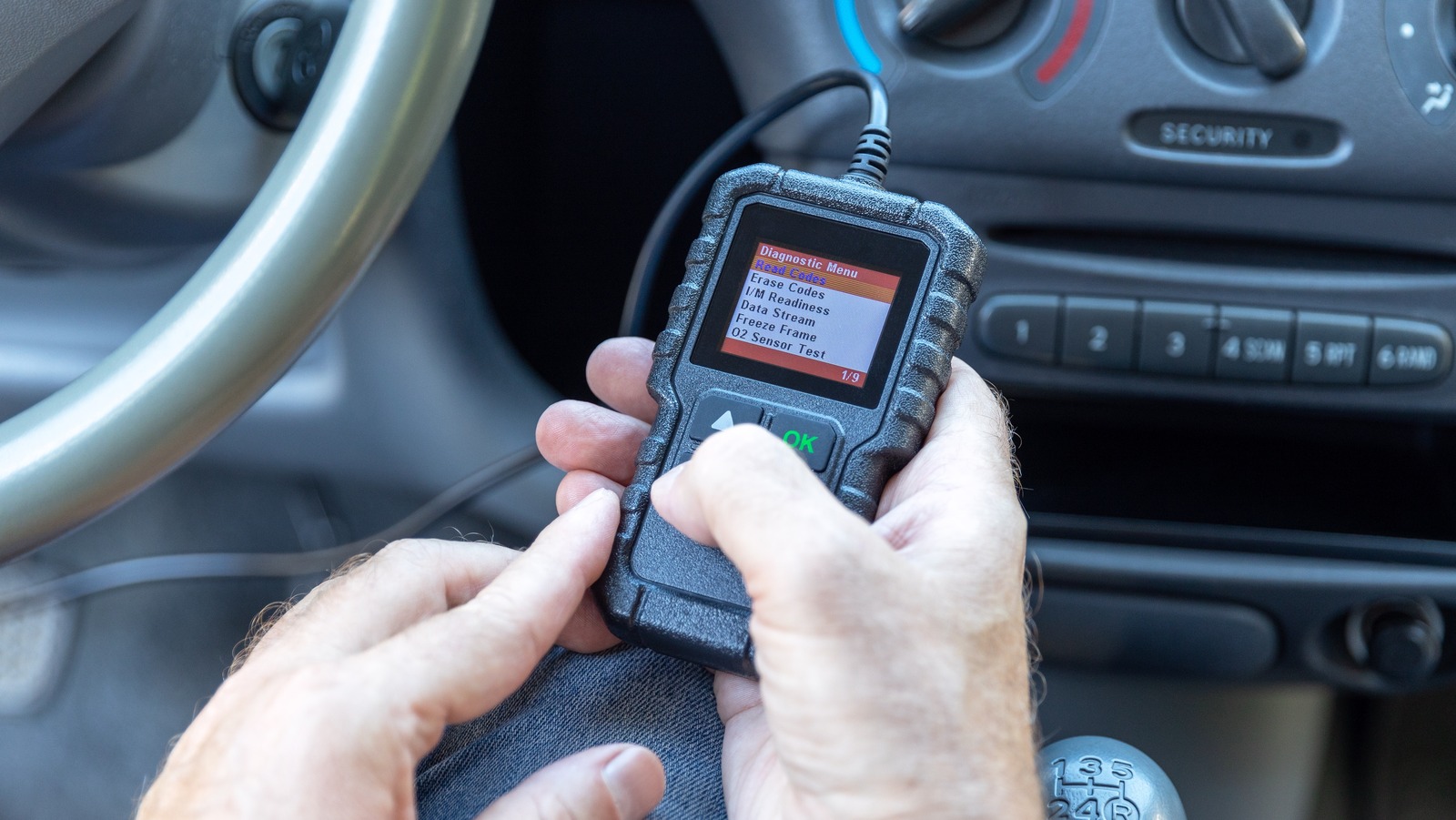
Connect an OBD-II scanner capable of displaying live powertrain parameters.
- Note the values for Short Term Fuel Trim (STFT) and Long Term Fuel Trim (LTFT) at idle engine speed.
- Elevate engine speed to approximately 2,500 RPM and hold it steady for 30 seconds while monitoring fuel trims.
- Interpret the results:
- If fuel trim numbers improve (drop closer to 0%) at higher RPMs, the root cause is almost certainly a vacuum leak. Higher engine airflow dilutes the impact of small vacuum leaks.
- If fuel trim numbers remain high (+15% or more) or get worse at higher RPMs, the issue is more likely related to fuel delivery (low fuel pressure) or a faulty MAF sensor.
Step 2: Perform a Thorough Visual Inspection
Examine the engine bay carefully before buying replacement parts:
- Check the flexible plastic/rubber air intake tube between the air filter housing and throttle body. Inspect the accordion bellows for cracks or tears.
- Verify that vacuum lines attached to the intake manifold are fully connected, supple, and crack-free.
- Ensure the oil dipstick is fully seated and the oil cap is tightened securely.
Step 3: Inspect the PCV System (Especially on 1.4L Turbo Engines)
On Chevrolet 1.4L engines:
- Locate the small burst disc / diaphragm housing on the top right side of the plastic camshaft valve cover.
- Start the engine and let it idle.
- Place your finger over the small opening on the valve cover diaphragm. If you feel strong vacuum suction against your finger or if the high-pitched squealing sound disappears, the internal valve cover membrane has ruptured, requiring replacement of the valve cover assembly.
- Remove the corrugated plastic PCV hose from the top of the intake manifold and look inside the intake nipple. Inspect for the presence of the small orange non-return check valve nipple. If missing, the intake manifold must also be repaired or replaced to prevent immediate failure of the new valve cover.
Step 4: Inspect and Clean the Mass Air Flow (MAF) Sensor
- Turn off the ignition and disconnect the MAF sensor electrical harness connector.
- Remove the retaining screws and lift the MAF sensor out of the intake housing.
- Inspect the fine sensor wires inside. If contaminated with dirt or oil film, spray them liberally with dedicated Mass Air Flow Sensor Cleaner (do not use brake cleaner or harsh solvents).
- Allow the sensor to dry completely, reinstall it, clear the diagnostic codes, and monitor fuel trim values on a test drive.
Step 5: Check the EVAP Purge Valve
- Disconnect the vacuum tube running from the gas tank to the EVAP purge solenoid located on the engine intake manifold.
- With the electrical connector still attached, start the engine.
- Put your finger over the vacuum port on the purge valve.
- If the valve is drawing vacuum while the engine is idling cold and the ECM is not commanding purge flow, the solenoid valve is stuck open mechanically and requires replacement.
Step 6: Test Fuel Pressure and Supply
If vacuum leaks and air delivery sensors test normal, evaluate the fuel system:
- Locate the fuel pressure test valve (Schrader valve) on the engine fuel rail (or use an inline adapter on direct-injection systems).
- Connect a mechanical fuel pressure gauge.
- Turn the ignition on to prime the pump and record static fuel pressure. Start the engine and monitor pressure at idle and under snap-throttle conditions.
- Compare fuel pressure values to official General Motors service specifications for your model year. Low pressure points to a worn fuel pump, restricted fuel filter, or faulty fuel pressure regulator.
Chevy-Specific Vulnerabilities by Engine Family
Understanding common engine-specific design patterns helps pinpoint P0171 quickly on specific Chevrolet vehicles:
1.4L Turbo Ecotec (Cruze, Sonic, Trax)
This platform accounts for a high volume of P0171 diagnoses. The combined failure of the intake manifold PCV check valve and valve cover diaphragm is extremely well-documented. Replacing only the valve cover without verifying the intake manifold check valve frequently results in the new cover failing within a few hundred miles.
2.4L Ecotec Direct Injection (Equinox, Terrain, Malibu)
The 2.4L LAF/LEA engine family commonly exhibits P0171 due to internal leakage of the high-pressure fuel pump (HPFP), worn intake manifold seals, or cracked exhaust manifolds. A cracked exhaust manifold on these vehicles lets outside air reach the upstream oxygen sensor, corrupting oxygen readings.
5.3L / 6.2L Small Block V8 (Silverado, Tahoe, Suburban)
In full-size trucks and SUVs, P0171 (often accompanied by P0174) is frequently caused by intake manifold gasket degradation over time. The plastic intake gaskets shrink and harden, causing air leaks around intake ports when the engine is cold. Cleaning dirt-fouled MAF sensors also resolves a large percentage of lean codes on these V8 powertrains.
Can You Drive a Chevy with Code P0171?
Driving short distances with code P0171 is generally possible, but it should be addressed promptly.
Short-Term Risks
In minor cases, driving for a few days to reach a repair facility will not immediately destroy the engine. However, expect reduced throttle power, unstable idling, and higher fuel consumption.
Long-Term Consequences
- Catalytic Converter Damage: Continuous lean conditions cause engine misfires. Unburned fuel from misfiring cylinders travels into the exhaust, where it ignites within the ultra-hot ceramic honeycomb of the catalytic converter, causing internal meltdown or clogging.
- Engine Overheating and Internal Damage: A lean mixture burns significantly hotter inside the combustion chamber than a properly balanced mixture. Prolonged high-load driving with severe lean conditions elevates cylinder temperatures, increasing the risk of engine knock (detonation), burned exhaust valves, and damaged pistons.
Frequently Asked Questions
Can a dirty engine air filter cause code P0171 on a Chevy?
No, a dirty engine air filter restricts total airflow into the engine, which generally reduces power but does not cause a lean air-fuel ratio. Because the Mass Air Flow sensor sits downstream of the air filter, it measures whatever air passes through it. Restricted air intake lowers both air and fuel equally. However, if an air filter is improperly installed or torn, allowing dirt to contaminate the MAF sensor wire, that dirty sensor can trigger code P0171.
Will code P0171 clear itself after fixing the underlying problem?
Yes, once the root cause is resolved and air-fuel trim values return to acceptable parameters, the ECM will clear the Check Engine Light after completing several successful driving cycles (usually 3 to 5 full warm-up and cool-down drive cycles). Alternatively, you can clear the code manually using an OBD-II scanner to verify immediate resolution.
Why does my Chevy Cruze have code P0171 along with a high-pitched squealing noise?
This combination is characteristic of a failed PCV system on 1.4L Turbo engines. The squealing sound is atmospheric air pulling past internal seals into the crankcase due to a ruptured internal membrane in the camshaft cover assembly. Replacing the valve cover—and inspecting the intake manifold check valve—resolves both issues.
How do fuel trim numbers help diagnose code P0171?
Fuel trims reflect how much extra fuel the computer must add to balance the mixture. Total trim is calculated by adding STFT and LTFT values. Positive numbers above +10% indicate the computer is adding extra fuel. If trim values drop toward normal levels at higher engine RPM, the primary cause is an air vacuum leak; if trims remain high under load, it points to low fuel flow or an inaccurate MAF sensor.
Is P0171 always caused by a vacuum leak?
No. While vacuum leaks (unmetered air) are the most common cause, P0171 can also be triggered by insufficient fuel pressure, clogged fuel injectors, a contaminated MAF sensor, an upstream exhaust leak, or a failing oxygen sensor reporting false low-voltage data to the computer.
Recommended Next Actions
If your Chevrolet's Check Engine Light is displaying code P0171, follow this logical progression to resolve the issue effectively:
- Scan Live Engine Data: Connect a diagnostic scan tool to view STFT and LTFT levels at idle and 2,500 RPM to narrow the root cause down to an air intake or fuel supply issue.
- Perform the "PCV & Hose Check": Inspect intake boots for visible splits, verify vacuum lines are snug, and check for strong suction around the valve cover diaphragm on four-cylinder turbo models.
- Clean the MAF Sensor: Spray the MAF sensor element using an approved sensor cleaner—a simple, low-cost maintenance step that resolves false airflow readings.
- Test EVAP Solenoid and Fuel Pressure: If vacuum lines and air sensors pass inspection, test the EVAP purge valve for mechanical bypass and verify that fuel pressure meets factory parameters at the fuel rail.
Addressing diagnostic code P0171 systematically ensures optimal fuel economy, smooth idle performance, and long-term protection for your engine and catalytic converter.
Image Gallery