Chess Robot Grabs and Breaks Finger of 7-Year-Old Opponent at the Moscow Open: Incident Breakdown and Robotics Safety Analysis
During the Moscow Open chess tournament in July 2022, an automated chess-playing robotic arm seized and fractured the finger of a seven-year-old contestant after the child attempted a move before the machine had completed its turn. Bys...
During the Moscow Open chess tournament in July 2022, an automated chess-playing robotic arm seized and fractured the finger of a seven-year-old contestant after the child attempted a move before the machine had completed its turn. Bystanders intervened to free the boy, who completed the tournament in a cast.
Contents
Detailed Chronology of the Moscow Open Incident
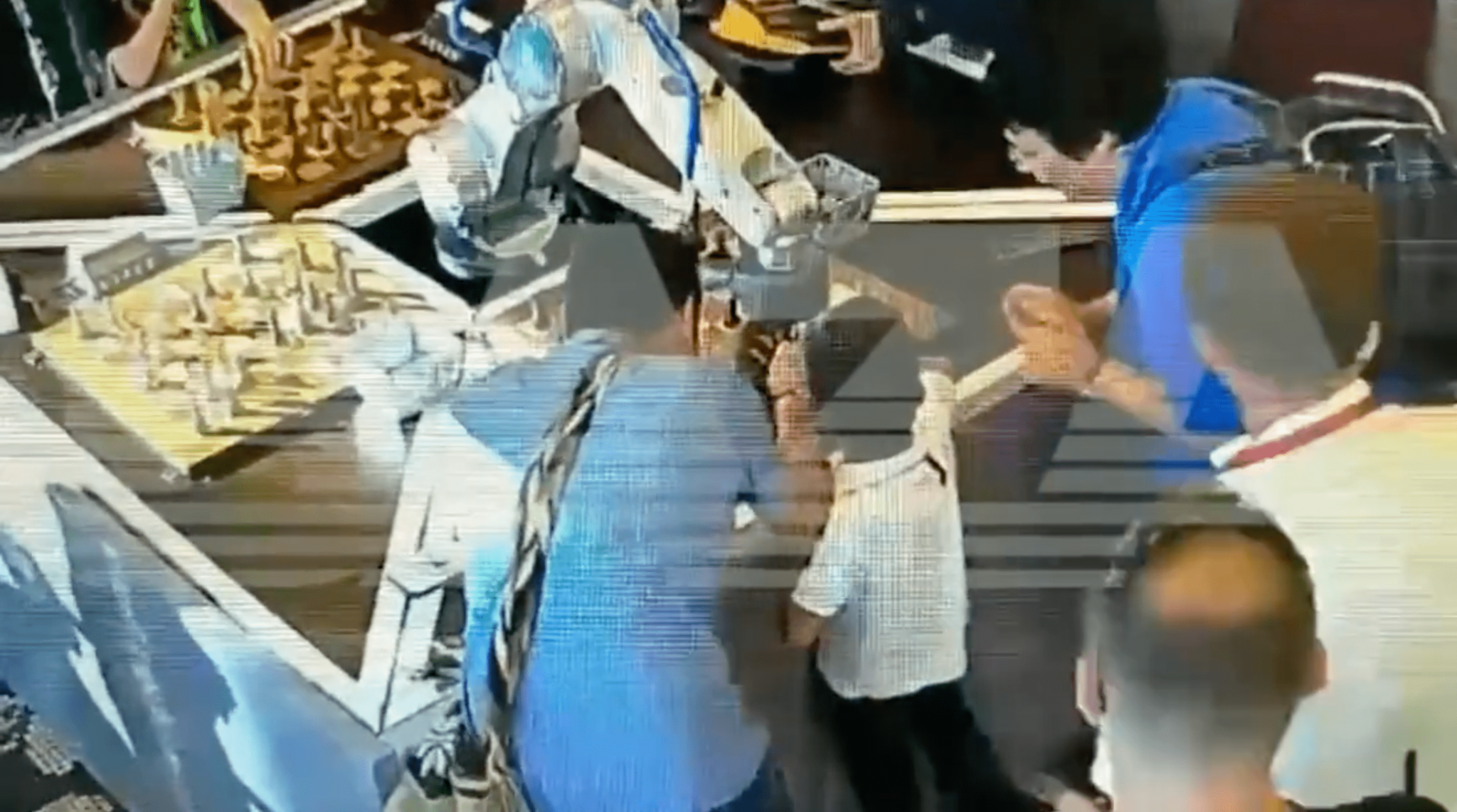
The incident occurred on July 19, 2022, during a demonstration match at the Moscow Open, one of Russia’s premier annual chess events. The machine involved was an industrial-style robotic arm modified to play multiple games of chess simultaneously across several boards. The machine's opponent was a seven-year-old boy named Christopher, who ranked among the top chess players in Moscow in the under-nine age category.
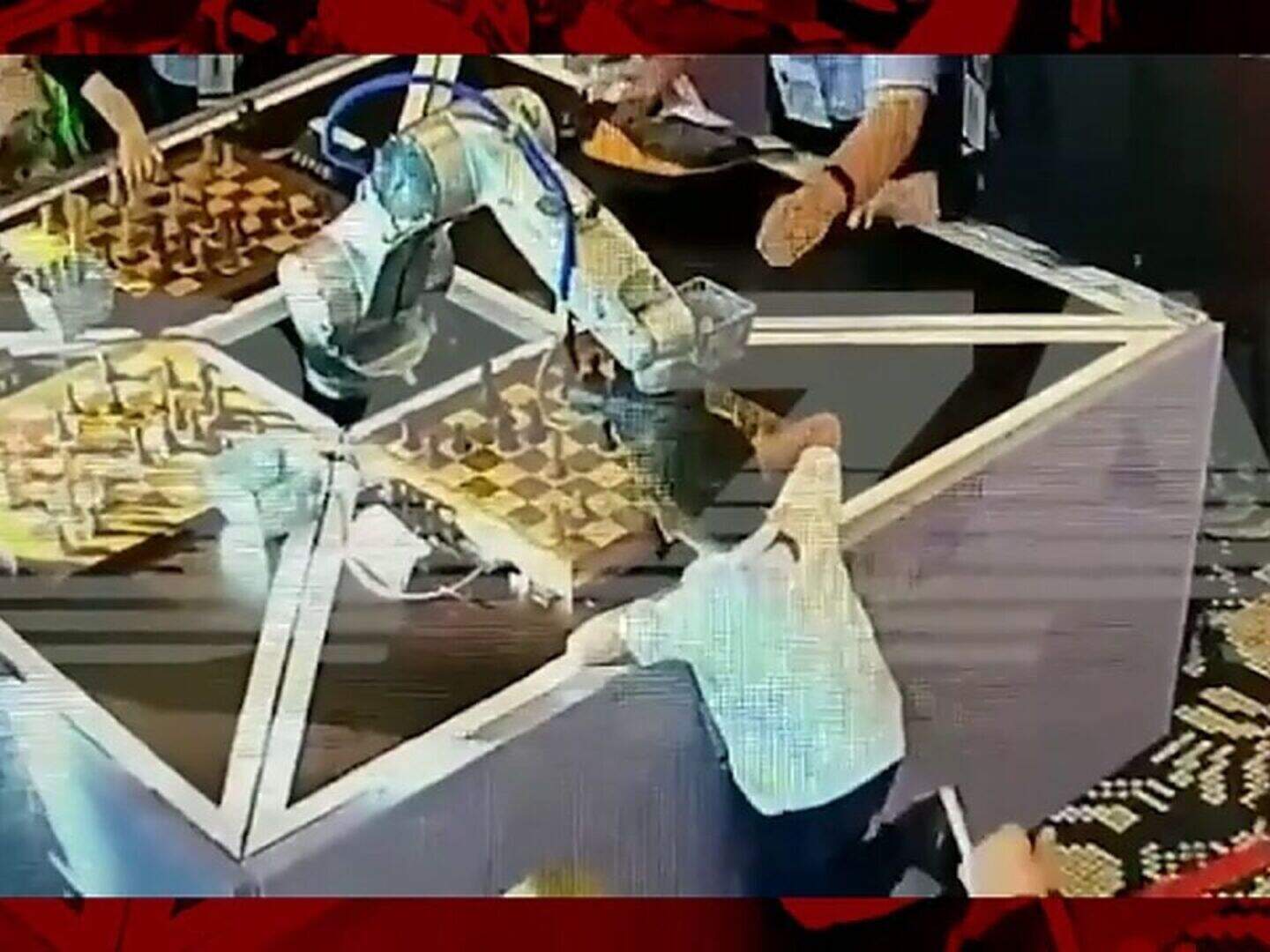
According to video recordings and witness statements, the robot had taken one of the boy’s pieces and was in the middle of placing its own piece onto the destination square. Before the robotic arm had fully retracted from the board, the young player reached forward to execute his counter-move. The machine's vision system and motion-planning software failed to register the human hand as an obstacle or distinct entity. Instead, the mechanical end-effector gripped the child's index finger, mistaking it for a chess piece or closing its mechanical claw as part of its rigid, pre-programmed execution cycle.
- Robot moves piece
- Boy reaches early
- Optical sensor fails to differentiate
- Pinch-point closure
Four adults—including tournament organizers and spectators—rushed to the board to pull the boy’s hand free from the mechanical clamp. The process took several seconds because the industrial actuator lacked an automated emergency release or instantaneous back-drivability. The child sustained a bone fracture to his finger, received medical attention, and had his hand placed in a cast. Despite the injury, he resumed playing in the tournament the following day with assistance from adult aides who recorded his moves.
Technical Analysis: Why the Mechanical Arm Failed
The mishap at the Moscow Open highlights critical vulnerabilities in adapting traditional industrial automation for interactive public environments. Industrial robotic arms operate on precise kinematic models designed for repetitive manufacturing tasks, such as spot welding or pick-and-place packaging, where the operating workspace (the workcell) is strictly isolated from human presence.
- Industrial Setup:
- [Robot Arm]
- Physical Barrier
- [No Humans Allowed]
- Moscow Setup:
- [Robot Arm]
- [7-Year-Old Player] (CRITICAL DEFECT)
Motion Planning and Execution Loops
Industrial robots rely on deterministic state machines. In a typical execution loop:
- Target Identification: The camera system scans the board state and sends coordinates to the motion controller.
- Path Generation: The path planner calculates a trajectory for the end-effector to reach, pick up, move, and release the chess piece.
- Open-Loop Execution: Once the movement trajectory begins, the controller expects the workspace to remain completely static unless interrupted by external safety hardware.
If a human enters the workspace mid-cycle, standard industrial controllers do not automatically re-evaluate the trajectory or re-segment the point-cloud data from vision sensors unless explicitly integrated with dynamic safety interlocks. When the young player reached for the board, the robot's motion planner was executing its fixed release phase. The end-effector closed to release or clear a position, trapping the boy's finger against the board.
Lack of Tactile Feedback and Power-and-Force Limiting (PFL)
A major contributing technical factor was the absence of internal force-torque sensors (FTS) or motor-current feedback mechanisms calibrated for human contact. Modern collaborative robots (cobots) continuously monitor joint torque and current draw. If a cobot encounters an unexpected resistance exceeding a minimal threshold (e.g., 10 to 50 Newtons), the internal drive controller trips a safe torque off (STO) state within milliseconds, halting motor actuation.
In contrast, non-cobot industrial arms utilize high-gear-ratio actuators (such as harmonic drives or planetary gearboxes) driven by high-torque brushless DC motors. These systems will apply their maximum rated force against an obstruction until the target position encoder value is reached or the drive trips a severe motor-overcurrent fault—a threshold far higher than what is required to crush biological tissue and fracture bones.
Responses from Officials and Safety Protocols Disregard
Following the incident, officials from the Moscow Chess Federation and the Russian Chess Federation issued public statements addressing the event.
Sergey Lazarev, president of the Moscow Chess Federation, confirmed the incident and noted that the robot had been rented for public demonstrations and had performed safely in numerous prior events without incident. Lazarev stated that the child violated safety guidelines by failing to allow the robot sufficient time to complete its move before reaching into the play field.
Sergey Smagin, vice-president of the Russian Chess Federation, characterized the incident as an extremely rare coincidence, asserting that the machine was safe but acknowledging that organizers needed to enhance safety protocols. Smagin reiterated that players must wait for the machine to return to a neutral rest position before making physical contact with the board.
However, safety engineering principles dictate that safety in public human-robot interaction (HRI) cannot rely solely on human compliance with rules—especially when interacting with children. Under standard machinery safety directives, such as those established by the International Organization for Standardization (ISO), physical or technological safeguards must prevent contact regardless of user operational errors.
Industrial Robotic Arms vs. Collaborative Robots (Cobots) in Public Settings
Deploying robotics in human-centric spaces requires selecting machines designed specifically for shared environments. The table below outlines the primary technical differences between standard industrial arms and force-limited collaborative systems.
| Feature / Metric | Traditional Industrial Robotic Arm | Collaborative Robot (Cobot) | Moscow Open Robot Rig |
|---|---|---|---|
| Primary Deployment | Enclosed factory floors, automated cells | Shared workspaces, human-assistive tasks | Temporary public demonstration board |
| Force & Torque Limiting | None; relies on external physical guarding | Internal force-torque sensors and current monitoring | None; reliance on standard motor drives |
| Pinch-Point Safety | Requires light curtains or physical cages | Rounded joints, energy-absorbing covers, gap limits | Rigid mechanical gripper without soft padding |
| Response to Obstruction | Maintains trajectory using maximum drive motor torque | Immediate Safe Torque Off (STO) within < 15 ms | Continued trajectory execution until position error |
| Applicable Standards | ISO 10218-1 / ANSI/RIA R15.06 | ISO 10218-1/2, ISO/TS 15066 | Uncertified custom integration |
| Emergency Stop System | Hardwired E-stop button on control pendant | Dedicated hardware E-stops and dynamic zone stops | Manual human intervention (bystanders physically pulling) |
Standard Safety Protocols for Human-Facing Robotics
To prevent incidents like the one at the Moscow Open, systems deployed in spaces accessible to the public must comply with stringent robotics safety frameworks. Integrators and event operators must enforce specific mechanical, software, and procedural controls.
- ROBOTICS SAFETY FRAMEWORK
- [ISO/TS 15066 Standards]
- Force limit: <140 N
- Speed limit: <250 mm/s
- [Hardware Interlocks]
- E-Stops within reach
- Physical kill switches
- [Redundant Vision Sensing]
- 3D LiDAR/Depth cameras
- Dynamic speed reduction
- [ISO/TS 15066 Standards]
Compliance with ISO/TS 15066 and ISO 10218
The ISO/TS 15066 technical specification details explicit safety requirements for collaborative industrial robot systems and their work environment. Key technical metrics include:
- Maximum Force Thresholds: Biomechanical limits specify maximum allowable force and pressure levels for different body zones. Contact with hands or fingers must not exceed strict transient force thresholds (typically capped under 140 Newtons depending on contact geometry and surface area).
- Speed and Separation Monitoring (SSM): The robot’s operating speed must scale dynamically based on the distance between the robot and any detected human. If a human moves within a defined warning zone, the robot slows down; if the human enters the critical zone, the robot executes a controlled stop (Category 0 or Category 1 stop according to IEC 60204-1).
Redundant Sensing Architecture
Integrators operating interactive machines must implement redundant, multi-modal sensing configurations:
- 3D Depth Sensing: Systems must use stereo-vision or Time-of-Flight (ToF) cameras calibrated to monitor the volume directly above the board. If any object interrupts the zone while the end-effector is in motion, drive power to the motors must instantly cut.
- Physical Light Curtains: Infrared light barriers placed around the perimeter of the chessboard create an invisible field. Interrupting the beam immediately trips an interlock circuit to freeze joint actuation.
Emergency Stop (E-Stop) Accessibility
For any public demonstration, an emergency stop button must be clearly marked and directly wired into the safety controller’s safety-rated logic circuits (such as Safety Integrity Level [SIL] 2 or Performance Level [PL] d). In the Moscow incident, bystanders were forced to physically struggle against the arm's mechanical advantage because an E-stop was either unavailable or unactuated by staff.
Legal, Regulatory, and Integration Lessons
The Moscow Open incident remains a classic case study in robot safety engineering, product liability, and risk assessment for event planners.
1. Risk Assessments Must Account for Non-Compliant Users
System integrators cannot design safety systems around ideal human behavior. Children, non-technical users, and distracted individuals frequently fail to follow verbal instructions or written notices. Safety systems must achieve intrinsic safety through engineering controls rather than administrative rules.
2. Certification of Custom Integrations
Attaching an industrial actuator to a custom chess engine creates a new machinery assembly under international standards. Integrators must perform complete hazard identification and risk reduction procedures, ensuring that retrofitted tools or grippers do not create new mechanical pinch points, shear points, or crushing hazards.
3. Immediate E-Stop Accessibility and Operator Training
Any organization deploying autonomous hardware near spectators must station trained personnel equipped with immediate access to hardware kill switches. Staff must be trained to monitor human approach vectors and trigger emergency halts proactively.
Frequently Asked Questions
What caused the chess robot to break the child's finger?
The robot closed its mechanical end-effector on the boy's finger because its control system failed to recognize the hand's intrusion into the play area. Because the machine was executing an open-loop movement sequence without dynamic force-torque feedback, it continued its physical stroke until manual intervention occurred, causing a bone fracture.
Was the robot operating on artificial intelligence during the event?
The system used chess calculation algorithms coupled with computer vision to determine moves, but its physical movements relied on fixed industrial motion-control code. It lacked the real-time adaptive computer vision and force-sensing hardware required to detect and protect human hands in its path.
Did the injured child continue playing in the Moscow Open?
Yes. After receiving emergency medical care and having his fractured finger set in a cast, the seven-year-old player returned to compete in the tournament the following day, completing his scheduled matches with assistance from volunteers.
What technical standards apply to robots interacting with humans?
Human-robot interaction is governed by international standards including ISO 10218-1 and ISO 10218-2 (safety requirements for industrial robots) and ISO/TS 15066 (specific guidance for collaborative robots). These standards mandate limits on force, velocity, distance monitoring, and emergency response capabilities.
How can event organizers prevent similar robot injuries?
Organizers must utilize certified collaborative robots (cobots) equipped with dynamic force-limiting software, install physical barriers or optical light curtains around the operating arena, and maintain dedicated safety personnel with immediate access to physical emergency stop switches.
Mandatory Checklist for Interactive Robotics Deployments
Organizations plan to deploy automated arms or machinery in public spaces should follow this operational safety checklist before permitting human interaction:
- Conduct a Formal Risk Assessment: Document all potential mechanical hazards, including pinch points, shear zones, and force limits according to ISO 12100.
- Implement Power and Force Limiting (PFL): Ensure motor drives automatically limit torque to safe, non-injurious levels upon contact.
- Install Physical or Sensor Safety Barriers: Position infrared light curtains or dynamic zone-monitoring depth sensors around the workspace.
- Establish Dedicated Emergency Halts: Verify that physical E-stop switches are fully functional, fail-safe, and situated within direct reach of trained supervisors.
- Enforce Administrative and Visual Warnings: Clearly mark operating fields while relying strictly on hardware-level interlocks for true safety enforcement.
Image Gallery