Indonesian Wildlife Diversity and Conservation: Ecosystems, Endemic Fauna, and Mitigation Strategies
Indonesia’s extreme wildlife diversity stems from its position across two major biogeographical realms—Indomalayan and Australasian—separated by the Wallace Line. Conservation in the archipelago focuses on protecting critically endange...
Indonesia’s extreme wildlife diversity stems from its position across two major biogeographical realms—Indomalayan and Australasian—separated by the Wallace Line. Conservation in the archipelago focuses on protecting critically endangered endemic species, including Sumatran tigers, rhinos, and orangutans, through national park management, community-based forest stewardship, ecosystem restoration concessions, and legal protections under national environmental legislation.
Contents
Biogeographic Foundations of Indonesian Biodiversity
Indonesia covers less than 1.5% of Earth's land surface yet harbors roughly 12% of the world's mammal species, 16% of reptile and amphibian species, and 17% of bird species. This disproportionate richness is driven by the country's unique tectonic history and island architecture, which created distinct biogeographical zones separated by deep-water oceanic trenches.
- WEST (Indomalayan)
- Sumatra, Java, Borneo, Bali
- Asian continental fauna (Tigers, Elephants, Rhinos)
- WALLACEA (Transition Zone) (separated from West by Wallace Line)
- Sulawesi, Maluku, Lesser Sunda Islands
- High endemicity rate (Anoa, Babirusa, Maleo)
- EAST (Australasian) (separated from Wallacea by Lydekker Line)
- Papua & Aru Islands
- Australasian fauna (Marsupials, Tree Kangaroos)
The Sunda Shelf (Indomalayan Realm)
The western islands of Sumatra, Java, Borneo, and Bali sit on the Sunda Shelf, a continental block that was periodically connected to mainland Asia during Pleistocene glacial periods. As a result, the fauna in this region reflects Asian evolutionary origins. Top predators and large herbivores evolved here, including the Sumatran tiger (Panthera tigris sumatrae), Asian elephant (Elephas maximus sumatrensis), Javan rhinoceros (Rhinoceros sondaicus), Sumatran rhinoceros (Dicerorhinus sumatrensis), and multiple primate species such as gibbons, langurs, and orangutans.
Wallacea (Transition Zone)
Situated between the Wallace Line to the west and Lydekker’s Line to the east, Wallacea encompasses Sulawesi, Maluku, and the Lesser Sunda Islands (Nusa Tenggara). Because these islands were never connected to either Asian or Australian landmasses, species colonization occurred via long-distance dispersal, giving rise to exceptional rates of endemism. Over 90% of Sulawesi’s non-volant mammals are found nowhere else on Earth. Notable endemic species include the anoa (Bubalus depressicornis and Bubalus quarlesi), the babirusa (Babyrousa spp.), the spectral tarsier (Tarsius spectrum), and the maleo bird (Macrocephalon maleo).
The Sahul Shelf (Australasian Realm)
The eastern province of Papua and the Aru Islands lie on the Sahul Shelf, historically linked to the Australian continent. The fauna here is predominantly Australasian, lacking native placental carnivores and ungulates. Instead, these tropical rainforests host marsupials such as tree kangaroos (Dendrolagus spp.) and cuscus (Phalangeridae), monotremes like the long-beaked echidna (Zaglossus spp.), and avifauna such as birds-of-paradise (Paradisaeidae) and cassowaries (Casuarius spp.).
Marine Ecosystems of the Coral Triangle
Indonesia forms the core of the Coral Triangle, the epicenter of global marine biodiversity. Marine habitats in regions such as Raja Ampat, the Banda Sea, and Komodo National Park support more than 600 species of reef-building corals—representing 75% of the world total—and over 2,000 species of reef fish. Pelagic zones serve as crucial migration corridors for cetaceans, marine turtles, and whale sharks.
Critically Endangered Megafauna and Key Endemic Species
Conservation priorities in Indonesia concentrate on iconic megafauna that serve as flagship and umbrella species for entire ecosystems. Protecting their habitats preserves thousands of co-existing plant and animal species.
| SPECIES | ESTIMATED WILD POPULATION | PRIMARY HABITAT LOCATION |
|---|---|---|
| Sumatran Tiger | < 400 - 600 individuals | Sumatra (Leuser, Bukit Barisan) |
| Javan Rhinoceros | ~ 75 - 80 individuals | Ujung Kulon National Park (Java) |
| Sumatran Rhinoceros | < 80 individuals | Fragmented pockets in Sumatra |
| Tapanuli Orangutan | < 800 individuals | Batang Toru Ecosystem (Sumatra) |
| Bornean Orangutan | ~ 55,000 individuals | Kalimantan (Borneo) |
| Komodo Dragon | ~ 3,000 - 3,500 individuals | Komodo National Park, Flores |
Orangutans (Pongo Species)
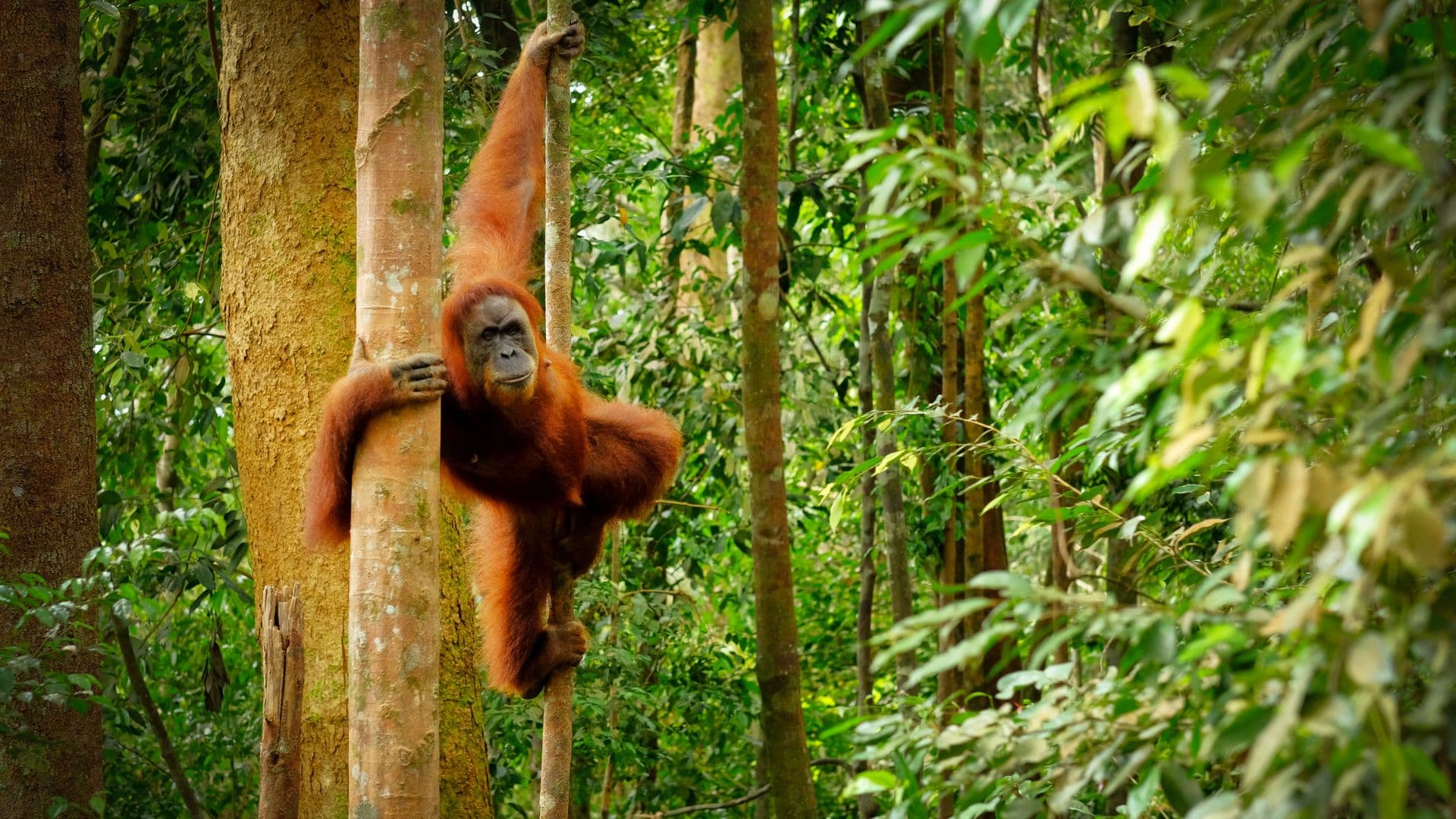
Indonesia is home to three distinct orangutan species, all classified as Critically Endangered:
- Bornean Orangutan (Pongo pygmaeus): Inhabits lowland and peat swamp forests of Kalimantan. Population declines are primarily driven by deforestation and forest conversion.
- Sumatran Orangutan (Pongo abelii): Restricted mainly to the northern provinces of Sumatra, with the Leuser Ecosystem remaining its primary stronghold.
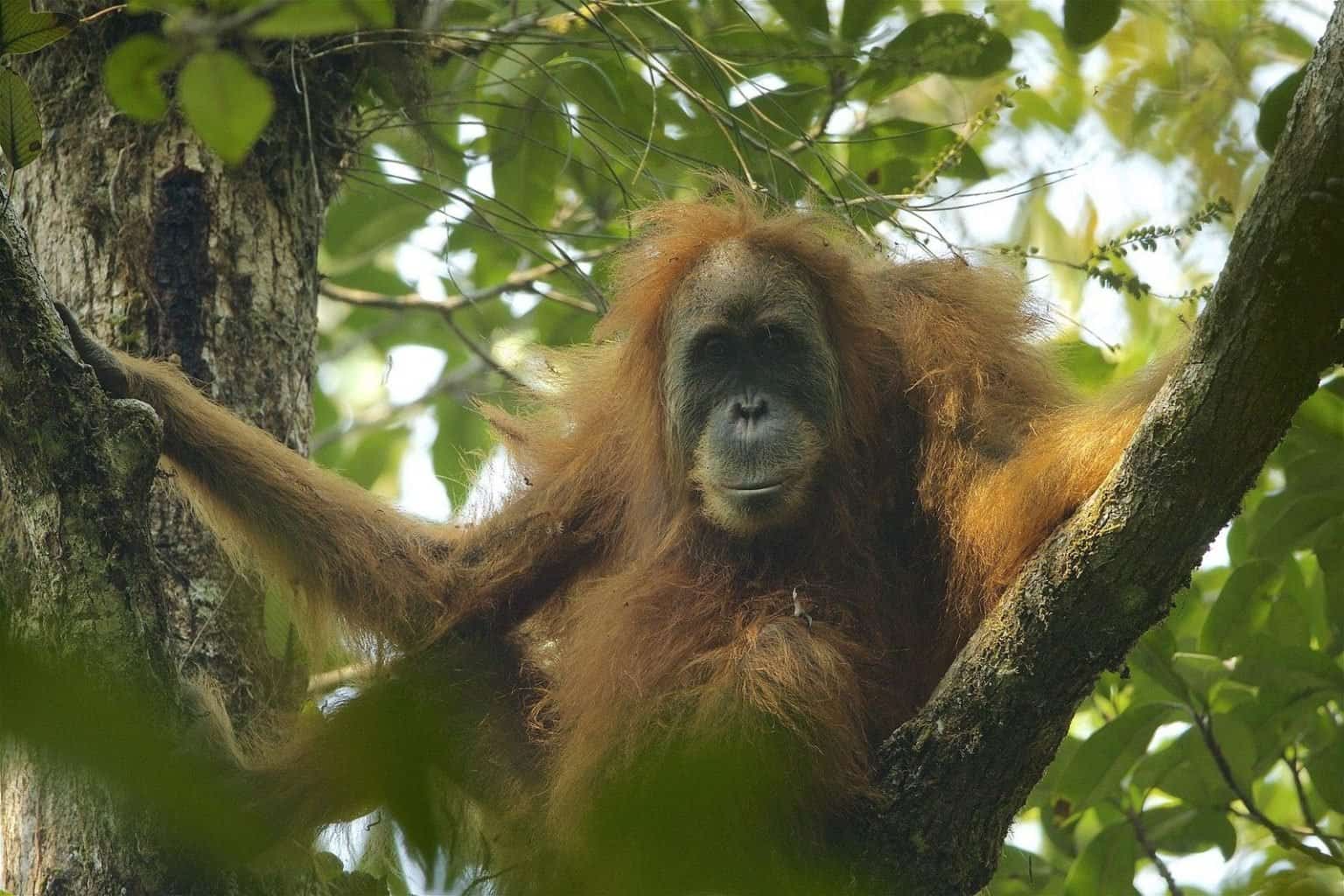
- Tapanuli Orangutan (Pongo tapanuliensis): Identified as a separate species in 2017, it is the most threatened great ape in the world. Restricted to roughly 1,000 square kilometers of the Batang Toru forest in North Sumatra, its total population numbers fewer than 800 individuals.
Sumatran and Javan Rhinoceroses
The two Asian rhino species native to Indonesia face imminent extinction:
- Javan Rhinoceros (Rhinoceros sondaicus): Restricted to a single wild population in Ujung Kulon National Park at the western tip of Java. The population is vulnerable to catastrophic events such as volcanic eruptions from nearby Mount Anak Krakatau, disease transmission from domestic livestock, and limited genetic diversity.
- Sumatran Rhinoceros (Dicerorhinus sumatrensis): The smallest and only two-horned Asian rhino, this species exists in extremely small, isolated populations across Sumatra and small pockets in East Kalimantan. Breeding isolation is the primary barrier to recovery, prompting intensive managed breeding programs at the Sumatran Rhino Sanctuary in Way Kambas National Park.
Sumatran Tiger (Panthera tigris sumatrae)
As the sole surviving tiger subspecies in Indonesia (following the 20th-century extinctions of the Bali and Javan tigers), the Sumatran tiger is confined to fragmented forest landscapes across Sumatra. Key strongholds include the Leuser Ecosystem, Kerinci Seblat National Park, and Bukit Barisan Selatan National Park. Habitat fragmentation increases human-tiger conflicts and leaves populations susceptible to illegal snare poaching.
Primary Drivers of Habitat Loss and Ecological Pressures
The primary drivers of wildlife decline in Indonesia are linked to rapid economic development, land-use conversion, and illegal trade networks.
- Agricultural Expansion: Deforestation & Habitat Fragmentation
- Peatland Drainage: Forest Fires & Carbon Release
- Poaching Networks: Illegal Wildlife Trade (IWT) & Snares
- Infrastructure Growth: Landscape Disruption & Human-Wildlife Conflict
Industrial Deforestation and Agricultural Conversion
Large-scale conversion of lowland dipterocarp forests and peat swamps into oil palm plantations, pulp and paper concessions, and agricultural land has historically fragmented wildlife corridors. Between 1990 and 2020, millions of hectares of natural forest were lost, direct driving habitat loss for wide-ranging mammals.
Peatland Degradation and Wildfires
Indonesia’s tropical peatlands store vast amounts of soil carbon and provide specialized habitats for species like orangutans and false gharials (Tomistoma schlegelii). Drainage canals constructed for agricultural development lower the water table, rendering peat layers highly combustible during dry seasons and El Niño cycles. Uncontrolled fires destroy habitats, release megatons of carbon dioxide, and cause severe respiratory illness in wildlife and human populations.
Illegal Wildlife Trade (IWT) and Poaching
The illegal trade in live animals and body parts remains a significant threat:
- Targeted Megafauna: Rhinoceros horns, tiger canine teeth, skins, and bones continue to command high prices on local and international black markets.
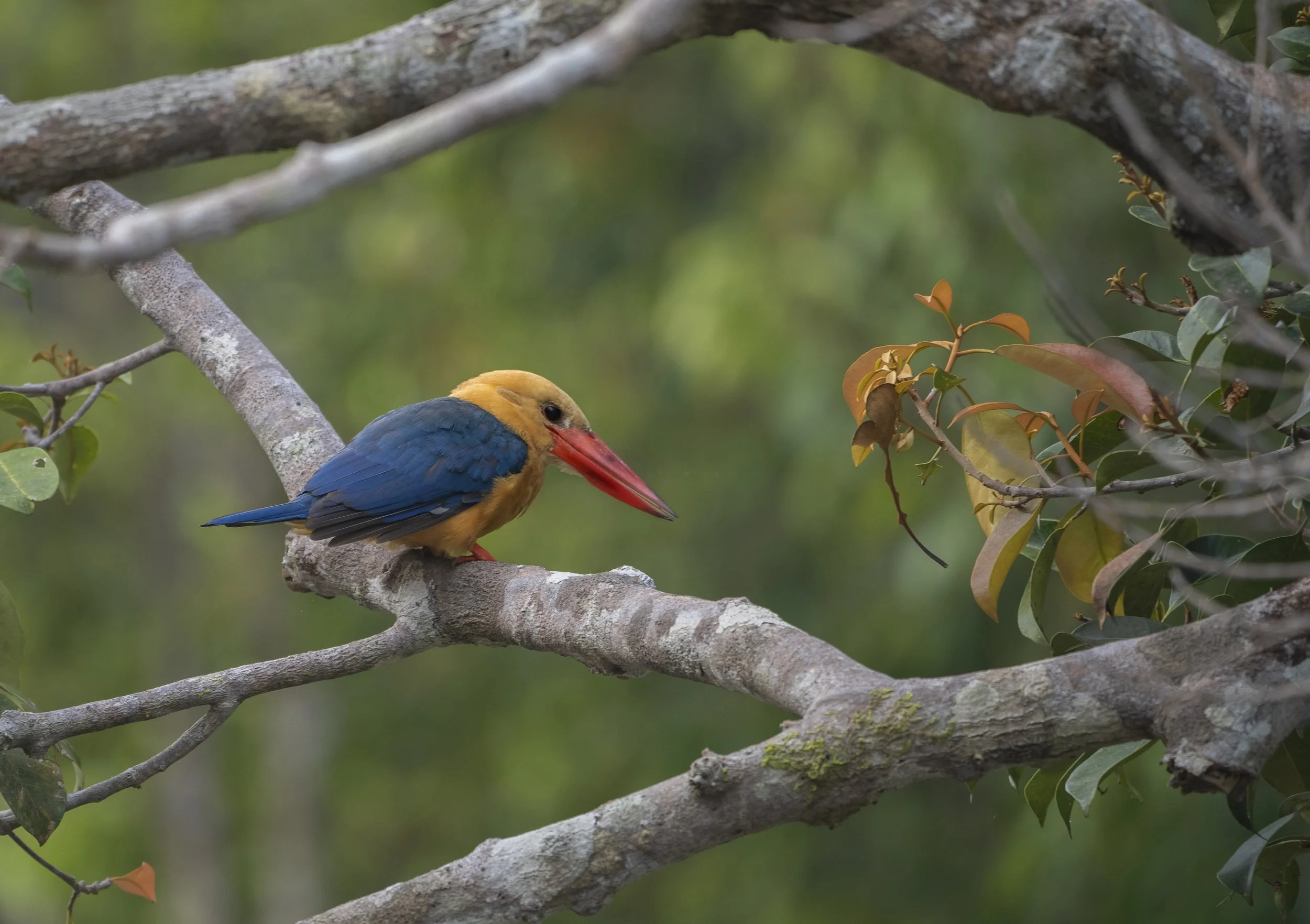
- Avian Trade: The songbird trade in Java and Sumatra has caused severe population crashes among wild bird populations, notably impacting the straw-headed bulbul (Pycnonotus zeylanicus) and the helmeted hornbill (Rhinoplax vigil), which is targeted for its solid keratin beak ("red ivory").
- Scaly Anteaters: The Sunda pangolin (Manis javanica) is heavily poached for its scales, used in traditional medicine, and its meat, making it one of the most trafficked mammals in Southeast Asia.
Human-Wildlife Conflict (HWC)
As human settlements, roads, and agricultural zones expand into historical animal ranges, encounters between communities and wildlife increase. Elephants and tigers frequently move through agricultural clearings bordering protected areas, resulting in crop destruction, livestock predation, retaliatory killings, and human casualties.
Legal and Governance Frameworks for Indonesian Conservation
Indonesia’s conservation strategy is governed by a combination of statutory law, institutional oversight, and evolving land-tenure policy.
Legislative Basis
The legislative foundation for species and habitat protection in Indonesia was established by Law No. 5 of 1990 on the Conservation of Biological Natural Resources and Ecosystems. This framework was substantively updated through Law No. 32 of 2024, which revised Law No. 5/1990 to modernize enforcement capabilities:
- Increased Criminal Penalties: Higher minimum and maximum prison sentences and legal fines for poaching, illegal possession, and trafficking of protected flora and fauna.
- Corporate Accountability: Expanded liability for corporations responsible for environmental destruction or wildlife illegalities occurring within their concessions.
- Jurisdictional Enforcement: Broader authority granted to civil servant investigators (PPNS) and forest rangers (Polhut) to enforce laws outside strictly designated national parks.
Institutional Governance
The primary government agency responsible for managing national wildlife and ecosystems is the Ministry of Environment and Forestry (Kementerian Lingkungan Hidup dan Kehutanan - KLHK), specifically under the Directorate General of Natural Resources and Ecosystem Conservation (KSDAE). Regional management is carried out by local Natural Resource Conservation Agencies (BKSDA) and National Park Authorities (Balai Taman Nasional).
Protected Area Classifications
Indonesia categorizes its conservation areas into distinct operational types:
- National Parks (Taman Nasional): Large areas designated for biodiversity protection, research, education, and regulated eco-tourism (e.g., Leuser, Ujung Kulon, Lorentz).
- Nature Reserves (Cagar Alam): Strictly protected sites reserved for scientific research and ecological preservation, with human entry restricted.
- Wildlife Sanctuaries (Suaka Margasatwa): Habitats designated to maintain specific fauna populations requiring active management and protection.
| DESIGNATION | GOVERNANCE GOAL | PERMITTED ACTIVITIES |
|---|---|---|
| National Park | Ecosystem preservation & public entry | Managed tourism, scientific research, education |
| Nature Reserve | Strict ecological preservation | Non-invasive scientific research only |
| Wildlife Sanctuary | Target species habitat management | Research, habitat enhancement, monitoring |
| Customary Forest | Indigenous land stewardship | Sustainable traditional use, local protection |
| Restoration Concession | Commercial degraded forest recovery | Active reforestation, carbon offset generation |
Customary Forests (Hutan Adat) and Ecosystem Restoration Concessions
Following Constitutional Court Ruling No. 35/PUU-X/2012, the Indonesian government recognized Indigenous communities' rights over their customary forests (Hutan Adat). Granting formal land tenure to Indigenous peoples (Masyarakat Adat) has proven effective in mitigating illegal logging and land grabbing in buffer zones around national parks.
Additionally, Indonesia developed the Ecosystem Restoration Concession (ERC) model (Izin Usaha Pemanfaatan Hasil Hutan Kayu Restorasi Ekosistem). ERCs allow private companies and non-profit entities to secure timber concessions on degraded production forests, shifting the operational mandate from logging to active reforestation, biodiversity recovery, and carbon credit generation (e.g., the Harapan Rainforest in Sumatra and the Katingan Mentaya Project in Kalimantan).
Comparative Matrix: Biogeographical Realms and Conservation Priorities
The following table details the primary ecological characteristics, endemic species, threats, and key reserves across Indonesia's major geographic regions:
| Geographic Region | Biogeographical Realm | Key Endemic & Protected Species | Primary Ecological Threats | Priority Protected Areas & Reserves |
|---|---|---|---|---|
| Sumatra | Indomalayan (Sunda Shelf) | Sumatran Tiger, Sumatran Elephant, Sumatran & Tapanuli Orangutans, Sumatran Rhino | Palm oil conversion, peatland fires, illegal snare poaching, linear infrastructure | Leuser Ecosystem, Kerinci Seblat NP, Bukit Barisan Selatan NP, Way Kambas NP |
| Java & Bali | Indomalayan (Sunda Shelf) | Javan Rhinoceros, Javan Hawk-Eagle, Javan Leopard, Bali Myna | High human population density, extreme habitat fragmentation, songbird trade | Ujung Kulon NP, Meru Betiri NP, Mount Halimun Salak NP, West Bali NP |
| Borneo (Kalimantan) | Indomalayan (Sunda Shelf) | Bornean Orangutan, Proboscis Monkey, Bornean Pygmy Elephant, Helmeted Hornbill | Industrial logging, coal mining, peatland drainage, forest fires | Tanjung Puting NP, Betung Kerihun NP, Kayan Mentarang NP, Sebangau NP |
| Sulawesi | Wallacea (Transition Zone) | Anoa (Lowland & Mountain), Babirusa, Maleo Bird, Spectral Tarsier, Crested Black Macaque | Nickel mining expansion, agricultural encroachment, wild meat consumption | Bogani Nani Wartabone NP, Lore Lindu NP, Tangkoko Nature Reserve |
| Lesser Sunda Islands | Wallacea (Transition Zone) | Komodo Dragon, Flores Giant Rat, Sumba Hornbill, Yellow-crested Cockatoo | Tourism infrastructure pressures, feral dog competition, illegal collection | Komodo National Park, Laiwangi Wanggameti NP, Kelimutu NP |
| Maluku | Wallacea (Transition Zone) | Moluccan Eclectus Parrot, Moluccan Megapode, Salmon-crested Cockatoo | Poaching for pet trade, logging, small-island deforestation pressures | Manusela National Park, Aketajawe-Lolobata National Park |
| Papua & Aru | Australasian (Sahul Shelf) | Tree Kangaroos, Birds-of-Paradise, Southern Cassowary, Western Long-beaked Echidna | Road network expansion, industrial logging, illegal wildlife trade export | Lorentz National Park (UNESCO site), Wasur National Park, Cyclops Mountains Reserve |
Community-Based Conservation and Technical Monitoring Innovations
Effective conservation in Indonesia increasingly relies on combining local indigenous stewardship with advanced environmental technology.
Community Patrols and SMART Conservation
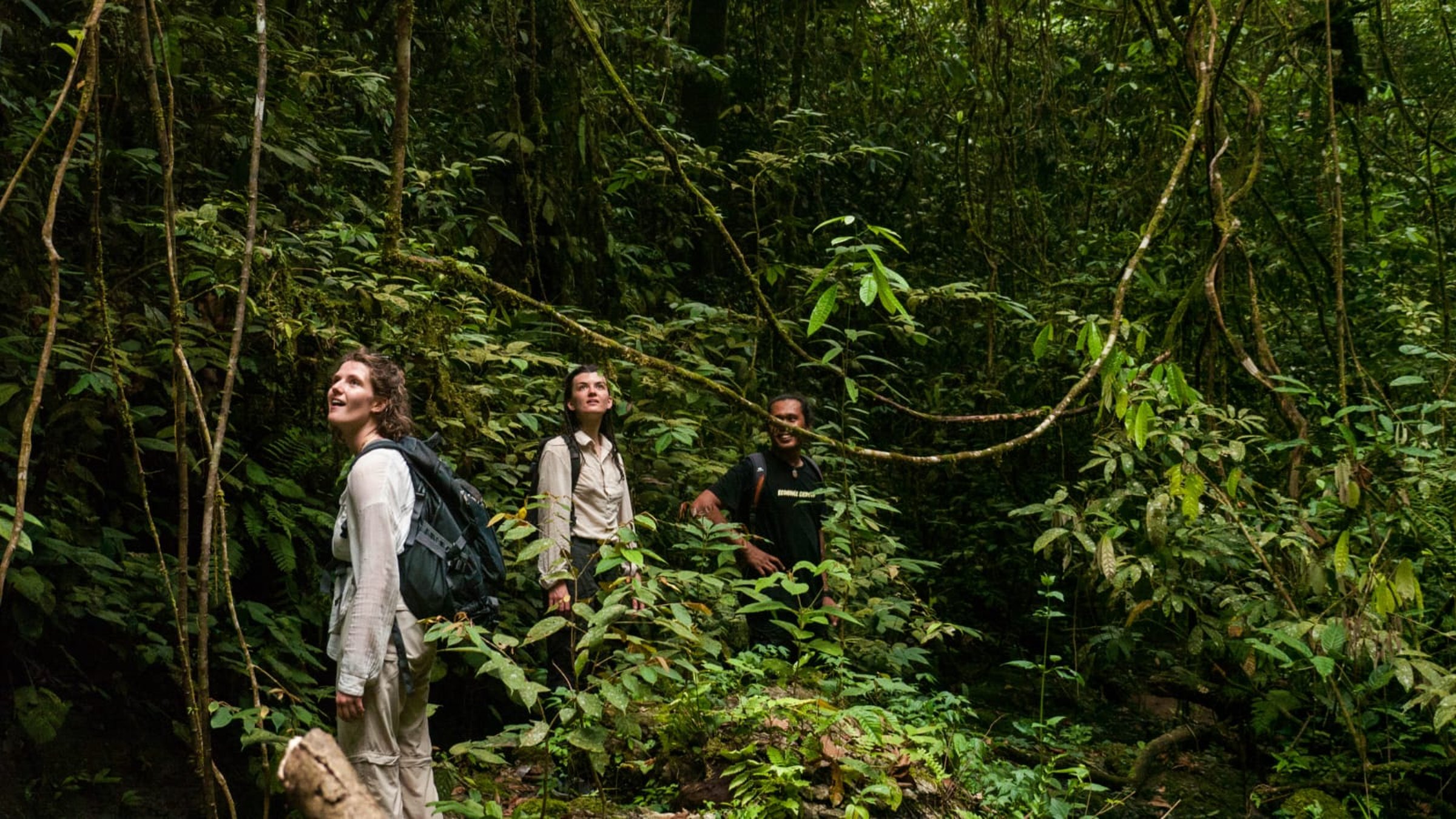
In regions such as the Leuser Ecosystem and Central Kalimantan, local communities participate directly in conservation monitoring. Using Spatial Monitoring and Reporting Tool (SMART) software, patrol teams log illegal activities, record wildlife sightings, and locate and dismantle wire snares. Community-led patrols build local buy-in, provide alternative employment opportunities, and improve coverage across vast park boundaries.
- Field Rangers / Community Patrols: Collects Data via SMART Mobile App
- Acoustic Sensors / Camera Traps: Captures Audio & Image Data
- AI Analytics Platform: Processes Threat Alerts & Species ID
- KLHK / National Park Command: Deploys Rapid Enforcement Interventions
Technological Interventions in Population Monitoring
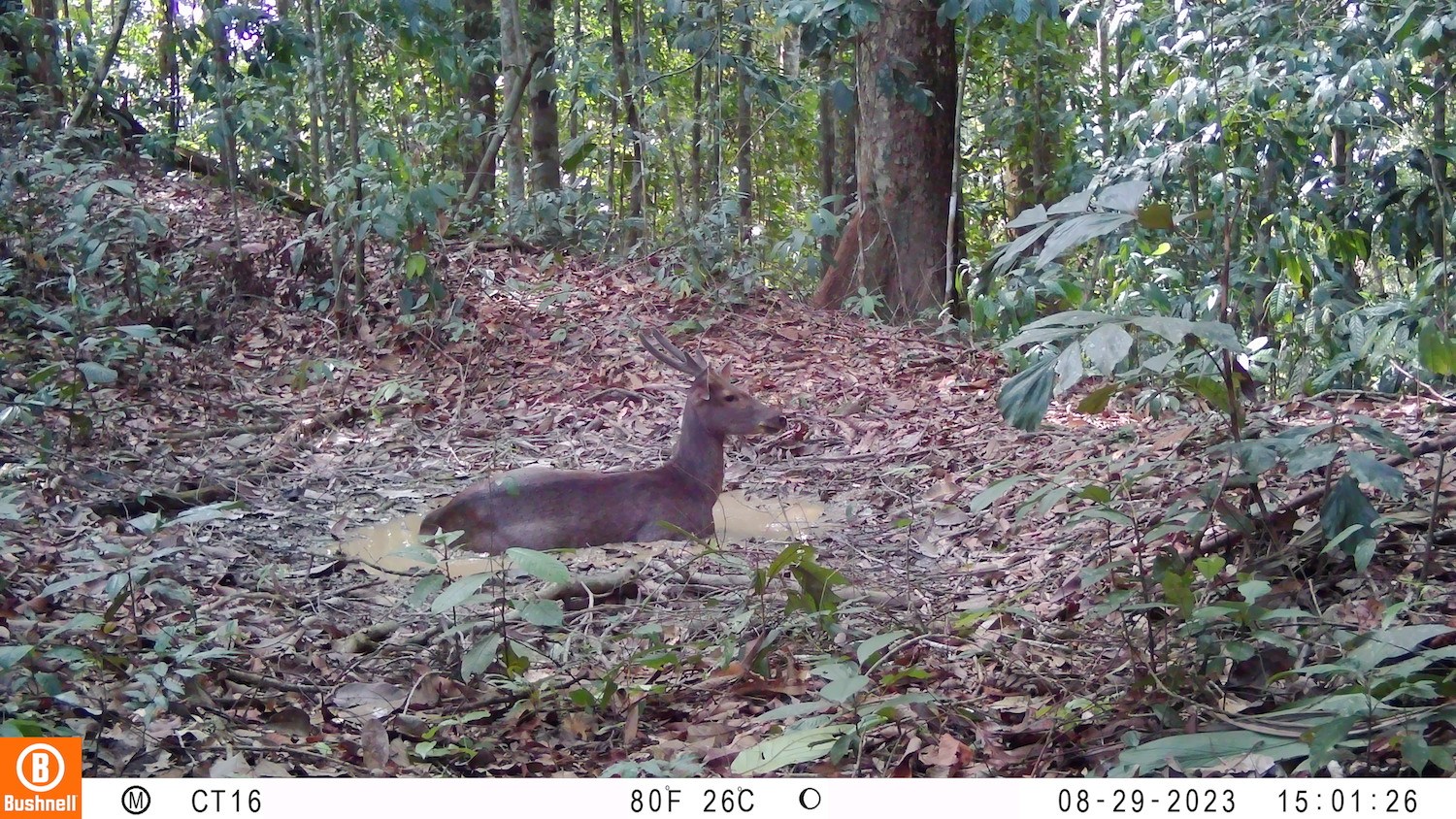
- AI-Driven Camera Trapping: Machine learning models rapidly filter millions of camera trap images, accurately identifying individual Sumatran tigers by their stripe patterns and mapping hidden populations of cryptic species like the Asian golden cat (Catopuma temminckii).
- Passive Acoustic Monitoring (PAM): Autonomous recording units installed in canopy layers continuously monitor audio landscapes. AI bioacoustic algorithms detect chainsaw frequency patterns, gunshots, and specific animal calls, such as gibbon codas and hornbill vocalizations, enabling real-time alerting for illegal logging or poaching.
- Environmental DNA (eDNA): Aquatic eDNA sampling in river systems across Kalimantan and Papua provides precise species presence verification without requiring physical capture, which is particularly valuable for rare freshwater turtles, fish, and amphibians.
- Thermal Drone Surveys: Drones equipped with high-resolution infrared thermal imaging assess orangutan nest densities in dense forest canopies, improving population estimates across inaccessible peat swamps.
Practical Actions for Conservation Stakeholders and Researchers
Organizational stakeholders, independent researchers, and conservation institutions working in Indonesia must navigate specific legal pathways and operational best practices to ensure project success and regulatory compliance.
Regulatory and Permitting Compliance
- Foreign Scientific Research Permits: Foreign researchers must secure formal research permits through the National Research and Innovation Agency (BRIN - Badan Riset dan Inovasi Nasional). Unpermitted research risks immediate deportation, blacklisting, and legal fines.
- Conservation Area Entry Permits (SIMAKSI): Entering national parks, nature reserves, or wildlife sanctuaries for scientific, commercial, or media activities requires a Surat Izin Masuk Kawasan Konservasi (SIMAKSI) issued by the relevant KLHK authority or National Park office.
- Access and Benefit Sharing (ABS): Any collection of biological samples requires compliance with Nagoya Protocol regulations and Indonesian genetic material export permits issued by the Ministry of Environment and Forestry.
Field Engagement Framework
- Establish Formal Partnerships: Coordinate directly with local universities (e.g., Institut Pertanian Bogor, Universitas Gadjah Mada, Universitas Indonesia) and domestic non-governmental organizations (NGOs) to ensure dual-capacity building and legal compliance.
- Incorporate Free, Prior, and Informed Consent (FPIC): Engagement with customary communities (Masyarakat Adat) must prioritize FPIC principles prior to initiating conservation projects, establishing protected boundaries, or establishing eco-tourism operations on traditional lands.
- Implement Landscape-Level Strategies: Focus conservation investments on multi-use buffer zones around primary national parks. Support agroforestry initiatives—such as shade-grown cacao, coffee, and sustainable rattan harvesting—that offer local communities income alternatives to forest clearing.
Frequently Asked Questions
Why is the Wallace Line biologically significant to Indonesian wildlife?
The Wallace Line marks a deep ocean channel that prevented terrestrial fauna from crossing between the Asian (Sunda) and Australian (Sahul) continental shelves during glacial sea-level drops. As a result, it defines a sharp transition between Asian-derived mammals (such as tigers, rhinos, and apes) to the west and endemic or Australasian species (such as marsupials and birds-of-paradise) to the east.
What is the current status of the Sumatran rhinoceros?
The Sumatran rhinoceros (Dicerorhinus sumatrensis) is Critically Endangered, with fewer than 80 individuals remaining in isolated wild populations in Sumatra and Kalimantan. Because habitat fragmentation prevents natural breeding, primary conservation actions center on capturing isolated individuals for managed breeding programs at dedicated sanctuaries, such as the Sumatran Rhino Sanctuary in Way Kambas National Park.
How did Law No. 32 of 2024 strengthen wildlife protection in Indonesia?
Law No. 32 of 2024 updated the core framework of Law No. 5 of 1990 by increasing criminal penalties, mandating strict minimum prison sentences and substantial financial fines for poaching and wildlife trafficking. It introduced explicit corporate liability mechanisms and expanded the investigative authority of civil servant investigators (PPNS) and forest rangers across non-conserved forest estates.
What is an Ecosystem Restoration Concession (ERC)?
An Ecosystem Restoration Concession is a legal permit issued by the Ministry of Environment and Forestry that allows private companies or conservation entities to manage degraded timber production forests. Instead of harvesting timber, the concession holder engages in active reforestation, habitat protection, biodiversity recovery, and ecological services financing, such as carbon offsetting.
How do customary forests (Hutan Adat) support biodiversity protection?
Following Constitutional Court Ruling No. 35/PUU-X/2012, Indigenous communities can secure legally recognized rights to manage their ancestral lands. Indigenous stewardship often applies traditional conservation rules (customary laws or adat) that limit deforestation, prevent industrial encroachment, and eliminate destructive land clearing, creating effective community-managed buffer zones around national parks.
Image Gallery