Benoit Mandelbrot Net Worth: Financial Legacy of the Father of Fractals
At the time of his passing in October 2010, mathematician Benoit Mandelbrot had an estimated net worth between $1 million and $5 million. His accumulated wealth stemmed from a distinguished 35-year tenure at IBM Research, an endowed ch...
At the time of his passing in October 2010, mathematician Benoit Mandelbrot had an estimated net worth between $1 million and $5 million. His accumulated wealth stemmed from a distinguished 35-year tenure at IBM Research, an endowed chair at Yale University, major international scientific monetary awards, and steady royalties from landmark books.
Contents
While modern technology pioneers often convert mathematical innovations into multi-billion-dollar enterprise equity, Mandelbrot operated primarily within corporate research labs and academic institutions. Consequently, his personal financial estate reflected the compensation of a top-tier institutional scientist and bestselling author, rather than that of a software founder—even though his discovery of fractal geometry laid the groundwork for modern computer graphics, wireless technology, and quantitative finance.
Who Was Benoit Mandelbrot?
Benoit B. Mandelbrot (November 20, 1924 – October 14, 2010) was a Polish-born French and American mathematician whose work fundamentally changed how scientists, engineers, and financial analysts understand irregularity in nature and human systems.
Unlike pure theoretical mathematicians who work strictly within abstract frameworks, Mandelbrot identified patterns in natural phenomena that traditional Euclidean geometry could not measure: the jagged edges of coastlines, the branching of blood vessels, the structure of clouds, and the erratic fluctuations of stock prices.
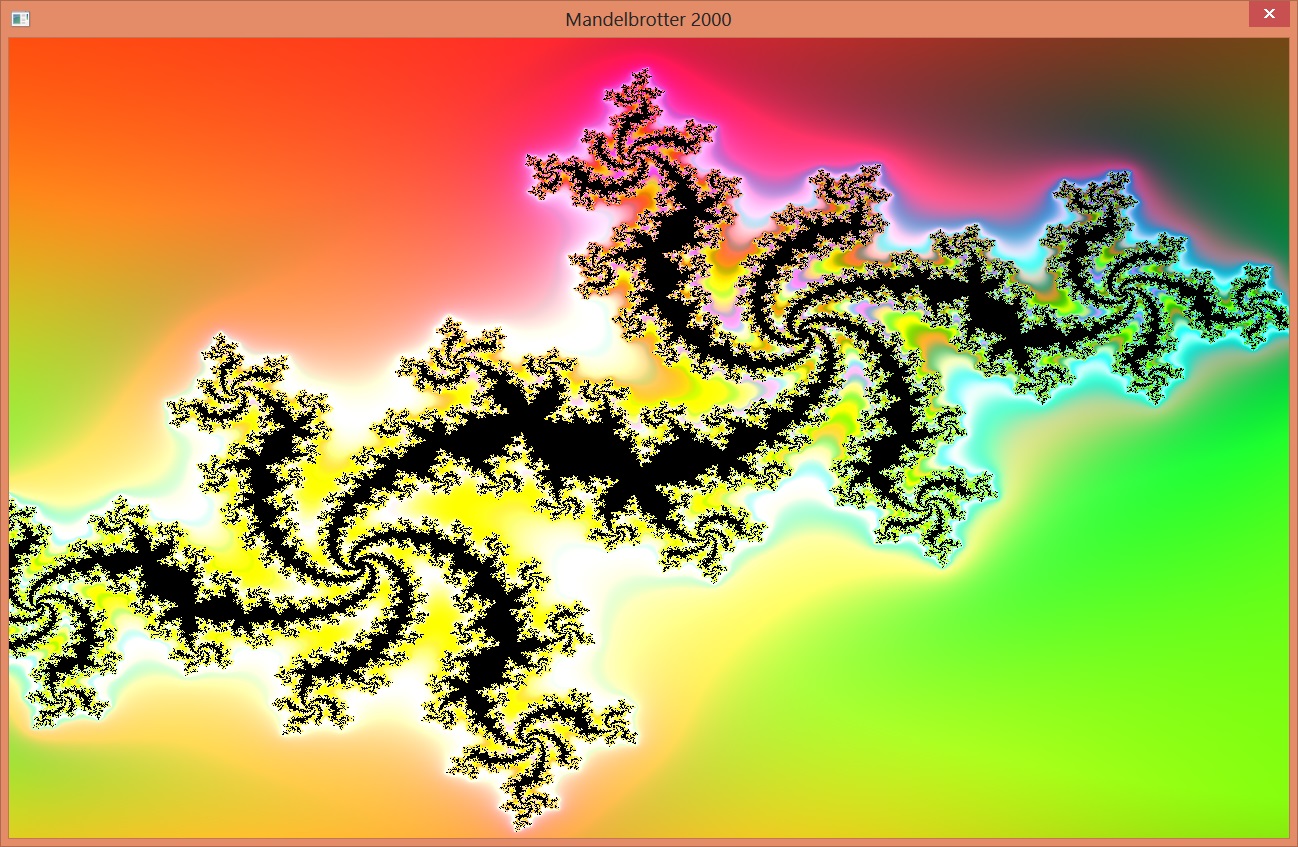
In 1975, Mandelbrot coined the term fractal (derived from the Latin fractus, meaning broken or fractured) to describe self-similar geometric shapes whose complex details remain consistent regardless of magnification. The famous Mandelbrot set, a complex set of numbers visualised as a intricate, infinitely detailed boundary, became one of the most recognizable icons of modern mathematics and computational science.
Primary Components of Mandelbrot's Financial Estate
Because Mandelbrot was an academic and corporate researcher rather than a corporate executive of a public company, his private probate details remain confidential. However, his overall lifetime earnings and financial standing can be evaluated through four distinct revenue streams.
1. Corporate Compensation at IBM Research (1958–1993)
Mandelbrot spent 35 years as a research staff member at the Thomas J. Watson Research Center in Yorktown Heights, New York. In 1974, IBM designated him an IBM Fellow, the highest honor a scientist or engineer can achieve within the company.
The IBM Fellow designation carried substantial financial benefits:
- High-tier corporate salary packages competitive with top corporate executives.
- Dedicated institutional research budgets with complete freedom to pursue interdisciplinary projects.
- Corporate pension benefits and executive health programs available to senior IBM personnel during the late 20th century.
This institutional security allowed Mandelbrot access to IBM’s high-performance supercomputers—tools unavailable to most university faculty at the time—which were required to render the initial visual calculations of fractal sets.
2. Academic Positions and the Yale Sterling Professorship
After retiring from IBM in 1987, Mandelbrot transitioned fully into higher education. He joined the faculty of Yale University, where he spent nearly two decades teaching and conducting research.
In 1999, Yale appointed Mandelbrot as the Sterling Professor of Mathematical Sciences, the highest academic rank given to faculty at the university. Salaries for Sterling Professors at Ivy League institutions typically fall within the upper tier of higher education compensation, providing predictable, high-level earnings until his retirement from teaching in 2005.
3. Major Scientific Prizes and Financial Awards
Throughout his career, Mandelbrot received numerous prestige awards, many of which came with tax-advantaged cash prizes:
- The Wolf Prize in Physics (1993): Awarded for his work in transforming our understanding of complex physical systems. The Wolf Prize carries an award of $100,000 (shared among recipients).
- The Japan Prize (2003): Recognized his lifetime achievements in science and technology. The Japan Prize includes a monetary award of 50 million Japanese yen (equivalent to approximately $400,000 to $450,000 USD at the time of the award).
- The Harvey Prize (1989) and Franklin Medal (1986): Additional international honors accompanied by cash stipends.
These prizes significantly boosted Mandelbrot's liquid net worth during the final two decades of his life.
4. Book Royalties and Publishing Revenue
Mandelbrot was a prolific author whose works crossed over from academic journals to mainstream public readership. His publishing revenue provided a steady secondary income stream.
key published works include:
- The Fractal Geometry of Nature (1982): A definitive text that sold tens of thousands of copies worldwide, rare for a specialized mathematics book, and remained in print for decades.
- The (Mis)Behavior of Markets: A Fractal View of Financial Risk (2004): Co-authored with Richard L. Hudson, this popular book analyzed the shortcomings of traditional financial risk models on Wall Street.
- The Fractalist: Memoir of a Theoretical Maverick (2012): Posthumously published memoir generating ongoing royalties for his estate.
Career Milestones and Financial Overview
| Career Phase / Income Source | Primary Entity | Operational Focus | Financial & Career Impact |
|---|---|---|---|
| IBM Research Fellow (1958–1993) | IBM Thomas J. Watson Research Center | Fractal theory, computer graphics, signal noise | High corporate salary, pension, computing access |
| Academic Tenure (1987–2005) | Yale University | Sterling Professor of Mathematical Sciences | Top-tier academic salary, institutional backing |
| Scientific Awards (1986–2003) | International Foundations (Japan Prize, Wolf Foundation) | Global recognition for mathematical breakthroughs | Cumulative cash prizes exceeding $500,000 |
| Publishing & Royalties (1977–2010+) | W. H. Freeman, Basic Books, Yale University Press | Books on fractals and quantitative finance | Sustained multi-decade passive royalty income |
Personal Net Worth vs. Indirect Economic Impact
A fundamental distinction must be drawn between Benoit Mandelbrot’s personal net worth and the global economic value derived from his discoveries. Mandelbrot chose not to patent basic mathematical formulations or algorithms related to fractal geometry. As a result, the commercial applications of his work generated billions of dollars in enterprise value for private industries without directly building his personal net worth.
- Quantitative Finance & Risk Management
- Power-law distributions and fat-tail risk modeling.
- Telecommunications & Computer Hardware
- Compact fractal antennas in modern smartphones.
- Digital Media & Visual Effects
- Realistic CGI terrain generation in film and video games.
- Medical & Materials Science
- Fractal modeling of human circulatory systems and lung structures.
Fractal Geometry in Wall Street Risk Models
Mandelbrot was an early critic of traditional financial mathematics, such as the standard Black-Scholes option pricing model and the Gaussian bell curve assumption. He demonstrated that financial market returns exhibit fat tails and long-term memory—meaning extreme price swings (market crashes and booms) happen far more frequently than standard statistical models predict.
While hedge funds, high-frequency trading firms, and quantitative risk managers later built multi-billion-dollar automated systems based on power laws and fractal volatility, Mandelbrot remained an educator and advisor, choosing academic publications over founding a proprietary trading firm.
Technology and Telecommunications Applications
Fractal geometry revolutionized antenna design in the late 1990s and early 2000s. Engineers realized that fractal-shaped antenna elements allow devices to receive multiple frequencies simultaneously while occupying a fraction of the physical space required by traditional antennas. This principle became standard in modern mobile phones, Wi-Fi routers, and satellite systems.
Similarly, fractal image compression and CGI terrain generation transformed computer graphics in cinema and gaming, creating natural-looking mountains, trees, and clouds for major entertainment studios.
Common Misconceptions Regarding Mandelbrot's Wealth
Did Mandelbrot Become a Billionaire From Wall Street Consulting?
No. Although Mandelbrot spent time studying market fluctuations and held discussions with major financial institutions, he never managed a private hedge fund or traded proprietary algorithms. His critique of traditional finance was theoretical and foundational. His earnings from financial institutions came primarily through speaking honorariums, academic grants, and book sales.
Did He Patent the Mandelbrot Set?
No. Under international intellectual property laws, mathematical formulas, abstract concepts, and fundamental laws of nature cannot be patented. While specific commercial implementations of fractal software or hardware designs can be patented by developers, the underlying mathematics of the Mandelbrot set remains in the public domain.
Frequently Asked Questions
What was Benoit Mandelbrot's net worth at the time of his death?
At the time of his passing in October 2010, Benoit Mandelbrot’s estimated net worth was between $1 million and $5 million. This estate value was derived from his long tenure as an IBM Fellow, his position as a Sterling Professor at Yale University, substantial scientific cash awards, and international book royalties.
Did Benoit Mandelbrot earn royalties from the Mandelbrot Set?
No. The Mandelbrot set is a mathematical discovery, not a commercial product or trademarked brand. Mandelbrot earned money by writing books, publishing research papers, giving paid lectures, and holding corporate and academic positions, but he received no licensing fees for the use of the Mandelbrot set itself.
How much money did Mandelbrot win from scientific prizes?
Throughout his career, Mandelbrot won several major scientific prizes that included cash awards. Most notably, the 2003 Japan Prize carried an award of 50 million yen (approx. $400,000+ USD), and the 1993 Wolf Prize in Physics included a share of a $100,000 award. Combined with other honors, total prize earnings exceeded $500,000.
What was Mandelbrot's primary source of lifetime income?
His primary long-term source of financial stability was his 35-year corporate career as a senior research scientist and IBM Fellow at the Thomas J. Watson Research Center, followed by his salary as an endowed professor at Yale University.
Why is Mandelbrot’s net worth lower than modern technology innovators?
Unlike tech entrepreneurs who build proprietary commercial software or found venture-backed corporations, Mandelbrot worked within institutional research and academia. His discoveries were published openly in scientific literature rather than commercialized through private business equity.
Conclusion and Key Takeaways
Benoit Mandelbrot’s career illustrates the difference between academic financial success and enterprise wealth creation. While his discovery of fractal geometry generated immense economic value across software development, telecommunications, and finance, Mandelbrot focused his professional career on pure research, writing, and institutional teaching.
His estimated net worth of $1 million to $5 million reflected a lifetime of financial prudence, executive-level corporate research compensation, elite university professorships, and prestigious scientific awards. For researchers, students, and financial analysts seeking to understand his economic legacy, Mandelbrot stands as an example of an institutional scholar whose intellectual contributions outstripped standard monetary measurements.
Image Gallery