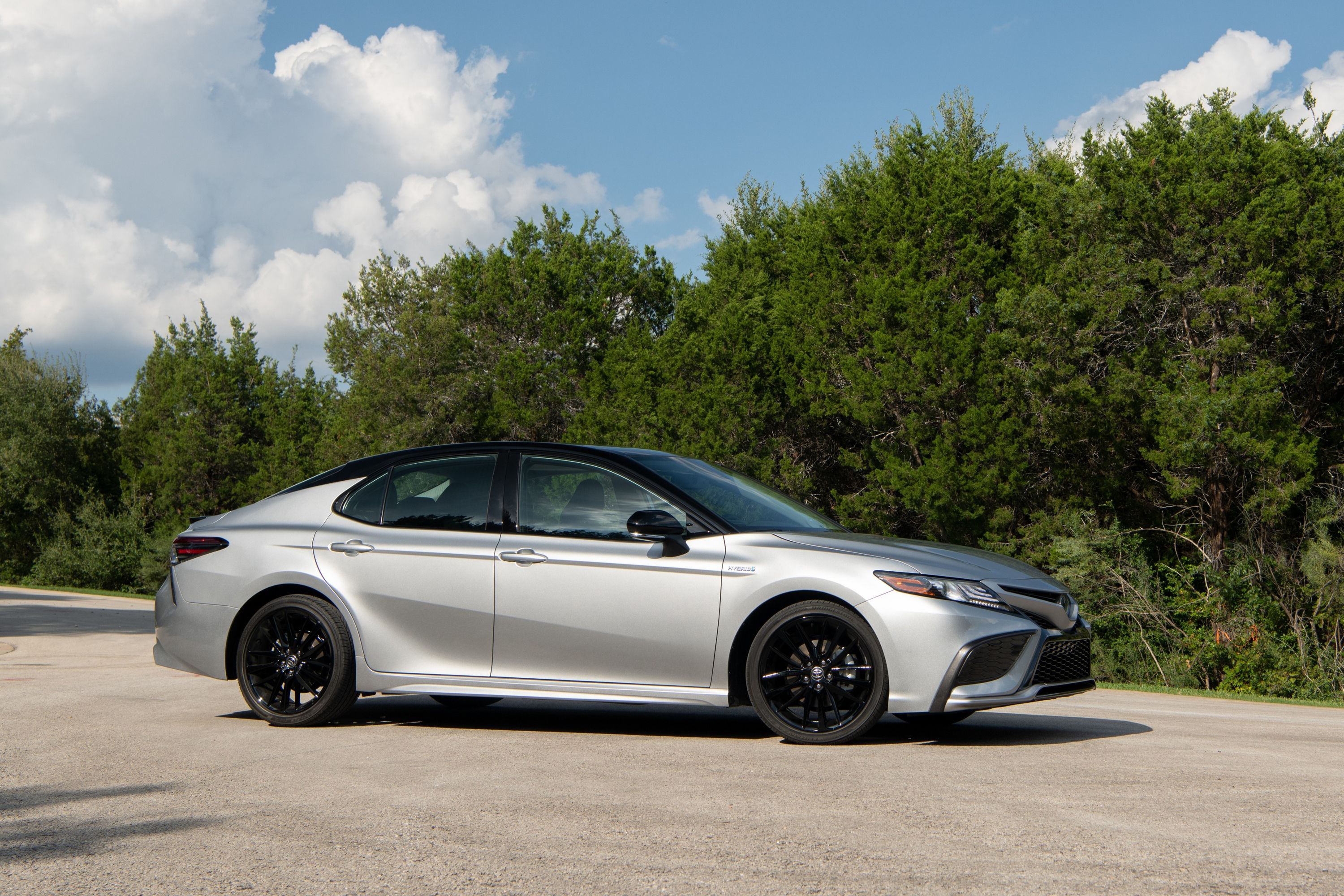
2021 Toyota Camry MPG Overview: Fuel Efficiency by Trim and Engine
The 2021 Toyota Camry offers a broad spectrum of fuel efficiency, ranging from an EPA-estimated 25 combined MPG in the performance-oriented TRD V6 to a remarkable 52 combined MPG in the Hybrid LE trim. Most standard 2.5L four-cylinder...
The 2021 Toyota Camry offers a broad spectrum of fuel efficiency, ranging from an EPA-estimated 25 combined MPG in the performance-oriented TRD V6 to a remarkable 52 combined MPG in the Hybrid LE trim. Most standard 2.5L four-cylinder models deliver between 31 and 32 combined MPG, making the 2021 Camry a leader in the mid-size sedan class for fuel economy.
Contents
Understanding the 2021 Toyota Camry Powertrain Lineup
The 2021 model year marked a significant point in the Camry's eighth generation (XV70), benefiting from the Toyota New Global Architecture (TNGA-K) platform. This platform was engineered to optimize weight distribution and aerodynamic efficiency, which directly influences the vehicle's fuel consumption. To understand the MPG variations, one must first distinguish between the three primary powertrain configurations available during this production year.
The 2.5L Dynamic Force Four-Cylinder
The backbone of the Camry lineup is the 2.5-liter Dynamic Force engine. This powerplant utilizes D-4S direct and port injection along with VVT-iE (Variable Valve Timing-intelligent by Electric motor). This technical combination allows the engine to achieve a thermal efficiency of approximately 40%, which is exceptionally high for a mass-produced internal combustion engine. In the 2021 Camry, this engine is paired with a Direct Shift 8-speed automatic transmission that utilizes a lock-up torque converter to minimize power loss and improve highway fuel economy.
The 3.5L V6 Engine
While many competitors shifted toward turbocharged four-cylinder engines, Toyota retained the 3.5-liter V6 for the 2021 Camry XLE, XSE, and TRD trims. This engine delivers 301 horsepower but requires more fuel to operate. Despite its size, it utilizes the same D-4S injection system as the four-cylinder, allowing it to remain relatively efficient during highway cruising by optimizing the fuel-air mixture based on load.
The Toyota Hybrid System II (THS II)
The 2021 Camry Hybrid pairs a specialized version of the 2.5-liter engine (operating on the Atkinson cycle) with two electric motors and a sophisticated planetary gear-based continuously variable transmission (ECVT). The Atkinson cycle trades some low-end torque for higher efficiency by keeping the intake valves open longer during the compression stroke. The energy normally lost during braking is captured through regenerative braking and stored in the battery pack, which in 2021 transitioned more broadly toward Lithium-ion technology for improved energy density and weight reduction in specific trims.
Detailed EPA Fuel Economy Ratings by Configuration
Fuel economy is not uniform across all 2021 Camry models. Factors such as drivetrain (FWD vs. AWD), wheel size, and vehicle weight lead to varying results.
Standard 2.5L Front-Wheel Drive (FWD)
The entry-level LE and the sport-tuned SE are the most efficient non-hybrid models. Because they utilize 17-inch or 18-inch wheels and have a slightly lower curb weight than the luxury-oriented trims, they achieve the highest ratings for the 2.5L engine. The XLE and XSE trims see a slight dip (roughly 1 MPG combined) due to additional features, heavier sound-deadening materials, and larger 19-inch wheels on the XSE which increase rolling resistance.
The Impact of All-Wheel Drive (AWD)
The 2021 Camry continued to offer an All-Wheel Drive system, available exclusively with the 2.5L engine. This system can direct up to 50% of engine torque to the rear wheels when slip is detected. However, carrying the additional weight of the propeller shaft, rear differential, and multi-link rear suspension adds approximately 165 pounds to the vehicle. Furthermore, the mechanical friction inherent in the AWD system results in a decrease of about 3 to 4 MPG across city and highway cycles compared to FWD counterparts.
Performance and the V6 Penalty
The V6 engine is designed for drivers prioritizing acceleration and smoothness. The TRD (Toyota Racing Development) trim, introduced as a permanent fixture by 2021, features aerodynamic body kits, a stiffer suspension, and wider tires. These performance enhancements create more aerodynamic drag and rolling resistance, resulting in the lowest MPG ratings in the Camry family.
| 2021 Camry Configuration | City MPG | Highway MPG | Combined MPG |
|---|---|---|---|
| LE / SE (2.5L FWD) | 28 | 39 | 32 |
| XLE / XSE (2.5L FWD) | 27 | 38 | 31 |
| LE / SE / XLE / XSE (2.5L AWD) | 25 | 34 | 29 |
| XLE V6 | 22 | 33 | 26 |
| XSE V6 | 22 | 32 | 26 |
| TRD V6 | 22 | 31 | 25 |
| Hybrid LE | 51 | 53 | 52 |
| Hybrid SE / XLE / XSE | 44 | 47 | 46 |
The Efficiency Leader: 2021 Camry Hybrid MPG
The 2021 Camry Hybrid represents a pinnacle of mid-size sedan efficiency, but there is a notable discrepancy between the Hybrid LE and the higher Hybrid trims (SE, XLE, XSE).
The Hybrid LE achieves a staggering 52 MPG combined. This is primarily due to its use of a Lithium-ion battery pack and narrower, low-rolling-resistance tires on 16-inch steel or 17-inch alloy wheels. This configuration minimizes the energy required to move the vehicle from a standstill.
In contrast, the Hybrid SE, XLE, and XSE trims are rated at 46 MPG combined. These trims often used a Nickel-Metal Hydride (NiMH) battery in certain production batches or simply suffered an efficiency penalty due to larger 18-inch or 19-inch wheels and increased curb weight from premium interior features. While 46 MPG is still exceptional, the 6 MPG gap between the LE and the XSE is a crucial consideration for buyers prioritizing maximum fuel range.
Real-World Factors Influencing 2021 Camry Fuel Economy
While EPA ratings provide a standardized benchmark, actual fuel consumption in 2026—as these vehicles reach five years of service—can be influenced by several maintenance and environmental factors.
Tire Selection and Pressure
The 2021 Camry was originally fitted with tires specifically chosen for low rolling resistance. As these vehicles require their first or second set of replacement tires, many owners opt for performance-oriented or all-weather tires. These replacements can decrease fuel efficiency by 2% to 5% if they have a higher grip coefficient or heavier carcass. Maintaining the recommended PSI (usually 35 PSI for most trims) is essential; under-inflated tires increase the contact patch and force the engine to work harder to maintain speed.
Aerodynamics and Modifications
The 2021 Camry features an underbody cover and active grille shutters (on certain trims) to reduce drag. Adding aftermarket roof racks, window deflectors, or heavy cargo carriers significantly disrupts airflow. At highway speeds, aerodynamic drag is the primary force the engine must overcome. Even a small roof rack can reduce highway MPG by 10% or more.
Fuel Quality and Ethanol Content
The 2021 Camry is designed to run on 87-octane regular unleaded gasoline. While using premium fuel (91+ octane) does not generally improve MPG in the 2.5L or Hybrid models, the ethanol content in the fuel does matter. E15 fuel (15% ethanol) contains less energy per gallon than E10 or pure gasoline, which can lead to a slight reduction in overall range.
2021 Camry MPG vs. Key Competitors
To contextualize the 2021 Camry's efficiency, it is helpful to compare it against its primary rivals from the same model year. The Camry consistently fought for the top spot against the Honda Accord and the Hyundai Sonata.
- Honda Accord (2021): The Accord's base 1.5L turbocharged engine offered 30 city / 38 highway / 33 combined. While slightly better than the Camry's base engine in combined ratings, the Camry's naturally aspirated 2.5L often proved more efficient in high-load highway situations. The Accord Hybrid offered 48 MPG combined, falling short of the Camry Hybrid LE’s 52 MPG.
- Hyundai Sonata (2021): The Sonata Blue (Hybrid) matched the Camry Hybrid LE with a 52 MPG combined rating. However, the standard 2.5L Sonata engines generally trailed the Camry by 1-2 MPG in highway cycles.
- Nissan Altima (2021): The Altima offered a competitive 32 MPG combined with its base engine and 30 MPG combined with AWD. It lacked a hybrid variant in 2021, giving the Camry a significant advantage for eco-conscious buyers.
Maintaining Peak MPG in a Five-Year-Old Camry
As of 2026, a 2021 Camry is likely approaching 60,000 to 85,000 miles. To maintain the original fuel economy standards, specific maintenance steps are required.
- Mass Air Flow (MAF) Sensor Cleaning: A dirty MAF sensor can lead to incorrect air-fuel ratios, causing the engine to run "rich" and consume more fuel.
- Spark Plug Inspection: While Toyota's iridium-tipped spark plugs are rated for 100,000 miles, early fouling can occur if the vehicle is driven primarily in short, city bursts where the engine doesn't reach full operating temperature.
- Hybrid Battery Health: For hybrid owners, ensuring the battery cooling fan intake (located near the rear seats) is free of dust and debris is vital. A hot battery is less efficient at taking a charge, forcing the gasoline engine to run more frequently.
- Transmission Fluid: Although often marketed as "lifetime" fluid, replacing the transmission fluid around the 60,000-mile mark can reduce internal friction and help maintain the efficiency of the 8-speed automatic.
FAQ
Does the 2021 Camry require premium gas to get the best MPG?
No. The 2021 Toyota Camry, including the V6 and Hybrid models, is engineered to operate at peak efficiency using regular 87-octane unleaded gasoline. Using premium fuel will not result in a measurable increase in MPG or performance for the 2.5L or Hybrid engines.
Why does the Camry TRD have such low MPG compared to the XSE V6?
The TRD trim utilizes a fixed rear wing and a unique aerodynamic body kit that increases downforce for better handling. This added drag, combined with stickier performance tires and a weight-optimized but less aerodynamic wheel design, results in a lower highway MPG rating (31 MPG) compared to the XLE V6 (33 MPG).
Is the AWD Camry significantly worse on gas than the FWD version?
The AWD system results in a loss of approximately 3 MPG in the combined cycle. This is due to both the mechanical drag of the additional drivetrain components and the extra weight. If you live in a climate where snow is infrequent, the FWD model is the more cost-effective choice for long-term fuel savings.
How much does the Camry Hybrid's "EV Mode" help with MPG?
EV Mode allows the vehicle to operate solely on electric power for very short distances (typically under 1 mile) at low speeds. While useful in parking lots, it is not the primary driver of the Camry's high MPG. The system's ability to seamlessly blend the engine and motor during normal city driving is what generates the 50+ MPG ratings.
Does wheel size really affect my Camry's fuel economy?
Yes. Larger wheels (like the 19-inch alloys on the XSE) are generally heavier and have tires with wider contact patches. This increases rotational inertia and rolling resistance. Moving from 17-inch to 19-inch wheels can result in a loss of 1-2 MPG.
Final Recommendation
For drivers prioritizing maximum fuel economy in 2026, the 2021 Toyota Camry Hybrid LE remains the superior choice, offering a rare combination of mid-size comfort and 52 MPG capability. If a hybrid is not feasible, the standard LE or SE FWD models provide the best balance of initial purchase price and fuel efficiency, consistently achieving nearly 40 MPG on the highway. When purchasing a used 2021 model, always verify the tire type and maintenance history, as these are the most significant variables affecting whether the car will still meet its original EPA ratings.
Image Gallery