Heisman Trophy Winners for Alabama: A Complete Historical and Statistical Analysis
As of the 2026 college football season, the University of Alabama has produced four Heisman Trophy winners: Mark Ingram II (2009), Derrick Henry (2015), DeVonta Smith (2020), and Bryce Young (2021). All four recipients achieved this ho...
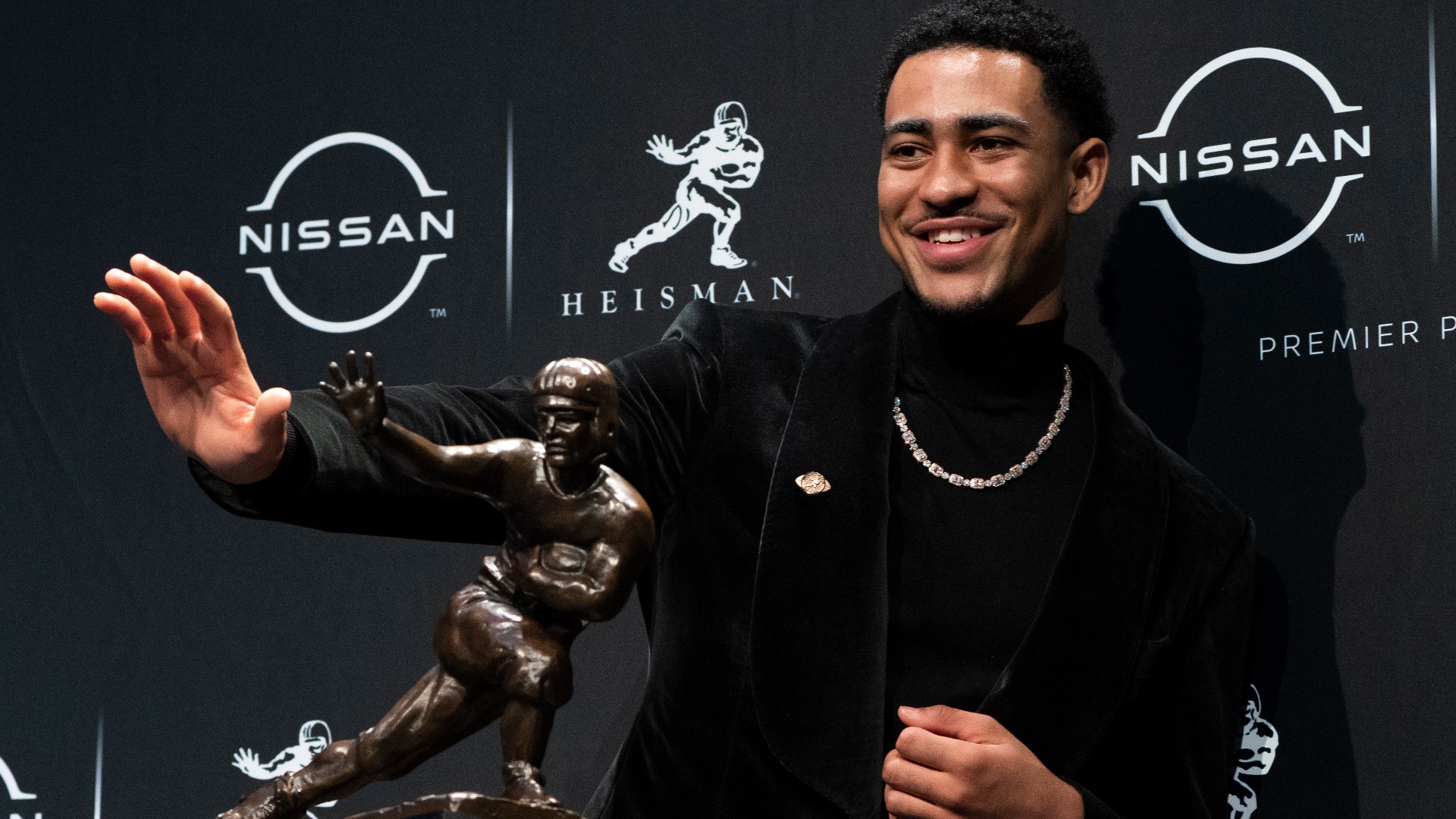
As of the 2026 college football season, the University of Alabama has produced four Heisman Trophy winners: Mark Ingram II (2009), Derrick Henry (2015), DeVonta Smith (2020), and Bryce Young (2021). All four recipients achieved this honor during the historic tenure of Coach Nick Saban, solidifying the Crimson Tide's modern reputation as a premier destination for elite offensive talent.
Contents
The Heisman Trophy, awarded annually by the Heisman Trust to the most outstanding player in college football, was a long-elusive prize for the Alabama Crimson Tide. Despite a century of dominance and numerous national championships, the program did not secure its first winner until 2009. This late-blooming success in the Heisman race coincides with Alabama’s strategic pivot from a traditional, defensive-minded powerhouse to a modern, high-octane offensive juggernaut that utilizes NFL-style concepts to maximize player production. In the current 2026 landscape, the program continues to set the standard for player development under the leadership of Kalen DeBoer, maintaining the high-performance culture established during the previous two decades.
Comprehensive Profile of Alabama Heisman Winners
The four winners represent three different positions—running back, wide receiver, and quarterback—demonstrating the versatility of the Alabama system. Each player’s Heisman campaign was defined by record-breaking statistics and pivotal performances in high-stakes games.
Mark Ingram II (2009): The Historic Breakthrough
Mark Ingram II became Alabama’s first Heisman winner in 2009, a milestone that many felt was decades overdue. As a sophomore, Ingram was the focal point of an offense that relied on power running and physical dominance. He finished the season with 1,658 rushing yards and 17 touchdowns, adding 334 receiving yards and three scores through the air.
His performance in the SEC Championship Game against No. 1 Florida was the "Heisman Moment" that sealed the vote. Ingram outshined the previous winner, Tim Tebow, by accounting for 189 yards from scrimmage and three touchdowns. His victory was one of the closest in history, narrowly defeating Stanford’s Toby Gerhart.
Derrick Henry (2015): The Workhorse Campaign
Six years after Ingram’s win, Derrick Henry delivered one of the most prolific rushing seasons in NCAA history. Standing 6'3" and weighing 247 pounds, Henry was a physical anomaly who wore down defenses with a massive volume of carries. In 2015, he broke Herschel Walker’s long-standing SEC single-season rushing record, finishing with 2,219 yards and 28 touchdowns.
Henry’s season was defined by endurance. In the final two games of the regular season and the SEC Championship, he carried the ball 46, 44, and 42 times, respectively. His ability to maintain elite speed and power over 40+ carries per game made him the consensus choice for the trophy, edging out Christian McCaffrey and Deshaun Watson.
DeVonta Smith (2020): Defying the Position Bias
In 2020, DeVonta Smith achieved what many thought was impossible in the modern era: winning the Heisman as a wide receiver. He was the first player at his position to win since Desmond Howard in 1991. Despite the 2020 season being shortened and complicated by global events, Smith’s numbers were staggering. He recorded 117 receptions for 1,856 yards and 23 touchdowns.
Smith’s "Slim Reaper" moniker reflected his lean frame, but his route running, hands, and ability to gain yards after the catch were unmatched. His performance in the first half of the National Championship Game—12 catches for 215 yards and three touchdowns—served as a final exclamation point on a season where he dominated every secondary he faced.
Bryce Young (2021): The First Quarterback
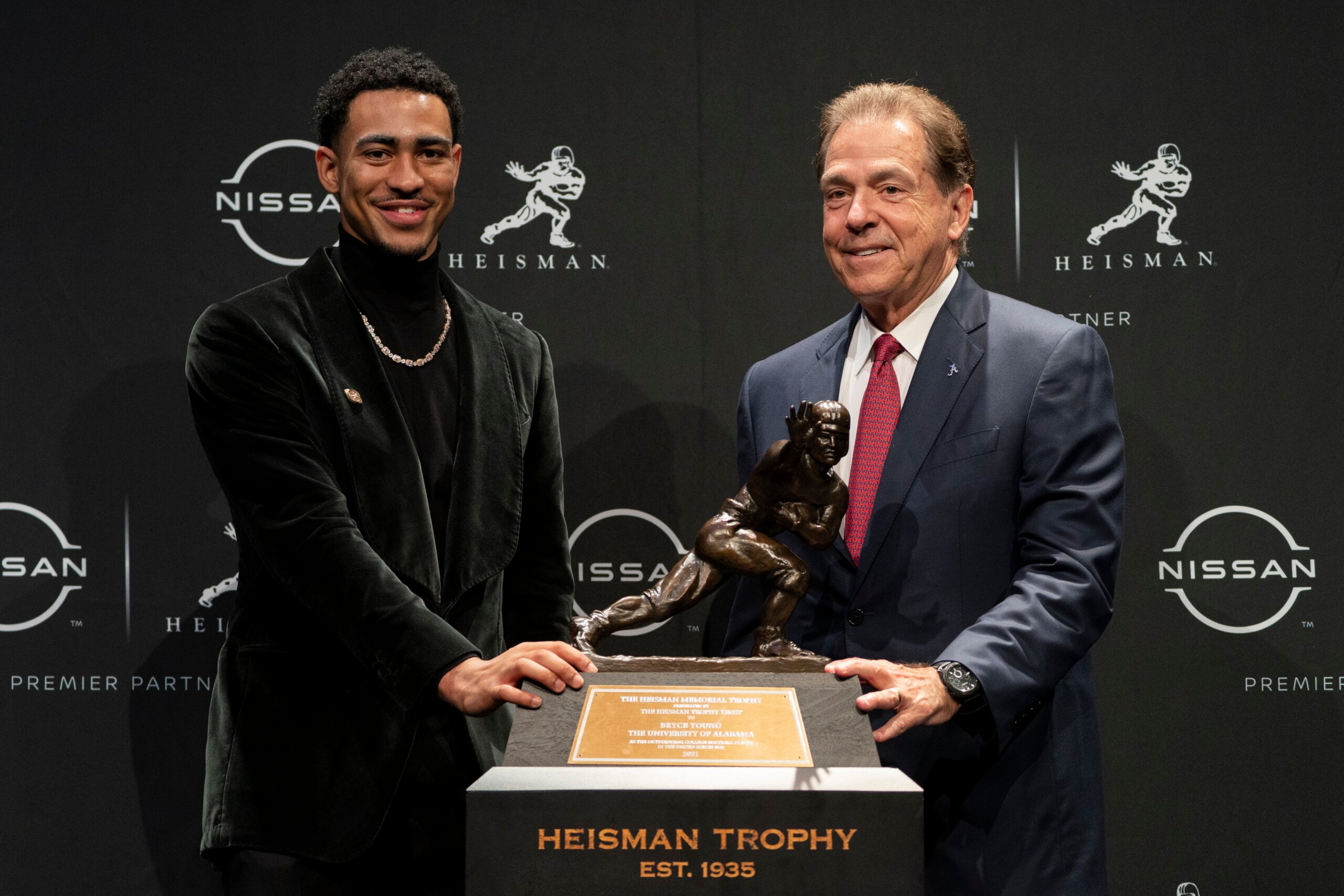
Surprisingly, despite a lineage of legendary signal-callers, Bryce Young was the first Alabama quarterback to hoist the Heisman. In his first year as a starter, Young displayed veteran-level poise and elite playmaking ability. He threw for 4,872 yards and 47 touchdowns, leading Alabama to another SEC title.
Young’s victory was cemented during the SEC Championship Game against a Georgia defense that many considered the best in a generation. He threw for an SEC Championship record 421 yards and three touchdowns, proving that his surgical precision could dismantle even the most elite defensive structures.
Comparative Statistical Breakdown of Alabama Winners
The following table provides a technical comparison of the statistical output during each player's Heisman-winning season.
| Winner | Year | Position | Key Statistic 1 | Key Statistic 2 | All-Purpose Yards |
|---|---|---|---|---|---|
| Mark Ingram II | 2009 | RB | 1,658 Rush Yards | 17 Rush TDs | 1,992 |
| Derrick Henry | 2015 | RB | 2,219 Rush Yards | 28 Rush TDs | 2,310 |
| DeVonta Smith | 2020 | WR | 1,856 Rec. Yards | 23 Rec. TDs | 1,921 |
| Bryce Young | 2021 | QB | 4,872 Pass Yards | 47 Pass TDs | 4,953 |
Evolution of the Alabama Offensive System
The concentration of Heisman winners between 2009 and 2021 reflects a massive shift in how the University of Alabama approaches the game. In 2026, we look back at this period as the Great Offensive Transition.
The Tactical Shift to RPO and Spread Concepts
Prior to 2014, the Alabama offense was primarily a "pro-style" ground-and-pound system. This was effective for Mark Ingram, but it limited the statistical ceiling for quarterbacks and receivers. The hiring of Lane Kiffin as offensive coordinator in 2014 marked the beginning of a transformation toward the Run-Pass Option (RPO) and spread mechanics.
The Impact of Elite Playcalling
The arrival of subsequent coordinators like Steve Sarkisian and Bill O'Brien further refined this approach. By stretching the field horizontally and vertically, Alabama forced defenders out of the box, creating the space necessary for athletes like DeVonta Smith to operate. This systemic evolution is the primary reason why Alabama produced three winners in a seven-year span after producing none for the first 74 years of the award's existence.
The "Near Misses": Alabama’s Heisman Finalists
While Alabama has four winners, the program’s dominance is further evidenced by the number of players who finished in the top three of the voting. In the 2026 era of college football, these finalists are remembered as equally vital to the program's prestige.
- AJ McCarron (2013): Finished 2nd in the voting after leading Alabama to back-to-back national titles. He was the prototype for the efficient, winning quarterback before the system became more stat-heavy.
- Tua Tagovailoa (2018): Finished 2nd behind Kyler Murray. Tagovailoa revolutionized the Alabama passing game, setting efficiency records that had never been seen in the SEC.
- Mac Jones (2020): Finished 3rd in the same year teammate DeVonta Smith won. Jones threw for 4,500 yards with a 77.4% completion rate, the highest in NCAA history at the time.
- Will Anderson Jr. (2021): Finished 5th in the voting but was widely considered the most dominant player in the country. As a linebacker, he recorded 17.5 sacks and 34.5 tackles for loss, sparking debates about the Heisman’s bias toward offensive players.
Professional Success and the "Heisman Jinx"
A common metric for the quality of a Heisman winner is their performance in the NFL. Alabama’s winners have largely avoided the "Heisman Jinx," with all four becoming significant contributors at the professional level.
- Mark Ingram II: Enjoyed a 12-year NFL career, becoming the New Orleans Saints' all-time leading rusher and a three-time Pro Bowler.
- Derrick Henry: Became one of the most dominant NFL backs of his generation with the Tennessee Titans, joining the elite "2,000-yard club" in 2020 and winning the NFL Offensive Player of the Year.
- DeVonta Smith: Quickly established himself as a WR1 for the Philadelphia Eagles, proving that his technical skills and route running translated perfectly to the professional game.
- Bryce Young: Drafted No. 1 overall by the Carolina Panthers in 2023, Young has faced the challenges of franchise rebuilding while demonstrating the high football IQ that won him the Heisman.
The 2026 Outlook: Who is Next?
As we move through the 2026 season, the question in Tuscaloosa is not if another player will win the Heisman, but when. Under Coach Kalen DeBoer, the offensive philosophy has remained aggressive. The program continues to recruit five-star talent at every skill position, and the current NIL (Name, Image, and Likeness) environment ensures that Alabama remains a top destination for Heisman-caliber transfers.
The technical infrastructure at Alabama, including the advanced sports science labs and the "Fourth Quarter" conditioning program, provides players with a physical edge that often manifests in the late-season performances that Heisman voters value most.
Frequently Asked Questions
Who was the first Alabama player to win the Heisman Trophy?
Mark Ingram II was the first Alabama player to win the Heisman Trophy, receiving the award in 2009. Despite the program's long history of success, it took 75 years of the award's existence for a Crimson Tide player to be honored.
Ingram’s win broke a perceived barrier for the program. Before 2009, legends like Bart Starr, Joe Namath, and Ken Stabler had played for Alabama but never won the award, often because the team’s success was attributed to a balanced system rather than individual stardom.
How many Heisman winners did Nick Saban coach at Alabama?
Nick Saban coached all four of Alabama’s Heisman winners: Mark Ingram II, Derrick Henry, DeVonta Smith, and Bryce Young. This achievement is a testament to his ability to adapt his coaching staff and philosophy to the modern game.
Saban’s recruitment of elite offensive coordinators—such as Lane Kiffin, Steve Sarkisian, and Bill O'Brien—was instrumental in this success. By moving away from a strictly defensive identity, he created a platform where individual offensive players could produce the "Heisman-worthy" statistics required by modern voters.
Has an Alabama defensive player ever won the Heisman?
No defensive player from Alabama has won the Heisman Trophy. The closest a defensive player came in recent history was Will Anderson Jr. in 2021, who finished fifth in the voting despite leading the nation in sacks and tackles for loss.
Historically, the Heisman has been an offensive-biased award. Only Charles Woodson (1997) has won as a primary defensive player. Alabama has produced numerous winners of the Bednarik and Nagurski awards (for best defensive player), but the Heisman remains elusive for the "Dark Side" of the ball.
Which Alabama Heisman winner has the most rushing yards in a season?
Derrick Henry holds the record for the most rushing yards in a Heisman-winning season for Alabama, with 2,219 yards in 2015. This total also set an SEC single-season record at the time.
Henry’s season was a display of pure volume and durability. He carried the ball 395 times that year, averaging 5.6 yards per carry. His performance in the 2015 Iron Bowl, where he carried the ball 46 times for 271 yards, is considered one of the greatest individual performances in the history of the rivalry.
How does Alabama compare to other schools in Heisman wins as of 2026?
As of 2026, Alabama is among the top tier of schools with four Heisman trophies. They trail historic leaders like Notre Dame, Ohio State, Oklahoma, and USC, which all have seven or more winners.
However, Alabama’s "density" of wins is unmatched in the 21st century. While many schools accumulated their trophies in the mid-20th century, all of Alabama’s wins have come since 2009. This makes Alabama the most successful Heisman factory of the modern era.
Summary of Heisman Excellence at Alabama
The legacy of the Heisman Trophy at Alabama is a story of evolution and excellence. From the breakthrough of Mark Ingram to the surgical precision of Bryce Young, the Crimson Tide has proven that it can produce elite talent at every offensive position. As the 2026 season progresses, the standard for Heisman candidacy remains the same in Tuscaloosa: individual brilliance must be matched by team success.
For fans and analysts tracking the next generation of stars, the University of Alabama remains the gold standard for player development and national exposure. Whether through the ground game or the air, the path to the Heisman often runs through the SEC and the legendary turf of Bryant-Denny Stadium.
Image Gallery