What is the Difference Between Term and Whole Life Insurance? A Clear 2026 Comparison
The primary difference between term and whole life insurance lies in the duration of coverage and the accumulation of cash value. Term life provides affordable, temporary protection for a set number of years, while whole life offers pe...
The primary difference between term and whole life insurance lies in the duration of coverage and the accumulation of cash value. Term life provides affordable, temporary protection for a set number of years, while whole life offers permanent coverage for your entire lifetime alongside a guaranteed savings component that builds equity.
Contents
Choosing the right life insurance policy is one of the most significant financial decisions an individual will make in 2026. As the economic landscape continues to evolve with shifting interest rates and modernized actuarial tables, understanding the mechanical differences between these two products is essential for protecting your family’s future. While both products pay a death benefit to beneficiaries, they serve entirely different roles in a comprehensive financial plan.
Understanding the Fundamentals of Life Insurance
Life insurance is a contract between an individual and an insurance provider. In exchange for regular premium payments, the insurer guarantees a lump-sum payment, known as a death benefit, to designated beneficiaries upon the insured's passing. This financial tool is designed to replace lost income, cover funeral expenses, pay off debts, or provide an inheritance.
By 2026, the life insurance industry has streamlined the underwriting process through accelerated digital assessments, making it easier than ever to secure coverage. However, the choice between "pure protection" and "permanent security" remains the central debate for consumers. To make an informed choice, one must look past the monthly premium and analyze the long-term utility of the policy.
Term Life Insurance: Pure Protection Defined
Term life insurance is often described as "pure" insurance because its sole purpose is to provide a financial safety net for a specific window of time. It does not include any investment features or savings components, which allows the premiums to remain significantly lower than those of permanent policies.
How Term Insurance Works
When you purchase a term policy, you select a "term"—typically 10, 15, 20, 25, or 30 years. If the insured individual passes away during this period, the insurance company pays the face value of the policy to the beneficiaries. If the insured outlives the term, the coverage simply expires, and no money is returned unless a specific "return of premium" rider was purchased.
Cost Structure and Affordability
In the current 2026 market, term life remains the most accessible form of coverage for young families and individuals with significant temporary debts, such as mortgages or student loans. Because the insurer only expects to pay a claim on a small percentage of term policies (since most policyholders outlive their terms), they can offer high coverage amounts—such as $1 million—for a fraction of the cost of a whole life policy.
The Conversion Privilege
Many modern term policies include a conversion rider. This allows the policyholder to convert their temporary term coverage into a permanent whole life policy without undergoing a new medical exam. This is a critical feature for individuals who may develop health issues during their term that would otherwise make them uninsurable or prohibitively expensive to cover later.
Whole Life Insurance: Permanent Security and Cash Value
Whole life insurance is a type of permanent life insurance designed to cover the insured for their entire life, provided the premiums are paid. Unlike term insurance, it is not just a risk-management tool; it is also a financial asset.
The Cash Value Component
The hallmark of whole life insurance is the cash value account. A portion of every premium dollar you pay is directed into a tax-deferred savings account within the policy. Over time, this cash value grows at a guaranteed rate set by the insurance company. By 2026, many policyholders use this accumulated equity as a "private bank," borrowing against it to fund business ventures, college tuition, or supplemental retirement income.
Guaranteed Level Premiums
With a standard whole life policy, your premiums are locked in at the age of purchase and will never increase, regardless of changes in your health or the economy. This provides a level of predictability that is highly valued by individuals focused on long-term estate planning. While the initial cost is much higher than term insurance, the fixed nature of the premium protects against the rising costs of insurance as one ages.
Dividends in Mutual Companies
If you purchase a whole life policy from a mutual insurance company, you may be eligible to receive annual dividends. While not guaranteed, these dividends represent a share of the company’s profits. Policyholders can choose to take these dividends in cash, use them to reduce their premium payments, or reinvest them into the policy to purchase "paid-up additions," which increase the total death benefit and cash value.
Side-by-Side Comparison: Term vs. Whole Life
To provide a clear comparison for 2026 consumers, the following table breaks down the essential differences across several key metrics.
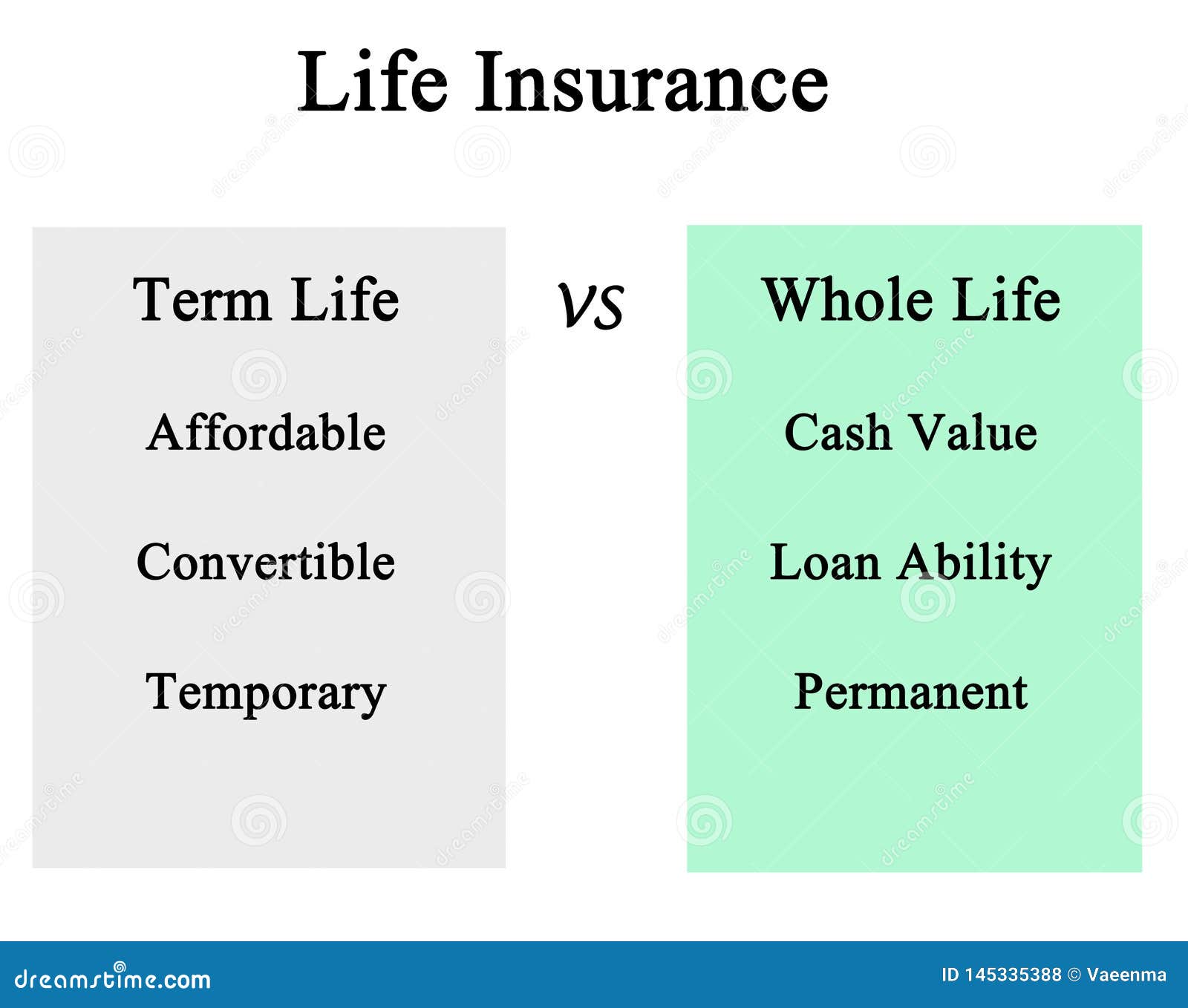
| Feature | Term Life Insurance | Whole Life Insurance |
|---|---|---|
| Duration of Coverage | Fixed period (e.g., 10, 20, or 30 years) | Entire lifetime (until death or age 121) |
| Premium Cost | Low and affordable in early years | High (often 5 to 10 times more than term) |
| Cash Value | None | Guaranteed growth over time |
| Death Benefit | Only paid if death occurs within the term | Guaranteed payout regardless of when death occurs |
| Flexibility | Policy expires or can be renewed at higher rates | Cash value can be borrowed or used for premiums |
| Tax Treatment | Death benefit is generally tax-free | Death benefit is tax-free; cash value grows tax-deferred |
| Best For | Income replacement, mortgage protection, families | Estate planning, high-net-worth wealth transfer |
Which Policy is "Better" for Your Financial Goals?
The term "better" is subjective and depends entirely on your specific stage of life and financial objectives. In 2026, financial advisors generally categorize the choice based on the following scenarios.
When Term Life is the Superior Choice
Term life is usually the better option for those who have a high need for coverage but a limited budget. For example, a 30-year-old parent with a new mortgage and two children needs a high death benefit to ensure the family can stay in their home and the children can attend college if a tragedy occurs. By the time the 30-year term ends, the mortgage is likely paid off, and the children are independent, meaning the need for insurance has naturally diminished.
When Whole Life is the Superior Choice
Whole life is often the better choice for individuals looking for a permanent "forced savings" vehicle or those with complex estate planning needs. If you have a lifelong dependent, such as a child with special needs, permanent coverage is essential. Additionally, high-income earners may use whole life as a way to diversify their portfolio with a low-volatility asset that offers tax advantages not found in traditional brokerage accounts.
Common Riders and Customizations in 2026
Both term and whole life policies can be customized with "riders"—optional add-ons that provide extra benefits. As of 2026, several riders have become industry standards:
- Accelerated Death Benefit: This allows you to access a portion of your death benefit while still alive if you are diagnosed with a terminal or chronic illness. This can be used to pay for medical care or hospice.
- Waiver of Premium: If you become totally disabled and unable to work, the insurance company waives your premium payments while keeping the policy in force.
- Child Term Rider: Provides a small amount of life insurance coverage for your children under your own policy, which can often be converted to a permanent policy when they reach adulthood.
- Long-Term Care (LTC) Rider: Increasingly popular in 2026, this allows the policy to pay for long-term care expenses, effectively combining life insurance with health-related protection.
Pitfalls and Myths to Avoid
One of the most common myths in the insurance world is the "Buy Term and Invest the Difference" (BTID) strategy. The logic is that since term is cheaper, you should take the money you saved by not buying whole life and invest it in the stock market. While this can be effective for disciplined investors, many people spend the "difference" rather than investing it, leaving them with no coverage and no savings later in life.
Conversely, a common pitfall of whole life insurance is the "surrender period." If you decide to cancel a whole life policy within the first few years, you will likely receive very little of your cash value back due to high initial administrative costs and agent commissions. Whole life is a decades-long commitment, not a short-term savings account.
Frequently Asked Questions
Can I have both term and whole life insurance at the same time?
Yes, this is known as "layering" or "laddering" coverage. Many people use a small whole life policy for final expenses and a larger term policy to cover their peak earning years and debt-heavy periods. This hybrid approach provides permanent protection while keeping overall costs manageable.
Does the death benefit of a whole life policy increase over time?
In a standard policy, the death benefit remains level. However, if you have a policy that pays dividends and you choose to use those dividends to purchase "paid-up additions," your total death benefit can grow significantly over the life of the policy.
What happens to the cash value in a whole life policy when I die?
Generally, the insurance company keeps the cash value and pays the face value (death benefit) to your beneficiaries. The cash value is essentially the "equity" that allows the insurer to maintain a level premium as you get older. Some specific policy types or riders allow for the payout of both the death benefit and the cash value, but these are typically more expensive.
Is term life insurance a waste of money if I don't die during the term?
No, insurance is the purchase of "risk transfer." Much like car insurance is not a waste if you don't get into an accident, term life provides peace of mind and financial security for your loved ones during your most vulnerable financial years.
Can I withdraw money from my whole life insurance cash value?
Yes, you can withdraw funds or take out a loan against the cash value. However, it is important to note that withdrawals can be taxable if they exceed the amount of premiums you've paid in, and unpaid loans will be deducted from the death benefit paid to your beneficiaries.
Making Your Decision: Next Steps
To determine which policy fits your needs in 2026, start by calculating your total financial obligations, including your mortgage balance, existing debts, and the future cost of your children’s education. If your primary goal is to cover these specific, time-bound debts, a term life policy is the most efficient solution. If you are looking for a permanent asset that will be part of your legacy or a source of emergency funds, whole life deserves a closer look.
Consult with a licensed financial professional who can provide a detailed quote based on your health profile and financial status. In 2026, many insurers offer online tools to compare the internal rate of return on cash value policies versus term-plus-investing scenarios, allowing for a data-driven decision.
For further information on insurance regulations and consumer protections, you can refer to the National Association of Insurance Commissioners (NAIC) or the Internal Revenue Service (IRS) for details on the tax implications of life insurance products.
Image Gallery