Understanding Los Angeles Police Rank Insignia in 2026
Los Angeles Police rank insignia consist of a specific system of sleeve chevrons, collar bars, and shoulder stars that denote a member's authority and responsibilities within the department. As of 2026, these markings remain standardiz...
Los Angeles Police rank insignia consist of a specific system of sleeve chevrons, collar bars, and shoulder stars that denote a member's authority and responsibilities within the department. As of 2026, these markings remain standardized according to the LAPD Manual, allowing for immediate visual identification of personnel ranging from entry-level Police Officers to the Chief of Police.
Contents
The Los Angeles Police Department (LAPD) maintains one of the most recognizable hierarchical structures in American law enforcement. For those interacting with the department, pursuing a career in service, or working in professional production, understanding the nuances of these visual markers is essential for recognizing the chain of command. In 2026, the department continues to utilize a blend of traditional military-style symbols and specialized identifiers to categorize its nearly 10,000 sworn officers.
The Hierarchical Structure of LAPD Ranks
The LAPD operates under a rigid quasi-military structure. This hierarchy is divided into several tiers: line officers, supervisors (Sergeants), mid-level management (Lieutenants and Captains), and executive leadership (Commanders and Chiefs). Each tier has specific insignia requirements that must be followed with high-precision uniform standards.
In the 2026 operational year, the distinction between "rank" and "pay grade" is a critical technical detail. For example, while a Police Officer II and a Police Officer III are different pay grades, they may not always have different sleeve insignia unless the officer has achieved a specific specialized status. However, once an officer moves into the supervisory or command tiers, the insignia change significantly.
Sworn Personnel Tiers
- Entry Level and Field Officers: Focus on patrol and basic investigation.
- Supervisory Staff: Sergeants and Detectives who oversee field operations and specialized units.
- Command Staff: Lieutenants and Captains who manage divisions or specialized bureaus.
- Executive Staff: Commanders, Deputy Chiefs, Assistant Chiefs, and the Chief of Police who handle city-wide strategy.
Sleeve Insignia: Officers and Sergeants
For the lower to mid-level ranks, the primary method of identification is the sleeve chevron. These are worn on both sleeves of the Class A and Class B shirts, as well as the formal dress jacket.
Police Officer and Senior Lead Officer
A standard Police Officer I or II does not wear rank insignia on their sleeves. However, upon reaching the rank of Police Officer III (P-III), the officer wears two chevrons. The P-III+1, often a Senior Lead Officer (SLO) or a Field Training Officer (FTO), wears the same two chevrons but is distinguished by their specific assignment and, in some historical or ceremonial contexts, additional service stripes near the cuff.
Sergeant Insignia (Sergeant I and II)
The rank of Sergeant is the first major step into supervision.
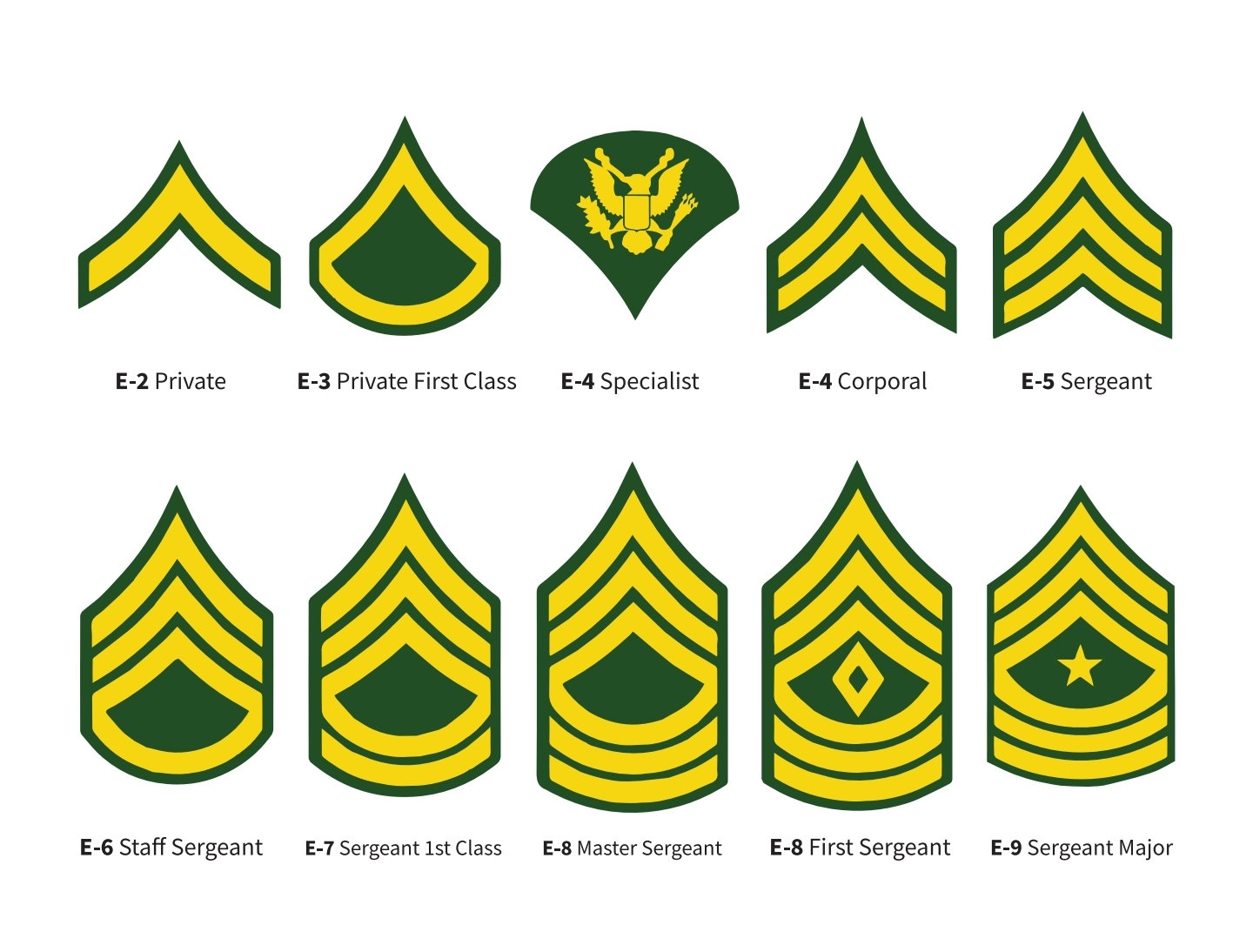
- Sergeant I: This rank is denoted by three chevrons worn on the upper sleeves. A Sergeant I is typically a field supervisor responsible for a squad of officers.
- Sergeant II: This is a higher-level supervisory rank, often involving administrative duties or specialized unit oversight. The insignia consists of three chevrons with a curved line (a "rocker") underneath them.
Detective Insignia
In 2026, the LAPD continues its unique tradition regarding Detectives. While Detectives hold equivalent authority and pay scales to Sergeants, they do not typically wear chevrons. Since Detectives usually work in plainclothes (civilian attire), their "insignia" is effectively their badge, which clearly states "Detective." In rare instances where a Detective wears a uniform, they do not wear chevrons, distinguishing them visually from the uniformed supervisory line.
Collar and Shoulder Insignia: Management and Executives
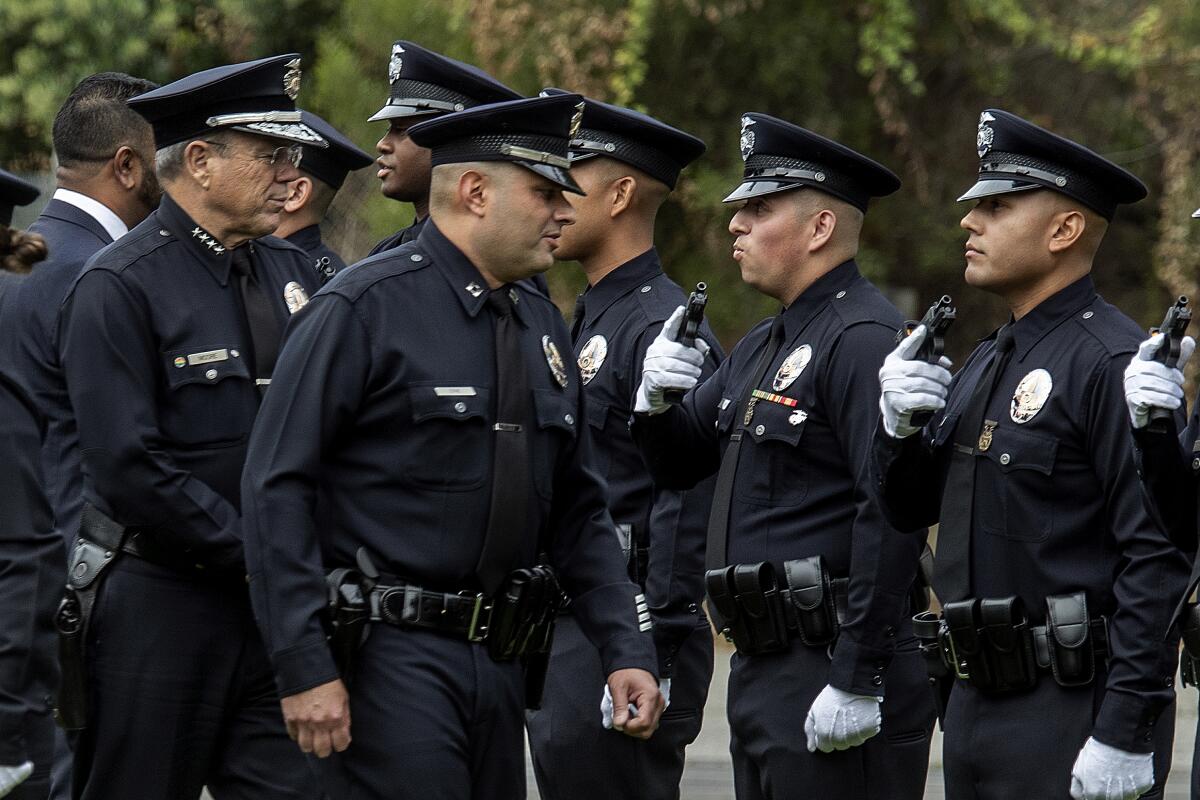
Once a member of the LAPD reaches the rank of Lieutenant, the insignia shifts from the sleeve to the collar (on shirts) or the shoulder (on dress jackets). These symbols are made of polished metal, typically silver or gold in appearance, though the LAPD uses silver-toned insignia for almost all ranks except for specific ceremonial roles.
Lieutenant and Captain (Mid-Level Management)
- Lieutenant I and II: Lieutenants wear a single silver bar on each side of the collar. They act as watch commanders, ensuring that police operations during a specific shift run smoothly.
- Captain I, II, and III: Captains are denoted by two silver bars (resembling "railroad tracks"). A Captain III is usually the commanding officer of an entire geographic area (a "precinct" in other cities) or a major specialized division.
Executive Leadership (Stars)
The highest levels of the LAPD are identified by silver stars. This system is consistent with federal military standards for general officers.
- Commander: A Commander wears a single silver star on each side of the collar. They typically serve as the assistant to a Bureau Chief.
- Deputy Chief: This rank is identified by two silver stars. Deputy Chiefs usually command one of the LAPD’s major bureaus (e.g., Central Bureau, South Bureau).
- Assistant Chief: Denoted by three silver stars. These individuals oversee major departmental offices, such as the Office of Operations.
- Chief of Police: The highest-ranking officer in the department wears four silver stars. The Chief is appointed by the Mayor and confirmed by the City Council.
Comprehensive LAPD Rank and Insignia Table 2026
| Rank Title | Insignia Description | Placement Location | Primary Responsibility |
|---|---|---|---|
| Police Officer III | Two Chevrons | Upper Sleeves | Field Training / Senior Patrol |
| Sergeant I | Three Chevrons | Upper Sleeves | Field Supervision |
| Sergeant II | Three Chevrons over One Rocker | Upper Sleeves | Administrative Supervision |
| Lieutenant I/II | One Silver Bar | Collar / Shoulder | Watch Commander |
| Captain I/II/III | Two Silver Bars | Collar / Shoulder | Division Commanding Officer |
| Commander | One Silver Star | Collar / Shoulder | Bureau Assistant |
| Deputy Chief | Two Silver Stars | Collar / Shoulder | Bureau Commanding Officer |
| Assistant Chief | Three Silver Stars | Collar / Shoulder | Office Director |
| Chief of Police | Four Silver Stars | Collar / Shoulder | Department Head |
Technical Specifications for Uniform Placement
In 2026, the LAPD maintains strict "Uniform and Personal Appearance" standards. Failure to adhere to these specifications can lead to disciplinary action, as the uniform is seen as a symbol of public trust and professional discipline.
Placement of Sleeve Chevrons Chevrons must be centered on the outer sleeve, halfway between the shoulder seam and the elbow. They must be sewn with matching navy blue thread, ensuring no puckering of the fabric. For the 2026 long-sleeve wool shirt, the alignment must be mathematically precise to ensure uniformity across the formation during inspections.
Collar Insignia Alignment Metal rank insignia (bars and stars) must be placed one inch from the front edge of the collar and centered between the top and bottom edges. The bars must be worn vertically. For the Chief of Police, the four stars are centered along the collar line in a straight row.
Service Stripes (Hash Marks) While not a "rank," service stripes are often confused with insignia. These are worn on the lower left sleeve of the long-sleeved shirt or jacket. Each stripe represents five years of service with the LAPD. By 2026, many senior officers may display four or five stripes, indicating 20 to 25 years of dedicated service.
Pros and Cons of the LAPD Insignia System
Advantages
- Immediate Recognition: The system allows officers from different divisions to instantly recognize the authority level of another officer during a multi-agency incident or a large-scale event.
- Tradition and Morale: The use of chevrons and stars fosters a sense of pride and a clear path for career advancement.
- Clarity for the Public: In a crisis, civilians can identify supervisors (Sergeants) or commanders by their distinct markings, helping them know whom to approach for leadership decisions.
Disadvantages
- Complexity for Outsiders: The distinction between a Sergeant I and Sergeant II (the rocker) is often too subtle for the general public to notice.
- Detective Ambiguity: Since Detectives do not wear uniformed rank insignia, it can sometimes be confusing for the public to understand their place in the hierarchy during mixed-unit operations.
- Maintenance Costs: The high standards for metal insignia and sewn-on chevrons require officers to invest significant time and money in uniform maintenance.
Historical Evolution and 2026 Modernization
The insignia used in 2026 has remained remarkably stable since the mid-20th century, with only minor adjustments to materials. In the early 2020s, there was a brief discussion regarding "subdued" insignia for tactical gear (SWAT and Metropolitan Division), which used black or olive drab colors. However, for the standard patrol and administrative uniforms, the LAPD has doubled down on the "Silver on Blue" aesthetic.
The department’s refusal to move toward "Gold" insignia for high ranks—a common practice in many other US police departments—is a point of pride. In Los Angeles, silver signifies the "Thin Blue Line" without the flashiness of gold, maintaining a tradition of professional humility and functional elegance.
Frequently Asked Questions
What does a "rocker" on an LAPD Sergeant's sleeve mean?
A "rocker" is a curved line beneath the three chevrons. It indicates the rank of Sergeant II, which is a higher pay grade and usually involves more complex administrative or specialized supervisory duties than a Sergeant I.
Why do some LAPD officers have no insignia on their sleeves?
Police Officer I and Police Officer II ranks do not wear sleeve insignia. These officers make up the bulk of the department's patrol force and are identified by their silver shield (badge) rather than sleeve chevrons.
How can you tell the difference between a Captain and a Lieutenant?
A Lieutenant wears a single silver bar on each side of their collar, while a Captain wears two silver bars (joined together, often called "railroad tracks"). Captains hold a higher level of command authority.
Does the LAPD use gold stars for the Chief of Police?
No. Unlike many other departments, the LAPD uses silver stars for all executive ranks, including the Chief of Police. This tradition of silver insignia is a hallmark of the LAPD uniform.
Do LAPD Detectives wear rank insignia?
Detectives generally do not wear rank insignia because they primarily work in civilian clothing. When in a formal uniform, they do not wear chevrons, as their rank is equivalent to a Sergeant but their role is investigative rather than supervisory.
What are the "hash marks" on the lower sleeve of an LAPD officer?
These are service stripes. Each stripe represents five years of service as a sworn officer with the LAPD. They are an indicator of experience rather than rank.
Conclusion and Recommendations
Understanding the Los Angeles Police rank insignia is vital for anyone interacting with the city's law enforcement structure in 2026. Whether you are a student of criminal justice, a journalist, or a resident, recognizing these symbols provides a clear window into the departmental chain of command.
For those entering the academy or looking to join the department, mastering the "Rules of the Uniform" is a prerequisite for success. Precision in insignia placement is not merely about aesthetics; it is a reflection of the attention to detail required in high-stakes police work. If you are ever in doubt about an officer's rank, a polite inquiry or a glance at their badge—which always contains the rank printed in clear text—will provide the definitive answer.
Image Gallery