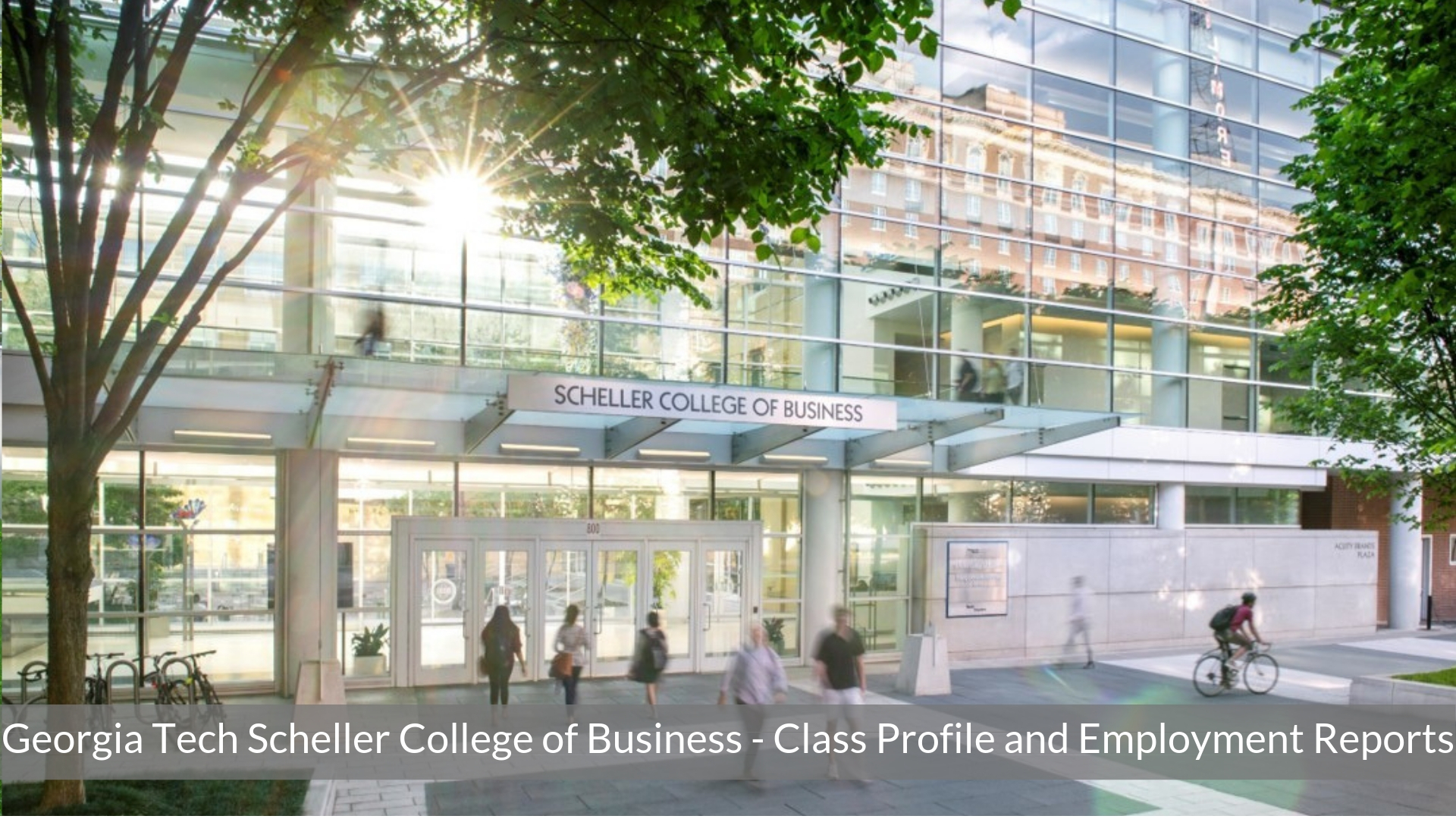
Georgia Tech Total Enrollment Numbers: 2026 Data and Institutional Trends
As of the 2025–2026 academic year, Georgia Tech’s total enrollment has reached a record high of approximately 53,700 students. This significant growth is primarily driven by the expansion of online graduate programs, while the undergra...
As of the 2025–2026 academic year, Georgia Tech’s total enrollment has reached a record high of approximately 53,700 students. This significant growth is primarily driven by the expansion of online graduate programs, while the undergraduate population remains intentionally stable at roughly 19,800 students to maintain campus capacity and educational quality.
Contents
The Georgia Institute of Technology (Georgia Tech) has undergone a dramatic transformation in its student body composition over the last decade. Once a primarily regional engineering school, it has evolved into a global powerhouse in technology and research. This evolution is reflected most clearly in its enrollment data, which showcases a unique "barbell" growth strategy: maintaining a highly selective, residential undergraduate experience while scaling high-quality, affordable graduate education to tens of thousands of working professionals worldwide.
Current Enrollment Overview for the 2025–2026 Academic Year
The total enrollment at Georgia Tech is currently divided between two distinct delivery models: traditional on-campus instruction and massive online programs. For the 2026 reporting period, the distribution reflects the Institute’s commitment to its mission of "Progress and Service" through expanded access.
- Total Headcount: ~53,700 students.
- Undergraduate Enrollment: ~19,800 students.
- Graduate Enrollment: ~33,900 students.
Graduate students now comprise more than 60% of the total student body. This is a reversal of historical norms for most public research universities, where undergraduates typically make up the majority. The catalyst for this shift is the success of the College of Computing’s online master’s programs, which have redefined the scale at which elite technical education can be delivered.
Enrollment Trends: A Decade of Rapid Expansion
To understand the 2026 enrollment numbers, one must look at the trajectory since 2014, the year Georgia Tech launched its pioneering Online Master of Science in Computer Science (OMSCS). At that time, total enrollment was roughly 23,000 students. In just over a decade, the Institute has more than doubled its student population.
The Scaling of Graduate Education
The growth in the graduate sector is almost entirely attributed to three specific programs:
- OMSCS (Computer Science): The flagship program that proved elite education could be scaled.
- OMSA (Analytics): An interdisciplinary program between the College of Computing, the College of Engineering, and the Scheller College of Business.
- OMS Cybersecurity: The newest of the "massive" online offerings, addressing a critical global labor shortage.
Unlike the undergraduate side, where physical space (dorms, classrooms, and labs) acts as a hard cap on growth, these online programs leverage asynchronous learning. This allows Georgia Tech to enroll thousands of additional students each year without significantly increasing its physical footprint in Midtown Atlanta.
Undergraduate Stability and Resident Mandates
While the graduate numbers have soared, undergraduate enrollment has seen more controlled growth. As a public institution, Georgia Tech faces immense pressure to serve Georgia residents. The University System of Georgia (USG) and the state legislature emphasize the recruitment of "homegrown" talent. Consequently, approximately 60% of the undergraduate student body consists of Georgia residents, with the remaining 40% split between out-of-state domestic students and international students.
Detailed Undergraduate Enrollment Breakdown
Undergraduate enrollment at Georgia Tech is characterized by extreme selectivity and a focus on STEM disciplines. For the 2025–2026 cycle, the Institute received over 60,000 applications for a freshman class of approximately 3,700 students.
Residency and Geographic Diversity
Georgia Tech employs a multi-faceted recruitment strategy to ensure a diverse student body while fulfilling its state obligations.
- Georgia Residents: The "Georgia First" initiative ensures that top students from every county in the state have a pathway to the Institute. Programs like the Georgia Tech Scholars Program guarantee admission to valedictorians and salutatorians from accredited Georgia high schools.
- Out-of-State and International: These cohorts contribute significantly to the cultural and intellectual diversity of the campus. International enrollment remains robust, particularly in the College of Engineering.
Demographic Shifts
The 2026 data shows continued progress in gender and ethnic diversity. Historically, engineering-heavy institutions have struggled with gender parity. However, through aggressive outreach and programs like "Women in Engineering," Georgia Tech has increased its female undergraduate population to approximately 34-36%, a significant increase from 25% two decades ago.
| Enrollment Category | Fall 2021 (Actual) | Fall 2023 (Actual) | Fall 2025/26 (Current) |
|---|---|---|---|
| Total Enrollment | 43,859 | 47,931 | 53,700 |
| Undergraduate | 17,447 | 19,204 | 19,800 |
| Graduate | 26,412 | 28,727 | 33,900 |
| Online Graduate | 21,500 | 23,800 | 28,500 |
| On-Campus Graduate | 4,912 | 4,927 | 5,400 |
The Impact of Online Programs on Total Enrollment
The "Online" factor cannot be overstated when discussing Georgia Tech’s total enrollment numbers. If one were to look only at on-campus students, Georgia Tech would appear as a medium-to-large sized university with about 25,000 residents. It is the virtual campus that pushes it into the tier of the largest universities in the United States.
The "At-Scale" Model
Georgia Tech’s "At-Scale" graduate programs are priced significantly lower than traditional degrees—often under $10,000 for the entire master's program. This price point, combined with the prestige of the Georgia Tech brand, attracts a demographic that previously could not access a top-10 engineering school: working parents, international professionals in developing economies, and career-switchers.
Quality Control and Completion Rates
Critics of massive enrollment growth often point to potential declines in quality. Georgia Tech has countered this by using the same faculty and the same rigorous assessments for both online and on-campus students. Data from 2025 indicates that the "Total Enrollment" figure is not just a vanity metric; the retention and graduation rates for these large-scale programs remain competitively high, contributing to the Institute’s reputation.
Admissions Selectivity and Yield
Enrollment numbers are the final result of a complex admissions funnel. For the 2026 academic year, Georgia Tech’s overall undergraduate acceptance rate hovered around 13-15%. However, this number is deceptive when viewed in isolation.
- In-State Acceptance: Usually higher (around 30-35%) due to state mandates.
- Out-of-State Acceptance: Extremely low (often 10% or lower), rivaling Ivy League selectivity.
- Yield Rate: The percentage of admitted students who choose to enroll is approximately 45-50%, reflecting Georgia Tech’s status as a first-choice destination for engineering and computer science.
How Georgia Tech Manages Rapid Growth
Managing a student body of over 53,000 requires substantial administrative and technological infrastructure. The Institute has invested heavily in several key areas to support these numbers:
- Campus Expansion: Development in "Tech Square" and the "Science Square" district provides more research space, which in turn supports a larger graduate student population.
- Digital Learning Platforms: The Institute uses custom-built versions of Canvas and other learning management systems to handle the load of 30,000+ online learners.
- Support Services: To maintain the student-to-faculty ratio, Georgia Tech has increased its use of instructional designers and specialized teaching assistants (TAs), including the famous "Jill Watson," an AI teaching assistant.
Frequently Asked Questions
Why has Georgia Tech's total enrollment increased so much since 2020?
The primary driver is the growth of the Online Master of Science programs (Computer Science, Analytics, and Cybersecurity). These programs allow Georgia Tech to enroll thousands of additional students globally without the physical constraints of a traditional campus. While undergraduate numbers have grown modestly, the graduate online sector has seen double-digit percentage increases annually.
What percentage of Georgia Tech students are from Georgia?
At the undergraduate level, Georgia Tech aims for approximately 60% of the student body to be Georgia residents. This is consistent with its mission as a public university under the University System of Georgia. At the graduate level, the percentage of Georgia residents is much lower, as the online programs attract a global audience.
How many students live on campus?
Approximately 8,500 to 9,000 students live in Georgia Tech-affiliated housing. While almost all freshmen live on campus, the majority of upperclassmen and graduate students live in off-campus apartments in Midtown Atlanta, Home Park, and surrounding neighborhoods.
Does the high total enrollment mean classes are huge?
For on-campus undergraduates, Georgia Tech maintains a student-to-faculty ratio of approximately 22:1. While introductory lectures in subjects like Calculus or Chemistry can be large, upper-level major courses are typically smaller. In the online graduate programs, "classes" are indeed massive (thousands of students), but they are broken down into smaller interaction groups led by TAs.
Is it harder to get into Georgia Tech now because of the enrollment size?
Paradoxically, yes. Even though the Institute is enrolling more students than ever before, the number of applications has grown even faster. The undergraduate acceptance rate has dropped significantly over the last decade, making it one of the most selective public universities in the United States.
Next Actions for Prospective Students and Researchers
For those looking to verify specific enrollment statistics or apply for the upcoming term, the following steps are recommended:
- Consult the IRP LITE Portal: Georgia Tech’s Institutional Research and Planning (IRP) department maintains a public dashboard called "LITE" (Legacy Institutional Information and Trends). It provides the most granular, up-to-date data on enrollment by major, ethnicity, and residency.
- Monitor USG Reports: The University System of Georgia publishes annual "Semester Enrollment Reports" (SER) which provide comparative data across all public colleges in the state.
- Review the Fact Book: Each year, Georgia Tech publishes an official Fact Book that summarizes enrollment, research expenditures, and faculty data.
- Admissions Pathways: If you are a prospective undergraduate, explore "Transfer Pathways." Because freshman admission is so competitive, a significant portion of the total undergraduate enrollment comes from students who transfer in after their first or second year at another institution.
Georgia Tech’s enrollment numbers for 2026 represent more than just a headcount; they reflect a strategic decision to democratize elite education. By balancing a high-touch residential undergraduate program with high-tech, at-scale graduate offerings, the Institute has created a sustainable model for the modern research university.
Image Gallery