Tax on Lincoln National Life Insurance: Complete Guide to Payouts, Cash Value, and Loans
The tax treatment of a Lincoln National life insurance policy depends on how and when money is drawn from the policy. Payouts received by beneficiaries after the insured’s death are generally free from federal income tax. However, livi...
The tax treatment of a Lincoln National life insurance policy depends on how and when money is drawn from the policy. Payouts received by beneficiaries after the insured’s death are generally free from federal income tax. However, living distributions—such as cash value withdrawals, policy surrenders, policy loans from Modified Endowment Contracts (MECs), and accumulated interest—can trigger taxable ordinary income.
Contents
How IRS Rules Apply to Lincoln National Life Insurance Policies
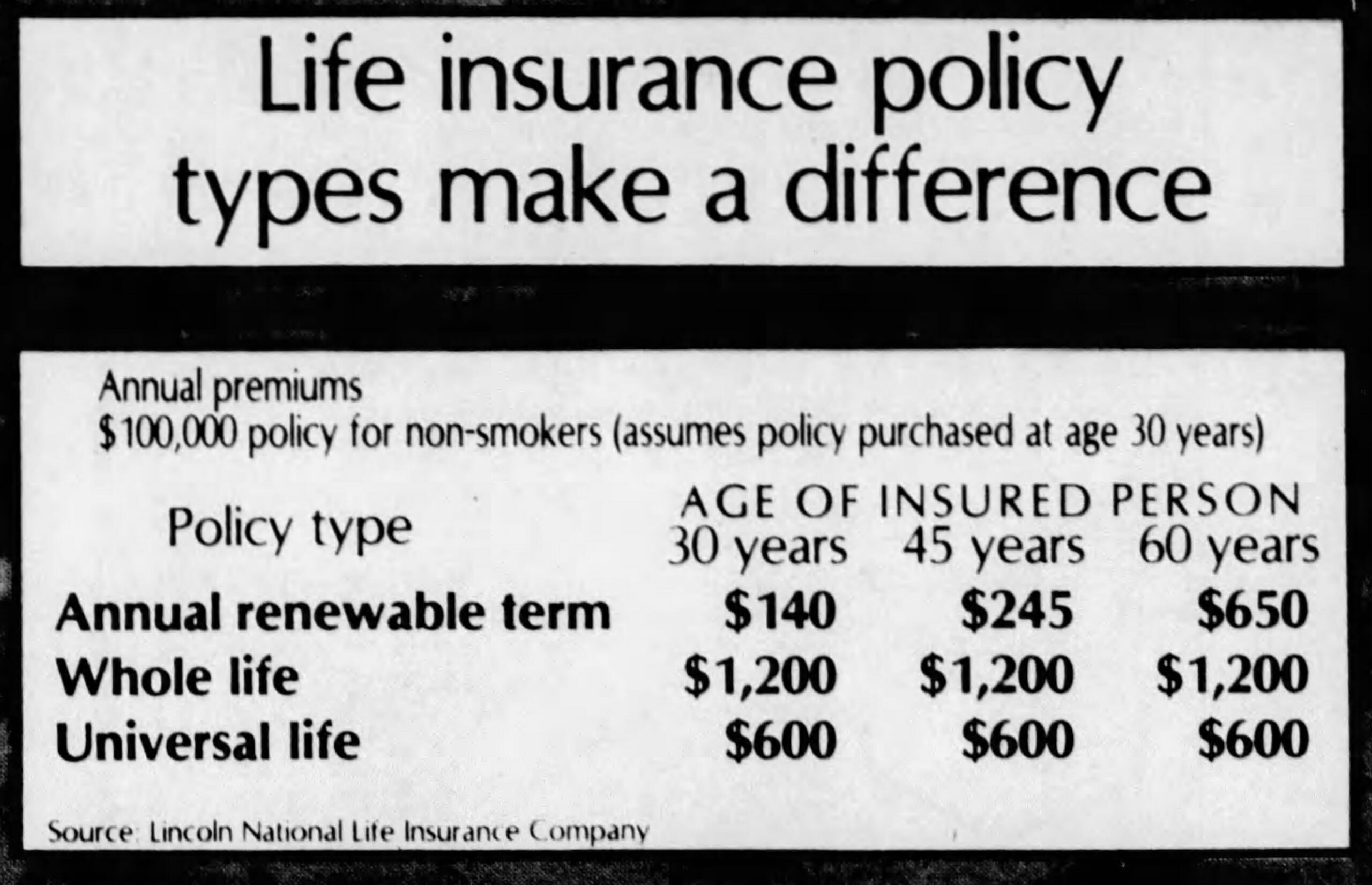
Lincoln National Life Insurance Company (operating broadly under Lincoln Financial Group) offers term, universal, variable universal, and whole life policies. While policy designs vary, all Lincoln National life insurance products are governed by federal tax principles set forth in the Internal Revenue Code (IRC).
Under IRC Section 7702, a policy must meet specific cash-value accumulation or corridor tests to qualify as life insurance for tax purposes. Qualifying policies enjoy tax-deferred cash value growth, meaning you do not pay annual income taxes on capital gains, dividends, or interest earned inside your Lincoln National cash-value account.
However, tax liability can arise under specific operational events, such as accessing living benefits, exceeding premium limits, or structuring ownership in ways that expose proceeds to federal estate tax.
Income Taxation of Lincoln National Death Benefits
For most beneficiaries, receiving a death benefit check from Lincoln National is a tax-free event. According to IRC Section 101(a), gross income does not include amounts received under a life insurance contract if such amounts are paid by reason of the death of the insured.
- Lincoln National Death Benefit Payout
- Standard Lump-Sum Payout
- 100% Income Tax-Free (IRC Sec. 101(a))
- Installment / Delayed Payout
- Principal = Income Tax-Free
- Interest = Taxable Ordinary Income
- Standard Lump-Sum Payout
Lump-Sum Proceeds
If Lincoln National pays the death benefit as a single lump-sum check or direct deposit, the entire payment is free from federal ordinary income tax and state income tax in virtually all jurisdictions. The beneficiary does not need to report this lump sum as taxable income on Form 1040.
Installment Payouts and Interest Options
If a beneficiary elects to receive the Lincoln National death benefit in installments or leaves the funds on deposit with Lincoln under an interest option, the tax rules split the payout into two components:
- Principal Portion: The original face value of the death benefit remains entirely tax-free.
- Interest Portion: Any interest accrued on the death benefit proceeds while held by Lincoln National after the insured's death is fully taxable as ordinary income in the year it is credited or paid out. Lincoln will issue a Form 1099-INT detailing this taxable interest.
Exceptions to Tax-Free Death Benefits
Tax-free treatment can be lost or limited under specific regulatory conditions:
- Transfer-for-Value Rule: If a Lincoln National policy was sold or transferred to another party for valuable consideration (money or goods), the death benefit may become taxable to the extent it exceeds the purchase price plus subsequent premiums paid. Exceptions apply to transfers to the insured, a partner of the insured, or a corporation in which the insured is an officer.
- Employer-Owned Life Insurance (EOLI): If an enterprise owns a Lincoln policy on an employee under IRC Section 101(j), strict notice and consent requirements must be satisfied prior to policy issuance. Failure to meet these criteria makes the death benefit taxable above the employer's cost basis.
Tax Rules for Living Benefits and Cash Value Distributions
Permanent life insurance policies from Lincoln National—such as Lincoln WealthAccumulate® Universal Life or Lincoln VULONE®—accumulate cash value over time. Accessing this money during your lifetime requires navigating specific IRS taxation hierarchies.
- Lincoln Cash Value Access
- Standard Policy (Non-MEC)
- FIFO Accounting Basis (Cost basis comes out first)
- Withdrawals: Tax-free up to basis
- Loans: Non-taxable while active
- FIFO Accounting Basis (Cost basis comes out first)
- Modified Endowment (MEC)
- LIFO Accounting Basis (Gains come out first)
- Withdrawals/Loans: Gains taxable
- 10% IRS Penalty if under age 59½
- LIFO Accounting Basis (Gains come out first)
- Standard Policy (Non-MEC)
Withdrawals (Partial Surrenders)
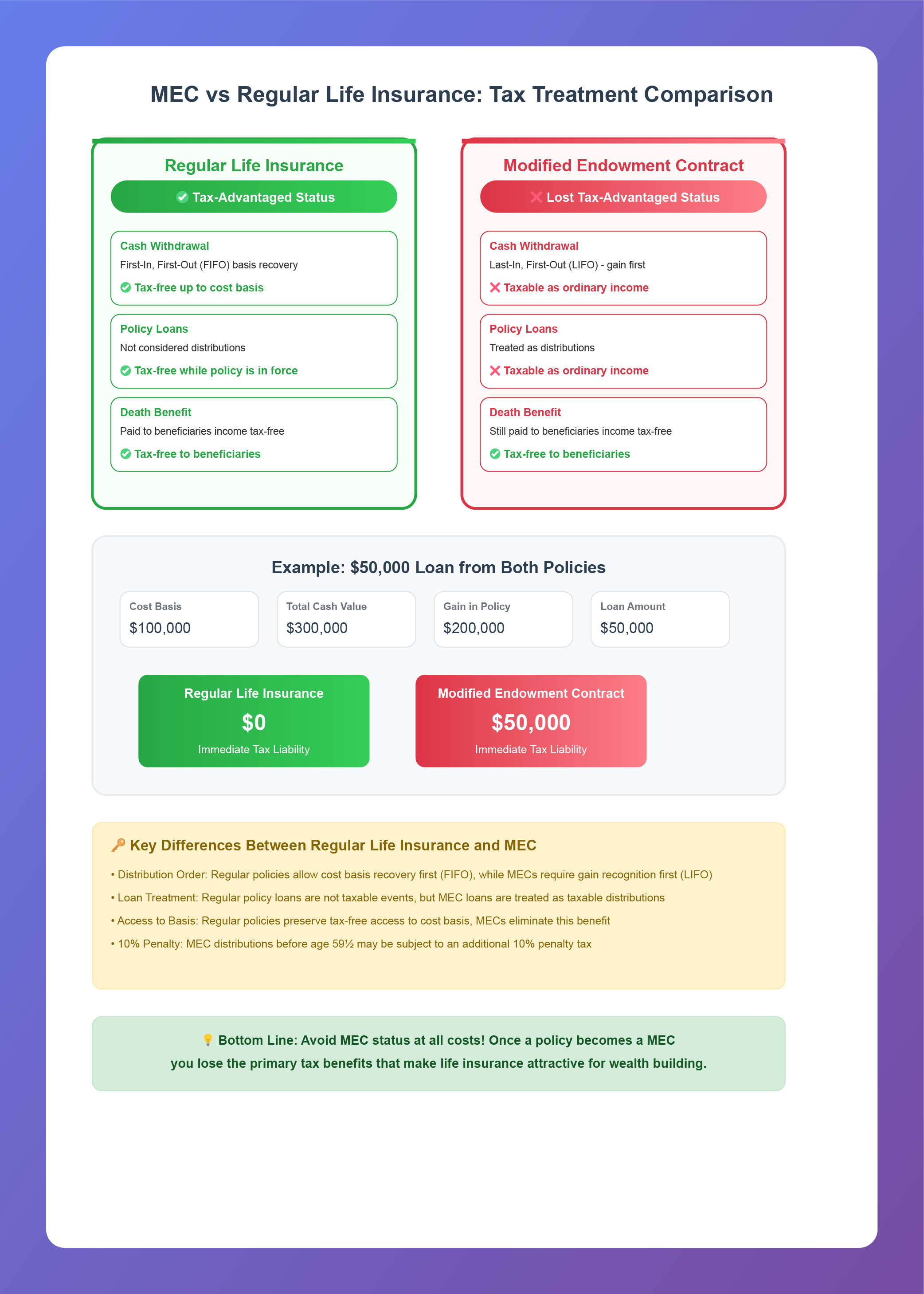
Withdrawals from a standard, non-MEC Lincoln National policy follow a First-In, First-Out (FIFO) tax accounting rule:
- Cost Basis (Tax-Free): Payments received up to your cumulative net premium investment (your "cost basis") are considered a non-taxable return of capital.
- Gains (Taxable): Once total withdrawals exceed your cumulative premium payments, every additional dollar withdrawn is taxed as ordinary income.
Policy Loans
Policyholders can borrow against the cash value of a non-MEC Lincoln policy. Under standard federal rules:
- Loan Proceeds: Policy loans are not considered taxable distributions when taken, even if the borrowed amount exceeds your premium basis.
- Lapse or Surrender Warning: If a policy lapses or is voluntarily surrendered while an outstanding policy loan exists, the IRS treats the forgiven loan balance as a distribution. If the outstanding loan plus cash withdrawn exceeds total premiums paid, the difference is taxed immediately as ordinary income.
Full Policy Surrender
Surrender of a Lincoln National policy for its full net surrender value ends coverage. The IRS calculates taxable gain on surrender as:
$$\text{Taxable Gain} = \text{Gross Cash Surrender Value} + \text{Outstanding Policy Loans} - \text{Total Net Premiums Paid}$$
Any positive gain is taxed at ordinary income tax rates, not preferential long-term capital gains rates.
Policy Dividends
Participating policies may pay policyholder dividends. The IRS treats policy dividends as a non-taxable return of premium that reduces the policy's cumulative cost basis. However:
- If accumulated dividends exceed total premiums paid into the policy, subsequent dividends are taxable as ordinary income.
- If dividends are left on deposit with Lincoln to earn interest, the interest credited each year is taxable ordinary income in the year earned.
Modified Endowment Contracts (MECs) and Lincoln Policies
To prevent life insurance policies from being used purely as tax-sheltered investment vehicles, Congress created the Modified Endowment Contract (MEC) classification under IRC Section 7702A.
The 7-Pay Test
A Lincoln National policy becomes a MEC if cumulative premium payments made during the first seven policy years exceed the amount necessary to pay up the policy's future death benefits under federal 7-pay limits. Flexible-premium policies, such as Universal Life, are vulnerable to becoming MECs if overfunded early.
Tax Consequences of MEC Status
If a Lincoln policy is classified as a MEC:
- Death Benefit: The death benefit remains tax-free to beneficiaries under IRC Section 101(a).
- LIFO Taxation: Withdrawals and policy loans switch from FIFO to a Last-In, First-Out (LIFO) tax structure. Gains in the contract are deemed distributed first.
- 10% Penalty Tax: Taxable distributions or loans taken prior to the policyholder reaching age 59½ face an additional 10% IRS early withdrawal penalty, subject to narrow exceptions for disability.
Lincoln Financial Group monitors policy premium thresholds and typically notifies policyholders if a planned premium payment will convert their contract into a MEC, offering an option to refund the excess premium within prescribed timeframes.
Tax Implications of Riders and Accelerated Death Benefits
Lincoln National policies often incorporate living benefit riders that allow access to policy funds during severe illness.
Chronic and Terminal Illness Riders
Accelerated death benefit riders pay out a portion of the policy’s death benefit while the insured is still living if diagnosed with a qualifying condition:
- Terminal Illness: Under IRC Section 101(g), benefits paid to an individual diagnosed with a illness reasonably expected to result in death within 24 months are fully exempt from federal income tax.
- Chronic Illness / Long-Term Care: Payments received due to chronic illness (inability to perform at least two Activities of Daily Living) are tax-exempt up to annual statutory per diem caps established by the IRS, or up to actual unreimbursed long-term care costs incurred.
1035 Tax-Free Exchanges
Under IRC Section 1035, you can exchange an existing Lincoln National life insurance contract for a new life insurance or annuity contract without triggering immediate income taxes on built-in cash value gains. To preserve tax deferral:
- The transaction must be executed directly between insurance carriers (an institutional transfer).
- The owner and insured on the new contract must match the original policy.
- Surrendering the Lincoln policy directly to receive a check before purchasing a new policy invalidates the 1035 exchange, triggering immediate taxation on gains.
Federal Estate Tax and Gift Tax Rules
While death benefits are generally clear of income taxes, they are not automatically protected from federal estate tax.
Incidents of Ownership and Gross Estate Inclusion
Under IRC Section 2042, the full face value of a Lincoln National life insurance policy is included in the insured’s gross estate for federal estate tax purposes if:
- The death benefit is payable directly or indirectly to the insured's estate.
- The insured possessed any "incidents of ownership" at death, such as the right to change beneficiaries, surrender or cancel the policy, assign the policy, or borrow against the cash value.
If the total gross estate (including life insurance proceeds) exceeds federal estate tax exemption thresholds, estate tax rates up to 40% may apply.
Using Irrevocable Life Insurance Trusts (ILITs)
To keep Lincoln National death benefits out of the taxable estate, policyholders frequently utilize an Irrevocable Life Insurance Trust (ILIT):
- Ownership Transfer: The ILIT is established as the sole owner and beneficiary of the Lincoln policy.
- Three-Year Lookback Rule: If an existing Lincoln policy is transferred to an ILIT, the insured must survive for at least three years following the transfer date under IRC Section 2035 for the proceeds to be excluded from their taxable estate. Newly issued policies applied for directly by the ILIT avoid this three-year rule.
Summary Matrix: Taxability of Lincoln National Transactions
| Policy Transaction / Event | Tax Status | Accounting Basis | Primary IRS Code Section |
|---|---|---|---|
| Lump-Sum Death Benefit Payout | Non-Taxable | N/A | IRC § 101(a) |
| Death Benefit Interest Portion | Taxable Ordinary Income | N/A | IRC § 61(a)(4) |
| Cash Value Growth | Tax-Deferred | N/A | IRC § 7702 |
| Partial Withdrawal (Non-MEC) | Non-Taxable up to Cost Basis | FIFO | IRC § 72(e) |
| Policy Loan (Non-MEC) | Non-Taxable (while active) | N/A | IRC § 72(e) |
| Policy Loan / Withdrawal (MEC) | Taxable Gain First + 10% Penalty if < 59½ | LIFO | IRC § 7702A / § 72(e) |
| Full Surrender Value Gain | Taxable Ordinary Income | Excess over basis | IRC § 72(e) |
| Terminal Illness Acceleration | Non-Taxable | N/A | IRC § 101(g) |
| Proper Section 1035 Exchange | Non-Taxable Transfer | Direct Carrier Transfer | IRC § 1035 |
IRS Reporting Forms and Tax Compliance
When taxable events occur on a Lincoln National policy, the company files official tax documents with the IRS and sends copies to the policyholder or beneficiary.
- Form 1099-R: Issued by Lincoln National for distributions, surrenders, MEC loans, or policy lapses with outstanding loans exceeding cost basis. Box 1 shows the gross distribution, and Box 2a indicates the taxable amount.
- Form 1099-INT: Issued to beneficiaries when interest is paid on death benefits that were delayed or paid under installment settlement options.
- Form 1099-LTC: Issued if payments are distributed under accelerated long-term care or chronic illness benefit riders.
Taxpayers must report these amounts on federal income tax returns (Form 1040) for the tax year in which the distribution or payment occurred.
Frequently Asked Questions
Will my beneficiary receive a Form 1099 for a Lincoln National death benefit?
If the death benefit is paid in a direct lump sum shortly after death, Lincoln National does not issue a Form 1099 because the payout is non-taxable under IRC Section 101(a). However, if Lincoln pays interest due to processing delays or installment elections, a Form 1099-INT will be issued solely for the interest portion earned.
What happens to taxes if my Lincoln National policy lapses with an outstanding loan?
If a permanent Lincoln policy lapses due to insufficient cash value to cover internal cost of insurance fees while a loan is active, the outstanding loan balance is treated as a constructive distribution. The IRS calculates taxable income as the total loan balance plus cash received minus your original premium cost basis.
Can I reduce the taxable gain when surrendering a policy?
Your taxable gain is reduced by your total cost basis, which equals cumulative premiums paid minus any previous non-taxable withdrawals or dividends received. Fees or surrender charges deducted by Lincoln National reduce net proceeds but do not directly alter the historical cost basis calculation.
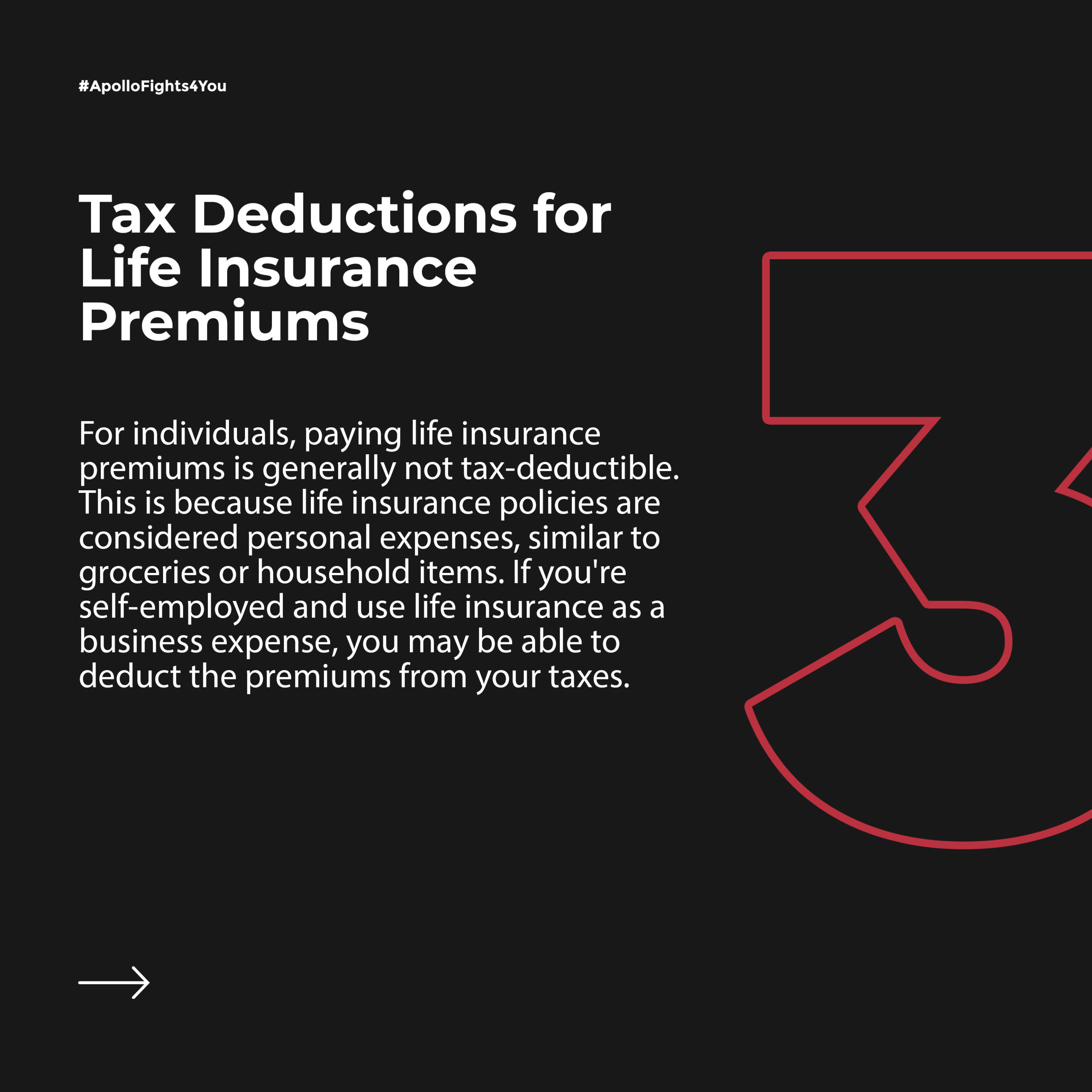
Are premiums paid for Lincoln National life insurance tax-deductible?
No. Individual life insurance premiums are considered personal living expenses by the IRS and are not tax-deductible on individual income tax returns. Business-paid premiums are generally non-deductible if the business is directly or indirectly a beneficiary under the contract.
Strategic Action Steps for Policyholders
To maximize the tax advantages of a Lincoln National life insurance policy and prevent unexpected tax liabilities, execute the following operational steps:
- Verify MEC Status Before Overfunding: Prior to depositing lump-sum premiums into a flexible-premium universal life policy, request a MEC illustration from Lincoln National or your financial advisor to verify that the contribution will not breach 7-pay limits.
- Monitor Active Policy Loans: Keep policy loan balances within safe structural limits to prevent policy lapse. A policy lapse with significant outstanding loans can trigger an immediate taxable event without cash on hand to pay the resulting tax bill.
- Audit Beneficiary and Ownership Structure: Review policy ownership designations to ensure policies intended for estate liquidity are properly isolated from incidents of ownership using trusts, avoiding unintended federal estate tax inclusion under IRC Section 2042.
- Coordinate 1035 Exchanges Structurally: If repositioning cash value from a Lincoln policy to another carrier or product, ensure funds move directly via institutional carrier-to-carrier transfer to satisfy IRC Section 1035 rules.
Disclaimer: Tax laws, including Internal Revenue Code provisions and state regulations, change frequently. For personal legal or tax planning regarding a Lincoln National policy, consult a licensed Certified Public Accountant (CPA) or estate planning attorney.
Image Gallery