Understanding Workers’ Compensation Premiums Based Only on Wages
Workers’ compensation premiums are primarily calculated using a business's total payroll, specifically the remuneration paid to employees. While often referred to as "wages," the calculation involves specific inclusions like gross pay...
Workers’ compensation premiums are primarily calculated using a business's total payroll, specifically the remuneration paid to employees. While often referred to as "wages," the calculation involves specific inclusions like gross pay and bonuses, and critical exclusions such as the overtime premium portion and certain fringe benefits, as defined by state law and NCCI guidelines.
Contents
In 2026, business owners and HR professionals must navigate a complex landscape to ensure they are not overpaying for coverage. The phrase "workers’ compensation only on wages" usually refers to the effort to isolate the "remuneration" base—the specific dollar amount that insurance carriers use to apply their rates. Because workers' compensation is a mandatory form of insurance in nearly every U.S. jurisdiction, understanding what constitutes a "wage" for premium purposes is the most effective way to control costs and prepare for the inevitable year-end audit.
The Definition of Remuneration in Workers’ Compensation
The term "wages" in a general sense often differs from the technical definition of "remuneration" used by insurance carriers. Under the standards set by the National Council on Compensation Insurance (NCCI), which are utilized by the majority of states, remuneration is the actual money (or substitutes for money) paid to employees for their services.
When calculating premiums, the goal is to determine the "basis of premium." This is not necessarily the same figure you see on an employee’s W-2 at the end of the year. The IRS and the insurance industry have different goals: the IRS wants to track taxable income, while the insurance carrier wants to measure the exposure to risk.
What is Included in the Wage Base?
To arrive at the correct payroll figure, employers must include the following components:
- Gross Wages: All regular pay, including salaries and hourly earnings before any deductions for taxes or retirement contributions.
- Total Commissions: Any performance-based commissions paid to sales staff or other employees.
- Bonuses: This includes year-end bonuses, performance bonuses, and any other non-discretionary incentive pay.
- Holiday, Vacation, and Sick Pay: Payments made for time not worked due to these reasons are still considered part of the payroll base.
- Overtime (Straight-Time Portion): Only the regular hourly rate for overtime hours is included. This is a critical distinction that many businesses overlook.
- Statutory Insurance: Any payments made by the employer as required under statutory insurance laws.
- Value of Board and Lodging: If an employer provides housing or meals as part of the compensation package, the monetary value of these perks is usually included in the remuneration base.
The Critical Exclusions: What Is Not "Wages" for WC Purposes?
The "only on wages" aspect becomes most relevant when discussing what is excluded from the calculation. If an employer includes these items, they are essentially paying a "tax" on money that should not be part of the premium formula.
The Overtime Premium Rule
Perhaps the most significant exclusion is the "overtime premium." In most states, if an employee works overtime at "time-and-a-half," only the "time" (the regular rate) is counted toward workers' comp. The "half" (the extra premium) is excluded.
For example, if an employee earns $20 per hour and works 10 hours of overtime, they are paid $30 per hour for those 10 hours ($300 total). For workers’ compensation purposes, the carrier only looks at the $20 base rate for all 50 hours worked. The extra $10 per hour paid for the 10 overtime hours ($100 total) is deducted from the payroll base before the premium is calculated. This rule exists because the risk of injury does not necessarily increase by 50% just because the pay rate increased by 50%.
Tips and Gratuities
In many jurisdictions, tips received by employees are excluded from the remuneration base, provided the employee receives at least the minimum wage from the employer. However, this varies significantly by state. In 2026, some states have moved toward including "reported tips" to ensure that if a server is injured, their disability payments (which are based on total income) are properly funded.
Employer Contributions to Benefits
Contributions made by the employer to group health insurance, life insurance, or retirement plans (like 401k matches) are generally not considered wages for workers' compensation purposes. These are benefits, not direct remuneration for labor performed.
2026 Payroll Calculation Table: Inclusion vs. Exclusion
The following table summarizes the typical treatment of various payment types under NCCI and most independent state bureau guidelines for 2026.
| Payment Type | Included in WC Base? | Specific Condition |
|---|---|---|
| Hourly/Salary Pay | Yes | Full gross amount before deductions. |
| Overtime (Regular Rate) | Yes | The base hourly rate for all hours worked. |
| Overtime (Premium) | No | The "extra" portion (e.g., the 0.5 in 1.5x pay). |
| Annual Bonuses | Yes | Includes all non-discretionary bonuses. |
| Employee 401(k) Contrib. | Yes | Included because it is part of the gross wage. |
| Employer 401(k) Match | No | Excluded as it is a fringe benefit. |
| Health Insurance Premiums | No | Employer-paid portion is excluded. |
| Severance Pay | No | Generally excluded as it is not for active labor. |
| Tips | Varies | Often excluded if documented correctly. |
| Uniform Allowance | No | Reimbursed business expenses are excluded. |
Why State Jurisdictions Matter
While the NCCI provides a framework for roughly 38 states, several "independent bureau" states (such as California, New York, New Jersey, and Pennsylvania) and "monopolistic" states (like Ohio and Washington) have their own specific rules for what constitutes "wages."
California (WCIRB)
In California, the Workers' Compensation Insurance Rating Bureau (WCIRB) has distinct rules regarding the inclusion of "Section 125" cafeteria plan contributions. Employers in California must be diligent about separating these out, as errors can lead to significant discrepancies during a premium audit.
New York (NYCIRB)
New York has specific caps on the amount of payroll that can be attributed to any single executive or employee in certain industries. In 2026, these "payroll caps" or "maxims" ensure that a company isn't paying premiums on a $500,000 salary when the maximum benefit the employee could receive is capped at a much lower level.
The Role of Executive Officers
For business owners, partners, and executive officers, the "wages" used for workers’ comp are often not their actual earnings. Most states set a "Minimum" and "Maximum" payroll amount for officers. If a CEO earns $1,000,000, the insurance company might only charge premium on a "capped" amount of $150,000 (the specific number varies by state and year). Conversely, if an officer takes no salary, the state may still require the business to pay premium on a minimum "deemed" wage.
The Impact of Classification Codes
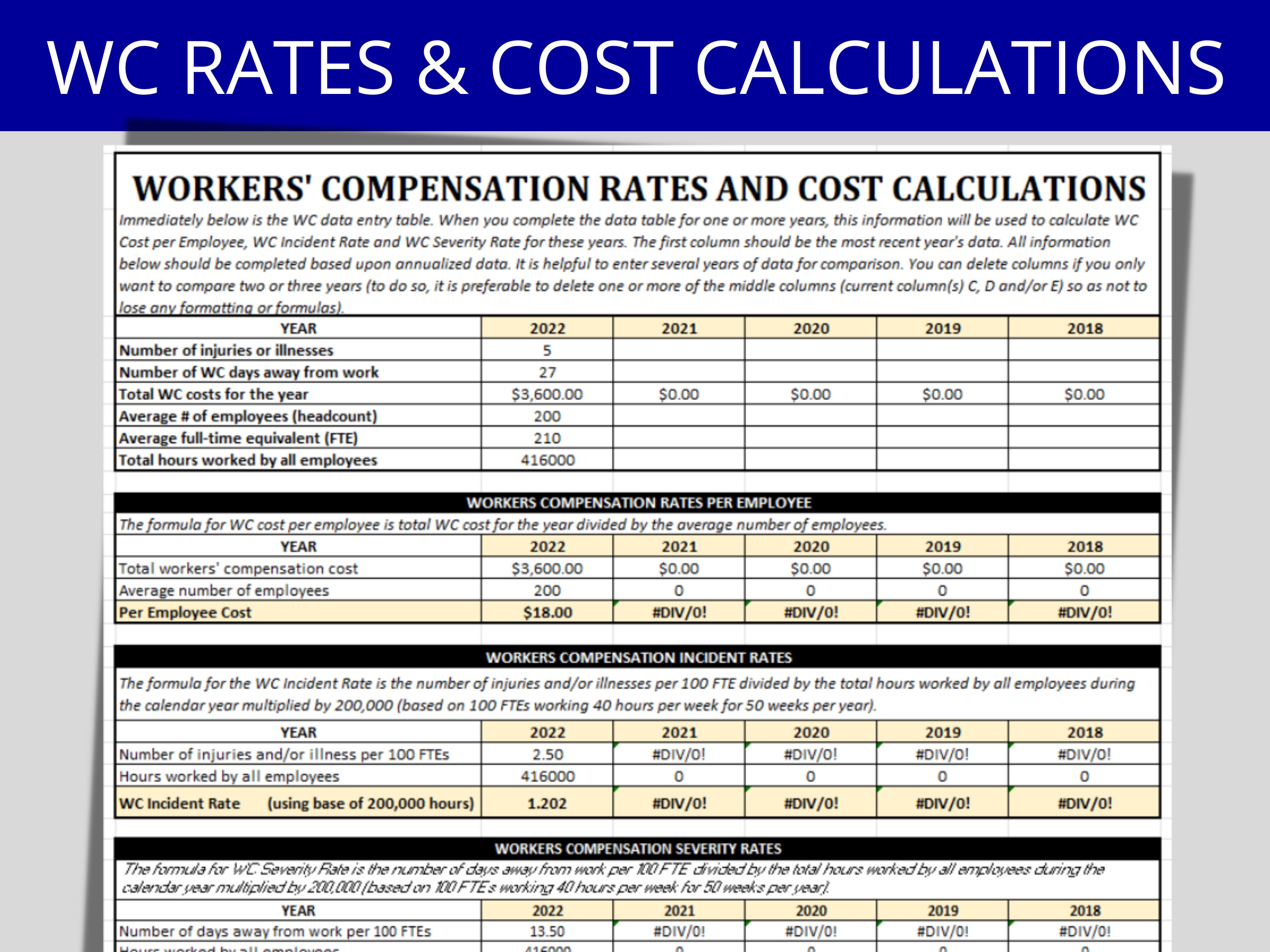
It is impossible to discuss "wages" without discussing classification codes. The premium formula is: (Payroll / 100) x Class Code Rate x Experience Modifier = Total Premium.
If you accurately report only your wages but apply them to the wrong classification code, you will still overpay. For example, if a clerical worker's wages ($50,000) are mistakenly classified under "Roofing" ($15.00 per $100) instead of "Clerical" ($0.20 per $100), the premium for that one employee would jump from $100 to $7,500.
In 2026, many insurance carriers use AI-driven auditing tools to flag "payroll-to-class" mismatches. Businesses should ensure that their payroll records clearly distinguish between different job functions, especially for employees whose roles might overlap.
How to Prepare for a Workers’ Compensation Audit
The annual audit is the process where the insurance carrier verifies the "estimated" payroll provided at the start of the policy against the "actual" payroll paid during the year. To ensure you are only paying on the correct wage base, follow these steps:
- Maintain Clear Records of Overtime: Ensure your payroll software can generate a report specifically showing the "overtime premium" amount separately from gross pay. If the auditor cannot see the separation, they will charge you for the full 1.5x rate.
- Verify Subcontractor Certificates: If you hire 1099 contractors who do not have their own workers' compensation insurance, their "wages" (the contract price) will be added to your payroll. Keep a file of their Certificates of Insurance (COI) to avoid this.
- Break Down Payroll by Class Code: Do not provide a lump sum of all wages. Provide payroll reports broken down by the specific NCCI or state class codes listed on your policy.
- Reconcile with Tax Filings: Auditors will look at your Form 941 (Employer's Quarterly Federal Tax Return) and state unemployment filings. Be prepared to explain why your "workers' comp wages" are lower than your "IRS wages" (due to exclusions like overtime premium).
Frequently Asked Questions
Is workers' comp calculated on gross or net pay?
Workers' compensation is calculated on gross pay. This means the amount before taxes, 401(k) deductions, and other withholdings. However, it is the gross pay after specific exclusions like the overtime premium are removed.
Do I have to pay workers' comp on my own salary if I own the business?
This depends on your state and your business entity type. In many states, sole proprietors and partners are automatically excluded but can "elect" to be covered. Executive officers in a corporation are usually automatically included but may "opt-out" if they own a certain percentage of the company.
Are bonuses considered wages for workers' compensation?
Yes, almost all bonuses—including holiday bonuses and performance incentives—are included in the remuneration base. The only exceptions are usually one-time, discretionary "gifts" that are not tied to work performance or hours worked, but even these are often scrutinized by auditors.
What happens if I understate my wages at the start of the year?
At the end of the policy term, the carrier will perform an audit. If your actual wages were higher than your estimate, you will receive an "audit premium" bill for the difference. If they were lower, you may receive a refund, depending on the "minimum premium" rules of your policy.
Are 1099 payments included in the wage base?
If the 1099 contractor is a true independent contractor with their own insurance, their payments are not included. However, if they do not have workers' compensation insurance, the law in most states treats them as your employee for the purposes of coverage, and their pay will be added to your payroll base.
Final Recommendations for 2026
To optimize your workers’ compensation costs, you must look beyond the total payroll figure. For 2026, ensure your payroll department or service provider is specifically tracking remuneration according to NCCI or your state-specific bureau's basic manual.
Review your policy's classification codes at least once a year to ensure they accurately reflect your current operations. Finally, during your annual audit, do not simply hand over your W-2s; provide a detailed reconciliation that highlights your exclusions—particularly the overtime premium and officer caps—to ensure your premium is based "only on wages" that are legally required to be covered.
Image Gallery