The Best Pokémon Games for Nintendo DS Lite: A Comprehensive Collector and Player Guide
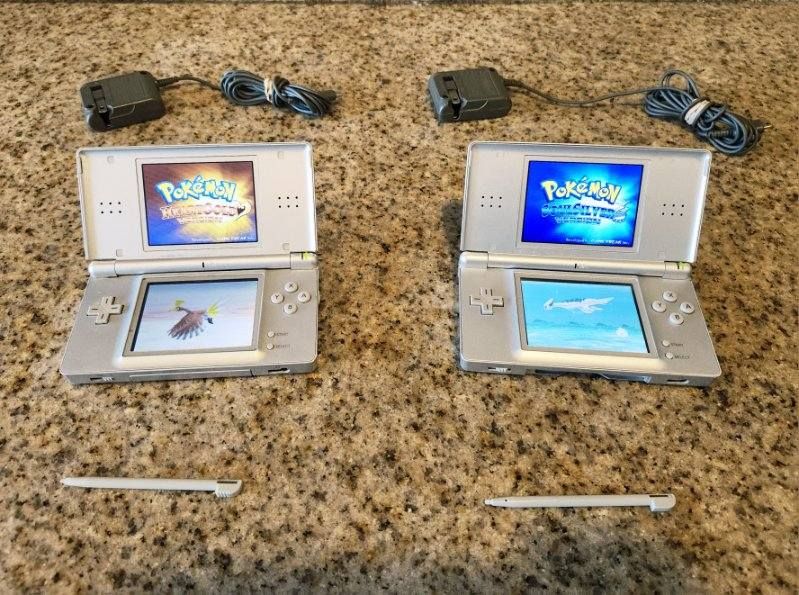
The Nintendo DS Lite remains one of the greatest handheld systems for experiencing classic Pokémon titles, thanks to its native dual-slot architecture that plays both Nintendo DS cartridges and Game Boy Advance cartridges. The finest P...
The Nintendo DS Lite remains one of the greatest handheld systems for experiencing classic Pokémon titles, thanks to its native dual-slot architecture that plays both Nintendo DS cartridges and Game Boy Advance cartridges. The finest Pokémon games for the platform include Pokémon HeartGold and SoulSilver for sheer feature depth, Pokémon Black and White for narrative ambition, and Pokémon Emerald for the pinnacle of third-generation portable design.
Contents
Understanding the Nintendo DS Lite Advantage
The Nintendo DS Lite occupies a unique position in retro gaming history. Released in 2006 as a slimmer, brighter redesign of the original Nintendo DS, it introduced a crucial hardware feature that completely changed how retro enthusiasts play monster-taming role-playing games: a fully functional Game Boy Advance (GBA) cartridge slot on the bottom of the console.
Unlike the Nintendo DSi and subsequent 3DS family systems, which abandoned backward compatibility entirely to save space and remove unused ports, the DS Lite provides physical hardware support for third-generation Game Boy Advance titles (Ruby, Sapphire, Emerald, FireRed, and LeafGreen). Furthermore, inserting a GBA Pokémon cartridge into Slot 2 while a fourth-generation DS cartridge (Diamond, Pearl, Platinum, HeartGold, or SoulSilver) is in Slot 1 unlocks exclusive in-game events, hidden areas, and rare Pokémon that would otherwise be unobtainable through standard gameplay.
For players seeking the ultimate portable Pokémon machine, the DS Lite delivers an unmatched library spanning two distinct hardware generations, physical backwards compatibility, and physical dimensions that easily fit into a pocket. Understanding how these titles interact across both slots is essential for building the ultimate collection and team.
The Generation IV Masterpieces: HeartGold, SoulSilver, Diamond, Pearl, and Platinum
The fourth generation of the Pokémon franchise launched on the original Nintendo DS and reached its technical zenith on the DS Lite. These games utilized the dual-screen layout to display active battle menus, party health statistics, and a touchscreen Pokétch utility watch simultaneously.
Pokémon HeartGold and SoulSilver
Widely considered by the community to be the greatest entries in the entire franchise, Pokémon HeartGold and SoulSilver are comprehensive remakes of the classic Game Boy Color titles Gold and Silver. Set in the dual regions of Johto and Kanto, these games offer an extraordinary amount of content, including 16 gym badges to collect, the ability for any Pokémon in your party to physically walk behind your character on the overworld map, and the inclusion of the Pokéwalker—a pedometer accessory that allowed players to level up their creatures in the physical world.
The technical execution on the DS Lite hardware is stellar. The sprite work, dynamic lighting, and redrawn orchestral-style soundtrack elevate the nostalgia of the 1999 originals into a modern masterpiece. Exploration rewards the player at every turn, and the level curve, while notoriously criticized in the original versions for sluggish progression, is significantly smoothed out through the inclusion of the Pokégear rematch system.
Pokémon Platinum
While Pokémon Diamond and Pearl laid the groundwork for Generation IV in the Sinnoh region, Pokémon Platinum serves as the definitive third-version experience. It fixes the sluggish movement speeds of its predecessors, introduces a drastically expanded story involving the legendary Pokémon Giratina, and adds the Distortion World—a visually striking, gravity-defying area that remains one of the most memorable set-pieces in handheld gaming history.
Platinum also reintroduced the Battle Frontier, a sprawling post-game facility that tests strategic teambuilding, prediction, and resource management against specialized brain facility leaders. For players wanting a challenging campaign with deep competitive mechanics, Platinum is an essential cartridge.
The Pinnacle of the Classics: Third-Generation GBA Titles on DS Lite
Because the DS Lite features a bottom-loading GBA slot, it serves as the ultimate bridge to the third generation. Playing these titles on the DS Lite provides a brighter backlit screen and a more durable hinge than the original Game Boy Advance SP (specifically the AGS-001 model, though late-model AGS-101 units also feature backlighting).
Pokémon Emerald
Pokémon Emerald is the definitive version of the Hoenn region, combining the opposing forces of Team Magma and Team Aqua into a single, cohesive narrative. It introduced Double Battles as a core gameplay pillar, added animated sprites for every Pokémon in battle for the very first time, and perfected the Battle Frontier concept.
Playing Emerald on a DS Lite grants access to secret bases, berry mixing, and legendary encounters with Rayquaza, Groudon, and Kyogre. The vibrant color palette of the Hoenn region pops remarkably well on the adjustable backlit screens of the DS Lite.
Pokémon FireRed and LeafGreen
As faithful remakes of the original Kanto adventures released on the Game Boy, Pokémon FireRed and LeafGreen brought the original 151 Pokémon into the modern mechanics framework. These versions introduced the Sevii Islands—a post-game archipelago that bridges the gap between Kanto and Johto lore, providing additional dungeons, Johto species migration, and extended storylines.
| Game Title | Generation | Primary Region | Notable DS Lite Feature |
|---|---|---|---|
| Pokémon HeartGold | Gen IV Remake | Johto & Kanto | Pokéwalker Accessory |
| Pokémon SoulSilver | Gen IV Remake | Johto & Kanto | Pokéwalker Accessory |
| Pokémon Platinum | Gen IV | Sinnoh | Distortion World |
| Pokémon Emerald | Gen III | Hoenn | Slot 2 GBA Integration |
| Pokémon FireRed | Gen III Remake | Kanto & Sevii Islands | Post-Game Archipelagos |
| Pokémon Black | Gen V | Unova | Fully Animated Sprites |
The Generation V Transition: Black and White
Pokémon Black and White arrived late in the Nintendo DS lifecycle. While they do not utilize the GBA slot like Generation IV games do, they represent the technical limits of the DS architecture. Utilizing fully animated, dynamic sprite technology that scaled and rotated during combat, these titles pushed the hardware to its absolute boundaries.
Set in the New York-inspired Unova region, Black and White attempted a narrative reset by featuring a completely original Pokédex of 156 creatures in the regional campaign, restricting older Pokémon until the post-game. While controversial among purists at launch, the storytelling, musical score, and seasonal changes within the overworld make these titles culturally vital within the series chronology.
Hardware Considerations and Authenticity Verification
Collecting physical Nintendo DS and Game Boy Advance cartridges in 2026 requires careful vigilance. Due to the high secondary-market value of authentic Nintendo cartridges, online marketplaces are frequently flooded with counterfeit reproductions.
Spotting Counterfeit DS Cartridges
- Plastic Shell Color: Authentic fourth- and fifth-generation DS cartridges (especially HeartGold, SoulSilver, and Black/White) use specialized dark-gray or translucent black plastic shells that contain infrared communication or memory chips. Solid light gray or cheap plastic shells are immediate red flags.
- Cartridge Back Codes: Look for the stamped Nintendo seal of quality and laser-etched serial codes on the circuit board pins that match the code on the front label.
- Label Quality: Counterfeit labels often feature blurry typography, washed-out colors, or incorrect Nintendo branding fonts.
Spotting Counterfeit GBA Cartridges
- Nintendo Logo on Board: Opening a GBA cartridge (or inspecting the exposed pins at the bottom) should reveal a clearly printed "Nintendo" logo on the green or brown circuit board itself.
- Save Functionality: Authentic GBA cartridges use flash memory or battery-backed SRAM to save progress. Many cheap bootlegs fail to save reliably or corrupt save files after a few hours of gameplay.
Frequently Asked Questions
Can the Nintendo DS Lite play regular Game Boy or Game Boy Color games?
No. The DS Lite features a GBA slot that is physically and electrically backwards compatible with Game Boy Advance and original Game Boy Advance Video cartridges only. Nintendo removed the Z80 processor required to run legacy Game Boy and Game Boy Color games, meaning titles like Pokémon Red, Blue, Yellow, Gold, Silver, and Crystal cannot be played directly on DS Lite hardware without emulation or hardware modifications.
What is "Dual-Slot Mode" and how does it affect gameplay?
Dual-slot mode refers to the DS Lite's ability to read a GBA game in Slot 2 while a DS game is inserted in Slot 1. In titles like Pokémon Diamond, Pearl, and Platinum, having a specific GBA cartridge inserted allows players to encounter older-generation Pokémon in high-level grass areas that would otherwise be locked until the post-game.
Are physical DS Pokémon cartridges region-locked?
With the exception of Pokémon DSi-Enhanced titles released later in the generation (which featured region locks when played on DSi or 3DS systems), standard Nintendo DS games like Diamond, Pearl, Platinum, HeartGold, and SoulSilver are region-free. You can play a Japanese cartridge on an American or European DS Lite console without issue.
Why are authentic Pokémon DS cartridges so expensive today?
Official Pokémon cartridges are out of print, manufactured in finite quantities during the late 2000s, and remain highly sought after by nostalgic adult collectors and retro gaming enthusiasts. Because supply is fixed while global demand remains exceptionally high, secondary market prices reflect standard economic scarcity.
How do I clean the cartridge pins if my DS Lite fails to read a game?
If your DS Lite fails to recognize a game cartridge, power off the system, dip a cotton swab in high-concentration isopropyl alcohol (90% or higher), and gently rub the gold connector pins on the cartridge. Allow the alcohol to dry completely for a few minutes before reinserting the cartridge into the system.
Final Recommendation
For players starting or expanding their retro collection, begin with Pokémon HeartGold or SoulSilver if you want the absolute highest value, most expansive world design, and best overall features. If you prefer a sharper, more challenging tactical experience with a classic aesthetic, secure an authentic copy of Pokémon Platinum or Pokémon Emerald (utilizing the DS Lite's GBA slot) to experience the golden era of handheld role-playing games at their absolute finest.
Image Gallery