Understanding the Percentage of Small Business Failures: Statistics, Causes, and Prevention Strategies in 2026
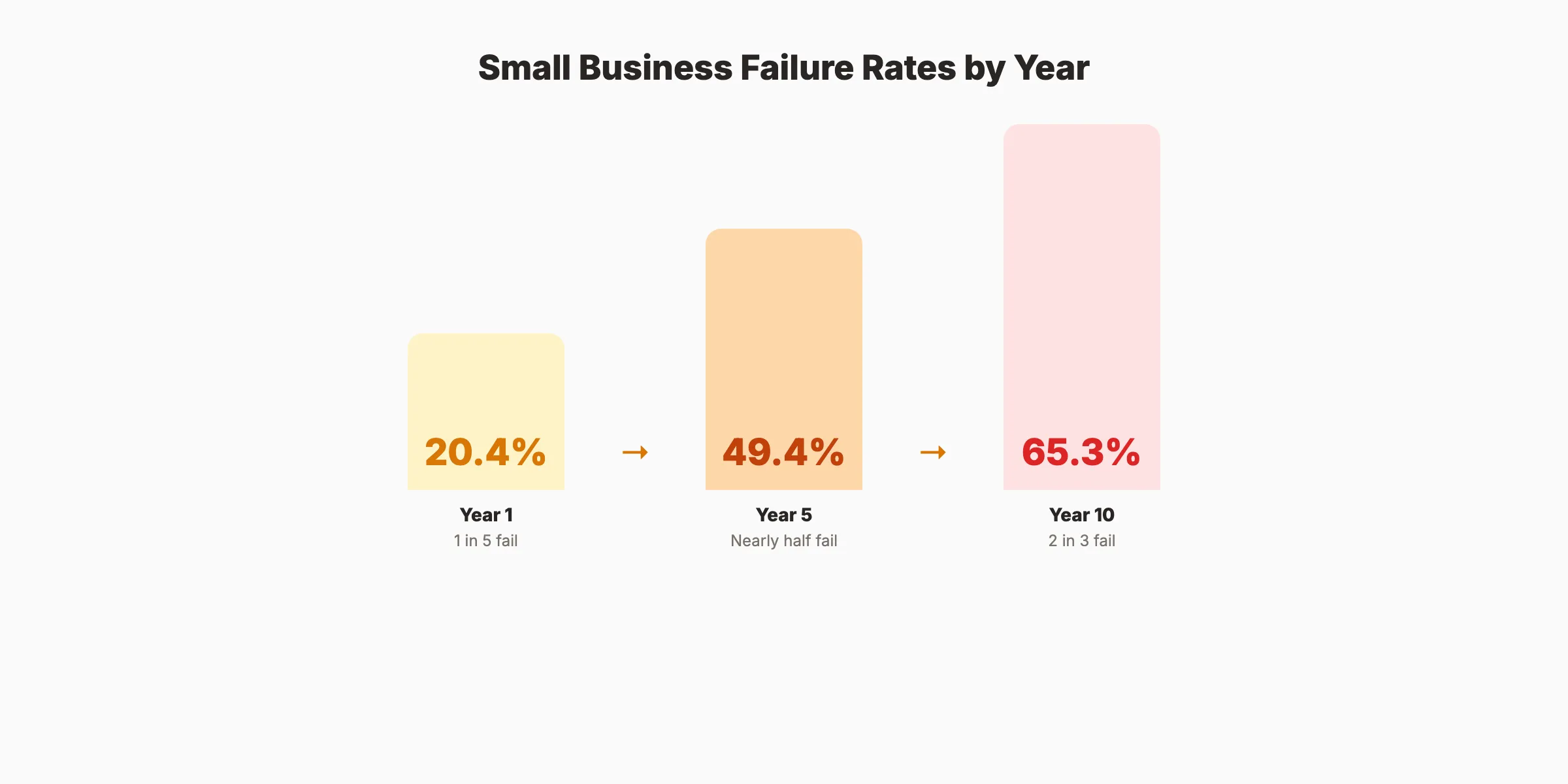
Statistically, approximately 20% of small businesses fail within their first year of operation. By the end of the fifth year, roughly 50% have ceased to exist, and by the tenth year, the failure rate climbs to nearly 65-70%. These benc...
Statistically, approximately 20% of small businesses fail within their first year of operation. By the end of the fifth year, roughly 50% have ceased to exist, and by the tenth year, the failure rate climbs to nearly 65-70%. These benchmarks, sourced from the U.S. Bureau of Labor Statistics (BLS), remain remarkably consistent despite technological advancements.
Contents
The Survival Curve: A Longitudinal Look at Business Longevity
Analyzing the percentage of small business failures requires a nuanced understanding of the "survival curve." This curve represents the thinning of the herd as market pressures, internal inefficiencies, and macroeconomic shifts take their toll. In 2026, while the tools for starting a business have become more accessible, the fundamental challenges of maintaining a profitable enterprise remain unchanged.
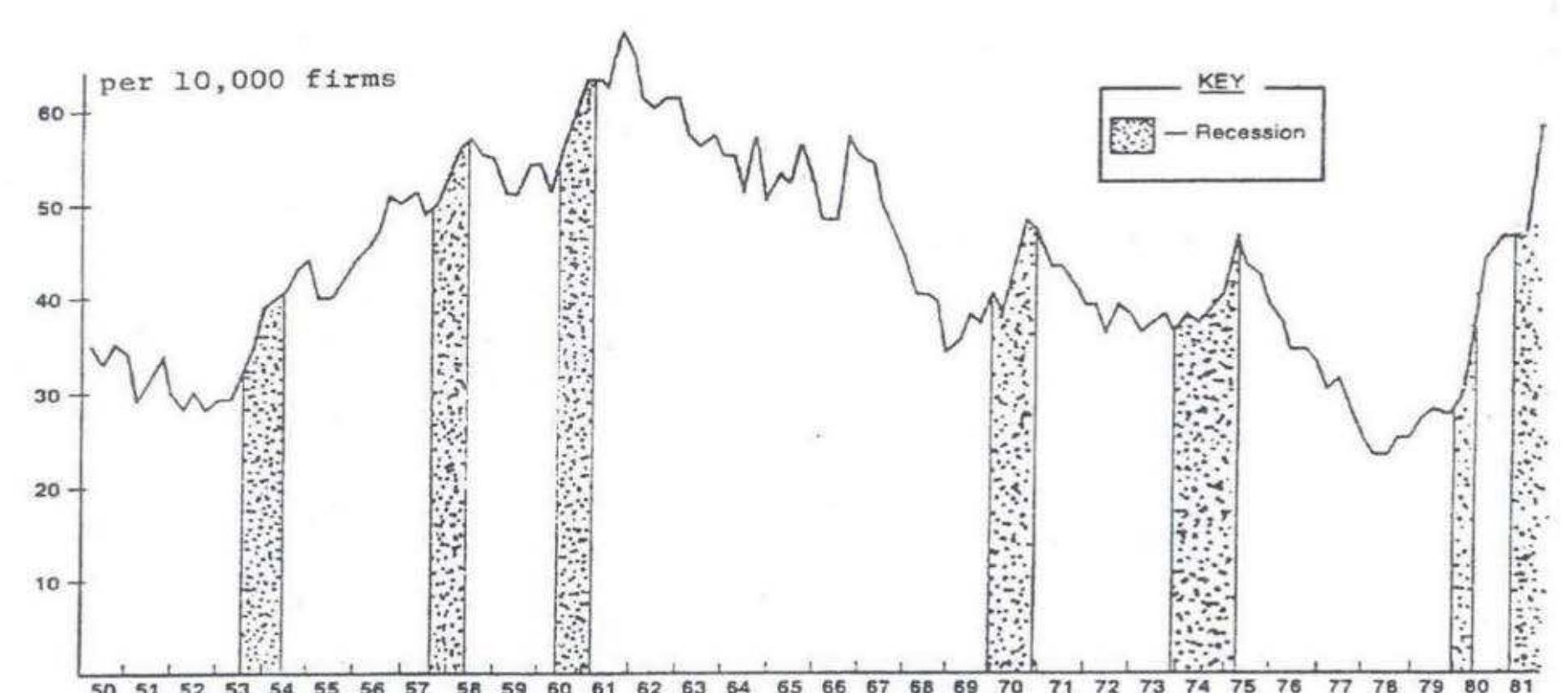
According to historical data from the U.S. Bureau of Labor Statistics, business survival rates do not significantly fluctuate based on the year an entity was founded. Whether a business was started in a boom cycle or a recession, the attrition rate remains remarkably steady. This suggests that the internal mechanics of a business—its leadership, capital management, and value proposition—are more predictive of success than external timing alone.
The first 24 months are often the most precarious. This "valley of death" is where the initial capital injection usually runs dry before the business can achieve self-sustaining cash flow. Businesses that survive the five-year mark are often those that have successfully pivoted from their original concept to a more sustainable, market-tested model. By the ten-year mark, the remaining 30-35% of businesses typically possess a dominant market niche or a highly efficient operational structure that provides a "moat" against new entrants.
Industry-Specific Failure Rates: Volatility by Sector
Not all industries are created equal when it comes to risk. The percentage of small business failures varies significantly depending on the capital requirements, regulatory environment, and competitive landscape of the specific sector.
High-Volatility Sectors: Food Service and Retail
The hospitality and retail sectors historically experience some of the highest turnover rates. In 2026, the integration of automation and shifting consumer preferences toward "experience-based" retail has created a divide. Traditional brick-and-mortar stores without a digital presence face failure rates exceeding the national average within the first three years. Restaurants, plagued by thin margins (often between 3% and 5%), are particularly susceptible to fluctuations in food costs and labor shortages.
Low-Volatility Sectors: Healthcare and Professional Services
Conversely, industries such as healthcare, social assistance, and specialized professional services (legal, accounting, engineering) show higher survival rates. These sectors benefit from high barriers to entry, such as licensing requirements and specialized education, which limit competition. Furthermore, the demand for these services is relatively inelastic; people require medical care and legal advice regardless of the broader economic climate.
The 2026 Tech Landscape
The technology sector presents a unique paradox. While the "failure" rate of venture-backed startups is estimated to be as high as 90%, these failures often look different than those of traditional small businesses. Tech failures are frequently characterized by "fast failure," where a lack of product-market fit leads to a quick shutdown or an "acqui-hire" merger. In contrast, a traditional small business may suffer a "slow death" over several years of declining revenues.
Primary Drivers of Business Failure in 2026
To understand why such a high percentage of small businesses fail, one must look beyond the surface-level symptoms and identify the root causes. In the current economic landscape of 2026, these drivers have become increasingly complex.
1. Cash Flow Mismanagement and Undercapitalization
Cash flow is the lifeblood of any enterprise. A significant number of businesses fail not because they are unprofitable on paper, but because they run out of liquid cash to meet immediate obligations. This often results from a mismatch between accounts receivable (money owed to the business) and accounts payable (money the business owes). In 2026, as interest rates have stabilized at higher levels than the previous decade, the cost of servicing debt has become a primary "silent killer" for small firms.
2. Lack of Genuine Market Need
Research from organizations like CB Insights consistently shows that the number one reason startups and small businesses fail is a lack of market need. Founders often fall in love with a product or service without verifying if a customer base is willing to pay for it at a price point that covers costs. In the 2026 market, which is saturated with niche solutions, the failure to differentiate or solve a "burning pain point" leads to rapid irrelevance.
3. Operational Inefficiency and the Digital Debt
"Digital debt" refers to the long-term cost of implementing poorly integrated software or failing to upgrade legacy systems. Small businesses that ignored the AI-driven operational shifts of 2024 and 2025 are finding themselves unable to compete on price in 2026. Higher labor costs mean that businesses must achieve greater output per employee; those failing to leverage automation frequently see their margins evaporate.
Comparative Survival Rates by Industry
The following table outlines the estimated survival rates across various sectors based on longitudinal trends and 2026 market analysis.
| Industry Sector | 1-Year Survival Rate | 5-Year Survival Rate | 10-Year Survival Rate |
|---|---|---|---|
| Healthcare & Social Assistance | 85% | 60% | 45% |
| Finance, Insurance & Real Estate | 82% | 55% | 38% |
| Construction | 75% | 48% | 32% |
| Professional & Technical Services | 80% | 52% | 36% |
| Retail Trade | 78% | 45% | 30% |
| Transportation & Warehousing | 72% | 40% | 25% |
| Food Service & Accommodation | 70% | 35% | 22% |
Macroeconomic Factors and the 2026 Environment
While internal management is the primary determinant of success, the macroeconomic environment provides the context in which small businesses operate. In 2026, several specific factors are influencing the percentage of small business failures.
- Inflationary Pressure on Input Costs: While the hyper-inflation of the early 2020s has subsided, the "new normal" for energy and raw material costs remains elevated. Small businesses with low pricing power are unable to pass these costs to consumers, leading to margin compression.
- The Credit Crunch: Banks have tightened lending standards. Small businesses seeking to bridge a seasonal gap or fund an expansion find that the Debt Service Coverage Ratio (DSCR) requirements are more stringent than in previous years.
- Labor Dynamics: The "war for talent" has shifted. Small businesses must now compete not just on salary, but on flexibility and technology. Failure to attract skilled labor often leads to a decline in service quality, which eventually triggers customer churn.
Critical Warning Signs of Impending Failure
Business failure rarely happens overnight. It is usually the result of a series of unaddressed "red flags." Recognizing these signs early can allow for a strategic pivot or a managed exit.
- Consistent Late Payments to Vendors: This is the first sign of a liquidity crisis. Once a business loses its credit standing with suppliers, its supply chain becomes fragile.
- High Employee Turnover: Beyond the cost of hiring, high turnover signals a toxic culture or a lack of confidence in the company’s future.
- Owner Over-Involvement: If a business cannot function for 48 hours without the owner’s direct intervention, it is a "job," not a scalable enterprise. This leads to founder burnout, a major contributor to business closures.
- Declining Margins Despite Stable Sales: This indicates that the cost of doing business is rising faster than the value provided to customers, or that the business is engaged in a "race to the bottom" on pricing.
Strategies for Mitigating Failure Risk
Longevity in business is rarely an accident; it is the result of rigorous planning and disciplined execution. To beat the statistical 50% failure rate at year five, owners must focus on three core pillars:
- Rigorous Financial Controls: Maintain a minimum of three to six months of operating expenses in a liquid reserve. Utilize real-time accounting software to monitor the "burn rate" and "cash runway" daily.
- Iterative Product Development: Instead of large, risky launches, successful 2026 businesses use "Minimum Viable Product" (MVP) cycles to test market reactions before committing significant capital.
- Diversified Revenue Streams: Relying on a single major client or one specific product line is a recipe for disaster. Long-term survivors typically have three or more independent revenue streams to buffer against market shifts.
Frequently Asked Questions
Does the percentage of small business failures include those that are sold or merged?
Statistically, most government data (like the BLS) tracks "cessation of operations." This includes businesses that close due to bankruptcy, but also those where the owner simply decides to retire or move on. However, successful exits (mergers and acquisitions) are often tracked separately in private equity data. A "failure" is generally defined as a business that ceases to exist without returning capital to its owners.
Are franchises safer than independent small businesses?
Franchises generally have a higher survival rate than independent startups, often cited as being around 10-15% higher in the first five years. This is because franchises provide a proven business model, established brand recognition, and a support network. However, they also require significant upfront fees and ongoing royalties, which can squeeze profit margins.
How has AI impacted the small business failure rate in 2026?
AI has acted as a double-edged sword. For businesses that have integrated AI for customer service, inventory management, and marketing, it has significantly lowered operating costs and increased survival odds. Conversely, businesses in industries being disrupted by AI (such as basic content creation or manual data entry) are seeing higher failure rates as their value propositions diminish.
Does starting a business during a recession increase the failure rate?
Surprisingly, no. Businesses started during economic downturns are often "leaner" and more resilient because they are forced to find a sustainable model immediately. According to the Small Business Administration (SBA), businesses that can survive a recessionary launch period often have higher 10-year survival rates because they have already weathered the worst-case scenario.
What is the most common reason for failure after the five-year mark?
While early failure is usually due to cash flow or market fit, late-stage failure (year 5 to 10) is often due to a failure to innovate. Markets evolve, and businesses that become complacent or "stuck in their ways" eventually lose their competitive edge to more agile newcomers.
Recommendation for Business Owners
To improve your odds of survival, prioritize a monthly financial audit and a quarterly market-fit assessment. Do not wait for a crisis to evaluate your cash reserves. By the time the bank balance is zero, your strategic options are already exhausted. Focus on building a "resilient" rather than just a "profitable" business by diversifying your client base and automating repetitive tasks to protect your margins.
Image Gallery