Debunking Common Auto Insurance Myths for Nashua Drivers in 2026
Navigating auto insurance in Nashua, New Hampshire, requires a clear understanding of state-specific statutes and local risk factors. While many drivers believe that vehicle color dictates premiums or that "full coverage" is a standard...
Navigating auto insurance in Nashua, New Hampshire, requires a clear understanding of state-specific statutes and local risk factors. While many drivers believe that vehicle color dictates premiums or that "full coverage" is a standardized legal requirement, these misconceptions often lead to inadequate protection or inflated costs. By debunking these myths with current 2026 actuarial data and New Hampshire Insurance Department (NHID) guidelines, Nashua residents can make informed decisions that protect their assets and ensure compliance with the state's unique financial responsibility laws.
Contents
The Reality of New Hampshire’s "Mandatory" Insurance Laws
Perhaps the most persistent myth in the Gate City is that auto insurance is not required because New Hampshire is a "Live Free or Die" state. While it is true that New Hampshire does not have a compulsory insurance law for all drivers, the reality is far more nuanced.
Under RSA 264, New Hampshire operates under a system of "Financial Responsibility." If you are a driver who does not carry insurance and you are found at fault for an accident, you must prove you have the financial means to cover the damages. Failure to do so results in the immediate suspension of your driver’s license and vehicle registration. Furthermore, certain individuals—such as those convicted of a DUI/DWI or those who have been at fault in an accident while uninsured—are legally mandated to file an SR-22 certificate, which effectively makes insurance compulsory for them.
In 2026, with the rising costs of medical care and vehicle technology (especially ADAS components common in Nashua’s newer fleets), the "no insurance" approach is a high-risk gamble. Most lienholders for vehicles purchased at dealerships along the Daniel Webster Highway will also require comprehensive and collision coverage as a condition of the loan, regardless of state law.
Myth 1: Red Cars and Sports Models Always Cost More to Insure
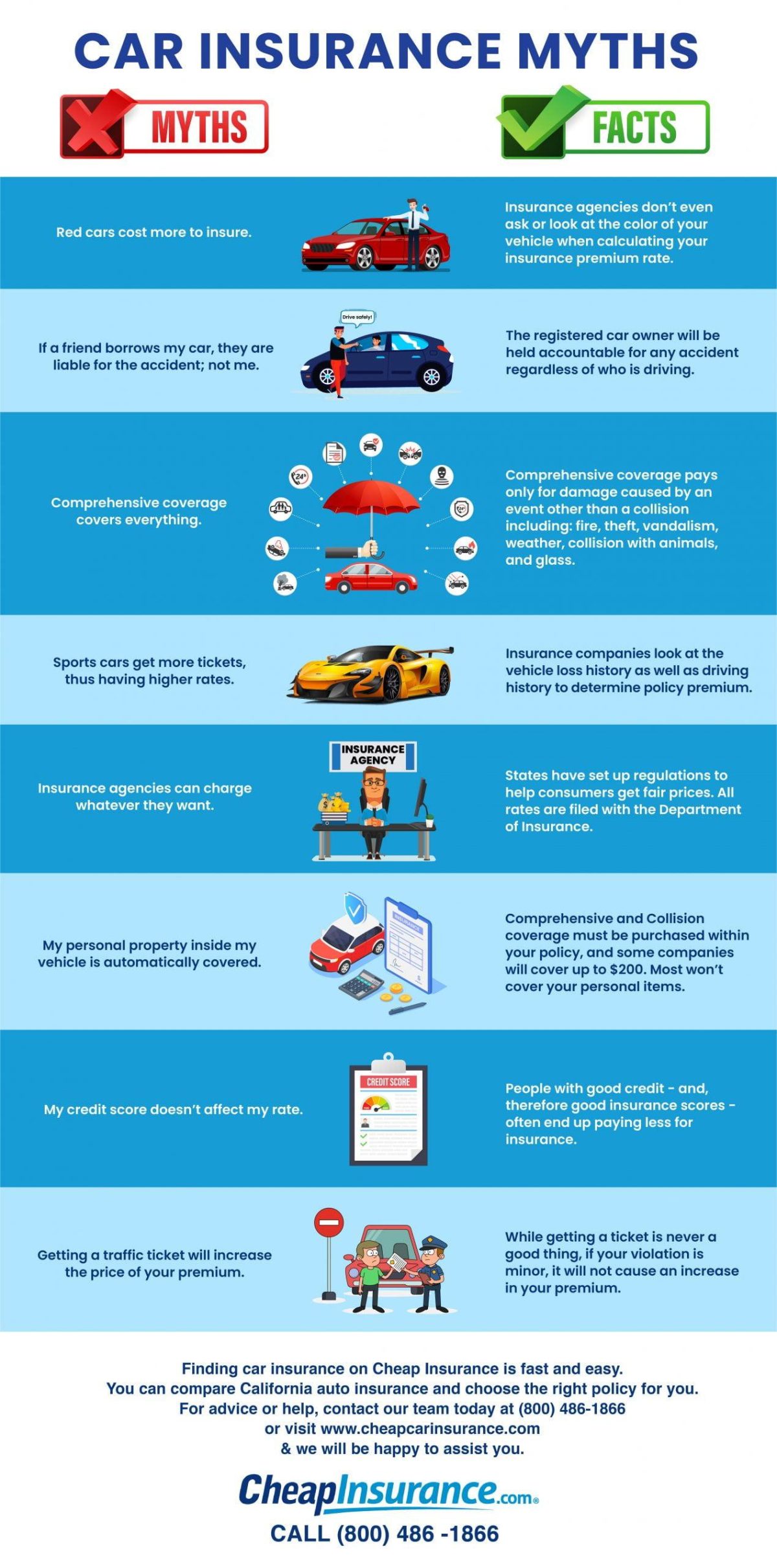
A long-standing urban legend in Nashua suggests that driving a red car will automatically trigger higher insurance premiums because red is associated with aggressive driving and higher ticket rates. In reality, insurance companies do not even ask for the color of your vehicle when generating a quote.
In 2026, actuarial pricing is driven by the Vehicle Identification Number (VIN), which informs the insurer about the car’s make, model, year, engine size, and safety features. An insurer cares about the "loss history" of a specific model. For example, if a certain sedan has a high frequency of claims or is expensive to repair due to proprietary sensors, the premium will be higher, regardless of whether the paint is red, silver, or black.
However, the "sports car" myth holds a grain of truth, though not for the reasons most think. It isn't just about speed; it's about the cost of replacement parts and the likelihood of theft. In a dense urban environment like Nashua, high-performance vehicles are statistically more prone to high-speed accidents that result in "total loss" payouts, which is what actually drives the rate increase.
Myth 2: "Full Coverage" is a Legal Definition That Protects You Completely
Many Nashua drivers walk into local agencies asking for "full coverage," assuming this is a specific, all-encompassing policy. In the insurance industry, "full coverage" is a colloquialism, not a legal term. It typically refers to a policy that includes Liability, Collision, and Comprehensive coverage.
- Liability: Covers damage you cause to others.
- Collision: Covers damage to your car resulting from a crash.
- Comprehensive: Covers non-crash events like theft, vandalism, or a deer strike on the Everett Turnpike.
The myth that this protects you "completely" is dangerous. It ignores essential additions like Uninsured/Underinsured Motorist (UM/UIM) coverage, which is vital in New Hampshire. Since many NH drivers exercise their right to remain uninsured, your "full coverage" might still leave a gap if you are hit by an uninsured driver unless you have high UM/UIM limits. In 2026, with the average new car price exceeding $50,000, having "full coverage" with a low liability limit like the state-recommended 25/50/25 is often insufficient for Nashua residents with significant personal assets.
Myth 3: New Hampshire is a "No-Fault" State
There is frequent confusion among Nashua commuters who work in Massachusetts about "No-Fault" insurance. Unlike our neighbors in the Commonwealth, New Hampshire is a "Fault" (or Tort) state.
In a no-fault state, your own insurance pays for your medical bills regardless of who caused the accident. In Nashua, the person who is found to be at fault for the accident is responsible for the damages. This makes the determination of liability by the Nashua Police Department or state troopers a critical component of any claim. If you are involved in an accident on Amherst Street, you or your insurer must prove the other driver's negligence to recover costs. This underscores the importance of Medical Payments (MedPay) coverage, which is an optional add-on in NH that can provide immediate funds for injuries while the liability dispute is being settled.
Myth 4: Your Credit Score Doesn't Affect Your Local Premium
Many consumers believe that because auto insurance is a "driving" product, it should only be based on their driving record. However, in New Hampshire, insurers are permitted to use credit-based insurance scores to help determine premiums.
Statistically, insurance companies have found a correlation between financial responsibility and driving behavior. In 2026, a driver in Nashua with a perfect 10-year driving record but a low credit score may pay significantly more than a driver with one minor speeding ticket and an excellent credit score. While some states have banned this practice, it remains a standard part of the underwriting process in the New Hampshire market. Residents looking to lower their rates should focus as much on their FICO score as they do on avoiding traffic violations.
Myth 5: Older Drivers Always Pay More Due to Age
While it is true that premiums tend to rise for drivers over the age of 75, the "older driver" myth is often exaggerated. In fact, drivers in the 50–65 age bracket in Nashua often enjoy some of the lowest rates in the city. This demographic is viewed as experienced, stable, and less likely to engage in risky nighttime driving.
Furthermore, many insurers in 2026 offer discounts for seniors who complete a certified defensive driving course. The New Hampshire Insurance Department provides resources on these credits. The group that truly pays the premium "tax" in Nashua is actually the 16–25 demographic, specifically those who are students at local institutions like Rivier University or Nashua Community College, due to their statistically higher frequency of distracted driving incidents.
Myth 6: Insurance Follows the Driver, Not the Car
This is one of the most common misconceptions when friends or family members borrow a vehicle. In New Hampshire, insurance generally follows the car, not the driver.
If you lend your SUV to a friend to move furniture across town and they cause an accident, your insurance policy is the primary coverage that will pay for the damages. Your friend’s insurance (if they have it) would typically act as secondary or "excess" coverage. This means your rates could increase due to an accident someone else caused in your vehicle. Before letting anyone "borrow the keys" in Nashua, it is imperative to verify they are a licensed driver and understand that your policy is on the line.
| Myth | Reality | Impact on Nashua Drivers |
|---|---|---|
| Red cars cost more | Color is not a rating factor; VIN and safety tech are. | Focus on vehicle safety ratings, not paint. |
| NH requires no insurance | Mandatory only for specific cases (SR-22), but liability is 100%. | High risk of license loss if uninsured and at fault. |
| Credit score doesn't matter | Credit-based insurance scores are used in NH. | Better credit leads to lower premiums. |
| Insurance follows the driver | Insurance follows the vehicle in most NH policies. | You are liable for accidents caused by friends borrowing your car. |
| "Full Coverage" is enough | It’s a marketing term; doesn't guarantee enough UM/UIM. | Nashua residents may be underinsured against uninsured drivers. |
| No-Fault state | NH is a "Fault" (Tort) state. | You must prove the other driver's negligence to recover costs. |
The Impact of Local Nashua Geography on Your Rates
A specific myth often overlooked is that a Nashua address is the same as any other in New Hampshire. In reality, your ZIP code within Nashua—whether it is 03060, 03062, 03063, or 03064—matters significantly.
Drivers in the more densely populated areas near Main Street or the retail corridors of the Daniel Webster Highway may see slightly higher premiums than those in the quieter residential areas of South Nashua or near the Hollis border. This is due to the higher frequency of "fender benders" and vehicle thefts in high-traffic zones. Additionally, Nashua's proximity to the Massachusetts border increases the "out-of-state driver" risk factor, which insurers account for when calculating the likelihood of a claim.
Modern Myths: Electric Vehicles and ADAS in 2026
As of 2026, a new myth has emerged: "Because my car has automatic braking and safety sensors, my insurance should be cheaper." While these features reduce the frequency of accidents, they drastically increase the severity (cost) of claims. A minor bumper scrape on an older car might cost $500 to buff out; on a 2026 model with integrated radar and cameras, that same scrape can cost $4,000 to recalibrate and replace sensors. Nashua drivers should be aware that high-tech safety features do not always translate to lower premiums.
FAQ
Is it true that New Hampshire has no minimum coverage limits if I choose to buy insurance?
No. While you are not always required to buy insurance, if you do choose to purchase a policy, New Hampshire law requires it to meet minimum limits of 25/50/25. This means $25,000 for bodily injury per person, $50,000 for bodily injury per accident, and $25,000 for property damage. In 2026, these minimums are widely considered insufficient for most drivers.
Does my insurance premium go up if I get a parking ticket in downtown Nashua?
No. Parking tickets are non-moving violations and do not appear on your driving record (MVR) used by insurance companies. Only moving violations, such as speeding, reckless driving, or failing to stop at a red light on Broad Street, will impact your rates.
Will my rates increase if I file a claim for a cracked windshield?
Usually, no. In New Hampshire, glass claims are typically filed under Comprehensive coverage. Most insurers do not raise premiums for a single comprehensive claim, especially for glass, as it is considered an "act of nature" or a "no-fault" event like a stone flying up on the Everett Turnpike.
Can I lower my rate by using a telematics "plug-in" device in Nashua?
Yes. Most major insurers in 2026 offer telematics programs that track your braking, acceleration, and time of day. For Nashua residents who work from home or have short commutes, these programs can offer significant discounts. However, be aware that aggressive driving on busy routes like Route 101A could actually prove you are a higher risk.
Does "Gap Insurance" come standard with NH policies?
No. Gap insurance, which pays the difference between what you owe on a car and its actual cash value if totaled, is an optional endorsement. If you are financing a new vehicle in Nashua, you must specifically request this or purchase it through your lender.
Practical Recommendation for Nashua Residents
To optimize your auto insurance in 2026, do not rely on "standard" assumptions or the myth that the state's lack of a mandate means you are protected. Start by requesting a comprehensive coverage review from a local Nashua agent who understands the specific traffic patterns of the Everett Turnpike and the legal nuances of NH's Tort system.
Specifically, ensure your Uninsured Motorist (UM) limits match your Liability limits. Given that New Hampshire does not mandate insurance, the likelihood of being hit by an uninsured driver is higher here than in 48 other states. Protecting yourself from the "uninsured" is just as important as protecting others from your own driving. Finally, check your credit report; in the 2026 NH insurance market, your financial health is nearly as important as your clean driving record.
Image Gallery